Understanding WW2 Allied Command
The Second World War was a global conflict of unprecedented scale and complexity, and at its heart lay the intricate and often challenging task of Allied command. Forged from disparate nations with differing strategic priorities, cultures, and military traditions, the Allied powers had to develop and maintain a cohesive leadership structure to wage war effectively against the formidable Axis powers. Understanding Allied command is not merely about identifying the key figures; it involves delving into the mechanisms of decision-making, the challenges of coordination, the evolution of strategy, and the personalities that shaped the course of the war.
The early years of World War II saw individual nations fighting for survival. Britain stood alone against Nazi Germany following the fall of France, while the Soviet Union was initially bound by a non-aggression pact with Hitler. The United States, while officially neutral, was increasingly drawn into the global struggle through Lend-Lease and growing tensions with Japan. The catalyst for formal Allied command structures was the undeniable realization that individual efforts were insufficient against the coordinated might of the Axis.
The Immediate Pre-War and Early War Period: Ad Hoc Arrangements
Before the full scope of the war became apparent, Allied cooperation was largely informal and reactive.
Diplomatic Channels and Intelligence Sharing
Initial efforts focused on diplomatic channels and the nascent sharing of intelligence. Britain and France, as the primary belligerents from 1939, had existing military and diplomatic ties, but these were tested by the swiftness of the German Blitzkrieg. The emergence of the Soviet Union as a combatant in 1941, and the United States’ entry following Pearl Harbor, necessitated a fundamental re-evaluation of command and coordination.
The “Grand Alliance”: A Pragmatic Necessity
The formation of the “Grand Alliance” between Britain, the United States, and the Soviet Union was not born of shared ideology but of a shared existential threat. The immediate challenge was to reconcile the vastly different strategic perspectives and logistical capabilities of these three global powers. This pragmatic necessity would become the bedrock upon which Allied command structures were built.
For a deeper understanding of the complexities of Allied command during World War II, you may find the article on strategic decisions and leadership dynamics particularly insightful. This piece delves into the various personalities and their influence on military strategy, shedding light on how collaboration among the Allies shaped the outcome of the war. To read more, visit the article at In the War Room.
The Architects of Victory: Key Leaders and Their Roles
The success of Allied command was inextricably linked to the individuals who occupied positions of ultimate authority. While the figureheads are well-known, their roles and interactions were complex and often fraught with disagreement.
Franklin D. Roosevelt: The Visionary and Pragmatist
As President of the United States, Franklin D. Roosevelt was a central architect of the Allied war effort. His charismatic leadership and unwavering resolve were crucial in rallying American public opinion and maintaining cohesion within the diverse Allied coalition.
The American Military-Industrial Complex
Roosevelt understood the immense industrial potential of the United States and marshaled it towards the war effort. His foresight in building up America’s military might provided the material advantage that would ultimately prove decisive.
The “Europe First” Strategy
Despite the shock of Pearl Harbor, Roosevelt, in agreement with Churchill, championed the “Europe First” strategy. This decision, while debated, prioritized the defeat of Nazi Germany, recognizing it as the more pressing threat.
Winston Churchill: The Indomitable Spirit and Tireless Diplomat
Winston Churchill, Prime Minister of Great Britain, was a wartime leader of immense courage and rhetorical power. His unwavering defiance in the face of Nazi aggression inspired his nation and the wider Allied cause.
The “Iron Curtain” Foreshadowing
Churchill, perhaps more than any other Western leader, was attuned to the emerging post-war landscape and the potential divergence of interests with the Soviet Union. His pronouncements often foreshadowed the coming Cold War.
Balancing Imperial Interests with Allied Needs
Churchill constantly juggled the needs of the global British Empire with the demands of the war in Europe and the Pacific. This often placed him in difficult diplomatic positions with his American allies.
Joseph Stalin: The Ruthless Realist and Soviet Titan
Joseph Stalin, Premier of the Soviet Union, was a figure of immense power and often brutal authority. His leadership, while dictatorial, was instrumental in mobilizing the vast resources and manpower of the Soviet Union for the war against Germany.
The Eastern Front’s Crucial Contribution
The immense sacrifices and relentless fighting on the Eastern Front were crucial in tying down and destroying the bulk of the German army. Stalin’s strategic direction, though often characterized by immense casualties, was undeniably effective in its primary goal: defending the Soviet homeland.
Suspicion and Strategic Disagreements
Stalin harbored deep-seated suspicions of his Western allies, often believing they were deliberately delaying the opening of a second front to bleed the Soviet Union dry. This mistrust, though understandable given historical context, often hampered effective Allied coordination.
The Machinery of Command: Councils, Conferences, and Committees
Beyond the individual leaders, a complex web of committees, councils, and conferences was established to translate grand strategy into concrete action. These bodies were the engines of Allied command, facilitating communication, resolving disputes, and shaping operational plans.
The complexities of Allied command during World War II are fascinating and have been explored in various articles. For a deeper understanding of the strategic decisions and leadership dynamics that shaped the war, you can read a related article that delves into the intricacies of military coordination among the Allies. This insightful piece can be found at this link, where it discusses the challenges faced by commanders and the impact of their decisions on the war’s outcome.
The Combined Chiefs of Staff: The Apex of Military Decision-Making
The Combined Chiefs of Staff (CCS) was arguably the most important body for military strategic planning and execution. Composed of the senior military leaders of the United States and Great Britain, it represented the pinnacle of Anglo-American military cooperation.
Strategic Direction and Resource Allocation
The CCS was responsible for formulating overall Allied military strategy, allocating resources, and coordinating operations across different theaters of war. Its deliberations were crucial in ensuring a unified approach to the global conflict.
The Pacific vs. European Theater Debate
The CCS was often the forum where disagreements between the European and Pacific theaters were hashed out. Balancing the needs of both fronts was a constant challenge, with differing priorities and resources at stake.
The Arcadia Conference (1941-42): Setting the Course
The Arcadia Conference, held in Washington D.C. shortly after the United States entered the war, was a pivotal moment in the establishment of Allied command. It was here that the “Europe First” strategy was solidified and the structure for future inter-Allied coordination was laid out.
The Washington Agreement
This landmark agreement formally established the Combined Chiefs of Staff and outlined the principles of combined planning and operations between the US and UK.
Initial Allocation of Responsibilities
The conference also began the difficult process of allocating responsibilities and resources
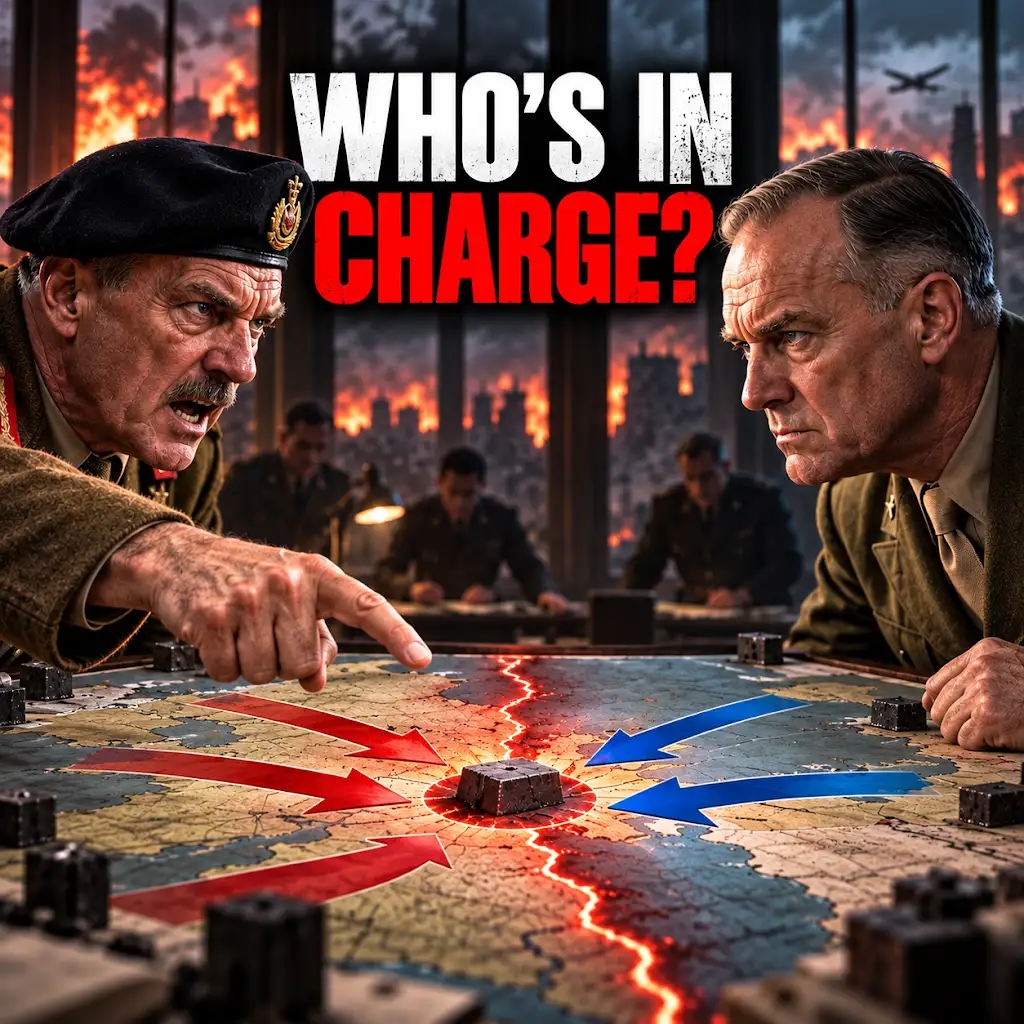
Eisenhower Gave Montgomery 2 U.S. Armies—Then He Wanted More
FAQs
What was the structure of the Allied command during World War II?
The Allied command during World War II was a coalition of military forces from various countries, led by the United States, the United Kingdom, and the Soviet Union. The Supreme Allied Commander was General Dwight D. Eisenhower, who oversaw the coordination of the Allied forces.
How did the Allied command coordinate military operations during World War II?
The Allied command used a system of combined planning and joint operations to coordinate military efforts. This involved regular meetings between the leaders of the Allied nations to discuss strategy, as well as the establishment of unified command structures in different theaters of war.
Who were the key leaders in the Allied command during World War II?
Some of the key leaders in the Allied command during World War II included General Dwight D. Eisenhower, who served as the Supreme Allied Commander in Europe, and General Douglas MacArthur, who led Allied forces in the Pacific theater. Other important leaders included British Prime Minister Winston Churchill and Soviet Premier Joseph Stalin.
What were some of the major military campaigns planned and executed by the Allied command during World War II?
The Allied command planned and executed several major military campaigns during World War II, including the D-Day invasion of Normandy, the Battle of Stalingrad, the Battle of Midway, and the Battle of El Alamein. These campaigns played a crucial role in the eventual defeat of the Axis powers.
How did the Allied command contribute to the outcome of World War II?
The Allied command played a key role in the outcome of World War II by coordinating the efforts of multiple countries to defeat the Axis powers. Through strategic planning, joint operations, and effective leadership, the Allied command was able to secure victory in both Europe and the Pacific.