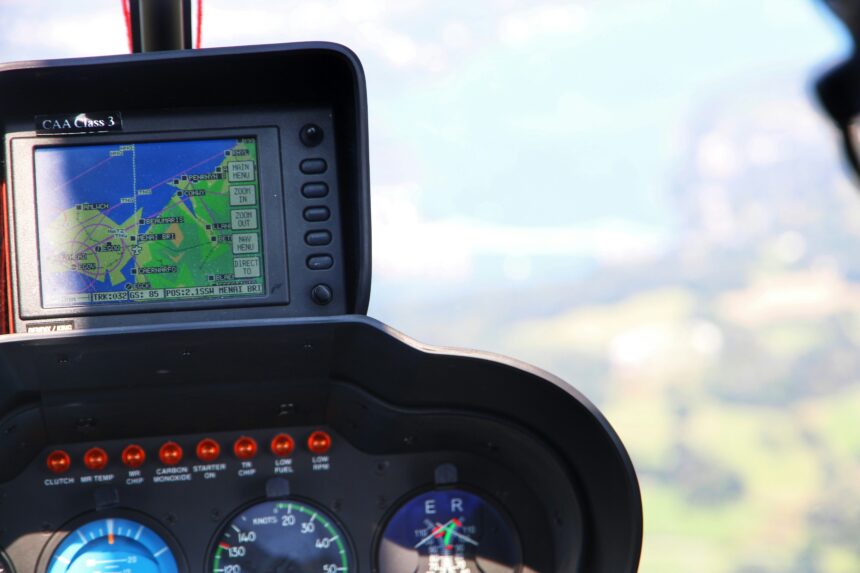
The subtle yet significant divergence between GPS jamming and GPS spoofing often goes unnoticed by the general public, yet these two forms of signal manipulation carry profound implications for modern society. While both interfere with the Global Positioning System (GPS), their mechanisms, objectives, and consequences are distinctly different. Understanding these differences is crucial for appreciating the vulnerabilities and potential threats associated with our reliance on precise location data. This article aims to demystify GPS jamming and spoofing, exploring their inner workings, the technologies involved, and the critical ramifications for everything from personal navigation to national security.
Before delving into the disruptions, it is essential to grasp how GPS operates. The system, originally developed by the United States Department of Defense, consists of three main segments: the space segment, the control segment, and the user segment.
The Space Segment: The Sentinel Satellites
The space segment comprises a constellation of satellites orbiting the Earth. Currently, the GPS system includes at least 31 operational satellites, though the exact number can fluctuate. These satellites broadcast precise timing signals and their orbital data. Each satellite transmits on specific frequencies, notably the L1 (1575.42 MHz) and L2 (1227.60 MHz) bands, carrying navigational messages.
The Control Segment: Ground-Based Oversight
The control segment is responsible for monitoring and managing the GPS satellites. This includes tracking their orbits, synchronizing their atomic clocks, and uploading updated navigation messages. A global network of ground stations ensures the constellation’s continuous accuracy and integrity.
The User Segment: Receiving the Signals
The user segment consists of GPS receivers found in a vast array of devices, from smartphones and car navigation systems to aircraft, ships, and precision agricultural equipment. These receivers detect the signals from multiple satellites simultaneously. By measuring the time it takes for the signals to arrive from each satellite, the receiver can calculate its distance from them. With signals from at least four satellites, a receiver can triangulate its position in three-dimensional space (latitude, longitude, and altitude) and its precise time.
The Importance of Signal Strength and Integrity
GPS signals are relatively weak by the time they reach Earth, making them susceptible to interference. The system relies on the integrity of these signals; any corruption or distortion can lead to inaccurate positioning, loss of lock, or complete failure of the receiver. This inherent vulnerability is what makes jamming and spoofing possible.
For a deeper understanding of the differences between GPS jamming and GPS spoofing, you can explore the article titled “Navigating the Risks: GPS Jamming vs. GPS Spoofing Explained” available at In the War Room. This article delves into the techniques used in both forms of interference, their implications for security, and the potential countermeasures that can be employed to mitigate these threats.
GPS Jamming: Overwhelming the Signal
GPS jamming is a disruptive technique that aims to prevent a GPS receiver from acquiring or maintaining a lock on legitimate satellite signals. It achieves this by broadcasting a powerful radio frequency (RF) signal on the same frequencies used by GPS satellites. This intrusive signal essentially drowns out the weaker GPS signals, rendering them unusable by the receiver.
The Mechanics of Jamming
A jammer works by transmitting a strong signal that interferes with the weak satellite signals. Imagine trying to hear a whisper in a crowded, noisy room; the jammer is like turning up the volume of the room to an unbearable level, making the whisper (the GPS signal) inaudible.
Types of Jamming Signals
- Continuous Wave (CW) Jamming: This is the simplest form where a jammer transmits a steady, uninterrupted signal on the GPS frequencies. While basic, it can be highly effective in disrupting positioning.
- Pulsed Jamming: This method involves transmitting the jamming signal in short bursts. This can be more energy-efficient and harder to detect than CW jamming, as the jammer is not transmitting constantly.
- Barrage Jamming: This technique involves broadcasting noise across a wide spectrum of frequencies, including those used by GPS. This is a more sophisticated and pervasive form of jamming.
- Spot Jamming: This focuses jamming efforts on specific GPS frequencies or a limited band. This can be more targeted and require less power than barrage jamming.
The Jammer’s Objective
The primary goal of GPS jamming is to deny an adversary or target the use of GPS. This can be for various reasons:
- Strategic Military Operations: To blind enemy navigation systems, disrupt precision-guided munitions, and impede command and control during conflict.
- Civilian Disruption: To cause chaos in transportation networks (air, sea, road), hinder emergency services, or disrupt critical infrastructure that relies on GPS for timing.
- Criminal Activities: To mask the movement of illicit goods or vehicles, or to prevent tracking by law enforcement.
- Personal Convenience (in some contexts): In some niche applications, individuals might use personal GPS jammers to avoid tracking, although this is often illegal.
The Impact of Jamming
The effect of GPS jamming is typically a loss of navigation capability. A GPS receiver subjected to jamming will likely:
- Indicate “No Signal” or “Poor Signal.”
- Display an inaccurate or drifting position.
- Show a loss of altitude information.
- Cease to function altogether.
The duration and extent of the disruption depend on the jammer’s power, range, and the receiver’s ability to filter out interference. Jamming is a blunt instrument, and its immediate effect is a complete incapacitation of GPS services in the affected area.
GPS Spoofing: Deceiving the Receiver
GPS spoofing, in contrast to jamming, is a more insidious form of interference. Instead of simply blocking the legitimate GPS signals, spoofing deceives the GPS receiver into believing it is in a different location or time than it actually is. This is achieved by broadcasting fabricated GPS signals that are carefully timed and structured to mimic genuine satellite transmissions, but with altered positional or temporal data.
The Mechanics of Spoofing
Spoofing is akin to a master impersonator; it doesn’t just shout over the original speaker; it speaks as the original speaker, but with a fabricated message. A spoofer broadcasts artificial GPS signals that are designed to be more powerful or appear more convincing to the receiver than the real signals.
Types of Spoofing Techniques
- Single False Satellite Spoofing: This involves broadcasting a signal from a single simulated satellite that convinces the receiver that it has momentarily moved. This can be enough to disrupt certain applications that rely on continuous tracking.
- Multi-Satellite Spoofing: This is a more advanced technique that simulates multiple satellites, creating a consistent but false navigational solution. This makes it much harder for the receiver to detect the deception, as it appears to have a valid fix from several “satellites.”
- Trajectory Spoofing: This involves broadcasting a sequence of fabricated signals that create the illusion that the receiver is moving along a specific, false path. This is a particularly dangerous form of spoofing as it can lead the user to believe they are following a safe or designated route.
- Time Spoofing: Beyond location, spoofing can also manipulate the perceived time. This can have severe consequences for systems that rely on precise synchronization, such as financial trading networks or critical infrastructure.
The Spoofer’s Objective
The goals of GPS spoofing are often more nuanced and potentially more damaging than those of jamming:
- Strategic Deception: To mislead enemy forces about the location of assets, the location of a target, or to guide them into traps.
- Subtle Sabotage: To redirect ships or aircraft off course, leading to potential accidents or security breaches.
- Evasion and Concealment: To make it appear that a vessel or vehicle is elsewhere, facilitating illicit activities or evading surveillance.
- Malicious Intrusion: To gain unauthorized access to systems or data by presenting a false location or time.
- “Stingray” Style Attacks (related concept): Similar to how a Stingray device impersonates cell towers to track phones, GPS spoofing can be used to manipulate location-dependent services.
The Impact of Spoofing
The effects of GPS spoofing are not necessarily a loss of service, but rather a misrepresentation of reality. A GPS receiver subjected to spoofing will:
- Provide a perceived GPS fix.
- Display a plausible, but incorrect, location and/or time.
- Continue to function, leading the user to believe their navigation is accurate.
This is where spoofing becomes particularly dangerous. The user is unaware that their navigation system is compromised, and they are being actively misled. This can lead to disastrous consequences, as evidenced by incidents involving maritime navigation and aviation.
Key Differences Summarized

The fundamental distinction between jamming and spoofing lies in their intended outcome and methodology.
Intent: Disruption vs. Deception
- Jamming: The intent is to disrupt and disable GPS functionality. The spoofer wants the user to know, at least implicitly, that GPS is not working.
- Spoofing: The intent is to deceive and mislead. The spoofer wants the user to believe they are receiving accurate GPS information, which is, in fact, false.
Method: Overpowering vs. Mimicking
- Jamming: Achieved by transmitting a signal that overpowers legitimate GPS signals, making them unreadable.
- Spoofing: Achieved by mimicking legitimate GPS signals with fabricated data, tricking the receiver into accepting the false information as genuine.
Outcome: Loss of Signal vs. False Signal
- Jamming: Typically results in a loss of GPS signal or an inability to acquire a fix.
- Spoofing: Results in a false GPS signal that provides a plausible but incorrect location or time.
Detectability: Easily Observable vs. Insidious
- Jamming: Often readily apparent to the user as a loss of GPS service or erratic behavior.
- Spoofing: Can be far more difficult to detect, as the receiver will often report a valid fix, masking the deception. Specialized monitoring equipment is often required for detection.
In the ongoing debate about the security of GPS technology, understanding the differences between GPS jamming and GPS spoofing is crucial for both users and developers. For a deeper insight into these tactics and their implications, you can explore a related article that delves into the nuances of these threats. This resource provides valuable information on how these methods can disrupt navigation systems and the potential countermeasures that can be employed. To read more about this topic, visit this informative article.
The Dual Threat to Critical Infrastructure
| Aspect | GPS Jamming | GPS Spoofing |
|---|---|---|
| Definition | Intentional interference with GPS signals to disrupt navigation | Creation of false GPS signals to deceive GPS receivers |
| Impact | Disrupts GPS reception and can cause navigation errors | Can mislead GPS receivers into providing incorrect location information |
| Equipment | Uses signal jammers to block or overpower GPS signals | Requires specialized equipment to generate fake GPS signals |
| Legality | Illegal in many countries | Illegal in many countries |
Our increasing reliance on GPS extends far beyond personal navigation. Critical infrastructure sectors depend heavily on the accuracy and availability of GPS signals for timing and positioning. Both jamming and spoofing pose significant threats to these systems.
Timing Synchronization: The Unseen Dependency
Many critical systems use GPS for precise time synchronization. This includes:
- Power Grids: Ensuring the synchronized operation of generators, substations, and distribution networks. A disruption in timing can lead to cascading failures and blackouts.
- Financial Networks: High-frequency trading relies on nanosecond-level timing accuracy. Spoofing or jamming could disrupt transactions and cause market instability.
- Telecommunications: Mobile networks, internet routing, and cellular tower synchronization depend on precise timing.
- Emergency Services: Coordinated responses, satellite communications, and even dispatch systems can be impaired.
Navigation and Positioning: Beyond the Car
- Aviation: Aircraft rely on GPS for navigation, approach, and landing. Jamming can lead to loss of control, while spoofing could guide an aircraft into a dangerous area.
- Maritime: Ships use GPS for navigation, collision avoidance, and port entry. Spoofing has already led to incidents where vessels have been directed off course or into restricted waters.
- Transportation and Logistics: Maintaining schedules, tracking shipments, and coordinating traffic flow are all GPS-dependent.
- Public Safety: Law enforcement, emergency medical services, and disaster response teams use GPS for locating vehicles and personnel.
The Greater Danger of Spoofing to Infrastructure
While jamming can cripple systems by denying them a signal, spoofing presents a more insidious threat to critical infrastructure. If a power grid’s timing system is spoofed, it might continue to operate but with incorrect timing, leading to internal inconsistencies and potential damage over time. Similarly, spoofing a financial network’s time signal could lead to fraudulent transactions appearing legitimate. The lack of immediate, obvious failure makes spoofing a particularly concerning vulnerability.
Mitigating the Threat: Resilience and Countermeasures
Addressing the threats of GPS jamming and spoofing requires a multi-layered approach, focusing on both technological solutions and policy initiatives.
Enhancing Receiver Robustness
- Multi-Constellation Receivers: Utilizing receivers that can track signals from multiple global navigation satellite systems (GNSS) like GLONASS, Galileo, and BeiDou in addition to GPS. This provides redundancy if one system is disrupted.
- Signal Authentication: Implementing technologies that authenticate the source of GPS signals, making it harder for spoofed signals to be accepted.
- Inertial Navigation Systems (INS) Integration: Combining GPS with INS, which uses accelerometers and gyroscopes to track movement independently of external signals. This allows for continued navigation in the event of GPS denial.
- Advanced Filtering Techniques: Developing algorithms within receivers that can detect anomalous signal characteristics indicative of jamming or spoofing.
Deploying Counter-Jamming and Counter-Spoofing Technologies
- Directional Antennas: Using antennas that are sensitive only to signals from specific directions, making them less susceptible to jammers located elsewhere.
- Controlled Signal Environments: Creating localized areas where legitimate GPS signals are amplified and protected.
- Signal Spectrum Monitoring: Developing systems that continuously monitor the GPS spectrum for unusual activity that might indicate jamming or spoofing.
Policy and Regulatory Measures
- Restricting Jammer Use: Implementing and enforcing laws against the unauthorized use of GPS jammers, which are illegal in many jurisdictions.
- International Cooperation: Collaborating with other nations to share threat intelligence and develop common strategies for combating GPS interference.
- Developing Alternative Timing Sources: For critical infrastructure, exploring and implementing independent, terrestrial timing sources that are not reliant on GNSS.
User Education and Awareness
- Highlighting the Risks: Educating users of GPS-dependent systems, particularly in aviation and maritime, about the potential dangers of spoofing and the signs to watch for.
- Promoting Best Practices: Encouraging users to employ backup navigation and timing methods and to report any suspected GPS anomalies.
The challenge of GPS jamming and spoofing is an ongoing evolution. As countermeasures are developed, so too are more sophisticated methods of interference. A proactive and adaptive strategy is essential to safeguarding our increasingly interconnected world from these potentially devastating threats. The continued development and deployment of resilient systems, coupled with vigilant monitoring and robust policy, will be crucial in ensuring the continued reliability of this indispensable technology.

The Hidden Weakness Behind Modern Warfare
FAQs
What is GPS jamming?
GPS jamming is the deliberate interference with GPS signals, typically using a device that emits radio frequency signals on the same frequency as GPS satellites. This interference disrupts the reception of GPS signals by GPS receivers, leading to inaccurate or unavailable location information.
What is GPS spoofing?
GPS spoofing is the creation of false GPS signals to deceive GPS receivers into providing incorrect location information. This is typically done by broadcasting counterfeit GPS signals that mimic legitimate signals from GPS satellites, leading to the receiver providing inaccurate location data.
What are the differences between GPS jamming and GPS spoofing?
GPS jamming involves the deliberate interference with GPS signals, disrupting the reception of legitimate signals, while GPS spoofing involves the creation of false GPS signals to deceive GPS receivers. In essence, jamming disrupts the reception of legitimate signals, while spoofing creates false signals to deceive receivers.
What are the potential impacts of GPS jamming and spoofing?
GPS jamming and spoofing can have serious consequences, particularly in critical applications such as aviation, maritime navigation, and military operations. Disruption of GPS signals can lead to inaccurate navigation, loss of situational awareness, and potential safety hazards.
What measures can be taken to mitigate the risks of GPS jamming and spoofing?
To mitigate the risks of GPS jamming and spoofing, various measures can be taken, including the use of anti-jamming and anti-spoofing technologies in GPS receivers, the implementation of secure and encrypted GPS signals, and the development of alternative navigation systems that are less susceptible to jamming and spoofing.