The Cold War was a period defined by a precarious balance of power, a constant dance on the precipice of global destruction. While many historical accounts focus on the high-stakes diplomatic maneuvers and the grand strategic confrontations, the true terror of this era lay in the chillingly plausible scenarios where a single decision, made under immense pressure, could have unleashed unimaginable catastrophe. Among these harrowing moments, the incident involving the Soviet submarine B-59 in October 1962, during the Cuban Missile Crisis, stands out as a stark reminder of how close the world came to nuclear war, and the critical role of individual human judgment in averting it. The B-59 nuclear torpedo decision, therefore, is not merely a footnote in history, but a profound lesson in the terrifying realities of nuclear brinkmanship and the vital importance of de-escalation.
The Tinderbox: The Cuban Missile Crisis and the B-59’s Role
The Cuban Missile Crisis, a thirteen-day confrontation between the United States and the Soviet Union, erupted in October 1962 after the discovery of Soviet ballistic missile facilities being constructed on Cuba. This discovery triggered a naval blockade of Cuba by the United States, a measure intended to prevent further Soviet military buildup and to exert pressure for the removal of existing missiles. The world held its breath as the two superpowers, armed with vast nuclear arsenals, stared each other down.
Within this escalating global tension, the Soviet submarine fleet was deployed to patrol the waters around Cuba. The B-59, a diesel-electric submarine armed with nuclear torpedoes, was one such vessel. Its mission was to break through the U.S. naval blockade, a perilous undertaking that placed its crew in a highly volatile environment. The submarines were operating under strict orders, but also under immense stress, cut off from regular communication and aware of the heightened state of alert on both sides.
The Unseen Threat: U.S. Naval Tactics and Soviet Perceptions
The U.S. Navy’s strategy during the blockade was not to engage Soviet submarines with lethal force unless absolutely necessary. However, their tactics involved dropping practice depth charges around suspected Soviet submarines. These were not intended to sink the submarines but to signal their presence and to prompt them to surface, thereby revealing their identity and location. For the submarines, however, these explosions, even if non-lethal, were perceived as acts of aggression. The jarring concussions, particularly when experienced deep underwater, could easily be mistaken for attacks, especially in the tense atmosphere of the blockade.
The crew of the B-59, already operating under immense psychological pressure, was particularly vulnerable to misinterpreting these signals. Their isolation, coupled with the perceived threat of their vessels being attacked, created a fertile ground for a desperate and potentially catastrophic response.
The Silent Game: Submarine Warfare and the Fog of War
Submarine warfare is inherently a clandestine and often terrifying experience. Operating in the silent depths, reliant on sonar and limited external information, submarines exist in a constant state of uncertainty. The “fog of war” is particularly thick underwater, where visual cues are absent and communication is restricted. This environment amplifies the psychological strain on the crew.
For the B-59, the situation was exacerbated by its mission. It was tasked with breaking the blockade, an act of defiance that automatically placed it in a confrontational posture. The constant threat of detection and the unknown intentions of the surrounding U.S. Navy vessels created a palpable sense of danger. The crew was trained for war, and the relentless barrage of what they perceived as attacks could easily trigger their combat instincts.
The decision regarding the B-59 nuclear torpedo during the Cuban Missile Crisis is a pivotal moment in Cold War history, highlighting the intense pressures faced by military leaders. For a deeper understanding of the implications and context surrounding this event, you can read a related article that explores the broader strategic considerations of the era. Check it out here: In The War Room.
The Crucible: The Events of October 27th, 1962
The defining moment of the B-59 incident occurred on October 27th, 1962, a day that has come to be known as “Black Saturday” during the Cuban Missile Crisis. This was arguably the most dangerous day of the entire confrontation, with multiple escalating incidents that brought the world perilously close to nuclear war.
On this fateful day, the B-59 was detected by U.S. Navy destroyers. Unaware of the B-59’s actual capabilities and sensitive to the broader crisis, the U.S. ships began dropping practice depth charges around the submarine. These were intended to force the B-59 to surface. However, for the crew on board, these explosions felt like actual attacks. The submarine was already running low on battery power and had been submerged for an extended period, leading to high temperatures and a suffocating atmosphere within the vessel.
The Pressure Cooker: Internal Tensions and Command Structure
The situation within the B-59 was dire. The commander, Captain Valentin Savitsky, was under immense pressure. The submarine had lost contact with Moscow, and the crew was suffering from heat, exhaustion, and the constant fear of an attack. In this crucible of stress, the perceived attacks from the U.S. Navy further heightened the tension.
Savitsky, along with the political officer Ivan Maslennikov, believed that they were under direct assault and that war might have already begun. Under the operational doctrine of the time, if attacked, Soviet submarine commanders had the authority to launch their nuclear torpedoes without further consultation with Moscow. This was a grim safeguard designed to ensure a retaliatory strike even if higher command structures were incapacitated.
The Desperate Measure: The Nuclear Torpedo Option
The B-59 carried three nuclear torpedoes. The decision to launch one of these weapons would have been an act of unimaginable consequence. The launch of a single nuclear torpedo would almost certainly have been interpreted by the United States as the opening salvo of a full-scale nuclear attack, leading to an immediate and devastating retaliatory strike. The consequences of such an exchange are unfathomable.
In the cramped confines of the B-59, Captain Savitsky, convinced that they were under attack and that war was imminent, ordered the preparation of a nuclear torpedo for launch. The atmosphere on board was one of desperation and a grim resolve to strike back.
The Unseen Hero: Vasili Arkhipov and the Decision to Hold Fire
Amidst the mounting panic and the grim determination of Captain Savitsky, one man stood as a bulwark against catastrophe: Vasili Arkhipov. Arkhipov was the flotilla chief of staff and the second-in-command of the B-59. Crucially, he was the third man in the command structure, meaning that he held a veto over the launch of the nuclear torpedo.
While Savitsky and Maslennikov were convinced that they had to retaliate, Arkhipov, who had a calmer demeanor and a clearer head, remained unconvinced that the explosions were direct attacks. He understood the U.S. Navy’s tactics of dropping practice depth charges as signals, and he knew that launching a nuclear weapon under these circumstances would have been an act of unimaginable folly.
The Disagreement: A Battle of Wills in the Depths
The disagreement between Arkhipov and the other two senior officers was intense. Savitsky and Maslennikov argued vehemently for launching the torpedo, citing the perceived attack and their orders. Arkhipov, however, stood firm. He reasoned that the explosions, while jarring, did not exhibit the characteristics of a deliberate attack meant to sink the submarine. He also understood the immense diplomatic implications of such an action, especially during the highly sensitive Cuban Missile Crisis.
It took considerable persuasion and a tense debate for Arkhipov to convince his fellow officers. He argued that they should attempt to communicate with Moscow, even if their communication was limited. He emphasized that an unprovoked nuclear attack would not only be a catastrophic military blunder but would also betray the very principles they were supposedly defending.
The Weight of the World: A Single Voice Against Annihilation
The story of Vasili Arkhipov is a testament to the power of individual courage and clear-headedness in the face of overwhelming pressure. His refusal to sanction the launch of the nuclear torpedo, despite the intense pressure from his superiors and the terrifying circumstances, is widely credited with preventing a nuclear war. His calm reasoning and unwavering conviction, in that moment, were more potent than the combined might of the Soviet nuclear arsenal.
The decision to stand down, made by Arkhipov, prevented the escalation that would have almost certainly followed. It allowed the B-59 to eventually surface and return to Soviet waters, a journey fraught with uncertainty but ultimately successful.
The Aftermath and Lessons Learned
The B-59 incident was not widely publicized at the time, largely due to the sensitive nature of the Cuban Missile Crisis and the desire to avoid further inflaming tensions. However, as historical accounts emerged, the story of Vasili Arkhipov’s pivotal role became a powerful cautionary tale.
The incident highlights several critical lessons about nuclear strategy, command and control, and the human element in high-stakes decision-making.
The Peril of Escalation: The Domino Effect of Nuclear War
The B-59 decision underscores the terrifying potential for escalation during a nuclear crisis. A single, unauthorized nuclear launch, even if based on a misinterpretation of events, could have triggered a cascade of retaliatory strikes. The doctrine of Mutually Assured Destruction (MAD) was designed to deter such an attack, but it relied on rational actors and clear communication, elements that were severely tested during the Cuban Missile Crisis. The B-59 incident demonstrates how fragile this deterrence could be when faced with miscalculation and extreme stress.
The Importance of Communication and De-escalation
The B-59 was operating in a vacuum of information. Its isolation from Moscow and the lack of clear communication channels exacerbated the situation. This incident emphasizes the critical need for robust and reliable communication systems during times of crisis. Furthermore, it highlights the paramount importance of de-escalation strategies, with leaders on all sides actively seeking ways to reduce tensions and avoid provocative actions. The U.S. practice of dropping non-lethal depth charges, while tactically sound from their perspective, proved to be a dangerous miscalculation in its impact on the Soviet submarine crew.
The Human Factor: Courage, Judgment, and the Burden of Command
Ultimately, the B-59 decision hinges on the human factor. The story of Vasili Arkhipov is a powerful reminder that even in the most technologically advanced and strategically complex scenarios, individual judgment and moral courage can play a decisive role. The pressure on Captain Savitsky was immense, and his actions, while misguided, stemmed from a perceived threat and a strict adherence to operational protocols. However, it was Arkhipov’s ability to rise above the immediate fear and to consider the broader consequences that saved the world from a potentially catastrophic outcome. This incident serves as a profound case study in the immense responsibility that rests on the shoulders of individuals in positions of command during times of existential threat.
The decision regarding the B-59 nuclear torpedo has been a topic of significant interest among historians and military analysts, particularly in light of its implications during the Cold War. For those looking to delve deeper into the context and consequences of this critical moment, a related article provides further insights into the strategic considerations at play. You can explore this fascinating discussion by visiting this link, which elaborates on the events surrounding the B-59 and its impact on international relations.
The Enduring Legacy: Remembering the Shadow
The B-59 nuclear torpedo decision, though largely unknown to the public for decades, has since become a crucial point of historical reflection. It serves as a stark reminder of how close the world has come to nuclear annihilation and the immense responsibility that accompanies nuclear weapons.
The story of Vasili Arkhipov is not just a historical anecdote; it is a moral imperative. It calls for continued vigilance, for the promotion of dialogue and diplomacy, and for a deep understanding of the human cost of conflict. As long as nuclear weapons exist, the lessons learned from the B-59 incident must be remembered and heeded. The shadow of annihilation, though perhaps less visible now than in 1962, remains a potent reminder of the fragility of peace and the enduring importance of wise and courageous leadership. The world owes a debt of gratitude to the three men on board the B-59 who, through their actions and decisions, navigated the perilous waters of the Cold War and ultimately steered humanity away from the abyss.
The U.S. Navy Didn’t Know This Submarine Had a Nuclear Torpedo
FAQs
What is the B-59 nuclear torpedo?
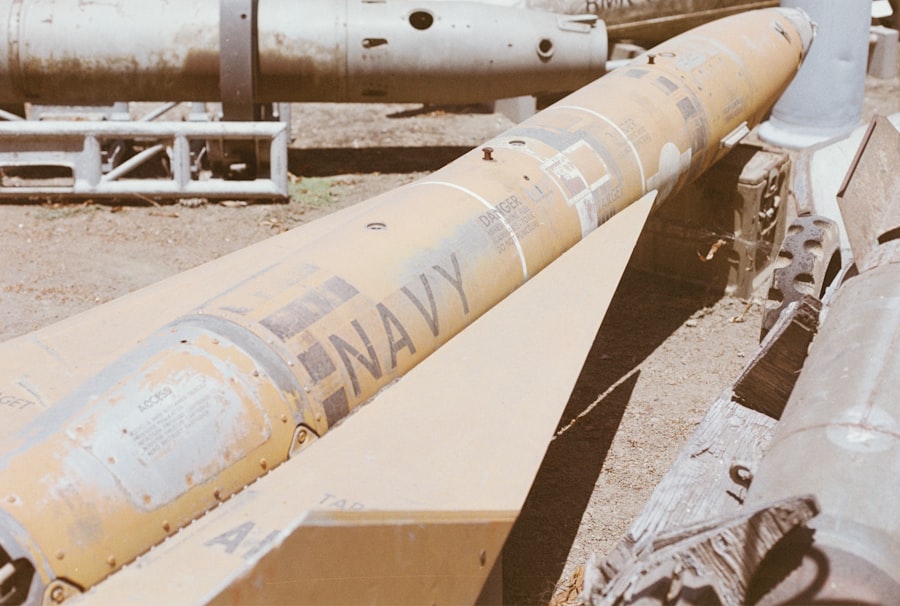
The B-59 nuclear torpedo was a type of nuclear weapon developed by the Soviet Union during the Cold War. It was designed to be launched from submarines and had the capability to cause massive destruction.
What was the recent decision regarding the B-59 nuclear torpedo?
The recent decision regarding the B-59 nuclear torpedo involved the declassification of information about an incident in 1962, where a Soviet submarine armed with the B-59 nuclear torpedo came close to launching it during the Cuban Missile Crisis.
Why was the B-59 nuclear torpedo declassified?
The declassification of information about the B-59 nuclear torpedo was aimed at shedding light on the events of the Cuban Missile Crisis and providing a better understanding of the risks and tensions that existed during that time.
What impact did the B-59 nuclear torpedo have on the Cuban Missile Crisis?
The presence of the B-59 nuclear torpedo on the Soviet submarine during the Cuban Missile Crisis heightened the already tense situation and brought the world to the brink of nuclear war. The declassification of this information has provided insight into the gravity of the situation at that time.
What are the implications of the B-59 nuclear torpedo decision?
The decision to declassify information about the B-59 nuclear torpedo serves as a reminder of the dangers of nuclear weapons and the importance of diplomatic efforts to prevent similar crises in the future. It also highlights the need for transparency and understanding of historical events for the sake of global security.