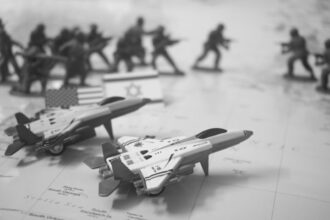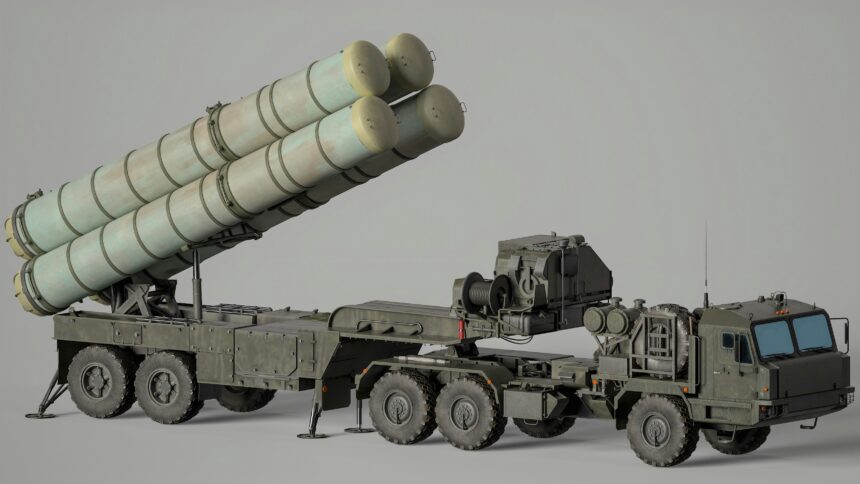
Defense technology, a vast and ever-evolving field, represents the cutting edge of human ingenuity, applied with a singular focus: national security. From the intricate workings of a missile guidance system to the sophisticated algorithms powering an unmanned aerial vehicle, defense technology is a complex tapestry woven from scientific innovation, engineering prowess, and strategic thinking. Understanding how these technologies function is not merely an academic exercise; it offers crucial insight into the geopolitical landscape, the challenges faced by military forces, and the very future of conflict and deterrence. This exploration delves into the fundamental principles and diverse applications that define modern defense technology, dissecting its core components and illuminating the ongoing advancements that shape our world.
At its heart, defense technology is built upon several interconnected pillars, each representing a significant area of research, development, and deployment. These domains, while distinct in their immediate application, often converge and synergize to create layered and highly effective defense systems. Understanding these foundational areas provides a framework for appreciating the broader spectrum of defense capabilities.
Information and Cyber Warfare
The battlefield of the 21st century extends far beyond physical territories and into the digital realm. Information and cyber warfare technologies are designed to manipulate, disrupt, and control information systems, both offensively and defensively. This encompasses a broad range of capabilities aimed at gaining an information advantage, degrading an adversary’s ability to function, or protecting one’s own critical infrastructure.
Intelligence, Surveillance, and Reconnaissance (ISR)
ISR systems are the eyes and ears of modern military operations. They are designed to collect, process, and disseminate information about potential threats, enemy movements, and the operational environment. The goal is to provide commanders with accurate and timely intelligence, enabling informed decision-making and strategic advantage.
Satellite-Based ISR
Satellites orbit the Earth, providing persistent observation capabilities. They are equipped with a variety of sensors, including optical cameras for high-resolution imagery, infrared sensors for detecting heat signatures, and radar systems that can penetrate clouds and darkness. These satellites allow for global surveillance, tracking of military assets, and monitoring of strategic locations without the need for proximity.
Unmanned Aerial Vehicles (UAVs) / Drones
UAVs, commonly known as drones, have revolutionized ISR. These remotely piloted or autonomous aircraft can loiter over an area for extended periods, gathering real-time video, imagery, and other sensor data. Their adaptability ranges from small, tactical drones for battlefield reconnaissance to large, strategic platforms capable of long-endurance missions.
Ground-Based Sensors and Human Intelligence
While advanced technologies dominate ISR, traditional methods remain vital. Ground sensors, such as seismic detectors and acoustic monitors, can detect enemy movements. Human intelligence, gathered through espionage and covert operations, provides invaluable insights that cannot be obtained through technological means alone.
Cyber Operations
Cyber operations focus on exploiting vulnerabilities in computer networks and digital systems. This can include activities such as hacking into enemy command and control systems, disrupting communication networks, or stealing sensitive data. Defensively, cyber operations focus on hardening networks, detecting and responding to intrusions, and restoring systems after an attack.
Network Exploitation and Intrusion
This involves identifying and exploiting weaknesses in an adversary’s computer networks. Techniques can range from sophisticated malware to social engineering to gain unauthorized access. The goal can be to disrupt operations, steal data, or establish a persistent presence within the target network.
Defensive Cyber Security
This encompasses the measures taken to protect systems from cyber threats. It includes implementing firewalls, intrusion detection systems, encryption, and regular security audits. Proactive measures, such as vulnerability assessments and penetration testing, are crucial in identifying and mitigating potential weaknesses before they can be exploited.
Information Warfare and Psychological Operations
Beyond direct cyber attacks, information warfare involves the manipulation of information to influence perceptions and decision-making. This can include disseminating propaganda, creating disinformation campaigns, or using social media to sow discord. Psychological operations (PSYOPS) are specifically designed to influence the emotions, motives, and behavior of target audiences.
For those interested in a deeper understanding of defense technology, a related article can be found at this link: Defense Technology Explained. This article delves into the latest advancements in military technology, exploring how innovations are shaping modern warfare and enhancing national security. It provides valuable insights into the strategic implications of these technologies and their potential impact on future conflicts.
Weapons Systems and Munitions
The delivery of force is a fundamental aspect of defense, and modern weapons systems have evolved dramatically in terms of precision, range, and lethality. The development of advanced munitions is driven by a desire to achieve tactical objectives with minimal collateral damage and maximum effectiveness.
Guided Munitions
Guided munitions represent a significant leap forward in accuracy. Unlike unguided bombs or missiles, these weapons incorporate systems that allow them to track and home in on their targets, greatly increasing the probability of a successful strike.
GPS/INS Guided Bombs
These bombs utilize Global Positioning System (GPS) receivers to determine their location and Inertial Navigation Systems (INS) to track their trajectory. This allows for precision strikes from high altitudes, reducing the risk to aircrews and increasing accuracy even in adverse weather conditions.
Laser-Guided Missiles and Bombs
Laser-guided munitions are designed to be guided by a laser designator. This can be a ground-based operator, another aircraft, or even a self-contained laser seeker on the munition itself. The target is illuminated with a laser, and the munition’s seeker locks onto the reflected beam, steering it directly to the target.
Infrared (IR) Guided Missiles
These missiles use infrared sensors to detect the heat signature of their target, typically an aircraft’s engine exhaust. They are often used as air-to-air or surface-to-air missiles and are effective against heat-emitting targets.
Ballistic and Cruise Missiles
These represent distinct classes of long-range projectile weapons, each with its own operational profile and technological underpinnings.
Ballistic Missiles
Ballistic missiles follow a parabolic trajectory after being propelled into space by rocket boosters. Once the boosters are expended, the missile travels under the influence of gravity and atmospheric drag. Intercontinental ballistic missiles (ICBMs) are capable of reaching targets across continents.
Cruise Missiles
Cruise missiles are powered, unpowered, or jet-propelled aircraft that are guided through flight, often at low altitudes to evade radar detection. They are typically smaller than ballistic missiles and can carry a variety of payloads, including conventional or nuclear warheads. Their ability to navigate terrain makes them highly adaptable for tactical and strategic roles.
In exploring the advancements in defense technology, one can gain valuable insights from a related article that delves into the latest innovations shaping modern warfare. This comprehensive piece highlights the integration of artificial intelligence and robotics in military applications, showcasing how these technologies are revolutionizing defense strategies. For a deeper understanding, you can read more about these developments in the article available at In the War Room.
Directed Energy Weapons (DEWs)
DEWs, such as lasers and high-powered microwaves, represent a fundamentally different approach to warfare. Instead of delivering a kinetic payload, they deliver energy to damage or disable targets.
Lasers
High-energy lasers can be used to damage or destroy targets such as drones, missiles, or even enemy vehicles. Their precision and speed make them highly attractive for defensive applications.
High-Powered Microwaves (HPM)
HPM weapons generate intense bursts of microwave radiation that can disrupt or destroy electronic systems. This makes them particularly effective against enemy radar, communications, and computer networks.
Aerospace and Naval Technologies
The projection of power across vast distances relies heavily on advanced aerospace and naval platforms. These technologies are designed for mobility, survivability, and the ability to conduct a wide range of missions, from reconnaissance and transport to offensive operations.
Advanced Aircraft Design
Aircraft design is a constant pursuit of greater speed, efficiency, stealth, and payload capacity.
Stealth Technology
Stealth aircraft are designed to reduce their radar cross-section, making them difficult to detect by enemy radar systems. This is achieved through a combination of specific shapes, radar-absorbent materials, and internal weapon bays.
Supersonic and Hypersonic Flight
Supersonic aircraft fly faster than the speed of sound, while hypersonic aircraft travel at speeds exceeding Mach 5. These capabilities enable rapid deployment and engagement, shortening the time between threat detection and response.
Unmanned Aerial Systems (UAS)
Beyond their ISR role, UAS are increasingly being developed for combat, transport, and other operational duties, reducing the risk to human pilots.
Naval Vessels and Submarines
Modern naval power is characterized by sophisticated vessels capable of operating in diverse environments and conducting a multitude of missions.
Aircraft Carriers
These are mobile airbases that project air power anywhere in the world. Their ability to launch and recover aircraft makes them a cornerstone of naval strategy.
Submarines
Submarines offer a unique advantage of stealth and surprise. They can conduct intelligence gathering, patrol strategic waterways, and launch missiles, often undetected. Modern submarines are increasingly equipped with advanced sonar systems and quieter propulsion.
Unmanned Maritime Systems (UMS)
Similar to UAS, UMS are emerging as a force multiplier for navies, capable of mine countermeasures, anti-submarine warfare, and intelligence gathering without risking human lives.
Emerging Technologies and Future Trends
The landscape of defense technology is in constant flux, with research and development actively pursuing next-generation capabilities that promise to reshape the future of warfare.
Artificial Intelligence (AI) and Machine Learning (ML)
AI and ML are poised to revolutionize many aspects of defense technology. From autonomous systems to advanced data analysis, these technologies offer the potential for enhanced decision-making and operational efficiency.
Autonomous Systems
AI is enabling the development of autonomous vehicles, both in the air and on the sea, that can operate independently of human control. This ranges from autonomous drones for reconnaissance to self-driving military vehicles.
AI-Powered Data Analysis
The sheer volume of data generated by modern sensors can be overwhelming. AI and ML algorithms can process this data at speeds and scales unimaginable for humans, identifying patterns, predicting threats, and optimizing resource allocation.
AI in Command and Control
AI can assist commanders in making faster and more informed decisions by analyzing complex battlefield situations, recommending courses of action, and managing vast logistical networks.
Quantum Technologies
Quantum computing and quantum sensing hold the potential for radical advancements in areas such as cryptography, sensor technology, and a new generation of secure communication networks.
Quantum Computing for Cryptography
Quantum computers, once fully developed, could break many of the encryption methods currently used to secure sensitive data. This has led to a race to develop quantum-resistant encryption.
Quantum Sensing
Quantum sensors offer unprecedented levels of sensitivity and precision, which could revolutionize everything from navigation and detection to early warning systems for advanced threats.
Biotechnology and Advanced Materials
The application of biological principles and the development of novel materials are also opening new frontiers in defense.
Biometrics for Identification and Security
Biometric technologies, such as fingerprint and facial recognition, are becoming increasingly important for secure access and troop identification.
Advanced Composites and Smart Materials
The development of lightweight, high-strength composite materials can improve the performance and survivability of vehicles and equipment. Smart materials that can change properties in response to stimuli are also being explored for applications like self-healing armor.
Understanding defense technology is an ongoing journey. As new innovations emerge and existing ones mature, the nature of security and conflict continues to transform. The complexities and advancements within this field underscore the critical importance of continuous research, ethical consideration, and strategic adaptation in navigating the ever-evolving global security landscape.

China’s Invisible Chokehold on Modern Weapons
FAQs
What is defense technology?
Defense technology refers to the tools, equipment, and systems used to protect a country’s security and interests. This can include weapons, surveillance systems, communication devices, and other advanced technologies designed for military use.
How does defense technology work?
Defense technology works by utilizing advanced scientific and engineering principles to develop tools and systems that enhance a country’s defense capabilities. This can involve the use of cutting-edge materials, electronics, and software to create weapons, vehicles, and communication networks that are more effective and efficient.
What are some examples of defense technology?
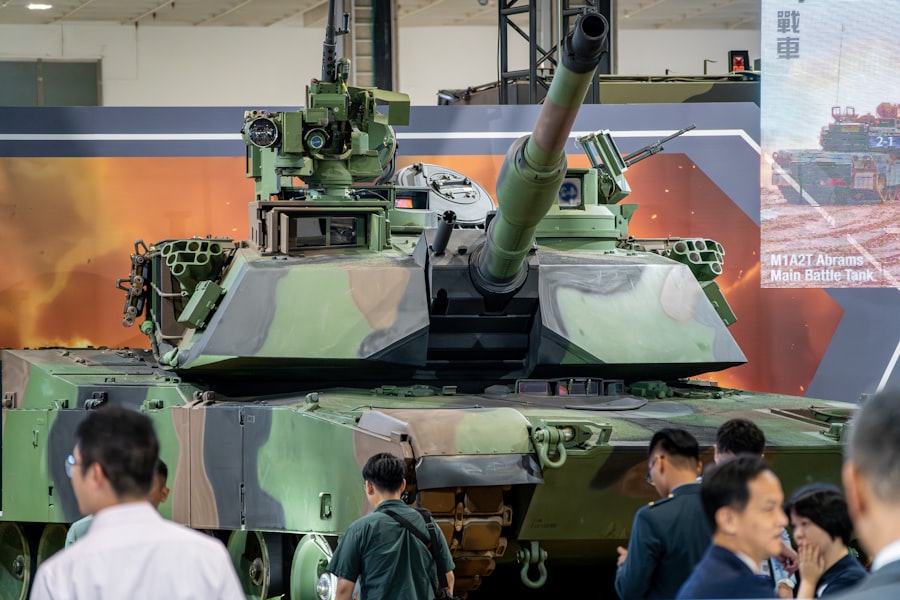
Examples of defense technology include military aircraft, missiles, drones, radar systems, cyber security tools, and advanced weaponry such as tanks and submarines. Additionally, communication systems, encryption technology, and surveillance equipment are also key components of defense technology.
How is defense technology developed and tested?
Defense technology is developed through a combination of research, development, and testing. This often involves collaboration between government agencies, military branches, and private defense contractors. Testing can take place in controlled environments, such as laboratories and testing facilities, as well as in real-world scenarios during military exercises and training.
What are the implications of defense technology?
The implications of defense technology are far-reaching, impacting national security, international relations, and global stability. While defense technology can enhance a country’s ability to protect itself, it also raises ethical and strategic considerations, including the potential for arms races, proliferation of weapons, and the impact on civilian populations during conflicts.