The scent of old paper and the hushed reverence of family lore often form the bedrock of personal histories. For many, genealogical research begins with these inherited narratives, a tapestry woven from photographs, letters, and whispered anecdotes. Yet, sometimes these threads lead to dead ends, to unanswered questions that linger like shadows. It is in these moments of familial enigma, particularly those shrouded by the vastness and tragedy of World War II, that the burgeoning field of genetic genealogy offers a revolutionary key, unlocking secrets that time and circumstance had otherwise sealed away. This is the story of how DNA, that fundamental building block of life, can become a detective, piecing together fragments of a past that might otherwise remain forever lost.
The Unfolding of a Post-War Puzzle
The post-war era was a time of rebuilding, not just of cities and economies, but also of families fractured by conflict. For generations, the story of one particular family centered around a shadowy figure: a paternal great-uncle who had disappeared during the war. His name was Arthur, and he was an enigma. Family whispers spoke of his courage, his patriotic fervor, and then, a stark silence. No letters from the front, no final resting place identified, no official confirmation of his fate. He simply vanished into the maelstrom of World War II. His brother, the family’s patriarch, carried this burden of uncertainty for decades, a quiet ache that permeated family gatherings. The official records offered little solace, the chaos of war obscuring individual fates. Birth certificates, marriage licenses, and census data could trace lineages forward, but the missing link, Arthur, remained a ghost in their collective memory. The family had scoured archives, consulted historical societies, and even attempted to petition military branches for information, all to no avail. The narrative remained incomplete, a poignant chapter left unwritten. It was this gnawing absence, this unanswered question that echoed through the generations, that ultimately prompted a new approach to his discovery. The traditional methods had been exhausted, and the family was left with a legacy of unanswered questions.
The Inheritance of Uncertainty
The uncertainty surrounding Arthur’s disappearance wasn’t merely an abstract historical footnote; it was a palpable presence within the family. His brother, the grandfather of the individual embarking on this genetic journey, often spoke of Arthur with a mixture of pride and profound sorrow. He recalled their childhood, their shared dreams, and the patriotic fervor that led Arthur to enlist. The official notification of his being “missing in action” was a devastating blow, a phrase that offered no closure, only a lingering hope that was slowly, painstakingly, extinguished. This uncertainty created a void, a missing piece of their shared identity that the family felt acutely. The absence of a definitive story, of a gravesite to visit, or even a final letter to cherish, left a wound that never truly healed. This emotional inheritance of unresolved grief and unanswered questions was passed down, a subtle but persistent undercurrent in the family’s collective consciousness. It was a story that was never fully told, a narrative that felt incomplete and frustratingly out of reach. The desire to fill this void, to provide a definitive ending to Arthur’s story, became a quiet ambition.
The Limits of Conventional Research
For years, family members had meticulously followed the well-trodden paths of genealogical research. They had painstakingly compiled birth and death certificates, traced marriage records, and meticulously documented ancestral homes. They had interviewed elderly relatives, piecing together oral histories, and poured over old family Bibles. They had even delved into public archives, hoping to find a clue in military records or historical accounts of the war. However, the sheer scale of World War II, with its millions of casualties and the widespread disruption of records, presented an insurmountable barrier. Arthur’s unit had been involved in intense fighting, and the immediate aftermath of the conflict had been characterized by chaos and displacement. Many records were lost, destroyed, or simply never created. The information available was fragmented, contradictory, or non-existent. Each dead end only amplified the frustration, solidifying the sense that Arthur’s fate was a mystery destined to remain unsolved through traditional means. The brick walls of historical research seemed insurmountable, leaving the family to grapple with a perpetual sense of incompleteness.
In exploring the fascinating intersection of genetic genealogy and World War II family mysteries, one can find intriguing insights in the article available at this link. The piece delves into how advancements in DNA testing have helped individuals uncover hidden family connections and solve long-standing questions about their ancestry, particularly in the context of the tumultuous events of the war. By tracing lineage and employing genetic tools, many have been able to piece together their family histories, revealing stories of bravery, loss, and resilience that have shaped their identities today.
The Genetic Revelation: A New Avenue

The advent of direct-to-consumer genetic testing promised a new horizon for genealogical exploration. Initially, the idea was to simply explore ethnic origins and discover distant relatives. However, as the technology advanced and the databases grew, a more profound application emerged: the ability to connect with unknown branches of the family tree, uncovering individuals whose existence was previously unknown. This was precisely the breakthrough that was needed to address the mystery of Arthur. The individual spearheading the research, a descendant of Arthur’s brother, decided to embark on a DNA journey, not with the expectation of finding Arthur directly, but with the hope of finding someone who might share a direct paternal line with him. This was a calculated gamble, a scientific endeavor aimed at illuminating a deeply personal historical enigma. The vastness of the DNA databases held the potential to bridge gaps that traditional research could not span, offering a unique opportunity to connect with individuals who might hold the missing pieces of the family puzzle.
Unraveling the Y-Chromosome
The key to tracing Arthur’s paternal lineage lay in the Y-chromosome. Unlike other chromosomes, which are inherited from both parents, the Y-chromosome is passed down almost exclusively from father to son. This made it the ideal tool for tracing a direct male line. By taking a Y-DNA test, the individual could compare their Y-chromosome to others in the database. If a close Y-DNA match was found, it would indicate a shared paternal ancestor. The hope was that this ancestor would be Arthur, or a direct male descendant of Arthur’s father, thereby establishing a genetic link to Arthur’s branch of the family tree. This scientific approach offered a tangible way to circumvent the limitations of historical records, relying instead on the immutable code of genetics to guide the investigation. The Y-chromosome became the beacon, a specific genetic marker that could illuminate the path to Arthur.
The Waiting Game and the First Sparks
The process of genetic genealogy involves a period of waiting. After submitting DNA samples, it takes time for the laboratories to process the results and for the algorithms to identify potential matches. During this period, the anticipation was palpable. The individual meticulously researched the potential matches that began to appear in their genetic genealogy account. Many were distant cousins, offering fascinating insights into other branches of the family tree, but none immediately offered a clear connection to Arthur. Then, a significant match appeared. A man, living across the ocean, shared a remarkably close Y-DNA signature. This was more than a mere coincidence; it was a strong indicator of a shared paternal ancestor. The excitement was immense, a surge of hope that had been absent for decades. This was the first tangible clue, a spark that illuminated the possibility of finally uncovering the truth about Arthur. The shared Y-chromosome was the scientific equivalent of finding a lost map.
Collaborative Detective Work Across Continents

The discovery of a significant Y-DNA match marked the beginning of a remarkable collaboration. The individual initiated contact with their newly discovered genetic cousin, introducing themselves and explaining the family mystery they were trying to solve. The response was enthusiastic and supportive. This genetic cousin, it turned out, had also been conducting his own genealogical research, driven by a similar curiosity about his paternal ancestors. He shared his own family tree, which, while not directly referencing Arthur, contained surnames and geographic locations that resonated with the family’s historical knowledge. The two embarked on a joint investigation, combining their respective genealogical skills and their shared genetic data. This transatlantic partnership, forged through the shared language of DNA, proved to be an invaluable asset in unraveling the mystery. They were no longer working in isolation; they were a team, united by a common goal.
Genetic genealogy has become an invaluable tool for unraveling family mysteries, especially for those with connections to World War II. Many individuals are discovering long-lost relatives and uncovering hidden stories from the past through DNA testing. For instance, an intriguing article on this topic can be found at In The War Room, where readers can explore how genetic testing is helping families piece together their histories and understand their heritage in the context of the war. This innovative approach not only sheds light on personal narratives but also contributes to the broader understanding of the impact of WWII on families across generations.
Bridging Geographical and Historical Divides
The initial challenge was to bridge the geographical distance. With the genetic cousin living in another country, direct meetings were impossible. However, the digital age facilitated constant communication. They exchanged emails, shared documents, and conducted video calls, meticulously piecing together their family histories. They discovered that their shared paternal ancestors had emigrated from the same region in Europe decades before World War II. This geographic convergence was a significant clue, suggesting that their common ancestor likely lived in that area. The genetic cousin’s family records provided a more detailed history of their branch, including information about a male ancestor who had served in a military capacity during the war. This was a crucial piece of the puzzle, a potential link to Arthur’s wartime experience. The shared ancestry, coupled with the geographical and historical connections, began to paint a clearer picture.
Decoding the Family Tree
Through their collaborative efforts, they began to construct a more comprehensive family tree, extending both branches back in time. The genetic cousin’s research unearthed a name that sent a jolt of recognition through the original family: the name of Arthur’s paternal grandfather. This was a major breakthrough. It confirmed that their shared Y-DNA match was indeed on the correct paternal line, connecting them directly to Arthur’s direct male ancestor. From there, they meticulously worked their way forward, tracing the lineage down to the genetic cousin and the original family’s paternal line, which would have diverged with Arthur’s father and his brother. The pieces were finally falling into place, not through dusty archives alone, but through a dynamic interplay of genetic evidence and genealogical detective work. The Y-chromosome had led them to the right family branch, and then the shared genealogical knowledge began to fill in the narrative.
The Elusive Fate of Arthur Revealed
With the established genetic and genealogical connection, the focus shifted to Arthur’s specific fate. Armed with the knowledge of their shared paternal lineage, the genetic cousin shared more
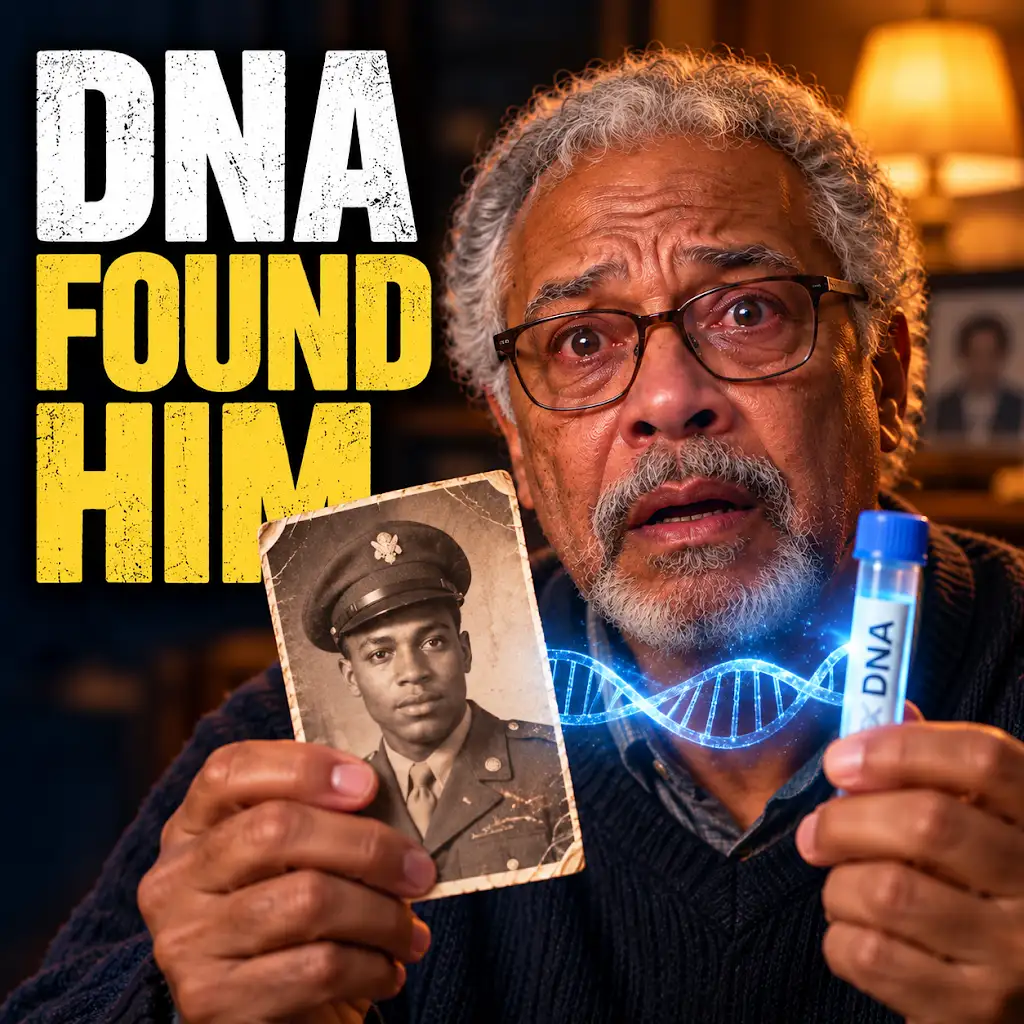
His WWII GI Father Was a Mystery for Nearly 80 Years
FAQs
What is genetic genealogy?
Genetic genealogy is the use of DNA testing in combination with traditional genealogical and historical records to infer relationships between individuals.
How can genetic genealogy help solve WWII family mysteries?
Genetic genealogy can help identify unknown relatives, confirm relationships, and uncover family secrets by comparing DNA results with others in a database to find potential matches.
What are some common DNA testing companies used for genetic genealogy?
Popular DNA testing companies for genetic genealogy include AncestryDNA, 23andMe, MyHeritage, and FamilyTreeDNA.
Can genetic genealogy be used to trace ancestry back to WWII veterans?
Yes, genetic genealogy can be used to trace ancestry back to WWII veterans by identifying living relatives who share DNA with the veteran and exploring their family trees.
Are there any privacy concerns with genetic genealogy testing?
There are privacy concerns with genetic genealogy testing, as individuals may uncover unexpected family secrets or sensitive information. It is important to carefully consider the implications before taking a DNA test.