The annals of history are often marked by pivotal moments, events that irrevocably alter the course of nations and the global landscape. For the United States in the Pacific theater of World War II, two such cataclysms stand out: the surprise attack on Pearl Harbor on December 7, 1941, and the Battle of Midway, fought from June 4-7, 1942. While seemingly distinct in their immediate impacts – one a devastating blow, the other a decisive victory – a deeper examination reveals a profound and intricate connection between these two battles. Pearl Harbor, the unprovoked assault that plunged America into war, directly sowed the seeds of the eventual triumph at Midway. The latter was not merely a separate engagement but the direct consequence, the strategic response, and ultimately, the retribution for the wounds inflicted at Pearl Harbor.
The Shockwaves of Pearl Harbor: A Nation Awakened
The morning of December 7, 1941, dawned bright and clear over the Hawaiian Islands, a deceptive tranquility shattered by the roar of Japanese aircraft. The Imperial Japanese Navy, seeking to cripple the U.S. Pacific Fleet and neutralize American power in the Pacific, launched a meticulously planned surprise attack on the naval base at Pearl Harbor. The devastation was immense. Battleships, the pride of the American navy, lay sunk or heavily damaged. Hundreds of aircraft were destroyed on the ground. The human cost was staggering, with over 2,400 Americans killed and more than a thousand wounded.
The immediate aftermath of Pearl Harbor was a mixture of shock, grief, and unadulterated fury that swept across the United States. The nation, which had largely remained isolationist and hesitant to engage in the growing global conflict, was galvanized into action. President Franklin D. Roosevelt famously declared December 7th “a date which will live in infamy,” and the United States formally declared war on Japan the following day. The strategic objective of the Japanese, to paralyze American naval power and gain freedom of action in Southeast Asia and the Pacific, was undeniably achieved in the short term. However, their miscalculation lay in underestimating the resolve and resilience of the American spirit.
The Strategic Aims of the Japanese Attack
- Neutralizing the U.S. Pacific Fleet: The primary goal was to eliminate the U.S. Pacific Fleet as a credible threat to Japan’s planned expansionist campaign in Southeast Asia and the Pacific Islands.
- Securing Resource-Rich Territories: Japan’s ambition was fueled by a need for vital resources like oil and rubber, abundant in regions then controlled by Western powers. A swift incapacitation of the U.S. fleet would allow Japan to seize these territories unhindered.
- Demoralizing the American Public and Government: The Japanese high command believed a swift and devastating blow would shatter American morale, leading to a negotiated peace favorable to Japan, thereby avoiding a protracted and costly war.
- Preemptive Strike Against Potential U.S. Intervention: Japan recognized the growing U.S. naval strength and feared that American involvement would ultimately thwart their imperial ambitions.
The Immediate Consequences for the United States
- Declaration of War: The attack directly led to the U.S. entering World War II, fundamentally altering the global balance of power.
- National Unity and Mobilization: Pearl Harbor fostered an unprecedented sense of national unity and a massive mobilization of industrial and human resources for the war effort.
- Loss of Naval Dominance in the Pacific: The immediate absence of a significant portion of the U.S. Pacific Fleet created a vacuum that Japan sought to exploit.
- Psychological Impact: The shock and trauma of the attack deeply affected the American psyche, fueling a desire for retribution.
The connection between the attacks on Pearl Harbor and the Battle of Midway is a pivotal chapter in World War II history, illustrating the shift in naval power in the Pacific Theater. For a deeper understanding of how these events are interlinked and their impact on the course of the war, you can explore this insightful article: Pearl Harbor and Midway: A Strategic Turning Point. This resource delves into the strategies employed by both the United States and Japan, highlighting the lessons learned from these significant battles.
The Intervening Months: A Shadow of Defeat and a Forge of Resilience
The months following Pearl Harbor were a grim period for the Allied forces in the Pacific. Japan, emboldened by its initial success, rapidly expanded its territorial control, capturing the Philippines, Singapore, and numerous other islands. The U.S. Navy, severely depleted, struggled to mount a coherent defense. However, within this period of apparent Japanese dominance, a crucial transformation was occurring within the American military and industrial complex.
The damage at Pearl Harbor, while significant, was not irreparable in the long run. Crucially, the Japanese attack missed the American aircraft carriers, which were at sea at the time. These carriers, along with submarines and land-based aircraft, became the backbone of America’s nascent Pacific offensive. The U.S. industrial might, spurred by the wartime imperative, began to churn out new ships, aircraft, and weapons at an astonishing rate, a stark contrast to Japan’s more limited industrial capacity. Furthermore, the intelligence war was intensifying. American cryptanalysts worked tirelessly to break Japanese naval codes, a task that would prove instrumental in the lead-up to Midway.
The Strategic Vacuum and Japanese Expansion
- Rapid Conquests: Japan capitalized on the weakened U.S. Pacific Fleet to achieve a string of rapid victories across the Pacific and Southeast Asia.
- Consolidation of Gains: The initial Japanese strategy focused on establishing a defensive perimeter, securing strategically important islands and resource-rich territories.
- Underestimation of American Recovery: Japanese strategists underestimated the speed and scale of American industrial recovery and its ability to project power across the vast Pacific.
The U.S. Response: A Race Against Time
- Naval Rebuilding: Despite the losses, U.S. shipyards worked around the clock to repair damaged vessels and construct new ones, with a particular focus on aircraft carriers.
- Intelligence Gathering: The critical work of code-breaking, particularly by Station Hypo under Commander Joseph Rochefort, began to yield vital insights into Japanese intentions.
- Hit-and-Run Raids: Early American naval actions, such as the Doolittle Raid on Tokyo in April 1942, while militarily minor, provided a significant morale boost and demonstrated American resolve.
- Strategic Defense: The focus shifted to holding key defensive positions and preventing further Japanese advances while the offensive capability was rebuilt.
The Intelligence Breakthrough: Unlocking the Japanese Code
The connection between Pearl Harbor and Midway is perhaps most vividly illustrated by the role of intelligence. The Japanese, confident in the security of their communications, used sophisticated codes. However, American cryptanalysts, particularly the dedicated team at Station Hypo in Pearl Harbor, worked tirelessly to decipher these codes. Their efforts were driven by the burning desire to prevent another devastating surprise attack and to find an opportunity to strike back.
The breakthrough came in the weeks and months leading up to Midway. By cracking the JN-25 code, the U.S. Navy gained invaluable insight into the Imperial Japanese Navy’s plans, including the specific target and approximate timing of their next major offensive. This intelligence revealed that the Japanese intended to launch a decisive strike against the U.S. naval base at Midway Atoll. This knowledge was a game-changer, transforming a potentially overwhelming Japanese offensive into a carefully orchestrated American ambush. The intelligence gained was a direct consequence of the need to understand and counter the enemy that had so brutally attacked Pearl Harbor.
The JN-25 Code: A Cryptographic Battlefield
- The Cipher Itself: JN-25 was a complex system employing a combination of book cipher and a one-time pad, making it difficult to break.
- The Codebreakers: Teams of dedicated cryptanalysts, working under immense pressure, dedicated themselves to deciphering the intercepted messages.
- The Station Hypo Team: Led by Commander Joseph Rochefort, this Pearl Harbor-based unit played a pivotal role in breaking the code and providing actionable intelligence.
The Impact of Deciphered Communications
- Foreknowledge of Japanese Intentions: The ability to read Japanese communications provided the U.S. with crucial information about their operational plans, fleet movements, and objectives.
- Identifying the Midway Target: The most significant intelligence gain was the confirmation that Midway Atoll was the primary target of the upcoming Japanese offensive.
- Strategic Advantage: This foreknowledge allowed the U.S. to concentrate its limited naval forces, particularly its aircraft carriers, for an ambush.
The Battle of Midway: A Tactical Masterpiece Born from the Ashes
The Battle of Midway was more than just a naval engagement; it was a testament to the resilience, ingenuity, and courage forged in the crucible of defeat. Armed with crucial intelligence, Admiral Chester W. Nimitz, Commander-in-Chief of the U.S. Pacific Fleet, assembled his remaining carriers and aircraft for a daring counteroffensive. The plan was audacious: to lure the Japanese fleet into a trap at Midway and strike them before they could fully engage the island’s defenses.
The ensuing battle was a brutal and fast-paced affair. American dive bombers, launched from the carriers USS Enterprise, USS Hornet, and USS Yorktown (which had been heavily damaged at the Battle of the Coral Sea but was miraculously repaired), proved to be the decisive weapon. In a series of devastating strikes, they caught the Japanese carriers at their most vulnerable – rearming and refueling their aircraft. Within a matter of hours, four of Japan’s most powerful aircraft carriers – Akagi, Kaga, Soryu, and Hiryu – were sunk, a catastrophic loss from which the Imperial Japanese Navy would never fully recover. The battle was a turning point, not just militarily, but psychologically. It demonstrated that Japan was not invincible and that the tide of war in the Pacific was beginning to turn.
The U.S. Strategy: Luring the Predator
- Concentration of Forces: Nimitz defied conventional wisdom by concentrating his limited carrier strength to defend Midway, knowing the element of surprise was paramount.
- Deception and Ambush: The U.S. fleet positioned itself northeast of Midway, out of Japanese reconnaissance range, to ambush the approaching Japanese forces.
- Exploiting Japanese Overconfidence: The Japanese, confident in their numerical superiority and past successes, launched a complex but ultimately dispersed attack plan.
The Decisive Air Strikes
- The Dive Bomber’s Triumph: American dive bombers, particularly those from USS Enterprise and USS Yorktown, delivered devastating blows to the Japanese carriers.
- Caught Unawares: The Japanese carriers were caught in a critical period of vulnerability as they prepared to launch their second strike, with aircraft and munitions exposed on their decks.
- The Loss of Four Carriers: The sinking of Akagi, Kaga, Soryu, and Hiryu represented a catastrophic loss of offensive power for Japan.
The connection between Pearl Harbor and the Battle of Midway is a pivotal chapter in World War II history, illustrating the shift in naval power in the Pacific. After the devastating attack on Pearl Harbor, the United States sought to turn the tide against Japan, culminating in the decisive victory at Midway. For a deeper understanding of these events and their implications, you can explore this insightful article that delves into the strategic maneuvers and outcomes of these battles. To read more, visit this link.
The Enduring Legacy: From Infamy to Victory
The Battle of Midway was the direct and most significant consequence of the attack on Pearl Harbor. The latter plunged the United States into a global conflict, forcing a fundamental re-evaluation of its strategic posture and a massive mobilization of its resources. The intelligence breakthroughs that enabled the victory at Midway were born out of the desperate need to understand and counter the threat that had so devastatingly struck Pearl Harbor. The loss of four vital Japanese aircraft carriers at Midway crippled the Imperial Japanese Navy’s offensive capabilities, effectively ending their unchecked expansion in the Pacific and paving the way for the eventual Allied victory.
Pearl Harbor represents the raw, emotional impetus for America’s entry into the war, a wound that demanded retribution. Midway, on the other hand, symbolizes the strategic brilliance, technological advancement, and unwavering resolve that ultimately delivered that retribution. The connection between these two battles is not merely chronological; it is one of cause and effect, of a nation’s awakening from shock to decisive action, of a devastating blow being answered by an even more potent counterstroke. The ashes of Pearl Harbor, in essence, fueled the fire of victory at Midway, forever linking these two monumental events in the narrative of World War II.
Midway as Retribution for Pearl Harbor
- A Direct Consequence: The entire Battle of Midway was a direct response to the aggression initiated at Pearl Harbor.
- Strategic Shift: The victory at Midway marked the end of Japanese naval dominance and the beginning of the American offensive.
- Psychological Rebalancing: Midway offered a much-needed psychological victory for the United States, demonstrating their ability to fight back and win against a seemingly invincible foe.
The Long-Term Impact on the Pacific War
- Crippling the Japanese Navy: The loss of experienced pilots and irreplaceable carriers at Midway severely hampered Japan’s ability to wage offensive warfare.
- Initiation of Island Hopping: The U.S. was now in a position to begin its long and arduous campaign of “island hopping” across the Pacific towards Japan.
- Turning the Tide: Midway is widely regarded as the turning point of the war in the Pacific, irrevocably shifting the momentum in favor of the Allies.
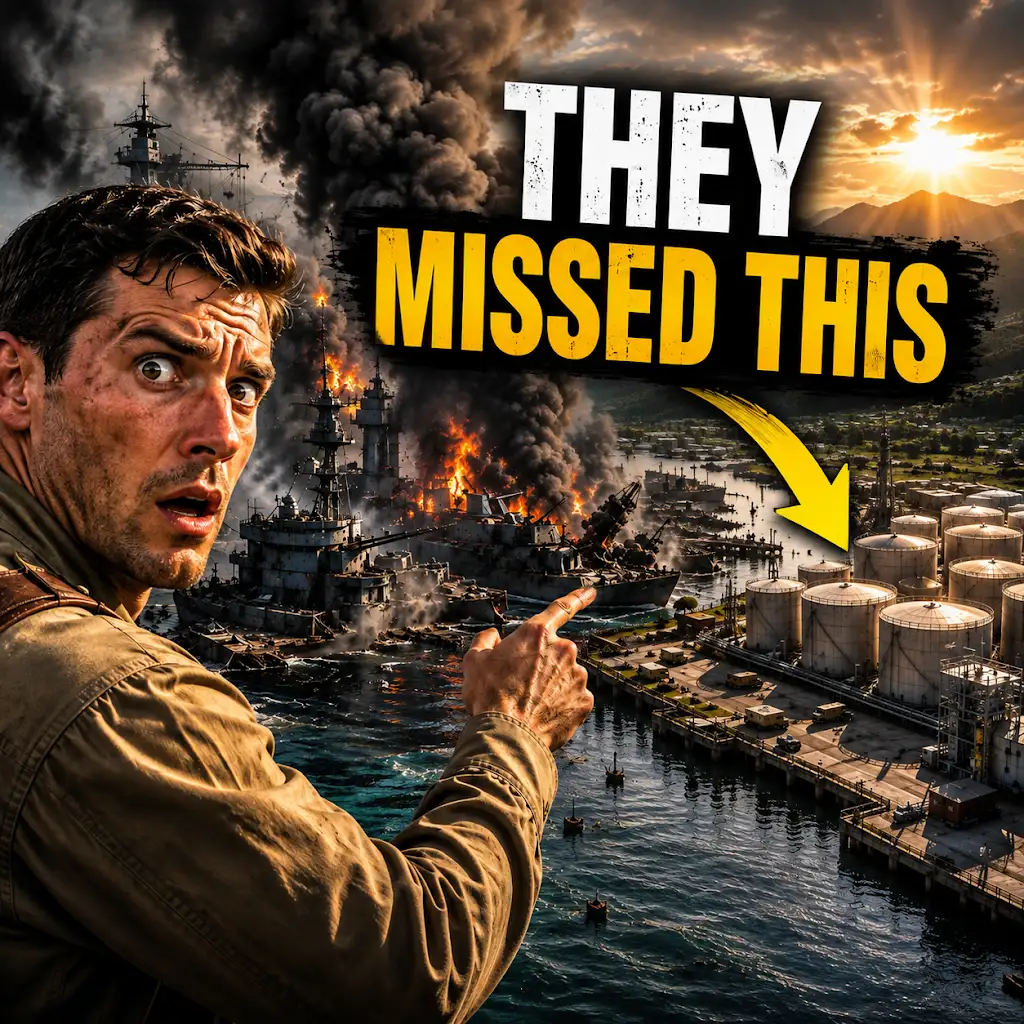
Japan Won Pearl Harbor—So Why Did It Lose the War?
FAQs

What is the connection between Pearl Harbor and Midway?
The connection between Pearl Harbor and Midway is that they were both significant battles in the Pacific theater of World War II. The attack on Pearl Harbor by the Japanese on December 7, 1941, led to the United States’ entry into the war. The Battle of Midway, which took place from June 4-7, 1942, was a turning point in the war, as the US Navy defeated the Japanese Navy and halted their expansion in the Pacific.
How did the events at Pearl Harbor lead to the Battle of Midway?
The attack on Pearl Harbor by the Japanese prompted the United States to fully commit to the war effort in the Pacific. This led to a strategic shift in the US military’s focus, and the Battle of Midway became a crucial opportunity to turn the tide against the Japanese and gain a strategic advantage in the Pacific.
What were the outcomes of the battles at Pearl Harbor and Midway?
The attack on Pearl Harbor resulted in significant damage to the US Pacific Fleet and the loss of over 2,400 American lives. However, it also galvanized the American public and military, leading to a determined effort to defeat the Japanese. The Battle of Midway resulted in a decisive victory for the United States, as they were able to destroy four Japanese aircraft carriers and gain the upper hand in the Pacific theater.
How did the events at Pearl Harbor and Midway impact the course of World War II?
The events at Pearl Harbor and Midway had a profound impact on the course of World War II. The attack on Pearl Harbor brought the United States into the war, while the Battle of Midway shifted the balance of power in the Pacific in favor of the Allies. These events marked a turning point in the war and ultimately contributed to the eventual defeat of the Axis powers.
What is the historical significance of the connection between Pearl Harbor and Midway?
The connection between Pearl Harbor and Midway is historically significant as it represents a critical period in World War II. The surprise attack on Pearl Harbor and the subsequent Battle of Midway shaped the course of the war in the Pacific and demonstrated the resilience and determination of the United States in the face of adversity. These events are remembered as pivotal moments in the history of the war and continue to be studied and commemorated for their impact on global history.