Korea, a land steeped in a rich and often turbulent history, is predominantly recognized for its recent economic prowess and its ongoing geopolitical complexities. However, beneath the surface of modern headlines and economic data lies a deep well of military achievements that have profoundly shaped its past and continue to resonate today. These are not always the battles that echo in global history books, nor the commanders whose names are universally known. Instead, they represent moments of remarkable strategic ingenuity, unwavering courage, and tenacious resilience that secured the peninsula’s survival and laid the groundwork for its future. Uncovering these hidden military triumphs reveals a narrative of a nation that, against formidable odds, has repeatedly defended its sovereignty and identity, forging a legacy of strength often overlooked.
The earliest chapters of Korean military history are not defined by grand empires but by the crucible of early state formation and defense. During the Bronze Age, nascent Korean societies faced the constant threat of nomadic incursions and inter-tribal conflict. It was in this challenging environment that fundamental principles of warfare and strategic thinking began to take root, laying the foundation for later military developments.
The Dawn of Organized Warfare: From Tribal Skirmishes to Proto-State Defense
The transition from scattered tribal communities to more organized polities necessitated the development of structured military responses. Evidence suggests a move from individualistic raiding to more coordinated defensive formations. This period saw the rise of fortified settlements, indicating a growing awareness of the need for collective security and the strategic placement of defenses to repel attackers.
Fortifications as a Strategic Asset
The construction of hill forts and earthworks, prevalent in this era, speaks volumes about the strategic priorities of early Korean societies. These were not merely defensive structures but integral to controlling territory and projecting power. Their locations were often chosen for their natural defensibility, maximizing the advantage of terrain and minimizing the need for extensive manpower. The development of such fortifications represented a significant leap in military organization and strategic planning.
The Evolving Role of Weaponry
While bronze weaponry was not unique to Korea, its effective deployment within organized units marked a strategic advancement. The ability to produce and distribute standardized bronze tools and weapons fostered a sense of unity and enabled more effective combat operations. The craftsmanship and distribution of these weapons can be seen as an early form of military industrial development, crucial for maintaining a defensive edge.
The Strategic Significance of Early Naval Capabilities
While much attention focuses on land-based defenses, early Korean societies also recognized the strategic importance of their maritime environment. The extensive coastline and numerous islands presented both opportunities and threats. The development of rudimentary naval capabilities allowed for coastal defense, trade protection, and potentially even offensive operations against sea-borne invaders.
Protecting Trade Routes and Coastal Settlements
The Yellow Sea and the East Sea were vital for early Korean economies. The ability to patrol these waters and protect merchant vessels was a critical strategic objective. Naval prowess, even in its nascent form, contributed to the economic stability and security of early Korean states.
The Threat of Maritime Incursions
Conversely, the seas also provided pathways for invaders. Early Korean rulers understood the need to counter potential threats from across the water, whether from neighboring mainland powers or maritime raiders. The development of naval forces was a direct response to this strategic imperative.
For those interested in exploring the lesser-known aspects of Korean military history, a fascinating article can be found at this link: In the War Room. This piece delves into the strategic maneuvers and pivotal battles that shaped Korea’s military landscape, highlighting events that often go unnoticed in mainstream historical narratives. By examining these overlooked moments, readers can gain a deeper understanding of Korea’s rich and complex military heritage.
The Three Kingdoms Period: A Crucible of Strategic Alliances and Defensive Innovations
The era of the Three Kingdoms – Goguryeo, Baekje, and Silla – stands as a pivotal period in Korean military history. Far from being mere internal squabbles, the conflicts and alliances between these kingdoms were characterized by sophisticated military strategies, innovative tactics, and the constant struggle for survival against powerful external forces, most notably China.
Goguryeo’s Mighty Army: The Northern Bulwark
Goguryeo, the northernmost kingdom, bore the brunt of invasions from Chinese dynasties. Its military success against these formidable adversaries was a testament to its strategic brilliance, disciplined soldiery, and effective use of terrain.
The Mountain Fortress Doctrine
Goguryeo’s primary defensive strategy revolved around its formidable mountain fortresses. These were not simply defensive positions but complex military ecosystems, designed to withstand prolonged sieges and launch counter-offensives. The strategic placement of these fortresses, often overlooking vital passes and river valleys, made them incredibly difficult to assault.
The Psychological and Tactical Advantage of High Ground
The tactical advantage of occupying high ground was masterfully exploited by Goguryeo. These fortresses provided excellent observation points, allowing for early detection of enemy movements. They also facilitated the use of gravity-based defensive measures, such as rockfalls and arrows, against attacking forces. The sheer difficulty of assaulting these positions often demoralized enemy armies.
Logistics and Self-Sufficiency within Fortresses
A key to the success of Goguryeo’s mountain fortresses was their capacity for self-sufficiency. They were designed to store large quantities of provisions and water, enabling them to endure long sieges. This strategic foresight allowed Goguryeo to outlast many invading armies that lacked the logistical capacity to maintain extended campaigns deep within enemy territory.
Elite Cavalry and Shock Tactics
Goguryeo was renowned for its elite cavalry, a force capable of devastating shock attacks. These horsemen, often heavily armored, were adept at maneuvering on rough terrain and executing swift, decisive assaults. Their effectiveness was crucial in breaking enemy formations and exploiting weaknesses during battles.
The “Ghostly Riders” of Goguryeo
Accounts of Goguryeo cavalry often refer to their speed and ferocity, earning them epithets like “ghostly riders.” Their ability to appear and disappear rapidly on the battlefield, disrupting enemy lines and sowing confusion, was a significant tactical advantage. This mobility allowed them to engage and disengage at will, dictating the terms of battle.
The Impact of Horse Breeding and Training
The effectiveness of Goguryeo’s cavalry was underpinned by a sophisticated system of horse breeding and training. A strong cavalry force required not only skilled riders but also sturdy, well-trained horses. Investment in these areas was a strategic imperative for Goguryeo’s military strength.
Silla’s Strategic Diplomacy and Defensive Prowess
Silla, initially the weakest of the three kingdoms, eventually rose to prominence through a combination of astute diplomacy, shrewd alliances, and a relentless focus on defensive strength. Their eventual unification of the peninsula is a testament to their long-term strategic vision.
The Hwabaek Council: A Unique Decision-Making Body
The Hwabaek council, a unique assembly of powerful nobles, played a crucial role in Silla’s decision-making process. While seemingly deliberative, its ability to reach consensus, particularly on matters of defense and foreign policy, provided a stability and strategic unity that was vital for Silla’s survival.
Consensus Building in Times of Crisis
In times of existential threat, the Hwabaek council’s ability to foster consensus was paramount. It allowed Silla to present a united front to external enemies and to mobilize its resources effectively without the crippling internal divisions that often plagued other states. This made Silla a formidable and predictable opponent.
Strategic Alliances as a Foreign Policy Cornerstone
Silla’s foreign policy was characterized by its skillful use of alliances, most notably with the Tang Dynasty of China. These alliances were not entered into lightly but were carefully calculated to achieve specific strategic objectives, primarily the weakening and eventual defeat of Goguryeo and Baekje.
The Rise of the Hwarang: Elite Warrior-Scholars
The Hwarang, a unique aristocratic youth group, played a significant role in Silla’s military and cultural development. These young men were trained in both martial arts and scholarly pursuits, embodying a holistic approach to leadership and service.
Martial Prowess and Unwavering Loyalty
The Hwarang were renowned for their exceptional martial skills, discipline, and unwavering loyalty to the Silla state. They served as elite shock troops, scouts, and diplomats, embodying the ideal of the warrior-scholar and inspiring loyalty throughout the kingdom.
The Hwarang’s Role in Unification Wars
During the unification wars, the Hwarang proved to be invaluable assets, leading critical battles and demonstrating exceptional bravery. Their influence extended beyond the battlefield, shaping the moral and ethical fabric of Silla society, which in turn fostered a strong sense of national identity and purpose.
Baekje’s Maritime Prowess and Diplomatic Engagements
Baekje, situated in the southwest, distinguished itself through its strong maritime capabilities and its extensive diplomatic and trade relations with Japan and China. This strategic orientation allowed it to carve out a unique niche and exert influence beyond the peninsula.
The Strategic Importance of the Han River Basin
Baekje’s control of the Han River basin provided it with fertile land and vital waterways for trade and military movement. This strategic heartland was crucial for its economic prosperity and its ability to project power in the region.
Controlling Trade Routes and Access to Resources
The Han River was a critical artery for both internal and external trade. Baekje’s dominance of this region allowed it to control access to vital resources and to facilitate the movement of goods and armies, contributing significantly to its economic and military strength.
Navigational Expertise and Early Naval Technology
Baekje developed sophisticated navigational skills and early naval technologies, allowing it to conduct extensive maritime trade and engage in naval warfare. Their ships were known for their seaworthiness and their capacity for carrying troops and supplies over long distances.
The Influence of Baekje Mariners on East Asian Seas
Baekje’s mariners were instrumental in facilitating cultural and technological exchange across East Asia. Their seafaring prowess contributed to the development of trade networks and naval strategies that influenced the maritime powers of the region.
The Goryeo Dynasty: Facing the Mongol Storm and the Birth of a Unified Identity

The Goryeo Dynasty (918–1392) faced one of the most significant military challenges in Korean history: the relentless Mongol invasions. The dynasty’s ability to resist the seemingly invincible Mongol Empire for decades, and its eventual adoption of Mongol customs and military innovations, profoundly shaped Korean identity and military doctrine.
The Ten-Year Resistance: A Testament to Korean Resilience
The Goryeo Dynasty’s protracted resistance against the Mongol Empire, which had conquered vast swathes of Asia and Europe, is a remarkable, often overlooked, military achievement. This decade-long struggle was not a tale of decisive victories but of dogged defiance, strategic attrition, and unwavering determination.
The Strategic Genius of General Kang Gam-chan
General Kang Gam-chan, a celebrated military leader of the Goryeo era, exemplified the strategic brilliance that characterized the Korean defense. His decisive victory at the Battle of Guiju in 1019 against the Khitan Liao Dynasty, while predating the full Mongol threat, demonstrated a sophisticated understanding of battlefield tactics and the use of terrain that would prove invaluable in later conflicts.
The Art of Deception and Strategic Retreat
Kang Gam-chan masterfully employed tactics of deception and strategic retreat to lure the enemy into disadvantageous positions. His understanding of enemy psychology and his ability to anticipate their moves were crucial in turning potential defeats into victories.
Utilizing Environmental Factors for Defensive Advantage
The terrain and weather were key allies for Korean forces. Kang Gam-chan’s strategies often involved luring the enemy into difficult terrain, where their cavalry superiority was negated, or using adverse weather conditions to disrupt their supply lines and morale.
The Naval Defense of the Islands
When faced with overwhelming land forces, Goryeo’s navy played a crucial role in defending the islands off the coast, denying the Mongols crucial staging points and supply lines. This amphibious aspect of the defense proved vital in stretching Mongol resources and preventing a complete land conquest.
The Use of Fire Ships and Naval Blockades
Goryeo’s naval forces employed tactics such as fire ships to disrupt Mongol fleets and established naval blockades to cut off supply routes. These innovative tactics demonstrated a tactical flexibility that surprised the land-centric Mongol forces.
The Strategic Importance of the Islands as Sanctuaries
The islands served not only as defensive strongholds but also as sanctuaries for the population and military reserves. Their inaccessibility to large Mongol armies made them crucial for maintaining the Goryeo government and its ability to continue the resistance.
The Mongol Influence and the Transformation of Goryeo Warfare
Despite their fierce resistance, Goryeo eventually became a vassal state of the Mongol Yuan Dynasty. However, this period was not one of passive subjugation but of cultural and military assimilation, which ultimately strengthened Goryeo’s military capabilities.
Adoption of Mongol Military Tactics and Technology
Goryeo soldiers were integrated into the Mongol military machine, adopting Mongol tactics, weaponry, and organizational structures. This exposure to the most advanced military practices of the era led to a significant enhancement of Goryeo’s own fighting prowess.
The Impact of Mongol Siege Warfare on Korean Fortifications
The Mongols were masters of siege warfare, employing advanced siege engines and tactics. Goryeo’s military, in turn, learned from these techniques, improving its own siege capabilities and defensive strategies to counter them effectively.
The Integration of Mongol Cavalry Tactics
The Mongol cavalry was renowned for its speed, mobility, and archery skills. Goryeo’s military adopted and adapted these tactics, enhancing its own cavalry units and developing more sophisticated combined-arms operations.
The Birth of the “Militia System” and Citizen-Soldiers
The constant need for defense, amplified by the Mongol threat, led to the development of a more widespread militia system. This ensured a larger pool of trained soldiers, able to mobilize quickly in times of crisis, a crucial adaptation for long-term defense.
Mobilization and Readiness in a Constant State of Alert
The Goryeo Dynasty maintained a state of constant military readiness, with established procedures for rapid mobilization. This ensured that the kingdom could respond swiftly to incursions and maintain a defensive posture against a formidable and persistent enemy.
The Role of the Commoner Soldier in National Defense
The reliance on a broader base of citizen-soldiers shifted the burden of defense and fostered a stronger sense of national unity. This military contribution by ordinary citizens helped to solidify a shared Korean identity during a period of intense external pressure.
The Joseon Dynasty: Defending the “Hermit Kingdom” Against Invasions
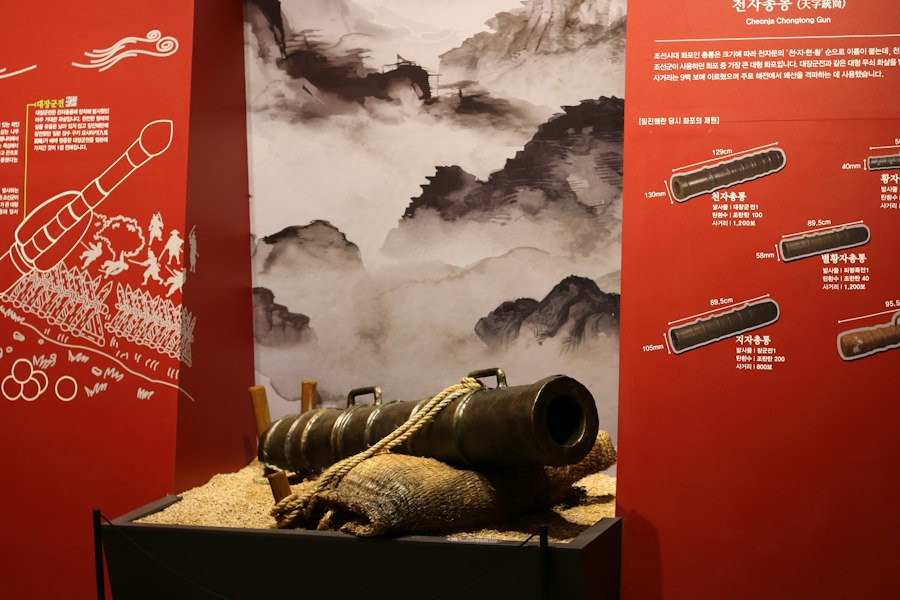
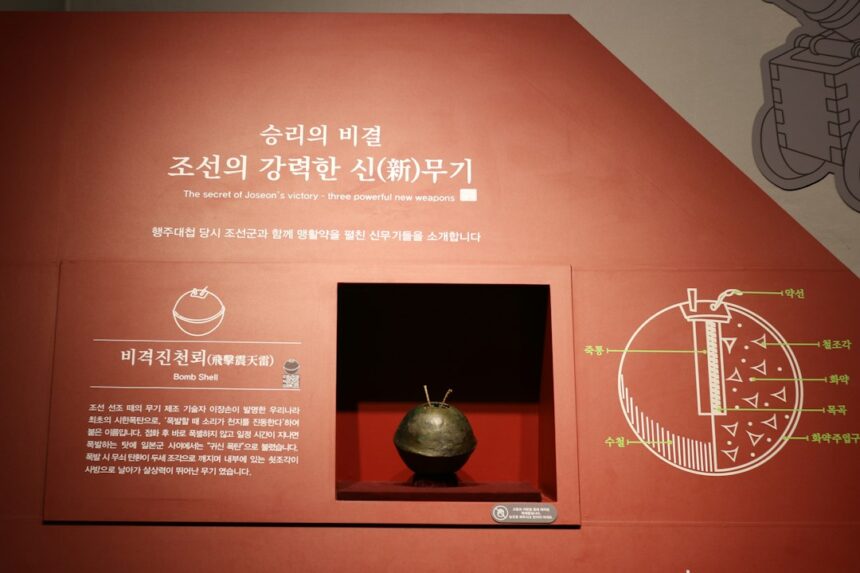
The Joseon Dynasty (1392–1897), despite its often-cited isolationist policies, faced two of the most devastating invasions in Korean history: the Imjin War against Japan (1592–1598) and the Manchu invasions (1627 and 1636). These conflicts tested the limits of Korean military resilience and forced significant adaptations in strategy and technology.
The Imjin War: Admiral Yi Sun-sin and the Undefeated Navy
The Imjin War is indelibly linked to the legendary Admiral Yi Sun-sin, whose naval genius and unwavering courage saved Korea from Japanese conquest. His brilliant tactics and his indomitable spirit represent a towering achievement in Korean military history.
The Turtle Ship: A Technological Marvel of its Time
Yi Sun-sin’s most iconic innovation was the “Geobukseon” or Turtle Ship. This heavily armored vessel, with its spiked roof to deter boarding, was a revolutionary warship that dominated the seas against the Japanese navy.
Superior Armor and Offensive Capabilities
The Turtle Ship’s iron plating made it virtually impervious to Japanese naval weaponry. Its formidable cannons and spear-tipped defenses allowed it to charge into enemy formations, inflicting heavy damage and sowing chaos.
Psychological Warfare and Unmatched Morale
The mere sight of the Turtle Ships often struck fear into the hearts of the Japanese sailors. Their invulnerability and ferocity created an overwhelming psychological advantage for the Korean navy, bolstering their own morale and demoralizing the enemy.
The Brilliant Tactics of Admiral Yi Sun-sin
Yi Sun-sin’s strategic brilliance extended far beyond his creation of the Turtle Ship. He consistently outmaneuvered and outfought numerically superior Japanese fleets, employing innovative tactics that exploited the terrain and the enemy’s predictable movements.
The “Crane Wing Formation” and its Devastating Effectiveness
The “Crane Wing Formation” (Hakikjin) was a masterful deployment strategy where Korean ships would surround and encircle enemy vessels, subjecting them to concentrated cannon fire from all sides. This tactic proved devastatingly effective in annihilating Japanese fleets.
Utilizing the Strengths of the Korean Coastline
Yi Sun-sin expertly used the treacherous Korean coastline, with its narrow straits and strong currents, to his advantage. He lured the Japanese into these areas, where their larger ships became unwieldy and vulnerable to Korean maneuverability and firepower.
The Defense of Myeongnyang: A Symphony of Courage and Strategy
The Battle of Myeongnyang, where Yi Sun-sin, with only twelve ships, faced a Japanese fleet of over 130, stands as one of the most improbable and heroic victories in military history. It was a testament to his strategic genius, the bravery of his men, and the effective use of naval tactics.
Outnumbered but Not Outmatched: The Power of Preparedness
Yi Sun-sin’s victory was not a fluke. It was the result of meticulous planning, superior naval technology, and a profound understanding of naval warfare. His forces were well-trained and motivated, ready to fight for their homeland.
The Moral Victory that Resonated Across the Peninsula
The victory at Myeongnyang provided a crucial turning point in the Imjin War, revitalizing Korean morale and preventing the complete collapse of the Joseon Dynasty. It became a symbol of Korean resilience and a source of national pride that echoed for centuries.
The Manchu Invasions: The Shame and the Strengthening of Joseon’s Military
The Manchu invasions of 1627 and 1636, often referred to as the “Shameful Wars,” were humiliating defeats for Joseon, resulting in the dynasty’s submission to the Qing Dynasty. However, these defeats also spurred significant military reforms and a hardening of national resolve.
The Vulnerability of Joseon’s Land Defenses
The Imjin War had exposed the weaknesses of Joseon’s land defenses, but the subsequent period of relative peace had led to complacency. The Manchu invasions highlighted this vulnerability, particularly the lack of preparedness against a highly mobile and skilled cavalry force.
The Impact of the Battle of Samjeonseong and the Three Bows
The defeat at Samjeonseong, where Joseon forces were overwhelmed by the Manchu cavalry, was a brutal lesson in the limitations of their military. The symbolic act of King Injo bowing to the Qing emperor was a profound national humiliation.
The Need for Tactical Adaptability
The Manchu invaders were masters of swift, decisive cavalry assaults and effective use of firearms. Joseon’s military, still largely reliant on traditional infantry and archery, struggled to counter these tactics, revealing a critical need for tactical modernization.
The Genesis of Military Reforms and a Stronger National Identity
The Manchu invasions, despite their ignominy, served as a catalyst for crucial military reforms. Joseon learned from its mistakes, strengthening its defenses and fostering a more unified national consciousness, albeit forged in the fires of defeat.
The Development of Modern Artillery and Fortifications
Following the Manchu invasions, Joseon invested heavily in the development of artillery and modernized its fortifications. The desire to avoid future humiliation spurred innovation and a more robust approach to military technology.
The Rise of a Unified Korean Consciousness
The shared experience of invasion and defeat, coupled with the imposition of foreign rule, paradoxically fostered a stronger sense of Korean national identity. This shared suffering and the desire for future self-determination became a powerful undercurrent in Korean society and military thinking.
Exploring the depths of little-known Korean military history reveals fascinating stories that often go overlooked, such as the strategic maneuvers during the Imjin War. For those interested in this intriguing period, a related article can provide further insights into the complexities of the conflict and its impact on Korean society. You can read more about it in this detailed analysis that sheds light on the lesser-known aspects of the war and the key figures involved.
Korea’s Post-War Military Development: Deterrence, Technological Advancement, and a Resilient Defense
| Event/Period | Date | Description | Significance |
|---|---|---|---|
| Battle of Salsu | 612 AD | Goguryeo forces under General Eulji Mundeok defeated the invading Sui dynasty army by flooding the Salsu River. | One of the greatest tactical victories in Korean military history, showcasing early use of environmental warfare. |
| Hwacha Deployment | 15th Century | Introduction of the Hwacha, a multiple rocket launcher used during the Joseon Dynasty. | Advanced Korean military technology that provided a significant advantage against Japanese invasions. |
| Battle of Hansan Island | 1592 | Admiral Yi Sun-sin’s naval forces defeated the Japanese fleet using the “turtle ship” and superior tactics. | Crucial naval victory that helped defend Korea during the Imjin War. |
| Goryeo Military Service System | 10th-14th Century | Mandatory military service system that organized local militias and professional soldiers. | Helped maintain internal stability and defend against Mongol invasions. |
| Battle of Ulsan | 1598 | Combined Korean and Ming Chinese forces attempted to break Japanese siege but failed. | Demonstrated the challenges of coalition warfare and the resilience of Japanese forces. |
The Korean War (1950-1953) was a devastating conflict that left the peninsula divided and scarred. However, the subsequent decades have witnessed an astonishing transformation in the Republic of Korea’s military capabilities, turning it into a formidable force dedicated to deterrence and regional stability.
The Crucible of the Korean War: Forging a Modern Military
The Korean War, fought against the backdrop of the Cold War, was a brutal baptism by fire for the nascent Republic of Korea Army. The conflict exposed significant weaknesses but also instilled a deep-seated understanding of the need for a strong, modern defense.
Early Struggles and the Vital Role of Allied Support
The initial stages of the war saw the ROK Army overwhelmed by the North Korean People’s Army. The intervention of United Nations forces, primarily the United States, was crucial for survival, highlighting the importance of international alliances in deterring aggression.
The Strategic Lessons of the Inchon Landing
The UN’s successful Inchon Landing, a daring amphibious assault orchestrated by General Douglas MacArthur, demonstrated the power of strategic maneuver and surprise in turning the tide of a war. This operation became a case study in military strategy, emphasizing the importance of bold and unconventional thinking.
The Stalemate and the Development of Defensive Strategies
The war eventually devolved into a bloody stalemate, with both sides digging in. This period forced the ROK Army to develop robust defensive strategies, emphasizing entrenchment, artillery support, and effective use of combined arms to hold the line.
The Foundation of a Modern Defense Force
Despite the immense human and material cost, the Korean War provided the essential foundation for the development of a modern, professional ROK military. The experience instilled a deep commitment to national defense and a realization of the need for advanced technology and training.
The Importance of Training and Discipline Under Fire
The sheer intensity of combat in Korea forged a generation of soldiers who understood the brutal realities of warfare. This experience, while traumatic, instilled a level of discipline and resilience that became a hallmark of the ROK military.
The Development of a Unified Command Structure
The war also highlighted the need for a unified and effective command structure, capable of coordinating diverse military assets and responding swiftly to threats. This led to the establishment of more robust military institutions and a more integrated approach to defense planning.
Technological Advancement and the Rise of a “Smart” Military
In the decades following the Korean War, South Korea embarked on a remarkable journey of technological advancement, which has been mirrored and significantly integrated into its defense sector. The ROK military is now a leading example of a technologically sophisticated fighting force.
Investment in Indigenous Defense Industries
Recognizing the strategic imperative of self-reliance, South Korea has heavily invested in its indigenous defense industry. Companies like Hyundai Rotem, Hanwha Defense, and LIG Nex1 are now global leaders in producing advanced tanks, artillery systems, naval vessels, and electronic warfare capabilities.
The K-Series Weapon Systems: A Global Benchmark
The K-series of military hardware, including the K2 Black Panther tank, the K9 Thunder self-propelled howitzer, and the K-105mm artillery system, have garnered international acclaim for their advanced technology, reliability, and cost-effectiveness. These systems are not only deployed by the ROK military but are also exported to numerous countries.
Innovation in Aerospace and Naval Technology
South Korea’s advancements extend to aerospace and naval technology. The development of indigenous fighter jets like the KF-21 Boramae and advanced naval destroyers and submarines showcases a comprehensive commitment to a modern, multi-domain defense capability.
The Integration of Information Technology and Cyber Warfare
The ROK military has embraced the digital age, integrating cutting-edge information technology and developing sophisticated cyber warfare capabilities. This includes advanced command and control systems, sophisticated surveillance and reconnaissance platforms, and robust cyber defense mechanisms.
Advanced C4ISR Systems for Superior Situational Awareness
The ROK military operates highly advanced Command, Control, Communications, Computers, Intelligence, Surveillance, and Reconnaissance (C4ISR) systems. These systems provide unparalleled situational awareness, enabling rapid decision-making and effective coordination of military assets.
The Growing Importance of Cyber Defense and Offensive Capabilities
In an era of increasing cyber threats, the ROK military has prioritized the development of both defensive and offensive cyber warfare capabilities. This includes protecting critical infrastructure and developing the ability to conduct cyber operations to neutralize threats.
A Robust Deterrence Posture: The “Kill Chain” and Comprehensive Defense
South Korea’s defense strategy is built upon a robust deterrence posture, designed to dissuade any potential aggressor. This is achieved through a combination of advanced military capabilities and a layered defense system.
The “Kill Chain” Strategy: Pre-emption and Rapid Response
The “Kill Chain” is a key component of South Korea’s defense strategy. It is a comprehensive system designed to detect, identify, decide, and destroy any incoming missile threats as early as possible, ideally before they are launched.
Early Warning Systems and Intelligence Gathering
The “Kill Chain” begins with sophisticated early warning systems, including radar networks, satellites, and intelligence gathering operations, designed to detect enemy missile preparations.
Rapid Interception and Strike Capabilities
Once a threat is identified, the “Kill Chain” emphasizes rapid interception through missile defense systems like the THAAD and L-SAM, as well as the ability to conduct pre-emptive strikes on launch sites using advanced strike assets.
The Importance of Missile Defense and Deterrence
South Korea’s investment in missile defense systems is a critical aspect of its deterrence strategy. The ability to intercept incoming missiles significantly reduces the effectiveness of any potential attack, thereby deterring aggression.
The Role of Patriot and THAAD Systems
The deployment of U.S. Patriot missile defense systems and the Terminal High Altitude Area Defense (THAAD) system provides a layered defense against ballistic missiles, enhancing South Korea’s security.
Development of Indigenous Surface-to-Air Missile Systems
South Korea is also actively developing its own indigenous surface-to-air missile systems, such as the L-SAM (Long-range Surface-to-Air Missile), further strengthening its air and missile defense capabilities.
A Comprehensive Approach to National Security
Beyond missile defense, South Korea’s military posture is characterized by a comprehensive approach to national security. This includes a strong conventional military, an emphasis on alliances, and a commitment to maintaining peace and stability on the Korean Peninsula and in the broader region.
The Indispensable Role of the ROK-US Alliance
The alliance with the United States remains a cornerstone of South Korea’s security architecture. Joint exercises, intelligence sharing, and the forward deployment of U.S. forces provide a powerful deterrent and a critical security guarantee.
Contribution to Global Peacekeeping and Humanitarian Efforts
The ROK military is also increasingly contributing to international peacekeeping operations and humanitarian assistance missions, demonstrating its commitment to global security and its growing role as a responsible international actor.
In conclusion, the military triumphs of Korea, often overshadowed by more globally prominent narratives, reveal a history of remarkable resilience, strategic ingenuity, and unwavering courage. From the Bronze Age fortifications to the advanced technological capabilities of the modern era, Korea has consistently demonstrated an ability to adapt, innovate, and defend its sovereignty against formidable challenges. Uncovering these hidden triumphs is not merely an exercise in historical revisionism; it is a vital step in understanding the enduring spirit of a nation that, time and again, has risen to meet its adversaries and secure its future. The narrative of Korean military history is a testament to the power of strategic foresight, the bravery of its people, and the unyielding determination to protect its land and its identity.

America Sent an Aircraft Carrier to Cut Down One Tree
FAQs
What is little known Korean military history?
Little known Korean military history refers to the lesser-known aspects of Korea’s military past, including battles, strategies, and military figures that are not widely covered in mainstream historical narratives.
Can you provide examples of little known Korean military history?
Examples of little known Korean military history include the Battle of Myeongnyang in 1597, where Admiral Yi Sun-sin defeated a much larger Japanese fleet with only 13 ships, and the Goguryeo-Wei War in the 4th century, which saw the Goguryeo Kingdom successfully defend against the Wei Dynasty’s invasion.
Why is it important to study little known Korean military history?
Studying little known Korean military history helps provide a more comprehensive understanding of Korea’s military heritage and the strategies employed by Korean military leaders throughout history. It also sheds light on lesser-known events that have had a significant impact on Korea’s development.
How can one learn more about little known Korean military history?
One can learn more about little known Korean military history by reading historical books, visiting museums in Korea that focus on military history, attending lectures or seminars on the topic, and conducting research online through reputable sources.
What are some misconceptions about Korean military history?
Some misconceptions about Korean military history include the belief that Korea has always been a passive or weak nation in terms of military prowess, when in fact, Korea has a rich history of military achievements and strategic innovations. Additionally, there is a misconception that Korean military history is limited to the Korean War, overlooking centuries of military history prior to the 20th century.