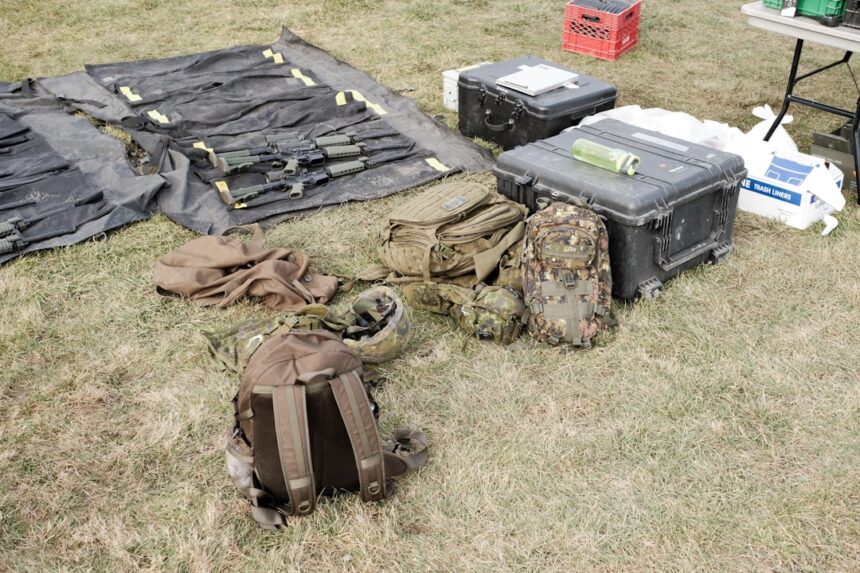
The European continent, a tapestry woven with centuries of conflict and geopolitical upheaval, holds secrets beneath its surface. While major wars have ended, the echoes of past hostilities linger, often manifesting in the form of buried weapon caches. These hidden stashes, remnants of desperate wartime preparations, clandestine operations, or even criminal enterprises, represent a persistent and often dangerous legacy. Uncovering these buried armories is a multifaceted endeavor, demanding a combination of historical research, advanced technology, meticulous investigation, and a profound understanding of the human element.
The prevalence of buried weapon caches in Europe is intrinsically linked to the continent’s tumultuous history. From the trenches of World War I to the clandestine networks of World War II and the Cold War, the need to conceal and preserve weapons for future use or to evade capture has been a recurring theme. Understanding this historical context is paramount for any serious attempt at discovery.
World War I: The Great War’s Hidden Stockpiles
The unprecedented scale and trench warfare of World War I led to immense stockpiles of weapons, ammunition, and explosives. As front lines shifted and nations mobilized, the necessity to secure these vital resources often meant burying them.
Trenches and Tunnels: Improvised Hiding Places
The very nature of trench warfare, with its intricate network of dugouts and subterranean passages, provided ideal, albeit rudimentary, locations for hiding weapons. Soldiers and retreating forces would often bury caches in the hope of returning or for a potential resurgence of conflict.
The Aftermath: Unaccounted For Arsenals
Following the armistice, many of these hidden caches remained undiscovered. The chaotic demobilization and shifting political landscapes meant that official inventories were often incomplete, leaving a significant number of weapons unaccounted for and potentially scattered across the former battlefields.
World War II: Occupation, Resistance, and the Cold War’s Shadow
World War II saw an even more sophisticated and widespread use of clandestine weapon concealment, driven by occupation forces, resistance movements, and the looming specter of a post-war confrontation.
Occupying Forces: Pre-emptive Security and Strategic Reserves
Invading armies and occupying powers frequently buried weapons as strategic reserves, intended for future use or to equip collaborating forces. These caches were often large and well-organized, reflecting the logistical capabilities of national armies.
Resistance Movements: The Spark of Rebellion
Resistance fighters and partisan groups relied heavily on hidden weapon caches to sustain their operations. These were often smaller, more dispersed, and deliberately camouflaged to avoid detection by enemy patrols. The ingenuity employed in concealing these arsenals remains a testament to their dedication.
The Cold War: Proxy Conflicts and Espionage
The Cold War era, while characterized by a different kind of conflict, also contributed to the phenomenon of buried weapons. Caches were established by intelligence agencies, paramilitary groups, and even civilian defense organizations in anticipation of potential Soviet aggression or to support proxy conflicts. These were often hidden in remote or strategically significant locations.
Post-Conflict Scenarios: Criminal Enterprises and Unexploded Ordnance
Even in periods of relative peace, the legacy of past conflicts continues to surface, often intertwined with criminal activities or the dangerous persistence of unexploded ordnance (UXO).
Organized Crime: Exploiting the Legacy
Unfortunately, the existence of readily available, albeit often aged, weaponry has also attracted the attention of organized criminal groups. These caches can provide a ready supply of firearms and explosives for illicit activities, posing a significant threat to public safety.
The Persistent Danger of UXO
Beyond intact weapon caches, the remnants of munitions, artillery shells, and bombs that failed to detonate during conflicts represent a distinct but related danger. These UXO sites require specialized handling and are a constant reminder of the destructive potential still lurking beneath the surface.
In recent years, the discovery of buried weapons caches across Europe has raised significant concerns regarding security and the potential for escalating conflicts. A related article that delves deeper into this issue can be found on In The War Room, which explores the implications of these hidden arsenals and their impact on regional stability. For more insights, you can read the article here: In The War Room.
Technological Innovations: Illuminating the Subsurface
The challenge of uncovering buried weapon caches is immense, given the sheer scale of potential hiding places and the deliberate nature of their concealment. Fortunately, technological advancements have provided invaluable tools for this challenging pursuit. These technologies allow investigators to “see” beneath the earth’s surface without disturbing it unnecessarily.
Ground Penetrating Radar (GPR): Peering Through the Earth
Ground Penetrating Radar (GPR) is one of the most widely used and effective technologies for detecting subsurface anomalies. It works by emitting radar pulses into the ground and measuring the reflections that bounce back from changes in the subsurface.
Principles of GPR Operation
GPR systems transmit electromagnetic pulses into the ground. When these pulses encounter objects or changes in soil composition, they are reflected back to a receiver. The time it takes for the pulses to return and the characteristics of the reflected signal can be analyzed to determine the depth, size, and nature of subsurface features.
Applications in Cache Detection
In the context of weapon caches, GPR can detect metallic objects, voids, and disturbed soil layers that may indicate a buried container or the presence of weapons. Its non-destructive nature is a significant advantage, allowing for initial surveys without extensive excavation.
Limitations and Environmental Factors
While powerful, GPR’s effectiveness can be influenced by soil type, moisture content, and the presence of other subsurface features like pipes or geological formations. Dense clay soils or areas with high metallic content from modern infrastructure can present challenges.
Recent investigations have revealed the existence of numerous buried weapons caches across Europe, raising concerns about the potential resurgence of armed conflicts in the region. These hidden stockpiles, often linked to past conflicts, pose significant challenges for authorities tasked with ensuring public safety. For a deeper understanding of this issue, you can read more in this insightful article on the topic. To explore further, visit this article that delves into the implications of these discoveries and the measures being taken to address them.
Magnetometry: Detecting Ferrous Signatures
Magnetometers are highly sensitive instruments that measure variations in the Earth’s magnetic field. Buried metallic objects, particularly those made of iron or steel, create localized magnetic anomalies that can be detected.
The Magnetic Properties of Weapons and Ammunition
Many historical weapons and ammunition components are made of ferrous metals, which significantly alter the local magnetic field. Magnetometers can therefore pinpoint areas where such materials might be present.
Interpreting Magnetic Signatures
Interpreting magnetometer data requires expertise. Experienced geophysicists can differentiate between the magnetic signatures of weapons caches and other ferrous objects, such as old farm equipment or geological anomalies.
Complementary to GPR
Magnetometry is often used in conjunction with GPR. While GPR can identify anomalies and their depth, magnetometry can help confirm the presence of metallic components within those anomalies, increasing the confidence in a potential cache detection.
Advanced Imaging Techniques: Beyond Conventional Methods
Beyond GPR and magnetometry, a range of more specialized imaging techniques are being developed and employed, offering even greater detail and insight into subsurface environments.
Electrical Resistivity Tomography (ERT): Mapping Subsurface Conductivity
ERT measures the electrical resistivity of the ground. Different materials have varying levels of electrical conductivity, allowing for the creation of 2D or 3D images of subsurface structures. Buried caches, particularly those encased in non-conductive materials or creating voids, can be identified.
Seismic Refraction and Reflection: Understanding Layered Structures
Seismic methods use sound waves to map subsurface layers and identify discontinuities. While often used for larger

The Secret Armies NATO Prepared for a Soviet Invasion
FAQs
What are buried weapons caches in Europe?
Buried weapons caches in Europe are hidden stockpiles of weapons, ammunition, and explosives that were buried during times of conflict or war. These caches can include firearms, grenades, landmines, and other military equipment.
Why were weapons caches buried in Europe?
Weapons caches were buried in Europe during various conflicts and wars as a means of hiding and protecting military supplies. This allowed resistance movements, military units, or individuals to store weapons and ammunition for future use without the risk of them being discovered or destroyed by enemy forces.
Where are buried weapons caches typically found in Europe?
Buried weapons caches in Europe can be found in a variety of locations, including forests, fields, urban areas, and remote rural areas. They are often hidden in underground bunkers, caves, or concealed in natural or man-made structures.
What are the risks associated with buried weapons caches in Europe?
The presence of buried weapons caches in Europe poses risks to public safety, as these caches may contain unstable or deteriorating explosives and ammunition. There is also a risk of accidental discovery and detonation, particularly during construction or excavation activities.
What should be done if a buried weapons cache is discovered in Europe?
If a buried weapons cache is discovered in Europe, it is important to immediately alert local authorities and law enforcement. It is crucial to keep a safe distance from the site and avoid any attempts to handle or move the weapons and explosives. Trained professionals should be called in to safely and securely remove and dispose of the weapons cache.