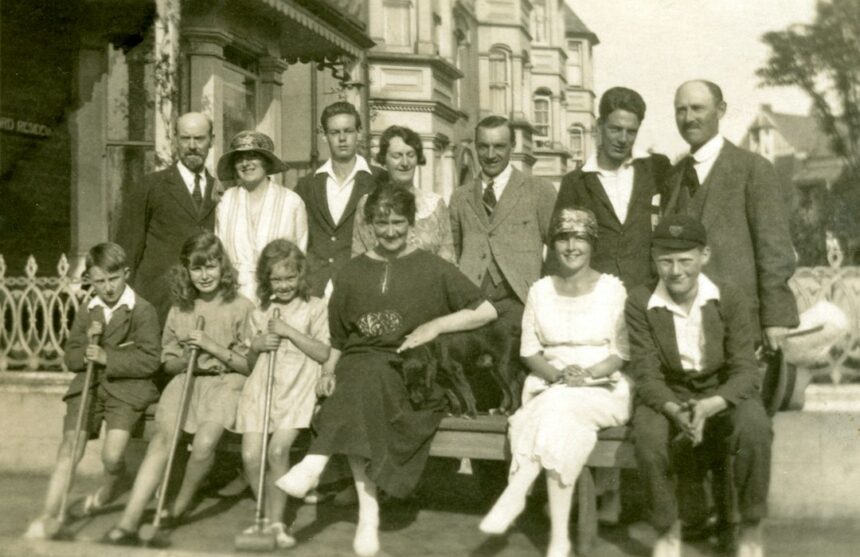
The old shoebox, discovered during a reluctant attic clean-out, held the ordinary detritus of a life: faded photographs, brittle letters, and a scattering of what appeared to be official documents. For Sarah, an archivist by profession and a lover of hidden narratives, it was an unexpected treasure trove. Her grandmother, Eleanor, had passed away a few years prior, leaving behind a quiet legacy of gardening and well-baked scones, but little in the way of personal history. Sarah had always assumed Eleanor’s life had been unremarkable, a peaceful existence marked by the routines of suburban comfort. This shoebox, however, hinted at something far more complex, a secret woven into the fabric of wartime.
Echoes from the Past
The initial rummaging through the shoebox revealed a series of photographs, sepia-toned and creased, depicting a young woman Sarah didn’t immediately recognize. She was striking, with a cascade of dark hair and an enigmatic smile that seemed to hold a story. Among the photographs were letters, penned in elegant, looping script, addressed to “Dearest Eleanor.” The language was intimate, filled with affection and longing, yet curiously devoid of any specific details about the writer or their circumstances. The dates on the letters spanned the years 1943 and 1944, placing them squarely in the heart of World War II. Sarah’s curiosity, already piqued, began to transform into a determined pursuit. Who was this unknown correspondent? And what was their connection to her grandmother?
The Silent Observer
Sarah’s grandmother, Eleanor, had been born in 1925. Her childhood had been shaped by the austerity and anxieties of the pre-war years and the early days of conflict. Sarah knew that Eleanor had a younger brother, Thomas, who had served in the Royal Navy and tragically lost his life when his ship was torpedoed in 1943. His death had cast a long shadow over the family, and Eleanor, always a stoic individual, rarely spoke of her grief. The shoebox contained a few mournful postcards from Thomas, their cheerful greetings a poignant contrast to the somber reality of their existence. Sarah had always attributed her grandmother’s reserved nature to this profound loss. Now, she wondered if there were other wartime experiences, other hidden chapters, that had contributed to Eleanor’s quiet strength. The collection of letters in the shoebox, so full of vibrant emotion, felt like a stark counterpoint to the reserved persona Sarah had known.
Unveiling the Unknown
The mystery deepened with each item Sarah examined. There were official-looking documents, some bearing unfamiliar stamps and insignia. One, in particular, caught her eye: a ration book, its pages filled with stamps for food and clothing. Another was a small, worn notebook, its pages filled with what appeared to be coded entries. Sarah, with her archivist’s eye for detail, meticulously cataloged each item, taking high-resolution photographs and making detailed notes. She recognized the handwriting on some of the letters as belonging to Eleanor, but the majority were from the unknown man. His name, when it finally appeared, was etched in her memory: “Arthur.” The more she delved, the more she realized that Arthur was not just a friend; the tender words, the shared dreams, painted a picture of a deep and passionate love affair.
Exploring the intricate connections between family history and World War II can often lead to fascinating discoveries and mysteries. For those interested in unraveling their own family stories from this tumultuous period, a related article titled “Uncovering Family Secrets: Tracing Your Roots in World War II” provides valuable insights and resources. You can read more about it by visiting this link: Uncovering Family Secrets: Tracing Your Roots in World War II. This article delves into various methods for researching family histories, including tips on accessing military records and personal letters that may shed light on your ancestors’ experiences during the war.
Whispers of Wartime Romance
The letters from Arthur were a revelation. They spoke of clandestine meetings, stolen moments, and a future they desperately hoped to build together after the war. He described the camaraderie of his fellow soldiers, the constant threat of danger, and his unwavering hope of returning to Eleanor. Sarah found herself completely engrossed in their story, piecing together fragments of their lives from the carefully chosen words. Arthur’s descriptions of his daily life were vivid, painting a picture of a world at war, a world of uncertainty and sacrifice, but also of resilience and love. He often wrote about the simple pleasures they shared – walks in the park, a cup of tea, the comfort of each other’s presence – making their love feel all the more precious against the backdrop of global conflict.
The Enigmatic Correspondent
Arthur’s identity remained elusive for a time. Sarah knew Eleanor had been engaged to a young man named Michael before the war, but he had been killed in the Battle of Britain. Was Arthur a different man entirely, or perhaps someone Eleanor met after Michael’s death? The letters offered no direct clues to Arthur’s surname or his military unit, adding another layer to the mystery. However, his consistent reference to Eleanor as his “Dearest Eleanor” and his yearning for their reunion suggested a relationship of significant depth and commitment. He wrote of shared hopes for a small cottage, a garden, and a life filled with the simple joys of domesticity, dreams that Sarah knew, in the end, were never fully realized.
A World of Shadow and Secrecy
As Sarah continued to read, a pattern emerged. Arthur’s letters often contained veiled references, hints of something more than just a soldier’s correspondence. He spoke of “important work” and “confidential matters,” words that sparked Sarah’s professional instincts. Could Arthur have been involved in something more clandestine than ordinary military service? The coded notebook, previously dismissed as a curious artifact, now seemed to hold a key. Sarah, with her background in archival research, knew that sometimes the most mundane objects could hold the most extraordinary secrets. The lack of any mention of Arthur’s family or his pre-war life also added to the intrigue. It was as if he had emerged from the shadows of war, leaving a profound impact on Eleanor, only to seemingly disappear back into them.
Deciphering the Coded Language
The small, leather-bound notebook was the most challenging piece of the puzzle. Its pages were filled with seemingly random sequences of letters and numbers, interspersed with occasional doodles of birds and flowers. Sarah, armed with her analytical skills, began to examine the patterns. She hypothesized that it might be a form of simple substitution cipher, a common method of secure communication during wartime. The fact that Eleanor had kept it, along with Arthur’s personal letters, suggested its significance. It was a tangible link to Arthur’s secret life, a life that Eleanor, it seemed, had been privy to.
The Archivist’s Toolkit
Sarah spent countless hours poring over the notebook, her desk littered with notes and reference books on cryptography. She tried various common ciphers, testing them against the coded entries. The breakthrough came when she noticed a recurring sequence of numbers that seemed to correspond with certain words in Arthur’s letters. It was a laborious process, involving cross-referencing, educated guesses, and a healthy dose of persistence. The doodles, initially dismissed as personal embellishments, also proved to be a vital clue, often providing hints to the subject matter of the coded entries. For example, a doodle of a lighthouse might precede a coded message related to coastal movements.
Unlocking the Secrets Within
Finally, after weeks of dedicated effort, Sarah cracked the code. The notebook revealed Arthur’s role as a reconnaissance agent, gathering intelligence on enemy movements along the coast. The coded entries detailed specific ship sightings, troop deployments, and even whispered rumors of impending attacks. This was no ordinary soldier; Arthur was a vital, albeit unsung, hero. The danger he faced was far greater than Sarah had ever imagined, and Eleanor’s quiet stoicism now took on a new meaning. She had lived with the constant anxiety of Arthur’s dangerous work, a burden she had carried alone, perhaps never fully able to share the true extent of his bravery or the risks he took. The notebook offered not only a glimpse into Arthur’s wartime activities but also a profound understanding of the immense pressure and fear Eleanor must have endured.
The Shadow of War and its Legacy
The decoded entries in Arthur’s notebook painted a stark and compelling picture of his wartime activities. He wasn’t simply a soldier on the front lines; he was a spy, operating in the shadows, his courage a silent, vital force in the war effort. The information he gathered was critical, potentially saving countless lives. The realization that her grandmother had been in a relationship with such a man, a man who risked so much, was both awe-inspiring and deeply moving. It explained so much about Eleanor’s quiet strength, her resilience in the face of adversity, and perhaps even her unspoken sadness.
The Unseen Sacrifice
Sarah now understood that Arthur’s love letters were not just declarations of affection; they were also a testament to his divided life, a life lived between the intimacy of love and the chilling reality of espionage. He had shared his hopes and dreams with Eleanor, but he had also entrusted her, implicitly, with the knowledge of his dangerous work. The absence of any mention of his family in his letters suggested a deliberate separation, perhaps to protect them or to maintain the secrecy of his mission. Eleanor had carried this knowledge, this secret love, and the constant fear for his safety, a burden that undoubtedly shaped her character and her life. The fact that he never returned to her, as she had so fervently hoped, only amplified the poignancy of their story.
The Enduring Enigma
While Sarah had uncovered a significant part of the mystery, Arthur’s ultimate fate remained a tantalizing question mark. The letters ceased abruptly in late 1944. There were no final goodbyes, no explanations, only a silence that mirrored the vast unknown of wartime casualties. Sarah speculated that he might have been captured, killed in action during a particularly perilous mission, or perhaps even reassigned to a different theater of war without the opportunity to communicate further. The shoebox offered no definitive answers, leaving a void that Sarah, as an archivist, felt compelled to fill. The story of Arthur and Eleanor, while intensely personal, also spoke to the countless untold stories of love, sacrifice, and hidden bravery that characterized the World War II era.
Exploring the complexities of family histories during World War II can often lead to intriguing mysteries that connect generations. Many individuals are uncovering stories of ancestors who served in the war, revealing hidden truths and unexpected connections. For those interested in delving deeper into this fascinating subject, a related article can be found at In the War Room, which offers insights and resources for tracing family histories tied to wartime experiences.
Reconstructing a Lost Narrative
| Metric | Description | Example Data |
|---|---|---|
| Number of Missing Relatives | Count of family members unaccounted for during or after WWII | 3 |
| Years of Uncertainty | Duration family has been searching for answers | 75 years |
| Countries Involved | Number of countries where family members were last known or possibly located | 4 (Germany, Russia, France, Poland) |
| Documents Found | Number of official records or letters discovered related to family members | 12 |
| DNA Matches | Number of genetic matches found through ancestry testing | 2 |
| Military Units Identified | Number of military units family members served in | 3 |
| Eyewitness Accounts | Number of testimonies or interviews collected from people who knew the family members | 5 |
Sarah’s discovery was more than just an interesting historical footnote; it was the reconstruction of a lost narrative, a testament to the power of love and resilience in the face of immense hardship. She realized that her grandmother, whom she had always seen as a quiet and unassuming figure, had harbored a profound secret, a wartime romance that had undoubtedly shaped her life in ways Sarah was only beginning to comprehend. The shoebox, once an overlooked relic of the past, had become a portal to a hidden world, a world of clandestine operations, desperate love, and unspoken courage.
The Echoes of a Life
The impact of this discovery resonated deeply with Sarah. She began to see her grandmother in a new light, her quiet demeanor now interpreted as the quiet strength of someone who had weathered unimaginable storms. Eleanor’s love for her garden, her meticulous attention to detail, her stoic nature – all seemed to stem from the experiences she had lived through, experiences that included a secret, dangerous love affair. Sarah felt a profound sense of connection to her grandmother, a connection that transcended generations and the silence of unspoken stories. The shoebox had not only revealed Arthur’s story but had also illuminated Eleanor’s inner life, revealing a woman of immense depth and quiet fortitude.
A Legacy of Love and Loss
Sarah decided to honor Arthur and Eleanor by sharing their story. She began by carefully transcribing the letters and the decoded notebook entries, preserving their words for future generations. She also researched local historical archives, searching for any mention of Arthur or his unit, hoping to piece together his ultimate fate. While she may never uncover every detail of Arthur’s final days, the journey of discovery had already provided her with an invaluable gift: a deeper understanding of her family’s history, a profound appreciation for the sacrifices made during wartime, and a lasting legacy of love and loss, whispered across the decades from a forgotten shoebox. The story, once hidden, was now brought into the light, a poignant reminder of the many invisible threads that weave the tapestry of our lives.
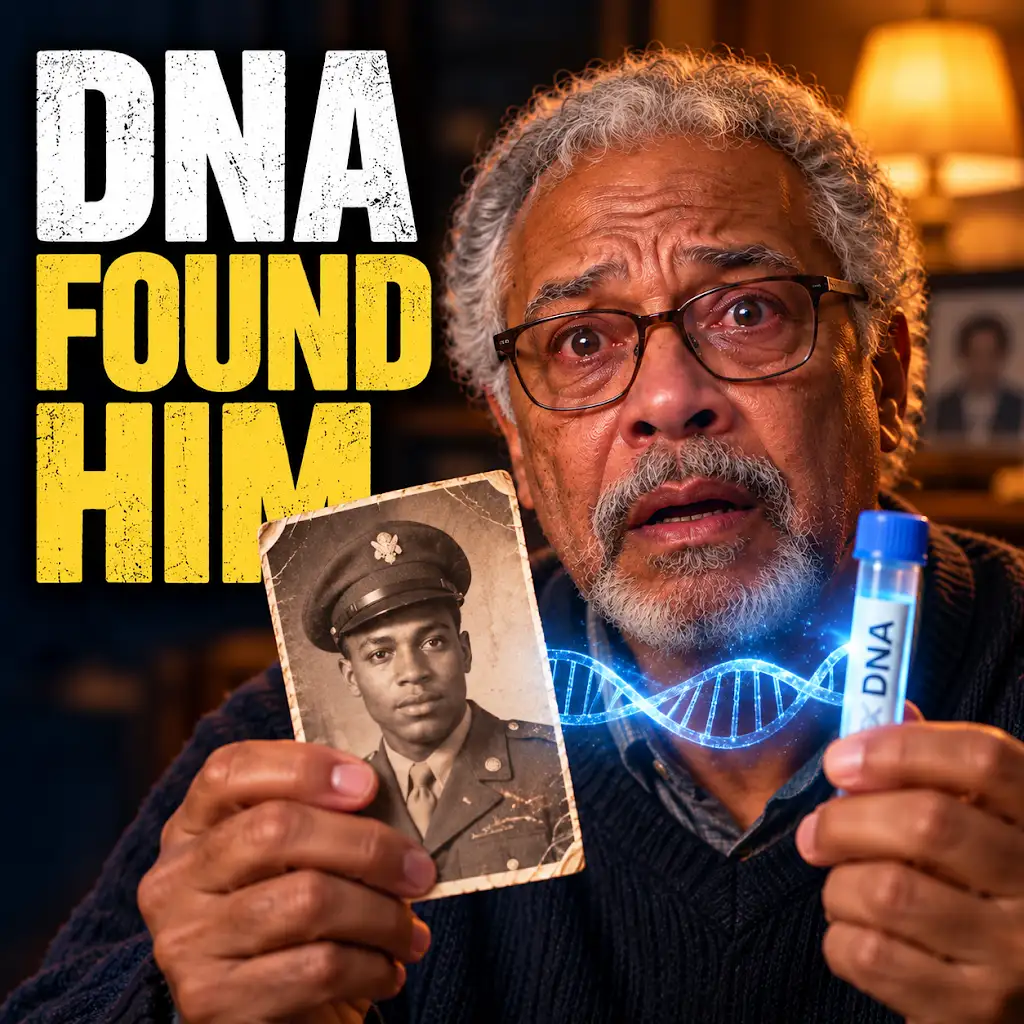
His WWII GI Father Was a Mystery for Nearly 80 Years
FAQs
What is the World War II family history mystery about?
The World War II family history mystery revolves around uncovering unknown or hidden details about a family’s involvement or experiences during the war.
How can one investigate their family’s World War II history?
To investigate their family’s World War II history, individuals can start by gathering any existing documents, photos, letters, or memorabilia related to the time period. They can also conduct research in archives, military records, and online databases.
What are common challenges faced when researching World War II family history?
Common challenges when researching World War II family history include missing or incomplete records, language barriers, conflicting information, and the passage of time leading to a lack of living relatives who may have firsthand knowledge.
Why is it important to uncover World War II family history mysteries?
Uncovering World War II family history mysteries can provide a deeper understanding of the past, honor the sacrifices and contributions of ancestors, and preserve a family’s legacy for future generations.
What resources are available to help individuals explore their family’s World War II history?
There are various resources available to help individuals explore their family’s World War II history, including online databases, genealogy websites, historical societies, museums, and professional researchers specializing in military history.