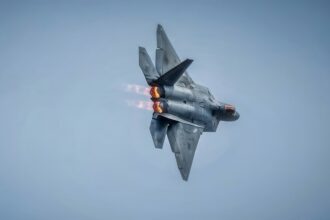
The dazzling glare of a directed energy weapon, once an imagined threat confined to science fiction, is rapidly becoming a tangible concern for modern militaries. While advanced weaponry offers unprecedented capabilities in precision, range, and destructive power, it also harbors a fundamental vulnerability: susceptibility to blinding. This exposure to optical disruption, whether through deliberate countermeasures or environmental factors, poses a significant challenge to the operational effectiveness and survivability of these sophisticated systems. Understanding this inherent weakness is crucial for developing robust defenses and ensuring the continued primacy of advanced military technology in an increasingly complex battlefield.
The contemporary battlefield is a dynamic and multifaceted environment characterized by rapid technological evolution and the integration of increasingly complex systems. Warfare is no longer solely reliant on kinetic projectiles; it now encompasses a spectrum of electromagnetic, cyber, and information warfare domains, all of which can be weaponized. Advanced weapons, such as precision-guided munitions, hypersonic missiles, advanced sensor platforms, and directed energy weapons themselves, represent the cutting edge of this transformation. These systems are designed to operate with unparalleled accuracy, speed, and autonomy, often relying on sophisticated targeting and guidance mechanisms that are highly dependent on precise sensory input.
The Reliance on Advanced Sensors
At the heart of most advanced weaponry lies an intricate network of sensors. These can range from sophisticated radar and lidar systems to electro-optical/infrared (EO/IR) imagers, multispectral sensors, and even acoustic sensors. The ability of a weapon system to effectively engage its target hinges on its capacity to accurately perceive and interpret its surroundings through these sensory organs. For instance, a smart bomb needs to “see” its target to guide itself, a drone requires visual and thermal input to navigate and identify threats, and a directed energy weapon needs to lock onto a target with pinpoint accuracy. This dependence creates a critical chokepoint: if the sensors are compromised, the entire system’s functionality can be severely degraded or rendered inoperable.
Targeting Systems and Their Precision
The effectiveness of modern precision-guided munitions (PGMs) is directly linked to their advanced targeting systems. These systems often employ a combination of sensors, including inertial navigation systems (INS), global positioning systems (GPS), semi-active laser seekers, or active radar seekers. The seeker head, responsible for acquiring and tracking the target, is a particularly vulnerable component. Any form of optical interference that disrupts the seeker’s ability to lock onto the intended signal can lead to a missed engagement, a misidentification of the target, or even a self-destruct sequence if the weapon interprets the interference as a threat to its own integrity.
Sensor Fusion and the Interconnectedness of Systems
Modern military platforms, from fighter jets to naval vessels, often utilize sensor fusion to create a comprehensive situational awareness picture. Data from multiple sensors—radar, EO/IR, electronic warfare systems, etc.—is integrated and analyzed to provide a unified and more accurate understanding of the battlefield. While this enhances overall capability, it also creates a cascading vulnerability. If one key sensor is blinded or degraded by optical interference, it can disrupt the entire sensor fusion process. This can lead to a loss of critical targeting information, a compromised understanding of the operational environment, and a reduction in the platform’s ability to effectively employ its own advanced weaponry.
The Increasing Sophistication of Directed Energy Weapons (DEWs)
Perhaps no class of advanced weaponry is more directly implicated in the discussion of blinding than directed energy weapons themselves. DEWs, including lasers and high-power microwaves, are designed to deliver energy to a target to disable, damage, or destroy it. However, the very principles that enable these weapons to function also make them susceptible to optical disruption.
Laser Weapons: A Double-Edged Sword
High-energy lasers (HELs) are designed to deliver a focused beam of light with significant power to a target. This focused energy can melt metal, ignite fuel, or disrupt sensitive electronic components. The accuracy and precision required for effective laser deployment, however, mean that the laser’s own optical systems, including the beam director and targeting sensors, are inherently sensitive to optical countermeasures. The same laser that can blind an enemy sensor could, under different circumstances, be blinded itself by a sophisticated countermeasure.
High-Power Microwaves (HPMs): A Different Form of Disruption
While not strictly “blinding” in the optical sense, high-power microwave weapons can severely disrupt or destroy electronic systems. This disruption operates on a similar principle of overwhelming sensitive components with energy. Just as a powerful light source can overload an optical sensor, a directed microwave pulse can overload and damage intricate electronic circuits within a weapon’s guidance or targeting systems. The vulnerability lies in the delicate nature of the electronics, which, like optical sensors, are not designed to withstand such intense energy fluxes.
In recent discussions about modern warfare, the vulnerability of advanced weaponry has come to the forefront, particularly regarding how these systems can be effectively blinded. An insightful article that delves into this topic is available at In The War Room, where experts analyze the implications of countermeasures that can disrupt the targeting systems of high-tech military assets. This exploration highlights the ongoing arms race between offensive capabilities and defensive strategies, emphasizing the need for continuous innovation in both fields.
The Nature of Optical Blinding: From Environmental Factors to Deliberate Countermeasures
The vulnerability of advanced weapons to blinding is not a theoretical construct; it manifests in various ways, originating from both natural phenomena and intentional human actions. Understanding these sources of optical disruption is key to developing effective protective strategies.
Environmental Factors: The Unseen Adversaries
The battlefield is rarely a sterile, controlled environment. Natural phenomena can present significant challenges to the optimal functioning of optical sensors and advanced weapon systems.
Atmospheric Conditions: Fog, Smoke, and Dust
Dense fog, heavy smoke generated by fires or explosives, and pervasive dust kicked up by operational activities can all significantly attenuate or scatter light, obscuring the visibility of targets. For EO/IR sensors, these conditions can reduce the amount of thermal radiation reaching the sensor, making it difficult to acquire or track targets. Lidar systems, which rely on laser pulses, can also be hampered by scattering from particles in the air. While advanced filtering and signal processing techniques can mitigate some of these effects, extreme conditions can overwhelm even the most sophisticated systems.
Solar Glare and Illumination
Direct solar glare, especially at low angles of incidence (dawn and dusk), can saturate optical sensors, rendering them temporarily incapable of detecting fainter targets. Bright artificial illumination, whether from flares, searchlights, or even the muzzle flash of friendly weapons, can also cause temporary blindness or overwhelming saturation of sensors. This can lead to target acquisition failures, misidentification, or delays in engagement, potentially allowing a threat to escape or initiate an attack.
Weather Phenomena: Rain and Snow
Heavy rain and snow can also interfere with optical sensors. Water droplets and snowflakes can scatter and absorb light, reducing the clarity and range of vision. While radar systems are generally less affected by precipitation, electro-optical systems can experience significant degradation, impacting the ability of guided munitions to track their targets.
Deliberate Countermeasures: The Art of Optical Warfare
Beyond natural environmental challenges, adversaries are actively developing and employing a range of sophisticated countermeasures to blind or degrade enemy advanced weaponry. This burgeoning field of optical warfare is a direct response to the increasing reliance on sensitive optical sensors.
Jamming and Spoofing of Optical Seekers
A common tactic involves a form of electronic warfare specifically targeting optical sensors. This can range from simple techniques like employing bright, persistent light sources to deliberately overwhelm a seeker, to more sophisticated methods of spoofing. Spoofing involves projecting false target signatures—mimicking the laser designator beam, for example—to trick a weapon into guiding on the wrong object. This could reroute a missile towards a harmless decoys or away from its intended target.
Smoke Screen Generation and Aerosol Deployment
Military forces employ smoke screens and obscurant aerosols not only for concealment but also as a direct countermeasure against optical sensors. These generated clouds of particles are designed to effectively block the line of sight and attenuate the signals required for targeting. Emerging technologies are also exploring the use of specialized aerosols that can absorb specific wavelengths of light used by advanced sensors, effectively creating a “dead zone” for the enemy’s targeting capabilities.
Laser Dazzlers and Directed Energy Countermeasures
The most direct offensive countermeasure against optical sensors is the use of laser dazzlers or even low-power directed energy weapons specifically designed to disrupt or disable enemy sensors. These systems can produce intense flashes of light or focused beams that overwhelm the delicate components of an enemy’s optical systems. While not always intended for permanent damage, a temporary blinding effect can be sufficient to disrupt an attack, allow for escape, or gain a critical tactical advantage. These countermeasures are becoming increasingly portable and sophisticated, posing a significant threat to a wide array of advanced weapon systems.
Specific Vulnerabilities Across Weapon Categories

The broad concept of blinding applies differently to various classes of advanced weapons, each with its unique sensory dependencies and susceptibility points.
In recent discussions about modern warfare, the vulnerability of advanced weaponry has come to the forefront, particularly regarding how these systems can be effectively blinded. This phenomenon is explored in detail in a related article that examines the implications of electronic warfare and countermeasures on military technology. For those interested in understanding the complexities of this issue, the article can be found here. As nations continue to invest in cutting-edge defense systems, the ability to disrupt their functionality poses significant strategic challenges.
Precision-Guided Munitions (PGMs): The Peril of the Seeker Head
PGMs, such as smart bombs, cruise missiles, and advanced artillery shells, represent a significant portion of modern precision strike capabilities. Their effectiveness hinges on sophisticated guidance systems, and the seeker head, the component that acquires and tracks the target, is a primary point of vulnerability.
Laser-Guided Munitions: The Fragility of the Spot
Laser-guided munitions rely on a ground-based or airborne laser designator to illuminate the target with a specific wavelength of light. The munition’s seeker then locks onto this reflected laser energy. This process is highly susceptible to “jamming” or “spoofing” if the laser spot is obscured by smoke, debris, or if a false laser spot is projected onto a different object. Furthermore, the seeker itself can be overloaded by excessively bright light or confused by multiple conflicting laser signals.
GPS-Assisted Munitions: The Threat of GPS Spoofing
While GPS-guided munitions offer all-weather capability, they are not entirely immune to disruption. Adversaries can employ GPS spoofing techniques, broadcasting false GPS signals that can trick the missile’s receiver into believing it is in a different location. This can lead to inaccurate guidance, mission failure, or even the weapon detonating prematurely or at the wrong location. While not strictly an optical vulnerability, the principle of sensory deception is similar, highlighting the reliance on accurate external cues.
Imaging Infrared (IIR) and Electro-Optical (EO) Guided Munitions: The “Seeing” Challenge
Munitions employing IIR or EO seekers rely on detecting the “heat signature” or visual appearance of a target. These systems can be deceived by decoys that mimic thermal or visual signatures, or by environmental obscurants that mask the true target. The complexity of advanced pattern recognition algorithms within these seekers means that subtle changes in illumination or thermal profiles can lead to misidentification or failure to acquire the target.
Unmanned Aerial Vehicles (UAVs) and Drones: The Eyes of the Future
UAVs, ranging from small reconnaissance drones to large combat platforms, are increasingly vital to modern military operations. Their operational effectiveness is absolutely dependent on their sensor payloads, making them highly vulnerable to optical disruption.
Navigation and Surveillance Sensors: Losing the Way and the Picture
The cameras, EO/IR sensors, and lidar systems on UAVs are essential for navigation, situational awareness, and target identification. Environmental factors like fog, smoke, and dust can severely degrade their vision, making it difficult to navigate safely or to effectively monitor an area. Deliberate countermeasures, such as laser dazzlers, can temporarily blind or permanently damage these sensors, effectively rendering the drone a blind pigeon.
Targeting and Weapon Delivery Systems: The Precision Problem
For armed UAVs, the targeting and weapon delivery systems are directly linked to their sensor capabilities. If the sensors are compromised, the ability to accurately aim and deliver ordnance is severely diminished. A drone that cannot “see” its target clearly cannot effectively engage it. This could result in missed shots, collateral damage, or the inability to neutralize a threat.
Advanced Targeting Pods and Reconnaissance Platforms: The Surveillance Blind Spot
Sophisticated targeting pods integrated onto fighter jets and other combat aircraft, as well as dedicated reconnaissance platforms, are crucial for intelligence gathering and target designation. These systems are packed with high-resolution cameras, thermal imagers, and laser designators, making them prime targets for optical countermeasures.
Laser Designator Vulnerability: The Double Whammy
A targeting pod that houses a laser designator is in a precarious position. While it is illuminating a target for friendly munitions, its own sensitive optics are exposed to potential enemy countermeasures. A well-timed laser dazzler, or even a carefully deployed smoke screen, can disrupt the designator process, rendering it useless and potentially exposing the platform to enemy fire.
High-Resolution Imaging Degradation: The Loss of Detail
The detailed imagery provided by advanced reconnaissance platforms is invaluable. However, atmospheric obscurants and targeted optical jamming can significantly degrade this imagery, reducing its utility for intelligence analysis and target confirmation. The ability to distinguish between battlefield objects in adverse conditions or under optical interference is a critical challenge.
Defensive Strategies and Future Outlook

The vulnerability of advanced weapons to blinding has spurred significant research and development into defensive measures. Military strategists and engineers are actively seeking ways to enhance the resilience of these sophisticated systems.
Enhancement of Sensor Robustness and Processing
A key area of focus is on increasing the inherent resilience of optical sensors. This includes developing sensors with wider dynamic ranges, better resistance to saturation, and improved signal processing algorithms that can filter out noise and deceptive signals.
Advanced Filtering and Signal Processing
Sophisticated algorithms can be employed to distinguish between genuine target signals and deceptive countermeasures. This includes techniques like adaptive filtering, which can adjust to changing environmental conditions, and advanced pattern recognition that can identify inconsistencies in simulated signals.
Multi-Spectral and Multi-Sensor Fusion for Resilience
By integrating data from multiple sensors operating across different parts of the electromagnetic spectrum, the overall system becomes more resilient. If one sensor is compromised, others can still provide crucial information, allowing for continued operation or a safe withdrawal.
Counter-Countermeasure Technologies: Fighting Fire with Fire
Just as adversaries are developing ways to blind our weapons, we are developing ways to counter their efforts. This involves both passive and active countermeasures.
Directed Energy Countermeasures to Neutralize Threats
The offensive capabilities of directed energy weapons can also be employed defensively. Low-power lasers can be used to “clear” optical paths or to neutralize intrusive light sources. This is a complex area, as the same technology can be used for both offense and defense.
Advanced Obscurant Technologies: Smarter Smoke
Future smoke screens and aerosol deployments will likely be more sophisticated, designed not just to block visibility but to actively absorb or scatter specific wavelengths of light used by enemy sensors. This creates a more targeted and effective form of optical disruption for defensive purposes.
Architectural Resilience and Redundancy
Designing weapon systems with built-in redundancy and alternative operational modes can significantly mitigate the impact of sensor degradation.
Redundant Sensor Systems
Having multiple, independent sensor systems on a platform can ensure that if one is disabled, others can take over seamlessly. This provides a critical layer of survivability.
Graceful Degradation and Alternative Guidance Modes
Weapon systems are increasingly being designed to “gracefully degrade” their performance rather than suffering complete failure when a sensor is compromised. This might involve shifting to a less precise but still functional guidance mode or relying on backup systems.
The Future of Warfare: An Arms Race in Visibility and Obscurity
The ongoing development of advanced weaponry and the countermeasures designed to defeat them highlight a perpetual arms race. The future battlefield will likely see an increasing emphasis on the ability to control and manipulate the visual and electromagnetic spectrum. Those who can “see” through the fog of war and deny their adversaries that same ability will hold a significant advantage. The vulnerability of advanced weapons to blinding is not a weakness to be ignored, but a critical factor that will shape the evolution of military technology and strategy for years to come. The ability to maintain the integrity of its sensory input will be as crucial as the destructive power of a weapon itself.

The Hidden Weakness Behind Modern Warfare
FAQs
1. What are the most advanced weapons in the world?
The most advanced weapons in the world include stealth aircraft, precision-guided munitions, hypersonic missiles, and advanced electronic warfare systems.
2. How can these advanced weapons be blinded?
Advanced weapons can be blinded through the use of electronic warfare techniques, such as jamming or spoofing radar and communication systems, as well as through the deployment of anti-satellite weapons to disrupt or destroy satellite-based navigation and communication systems.
3. What are the implications of blinding advanced weapons?
Blinding advanced weapons can significantly degrade their effectiveness and accuracy, potentially rendering them useless in combat situations. This can lead to a loss of tactical advantage and strategic capability for the military forces relying on these weapons.
4. How are military forces working to counter the threat of blinding advanced weapons?
Military forces are investing in advanced electronic warfare capabilities, such as improved radar and communication systems, as well as developing countermeasures to protect against electronic attacks and anti-satellite weapons. Additionally, efforts are being made to enhance the resilience and redundancy of satellite-based systems.
5. What are the potential future developments in blinding advanced weapons?
As technology continues to advance, the potential for blinding advanced weapons will also evolve. This may include the development of more sophisticated electronic warfare techniques, as well as the integration of artificial intelligence and autonomous systems to enhance the effectiveness of blinding tactics.