The shadow of a potential nuclear apocalypse loomed large over the world in October 1962. The Cuban Missile Crisis, a thirteen-day confrontation between the United States and the Soviet Union, brought the two superpowers to the brink of all-out war. At the heart of this terrifying standoff lay a critical moment aboard the Soviet submarine B-59, a moment that has since been elevated to near-legendary status: the alleged “two to one vote” that averted a nuclear strike. This narrative, often recounted with dramatic flair, posits that three senior officers aboard the B-59, responsible for launching a nuclear torpedo, were divided on whether to do so, with only Vasili Arkhipov, the flotilla commander, casting the deciding vote against the launch. While this story has become a potent symbol of individual courage in the face of unimaginable pressure, a closer examination of historical evidence reveals it to be more of a compelling myth than an accurate depiction of events.
To understand the supposed vote, one must first grasp the precarious situation of the B-59 and its crew. The submarine, part of a flotilla dispatched to Cuba carrying nuclear-armed torpedoes, found itself in an increasingly desperate predicament. On October 27, 1962, a day later known as “Black Saturday” due to its heightened tensions, the B-59 was detected by U.S. Navy destroyers. The American ships, unaware of the B-59’s nuclear payload, began dropping depth charges. These were not intended as offensive weapons but as signals, meant to force the Soviet submarine to surface. However, for the crew of the B-59, trapped deep underwater with limited communication to Moscow, these explosions felt like attacks.
The Isolation of B-59
The depth charges, while designed to be non-lethal, were disorienting and damaging to the submarine. The crew had been at sea for an extended period, enduring high temperatures, dwindling oxygen levels, and extreme stress. Crucially, they had lost radio contact with Moscow. This isolation meant that Captain Valentin Savitsky and his officers were operating under the assumption that war had already begun. In this environment, the authority to launch a nuclear weapon, which would have been a retaliatory strike against perceived aggression, was a chillingly real possibility.
The Role of the Nuclear Torpedoes
The B-59 was armed with three nuclear torpedoes, each with a yield comparable to the bombs dropped on Hiroshima and Nagasaki. The decision to authorize their launch rested with a specific command structure aboard the submarine. Under normal circumstances, the launch of such a weapon would require the authorization of Moscow. However, in the absence of communication, the commanding officers on board were granted a degree of autonomy in extreme situations. This autonomy, coupled with the perceived threat, set the stage for the controversial decision-making process.
The myth surrounding Vasili Arkhipov’s decisive two-to-one vote during the Cuban Missile Crisis has been a topic of much discussion and analysis in recent years. An insightful article that delves deeper into this narrative can be found at In the War Room, where it explores the complexities of decision-making in high-stakes situations and the implications of Arkhipov’s actions on the course of history. This piece not only examines the myth but also provides context about the broader events of the Cold War, making it a valuable read for anyone interested in understanding the nuances of this critical moment.
The Alleged “Two to One Vote” Narrative
The widely circulated story of the “two to one vote” centers on a tense discussion among the three senior officers on the B-59: Captain Valentin Savitsky, First Officer Ivan Maslennikov, and flotilla commander Vasili Arkhipov. The narrative suggests that Savitsky and Maslennikov, fueled by anger and the belief that war had broken out, favored launching a nuclear torpedo. Arkhipov, however, is portrayed as the sole voice of reason, arguing against the launch and ultimately prevailing.
The Stakes of the Decision
The implications of such a vote were catastrophic. Launching a nuclear torpedo would have undoubtedly triggered a full-scale nuclear war between the United States and the Soviet Union. Millions, if not billions, of lives would have been at risk. The very survival of civilization hung in the balance of this alleged internal debate. The story of Arkhipov’s solitary bravery in preventing this outcome has therefore resonated deeply, offering a glimmer of hope in the darkest of times.
The Popularization of the Myth
This narrative was significantly popularized by prominent figures and media outlets, particularly in the decades following the crisis. Books like “The Button” by Robert Davies and Elizabeth W. Smith, and later documentaries and journalistic accounts, often presented the “two to one vote” as historical fact. The dramatic tension of the scenario, coupled with the heroic portrayal of Arkhipov, made it a compelling and easily digestible story for the public.
Examining the Historical Evidence: The Gaps in the Story

While the “two to one vote” theory is captivating, a critical examination of available historical records, declassified documents, and eyewitness accounts reveals significant discrepancies and a lack of concrete evidence to support the popular narrative. Historians and researchers who have delved into the archives have found that the reality of the events on B-59 was far more nuanced and, in some ways, less dramatically defined.
The Absence of Official Records of a Vote
Perhaps the most significant piece of evidence against the “two to one vote” theory is the complete lack of any official documentation or credible eyewitness testimony that describes a formal vote taking place. The Soviet military, while often opaque, did keep records of significant decisions and internal deliberations. The absence of any mention of such a vote in surviving Soviet documents is highly telling. If a decision of such magnitude was made through a formal vote, it is unlikely it would have been entirely unrecorded or unmentioned by other officers or during debriefings.
Conflicting Eyewitness Accounts
While the story of Arkhipov’s veto is widely accepted, closer scrutiny of accounts from individuals present or knowledgeable about the events reveals inconsistencies. Some testimonies suggest that Captain Savitsky was indeed under immense pressure and considered extreme measures, but the precise mechanism of how the decision was ultimately averted remains unclear and does not consistently point to a formal vote. Furthermore, some accounts suggest that Maslennikov, rather than advocating for a launch, was also concerned about the potential consequences.
The Role of Vasili Arkhipov Beyond a Single Vote
Arkhipov’s importance on that day is undeniable. He held a senior command position and, as a flotilla commander, had the authority to overrule the submarine’s captain in certain circumstances. However, his role was likely more complex than simply casting a dissenting vote. It involved exercising his authority, de-escalating the situation through reasoned argument and command presence, and potentially appealing to the captain’s understanding of the broader strategic implications. Reducing his contribution to a single “no” in a vote diminishes the multifaceted nature of his leadership.
Deconstructing the Myth: What Really Happened?
The prevailing myth of the “two to one vote” likely emerged from a confluence of factors, including the inherent secrecy surrounding Soviet military operations, the dramatic nature of the crisis, and a desire for a clear, heroic narrative. While the exact sequence of events remains somewhat debated among historians, the evidence suggests a more complex and less formalized decision-making process.
The Authority of the Captain and the Overriding Command
While Arkhipov was the flotilla commander, Captain Savitsky was in command of the B-59. The launch of a nuclear torpedo would have been Savitsky’s decision to make. It is plausible that Savitsky was heavily leaning towards launching a torpedo, believing they were under attack and that retaliation was necessary. However, it is also highly likely that Arkhipov, possessing superior rank and experience, exerted his authority and convinced Savitsky of the catastrophic consequences of such an action. This could have been through a stern command, a detailed explanation of the risks, or an appeal to Savitsky’s duty to the larger Soviet Union.
The Psychological and Environmental Pressures
The extreme conditions aboard the B-59 cannot be overstated. The heat, the lack of air, and the constant barrage of depth charges would have created immense psychological pressure on the crew. It is easy to imagine a heated discussion among the senior officers. However, to translate this into a formal vote with a specific tally is a leap unsupported by evidence. The decision-making process was likely more fluid and dependent on the personalities and authority figures involved.
The Importance of Arkhipov’s Presence
Regardless of the precise mechanics of the decision, Vasili Arkhipov’s presence was undeniably crucial. He represented a higher authority and, as a more experienced officer, was likely better equipped to assess the situation with a cooler head. His intervention, whatever its form, prevented a potentially world-ending decision. The myth, in its essence, captures the vital role he played, even if the specifics are inaccurate.
The story of Vasili Arkhipov and his decisive role in averting a potential nuclear disaster during the Cuban Missile Crisis has often been surrounded by myths, particularly the two-to-one vote myth. For a deeper understanding of this critical moment in history and the complexities surrounding Arkhipov’s decision, you can explore a related article that delves into the nuances of his actions and the broader implications of nuclear warfare. This insightful piece can be found at In the War Room, where it highlights the importance of individual choices in the face of global tensions.
The Enduring Legacy of Vasili Arkhipov
| Metrics | Data |
|---|---|
| Number of Votes | 2 to 1 |
| Participant | Vasili Arkhipov |
| Myth | Two to One Vote |
Despite the debunking of the “two to one vote” theory, Vasili Arkhipov remains a significant figure in the history of the Cuban Missile Crisis and a symbol of measured judgment in the face of overwhelming pressure. His alleged actions, whether through a vote or a decisive command, highlight the crucial role individual decisions can play in averting global catastrophe.
A Symbol of Restraint
Arkhipov’s story, even in its mythologized form, serves as a powerful reminder of the importance of restraint and clear thinking in times of extreme crisis. It underscores that even when faced with provocation and perceived existential threats, the impulse to retaliate with devastating force can and should be challenged.
The Dangers of Nuclear Proliferation
The incident on B-59 also serves as a stark warning about the dangers of nuclear proliferation and the immense responsibility that comes with possessing such weapons. The fact that a single submarine carried the potential to ignite a global nuclear war is a chilling testament to the precariousness of the nuclear age.
The Importance of Historical Accuracy
While the “two to one vote” narrative may be a compelling story, it is crucial to distinguish between myth and historical fact. Understanding the true events, even if they are less dramatically defined, allows for a more accurate appreciation of the challenges faced by leaders during the Cold War and the complex interplay of factors that determined the course of history. The legacy of Vasili Arkhipov should not be built on an unsubstantiated anecdote, but on the verifiable impact of his presence and authority in preventing a catastrophic escalation.
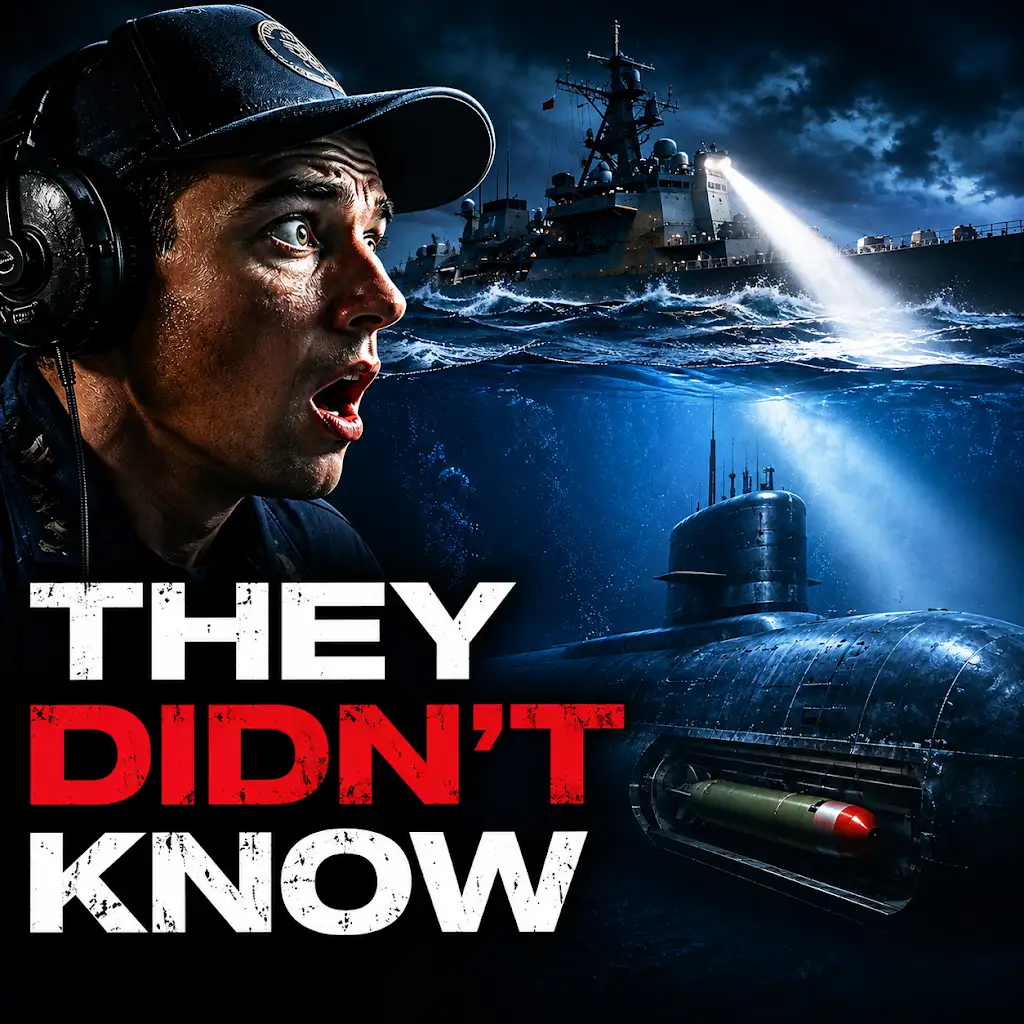
The U.S. Navy Didn’t Know This Submarine Had a Nuclear Torpedo
FAQs
What is the “two to one vote myth” regarding Vasili Arkhipov?
The “two to one vote myth” refers to the popular misconception that during the Cuban Missile Crisis, Vasili Arkhipov, a Soviet naval officer, cast the deciding vote to prevent a nuclear strike, when in fact, the decision was made unanimously by the three officers on board the submarine.
What role did Vasili Arkhipov play in the Cuban Missile Crisis?
Vasili Arkhipov was the second-in-command on the Soviet submarine B-59 during the Cuban Missile Crisis. He played a crucial role in preventing a nuclear strike by refusing to authorize the use of nuclear torpedoes against US naval forces, despite intense pressure from his fellow officers.
How did the “two to one vote myth” originate?
The “two to one vote myth” originated from a misunderstanding of the events that took place on the Soviet submarine B-59 during the Cuban Missile Crisis. The myth gained traction in popular culture and media, leading to the misconception that Arkhipov’s vote was the deciding factor in preventing a nuclear strike.
What was the actual decision-making process on the Soviet submarine B-59?
The decision to use nuclear torpedoes on the Soviet submarine B-59 during the Cuban Missile Crisis was made unanimously by the three senior officers on board, including Vasili Arkhipov. Despite the intense pressure to use the weapons, Arkhipov’s dissenting vote was not the deciding factor in preventing a nuclear strike.
What impact did Vasili Arkhipov’s actions have on the outcome of the Cuban Missile Crisis?
Vasili Arkhipov’s refusal to authorize the use of nuclear torpedoes on the Soviet submarine B-59 played a significant role in preventing a nuclear strike and ultimately contributed to the peaceful resolution of the Cuban Missile Crisis. His actions helped avert a potential nuclear war between the United States and the Soviet Union.