The crisp winter air of December 1944 hung heavy with a false sense of peace. After the relentless Allied advance following D-Day, the Western Front had largely stabilized. Soldiers on both sides, weary from months of brutal combat, expected a period of relative quietude before the spring offensives. Yet, beneath the veneer of calm, Adolf Hitler harbored a desperate, audacious gamble – a plan that would unleash the full fury of the German war machine upon a surprised Allied force and ignite the most brutal and costly battle fought on the Western Front during World War II: The Battle of the Bulge. This is the untold story, the narrative often overshadowed by the sheer scale of the eventual Allied victory, focusing on the human cost, the critical miscalculations, and the forgotten moments of extraordinary courage and harrowing despair.
The Third Reich, teetering on the brink of collapse, faced a bleak winter. The Eastern Front was a bloodbath, with Soviet forces relentlessly pushing westward. On the Western Front, the Allies, having liberated France and Belgium, were poised to invade Germany itself. The strategic situation was dire, and Hitler, increasingly detached from reality, sought a Hail Mary pass, a decisive strike that could shatter the Allied coalition and force them to negotiate a peace favorable to Germany. His solution was audacious, bordering on madness: Operation Wacht am Rhein – Watch on the Rhine.
The Strategic Imperative: A Fading Hope
By late 1944, Germany was undeniably losing the war. Allied air superiority choked off supply lines, and the sheer manpower and industrial might of the United States and the Soviet Union proved overwhelming. Yet, Hitler clung to the belief that a swift, decisive victory could still alter the course of the war. He envisioned a lightning thrust through the Ardennes Forest, a heavily wooded and mountainous region historically considered unsuitable for large-scale armor operations. His objective was to punch through the Allied lines, seize the vital port of Antwerp, thereby severing Allied supply lines and isolating the British and Canadian forces in the north. This, he hoped, would sow discord among the Allies and compel them to seek a separate peace, leaving Germany free to focus its remaining strength against the Soviets.
The Illusion of Secrecy and Surprise
The core of Hitler’s plan rested on achieving absolute surprise. The Ardennes sector was lightly held by American forces, perceived by the German high command as a relatively quiet area, a place where divisions were being refitted and rotated. This perception was crucial. Thousands of German soldiers, tanks, and artillery pieces were secretly amassed in the dense forests, their movements masked by camouflage and the inclement weather. The Allies, lulled into a false sense of security, had largely dismissed the possibility of a major German offensive in this sector. Intelligence reports hinting at increased German activity were largely downplayed or misinterpreted, contributing to the devastating shock of the initial assault.
The Hubris of the Führer
Hitler’s plan was a testament to his unwavering, and ultimately fatal, hubris. He dismissed the counsel of many of his experienced generals who warned of the logistical nightmares and the unrealistic expectations of such an offensive. The plan relied on exceeding the capabilities of the depleted German war machine, particularly in terms of fuel and air support. Despite these clear limitations, Hitler pressed forward, driven by a desperate need to prove his strategic genius and reverse Germany’s fortunes. This blind faith in his own infallibility would ultimately contribute to the catastrophic failure of Operation Wacht am Rhein.
The hidden story of the Battle of the Bulge reveals not only the fierce combat that took place but also the personal experiences of the soldiers who fought bravely during this pivotal moment in World War II. For a deeper understanding of the complexities and lesser-known narratives surrounding this historic battle, you can read a related article that delves into the untold stories of the soldiers and their struggles. To explore this fascinating perspective, visit this article.
The Storm Breaks: The Ardennes Offensive Unleashed
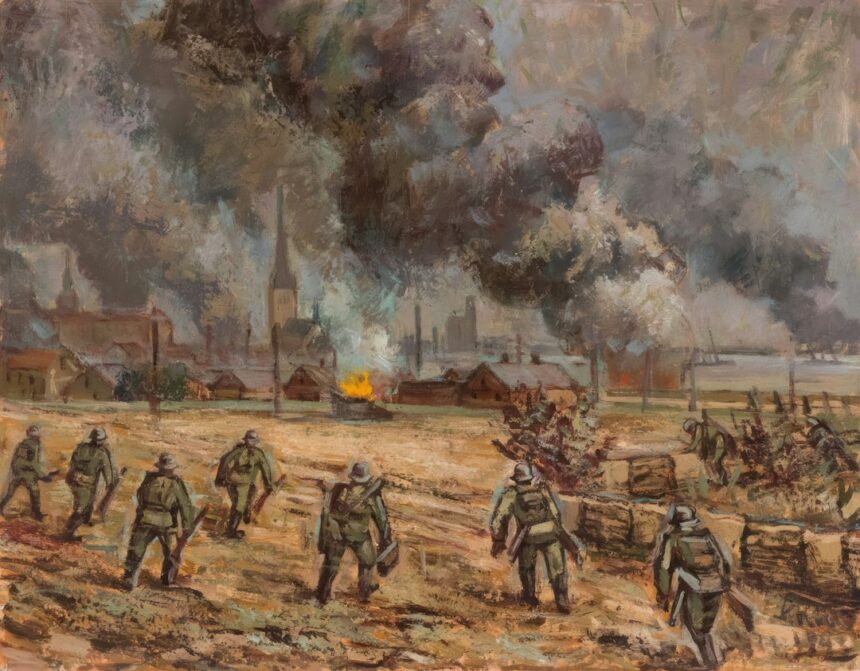
At 05:30 on December 16, 1944, the German guns opened fire, shattering the pre-dawn stillness of the Ardennes. What followed was a brutal, chaotic, and intensely personal battle for survival against a foe who had seemingly risen from the ashes. The surprise was total, and the initial German gains were stunning.
The Initial Shockwave: A Flood of Steel
The Ardennes offensive was launched with overwhelming force. Thousands of German tanks, including the formidable Tiger IIs, spearheaded the attack. The thinly spread American defenders in the Ardennes were caught completely off guard. Lines buckled, communication faltered, and the initial German advance achieved rapid breakthroughs, creating the infamous “bulge” in the Allied front line that would give the battle its name. The sheer ferocity and unexpectedness of the assault sent shockwaves through the Allied command.
The Massacre at Malmedy: A Stain on History
One of the most horrific episodes of the Battle of the Bulge, and indeed of the entire war, occurred on December 17, 1944, near the small Belgian town of Malmedy. Approximately 84 American prisoners of war, captured by the Kampfgruppe Peiper, were systematically murdered by SS troops. These men, disarmed and seeking to surrender, were mowed down by machine-gun fire. The discovery of the massacre sent waves of shock and outrage through the Allied ranks, hardening their resolve and fueling a desire for retribution. The Malmedy Massacre became a symbol of the brutal and often inhumane nature of the conflict, a dark chapter that continues to haunt the memory of the battle.
The Isolation of Bastogne: A Symbol of Resistance
As the German advance pushed deeper, the strategically vital crossroads town of Bastogne became a focal point. Surrounded by German forces, the 101st Airborne Division and elements of the 10th Armored Division found themselves isolated and under siege. Their situation was dire, with dwindling ammunition, medical supplies, and food. Yet, the defenders, famously led by Brigadier General Anthony McAuliffe’s defiant “Nuts!” in response to a surrender demand, held firm. Bastogne became a symbol of American resilience and determination, a crucial linchpin that the Germans desperately needed to capture to further their advance. The tenacious defense of Bastogne, though often celebrated, came at an immense human cost.
The Grinding Reality: The Cost of Survival

The Battle of the Bulge was not just about grand strategies and tactical maneuvers. It was a deeply personal struggle for survival fought in freezing conditions, on snow-covered battlefields, and in the desperate confines of shattered villages. The human cost was staggering.
The Frozen Trenches: A Battle Against the Elements
The winter weather was a brutal adversary in itself. Temperatures plummeted well below freezing, and heavy snowfall hampered movement and choked supply lines. Soldiers on both sides endured unimaginable hardship. Frostbite was rampant, and hypothermia claimed lives as surely as any bullet. The constant dampness, the biting wind, and the lack of adequate shelter created an environment of constant suffering. For many, the battle was as much a fight against the elements as it was against the enemy.
The Civilian Ordeal: Caught in the Crossfire
The civilian population of the Ardennes region bore a terrible burden. Villages were transformed into battlegrounds, and homes were destroyed. Thousands of civilians were displaced, forced to flee their homes in the midst of the fighting. Many were caught in the crossfire, their lives tragically ended by stray bullets or artillery shells. The fear and uncertainty experienced by these innocent bystanders are often overlooked in the grand narrative of military campaigns, yet their suffering was profound and their resilience remarkable.
The Psychological Toll: The Scars That Remain
The intense combat, the constant fear of death, the witness to horrific acts of violence, and the sheer exhaustion took a devastating psychological toll on the soldiers involved. Many who survived the battle carried the invisible wounds of war for the rest of their lives. The Battle of the Bulge, with its prolonged periods of intense fighting and the sheer brutality of the conflict, left an indelible mark on the minds and souls of those who experienced it.
The Turning Tide: Halting the German Advance

Despite the initial shock and the significant territorial gains made by the Germans, the tide of the battle began to turn. Allied reinforcements arrived, and the sheer resilience and determination of the American forces, coupled with strategic blunders by the German command, began to stem the German advance.
The Air War’s Crucial Intervention: Clearing the Skies
A critical factor in halting the German offensive was the eventual improvement in weather conditions. Once the skies cleared, Allied air power, which had been severely hampered by the fog and snow, was unleashed. Allied fighter-bombers and bombers wreaked havoc on German armor and supply lines. The Luftwaffe, largely absent due to Allied air superiority and the demands of the Eastern Front, could offer little resistance. This air superiority proved decisive in disrupting German logistics and preventing them from reinforcing their gains.
The Race Against Time: Allied Reinforcements
As news of the German offensive spread, Allied commanders scrambled to redeploy troops and shore up the collapsing front lines. The U.S. Third Army, under the command of General George S. Patton Jr., famously disengaged from its offensive in Lorraine and executed a daring 90-degree pivot to relieve the besieged Bastogne. This rapid redeployment of forces was a testament to Allied logistical capabilities and the strategic acumen of their commanders. The arrival of these fresh troops provided a much-needed boost to the beleaguered defenders and began to push the Germans back.
The Costly Counterattack: Driving the Germans Back
Once the initial shock had subsided and reinforcements arrived, the Allies launched a series of counterattacks. These were brutal and costly affairs, fought in the same harsh winter conditions. The fighting was often house-to-house in snow-covered villages, with both sides suffering heavy casualties. However, the Allies, with their superior resources and manpower, were able to gradually push the Germans back, forcing them to retreat from the territory they had so rapidly conquered. The “bulge” in the Allied line slowly began to recede.
The Battle of the Bulge, often overshadowed by other significant events of World War II, holds many hidden stories that reveal the resilience and bravery of the soldiers involved. One such story can be explored further in a related article that delves into the lesser-known aspects of this pivotal battle. For those interested in uncovering more about the complexities and personal accounts from this historic conflict, you can read the article here: hidden stories of the Battle of the Bulge.
The Legacy of the Bulge: Lessons Learned and Unlearned
| Aspect | Details |
|---|---|
| Date | December 16, 1944 – January 25, 1945 |
| Location | Ardennes Forest, Belgium and Luxembourg |
| German Forces | Approximately 200,000 troops |
| Allied Forces | Approximately 610,000 troops |
| Casualties (Allied) | Approximately 89,500 (19,000 killed, 47,500 wounded, 23,000 missing) |
| Casualties (German) | Approximately 100,000 (including killed, wounded, and captured) |
| Surprise Factor | German offensive caught Allies off guard due to poor weather and intelligence failures |
| Hidden Story: Intelligence Failures | Allied intelligence underestimated German capabilities and intentions, leading to initial surprise |
| Hidden Story: Role of Weather | Dense fog and snow grounded Allied air support, aiding German advance initially |
| Hidden Story: Use of English-speaking German Soldiers | German troops disguised as Allied soldiers infiltrated lines to cause confusion |
| Hidden Story: Impact on Civilian Population | Thousands of civilians were displaced or caught in crossfire during the offensive |
| Outcome | Allied forces eventually repelled the offensive, depleting German reserves and hastening the end of the war |
The Battle of the Bulge was a watershed moment in World War II. While an Allied victory, it came at a tremendous cost and revealed critical vulnerabilities that would inform future military strategies. The lessons of the battle continue to resonate today, even as some of its most poignant stories remain largely untold.
The Unseen Heroes: Individual Acts of Valor
Beyond the grand strategies and the famous generals, the Battle of the Bulge was defined by countless acts of individual bravery and sacrifice. From the lone radioman who risked his life to relay vital intelligence to the medic who braved enemy fire to save the wounded, these stories of courage often go unnoticed. The ordinary soldiers, thrust into extraordinary circumstances, demonstrated a resilience and determination that was the true backbone of the Allied victory. These are the untold stories, the personal narratives of fear, courage, and camaraderie that deserve to be remembered.
The Strategic Aftermath: A Final German Offensive
The failure of Operation Wacht am Rhein represented the last major offensive effort by Nazi Germany on the Western Front. It drained precious resources, manpower, and matériel that could have been used to defend the homeland. While it inflicted heavy casualties on the Allies, it ultimately hastened the end of the war by fatally weakening the German war machine. The battle marked a point of no return, pushing Germany closer to its inevitable defeat.
The Lingering Questions: What Ifs and What Could Have Been
The Battle of the Bulge continues to be a subject of intense historical study and debate. Questions linger about intelligence failures, the preparedness of Allied forces, and the strategic decisions made by both sides. Historians continue to analyze the battle, seeking to understand the myriad factors that contributed to its brutal intensity and its eventual outcome. The “what ifs” of the battle – what if the surprise had been even greater, what if German logistics had held up, what if Allied reinforcements had been delayed – offer a glimpse into the precarious nature of warfare and the countless variables that can influence its course.
The Battle of the Bulge, though an Allied victory, was a testament to the brutal realities of war, the resilience of the human spirit in the face of unimaginable adversity, and the devastating consequences of desperate gambles. Its untold stories, the personal accounts of fear, courage, and sacrifice, are crucial to understanding the true depth and breadth of this pivotal engagement. It was a battle fought not just on maps and in strategy rooms, but in the frozen forests, the shattered villages, and the hearts and minds of the men who endured its relentless storm.

Eisenhower Gave Montgomery 2 U.S. Armies—Then He Wanted More
FAQs
What was the Battle of the Bulge?
The Battle of the Bulge was a major German offensive campaign launched through the Ardennes region in Belgium during World War II.
When did the Battle of the Bulge take place?
The Battle of the Bulge began on December 16, 1944, and lasted until January 25, 1945.
Why was it called the Battle of the Bulge?
The battle was named after the “bulge” that was created in the Allied front line as a result of the German offensive push into the Ardennes region.
What were the key events of the Battle of the Bulge?
Key events of the Battle of the Bulge include the surprise German attack, the siege of Bastogne, the Allied counteroffensive, and the eventual German retreat.
What was the significance of the Battle of the Bulge?
The Battle of the Bulge was the last major German offensive on the Western Front during World War II and resulted in heavy casualties on both sides. It also marked a turning point in the war, leading to the eventual defeat of Nazi Germany.