The vast, sun-drenched waters of the Pacific held a simmering tension in the autumn of 1941. For Admiral Isoroku Yamamoto, Commander-in-Chief of the Combined Fleet of the Imperial Japanese Navy, this was more than just a geopolitical standoff; it was a calculated gamble, a desperate bid to secure Japan’s future in the face of burgeoning American industrial might. His strategy, culminating in the audacious attack on Pearl Harbor, remains a subject of intense historical scrutiny, a testament to his strategic brilliance, even as its ultimate success remains debated.
Yamamoto understood the fundamental imbalance of power that Japan faced. The United States, with its immense industrial capacity and vast resources, was a behemoth that Japan could not hope to defeat in a prolonged war of attrition. His vision was not one of conquest, but of a swift, decisive blow that would cripple the American Pacific Fleet, thereby buying Japan the time it needed to consolidate its gains in Southeast Asia and establish a defensive perimeter that would be prohibitively costly for the Americans to breach.
The Oil Embargo and the American Stranglehold
The escalating tensions were significantly fueled by the American oil embargo, implemented in response to Japan’s continued aggression in China and its expansionist policies in Southeast Asia. This was not merely an economic inconvenience; it was a strategic chokehold. Japan was heavily reliant on imported oil, and the embargo threatened to bring its military machine to a grinding halt. Yamamoto recognized that without access to vital resources, Japan’s ability to wage war, even a limited one, would be severely compromised. This realization solidified his belief that preemptive action was not just desirable, but a necessity.
The “War Without Victory” Dilemma
Yamamoto famously expressed his skepticism about Japan’s chances in a protracted war against the United States, often quoted as believing he would run rampant over America for the first six months to a year, but that “I have no confidence in our chance of winning. I can run the first six months or a year, but I have no confidence in the second or third year.” This prescient understanding of American resilience and industrial superiority informed his strategic thinking. His goal was not to conquer America, but to inflict a blow so severe that it would force the United States to the negotiating table, accepting Japan’s dominance in Asia.
The Quest for a Decisive Strike
Against this backdrop of existential threat and the daunting prospect of facing an industrial titan, Yamamoto began to formulate his audacious plan. He understood that a conventional naval engagement in the Pacific would likely result in Japan’s long-term disadvantage. Therefore, he sought a strategy that would shatter the American naval presence in its entirety, a preemptive strike that would neutralize the primary threat before it could be effectively deployed.
Isoroku Yamamoto’s strategy for the Pearl Harbor attack has been the subject of extensive analysis, highlighting the complexities of his military planning and the broader implications for World War II. For a deeper understanding of the strategic considerations and outcomes of this pivotal moment in history, you can explore a related article on the topic at In the War Room. This resource provides valuable insights into Yamamoto’s vision and the subsequent impact of the attack on American naval strategy.
The Bold Vision: The Pearl Harbor Offensive
The attack on Pearl Harbor was not conceived in a vacuum. It was the culmination of years of strategic thinking, meticulous planning, and a deep understanding of both Japanese and American naval capabilities. Yamamoto’s vision was to achieve a strategic surprise of unprecedented magnitude, crippling the U.S. Pacific Fleet at its home base.
The “Kido Butai”: The Heart of the Attack Force
The centerpiece of Yamamoto’s offensive was the Kido Butai, the Japanese carrier strike force. This was a revolutionary concept, relying on the coordinated power of aircraft carriers to project air power over vast distances. While the United States also possessed aircraft carriers, their doctrine was more focused on supporting battleship operations. Yamamoto, however, embraced the carrier as the primary offensive weapon, a gamble that would redefine naval warfare. The Kido Butai consisted of six of Japan’s most advanced aircraft carriers, accompanied by a powerful escort of battleships, cruisers, destroyers, and submarines.
The Doctrine of Carrier Supremacy
Yamamoto’s embrace of carrier supremacy was a bold departure from traditional naval thinking. He recognized that the battleship, long considered the ultimate arbiter of naval power, was vulnerable to massed air attack. The success of his plan hinged on the ability of his carrier-based aircraft to overwhelm and destroy the American battleships docked at Pearl Harbor. This was a radical departure from the doctrine of his peers, many of whom still clung to the idea of the decisive surface engagement.
The Element of Surprise: A Strategic Necessity
The success of the Pearl Harbor attack was intrinsically linked to the element of surprise. Yamamoto understood that any warning to the Americans would allow them to disperse their fleet, rendering the attack far less effective. His operational security was paramount, and the decision to launch the attack from waters far from Japan, in secrecy, was a critical component of his strategy. The deception employed, including maintaining diplomatic talks even as the attack was being prepared, was a calculated risk designed to lull the Americans into a false sense of security.
Tactical Execution: The Art of the Surprise Strike

The planning and execution of the Pearl Harbor attack showcase Yamamoto’s meticulous attention to detail and his understanding of tactical maneuver. He meticulously studied the geography of Pearl Harbor, identified vulnerabilities, and developed a multi-wave attack plan designed to maximize damage.
The “Lullaby of Death”: The Dawn Attack
The choice of a Sunday morning for the attack was deliberate. Yamamoto knew that naval personnel would be less alert, ships would be at anchor, and the defenses would be at their weakest. The timing, just before dawn, maximized the element of surprise and allowed the Japanese aircraft to approach undetected. The first wave, launched in the pre-dawn darkness, was intended to inflict maximum damage on the anchored battleships, the symbols of American naval power.
The “Tora! Tora! Tora!”: The Confirmation of Success
The phrase “Tora! Tora! Tora!”, meaning “Tiger! Tiger! Tiger!”, was the coded signal used by the Japanese pilots to confirm that complete surprise had been achieved. This iconic phrase, broadcast back to the fleet, signaled the commencement of a devastating assault. The initial wave of aircraft, comprising torpedo bombers, dive bombers, and fighter planes, unleashed a coordinated assault that overwhelmed the unsuspecting defenders.
The Second and Third Waves: Sustaining the Pressure
The attack was not a single, isolated event. Yamamoto’s plan included multiple waves of aircraft to sustain the pressure on the American forces and to exploit any lingering resistance. The second wave focused on destroying remaining ships and infrastructure, while the third wave aimed to further cripple airfields and fuel storage facilities, preventing any immediate American response. This multi-pronged approach demonstrated a clear understanding of how to achieve decisive operational results.
The “Crucial Mistakes”: The Unfinished Task
Despite the overwhelming tactical success, some historians point to what they deem “crucial mistakes” in the execution that ultimately benefited the Americans. These include the failure to destroy the American aircraft carriers, which were at sea at the time of the attack, and the lack of targeting of the vital fuel oil storage tanks and repair facilities at Pearl Harbor. Yamamoto’s critics argue that a more aggressive targeting of these assets could have crippled the U.S. Pacific Fleet for a much longer period, potentially altering the course of the war.
The Strategic Aftermath: A Pyrrhic Victory?
The immediate impact of the Pearl Harbor attack was a resounding strategic success. It crippled the U.S. Pacific Fleet, igniting American fury and galvanizing public support for entry into World War II. However, the long-term consequences were far from what Yamamoto had envisioned.
The Unintended Consequence: American Resolve
While the attack achieved its immediate objective of naval disruption, it had the unintended consequence of uniting a previously divided America. The outrage over the unprovoked attack transformed public opinion, leading to a surge in enlistments and a national commitment to total war. Yamamoto’s gamble to induce a negotiated peace had instead ignited the full might of the American war machine.
The Missing Aircraft Carriers: A Fatal Oversight
The absence of the U.S. aircraft carriers from Pearl Harbor on December 7, 1941, was a critical factor that ultimately undermined Yamamoto’s strategy. These carriers, the backbone of American naval power in the Pacific, were able to survive the attack and would go on to play a pivotal role in subsequent battles, including the Battle of Midway, which proved to be a turning point in the Pacific War.
The War of Attrition: The Nightmare Realized
Yamamoto’s greatest fear was a protracted war of attrition against the industrial might of the United States. The Pearl Harbor attack, while initially successful, failed to achieve the decisive outcome he had hoped for. Instead, it plunged Japan into a conflict it could not win in the long run, a war of attrition against an enemy with seemingly inexhaustible resources.
Isoroku Yamamoto’s strategy for the Pearl Harbor attack has been the subject of extensive analysis, highlighting the complexities of his military planning and the implications of his decisions. For those interested in a deeper exploration of the strategic considerations that influenced Yamamoto’s approach, a related article can be found at this link. This resource delves into the broader context of the attack and its impact on the course of World War II, providing valuable insights into the mind of one of Japan’s most prominent naval leaders.
The Legacy of Yamamoto’s Gamble: A Mastermind’s Tragic Miscalculation
| Metrics | Data |
|---|---|
| Attack Date | December 7, 1941 |
| Target | Pearl Harbor, Hawaii |
| Objective | Destroy US Pacific Fleet and prevent interference in Japanese expansion in the Pacific |
| Attack Force | 6 aircraft carriers, 2 battleships, 2 heavy cruisers, 1 light cruiser, 9 destroyers, 8 tankers, 23 fleet submarines, 5 midget submarines, and 414 aircraft |
| Result | Significant damage to US fleet, but failed to destroy crucial infrastructure and aircraft carriers |
Isoroku Yamamoto remains a figure of immense historical interest, a brilliant strategist who dared to challenge the established order. His attack on Pearl Harbor, while a masterpiece of tactical execution, ultimately proved to be a tragic miscalculation, a bold gamble that did not yield the desired strategic outcome.
The Genius of Operational Planning
Despite the ultimate failure to secure a favorable peace, Yamamoto’s operational planning for Pearl Harbor was undeniably brilliant. The meticulous coordination of air and naval forces, the audacious concept of the carrier strike force, and the relentless pursuit of surprise all stand as testaments to his strategic acumen. He pushed the boundaries of naval warfare and demonstrated a vision that was, in many ways, ahead of his time.
The Unforeseen Resilience of America
Yamamoto understood the industrial power of America, but perhaps underestimated its unwavering resolve and its capacity to mobilize for total war. His hope was to sow enough disruption to force a negotiated settlement. Instead, he galvanized American determination and unleashed a force that would ultimately overwhelm Japan.
A Debate That Continues
The strategic brilliance of Isoroku Yamamoto at Pearl Harbor continues to be a subject of debate among historians and military strategists. Was it a flawed masterpiece, a brilliant tactical victory that devolved into strategic defeat? Or was it a necessary gamble, a desperate attempt to alter an inevitable destiny? The answer, like the ebb and flow of the Pacific tide, remains complex and open to interpretation. Nevertheless, the story of Yamamoto’s audacious plan and its profound impact on the course of World War II remains a compelling and enduring chapter in military history.
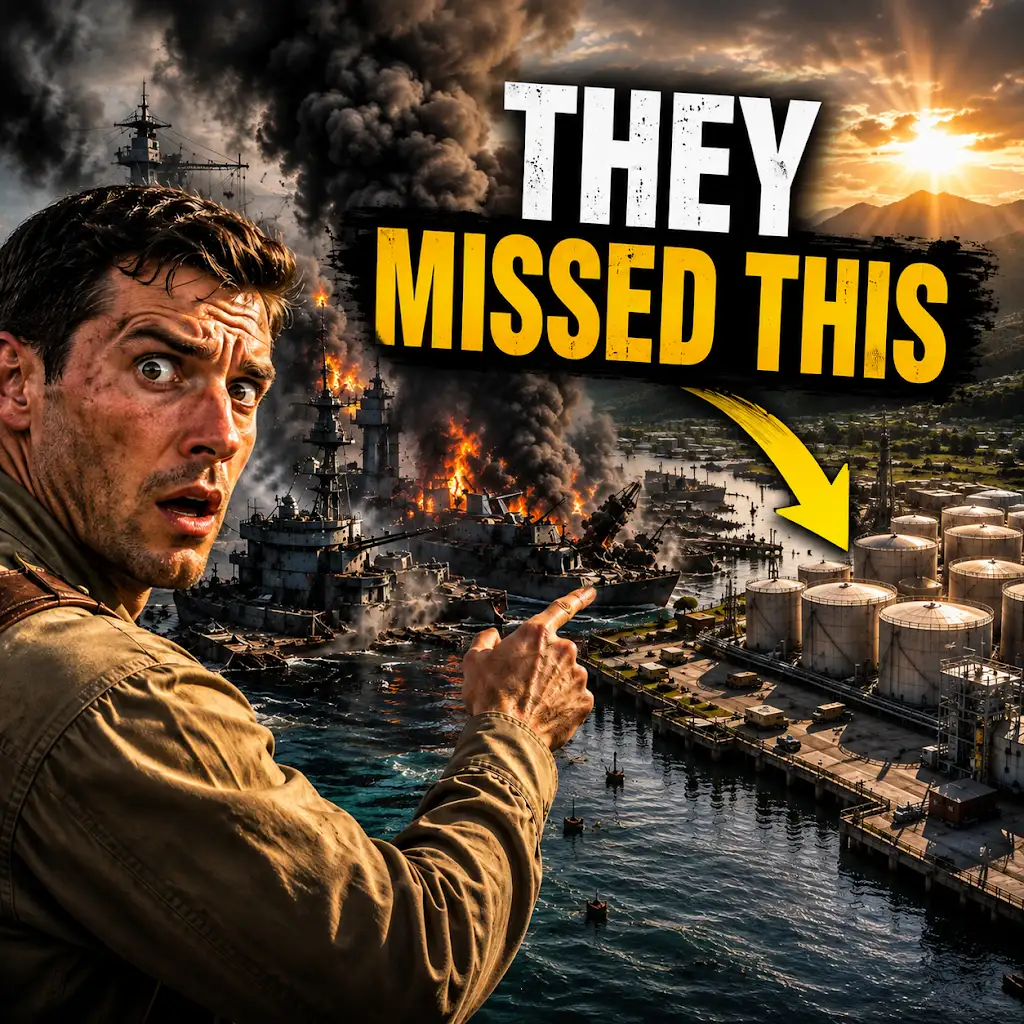
Japan Won Pearl Harbor—So Why Did It Lose the War?
FAQs
Who was Isoroku Yamamoto?
Isoroku Yamamoto was a Japanese Marshal Admiral of the Imperial Japanese Navy during World War II. He was the commander-in-chief of the Combined Fleet and played a major role in the planning of the attack on Pearl Harbor.
What was Isoroku Yamamoto’s strategy for the attack on Pearl Harbor?
Yamamoto’s strategy for the attack on Pearl Harbor was to launch a surprise aerial assault on the United States Pacific Fleet, with the goal of crippling the fleet and preventing the US from interfering with Japanese military operations in the Pacific.
Did Isoroku Yamamoto’s strategy for Pearl Harbor achieve its objectives?
The attack on Pearl Harbor on December 7, 1941, was successful in causing significant damage to the US Pacific Fleet. However, the attack did not achieve its ultimate objective of completely crippling the fleet, as the US aircraft carriers were not present at the time of the attack.
What were the consequences of Isoroku Yamamoto’s strategy for Pearl Harbor?
The attack on Pearl Harbor led to the United States’ entry into World War II and ultimately resulted in a turning point in the war in the Pacific. The US mobilized its resources and military strength, leading to a series of decisive victories against Japan.
What was Isoroku Yamamoto’s fate after the attack on Pearl Harbor?
Isoroku Yamamoto continued to serve as the commander-in-chief of the Combined Fleet and was involved in subsequent military operations in the Pacific. He was killed in 1943 when his plane was shot down by American forces during an ambush in the Solomon Islands.