The origins of the Soviet submarine silent arms race can be traced back to the aftermath of World War II, a period marked by intense geopolitical tensions and the onset of the Cold War. As the Soviet Union emerged as one of the two superpowers, it recognized the strategic importance of naval power, particularly in the realm of underwater warfare. The development of submarines became a focal point for military planners, who understood that stealth and surprise were crucial elements in naval engagements.
The United States had already begun to invest heavily in submarine technology, particularly with the introduction of nuclear-powered submarines, which prompted the Soviets to accelerate their own programs. In this context, the Soviet Union sought to develop submarines that could operate undetected in enemy waters. The need for stealth was underscored by the growing threat posed by American naval forces, which were equipped with advanced sonar and anti-submarine warfare capabilities.
The Soviets recognized that to counterbalance this technological advantage, they needed to innovate and create submarines that could evade detection. This marked the beginning of a silent arms race, where both superpowers competed not only in numbers but also in technological sophistication, leading to significant advancements in submarine design and capabilities.
Key Takeaways
- The Soviet Union initiated a silent submarine arms race to enhance stealth capabilities during the Cold War.
- Submarines played a crucial role in Soviet military strategy as strategic deterrents and intelligence platforms.
- Advances in quiet propulsion and hull design marked significant developments in Soviet silent submarine technology.
- The silent arms race intensified Cold War tensions and influenced global naval power dynamics.
- Soviet innovations in submarine stealth continue to impact modern submarine warfare and technology worldwide.
The Role of Submarines in Soviet Military Strategy
Submarines played a pivotal role in Soviet military strategy during the Cold War, serving as a critical component of the nation’s nuclear deterrent. The Soviet leadership understood that a robust submarine fleet would provide them with a second-strike capability, ensuring that even in the event of a nuclear attack, they could retaliate effectively. This strategic doctrine was rooted in the belief that submarines could operate stealthily, launching ballistic missiles from concealed positions, thus complicating enemy defense strategies.
Moreover, submarines were not solely viewed as tools of nuclear deterrence; they were also integral to conventional warfare strategies. The Soviet Navy envisioned a fleet capable of projecting power across vast distances, disrupting enemy supply lines, and conducting reconnaissance missions. This dual role of submarines—both as instruments of deterrence and as offensive weapons—highlighted their significance within the broader framework of Soviet military doctrine.
As such, the development of silent submarines became a priority, as these vessels would enhance the effectiveness of Soviet naval operations and contribute to the overall security of the state.
The Development of Silent Submarine Technology in the Soviet Union
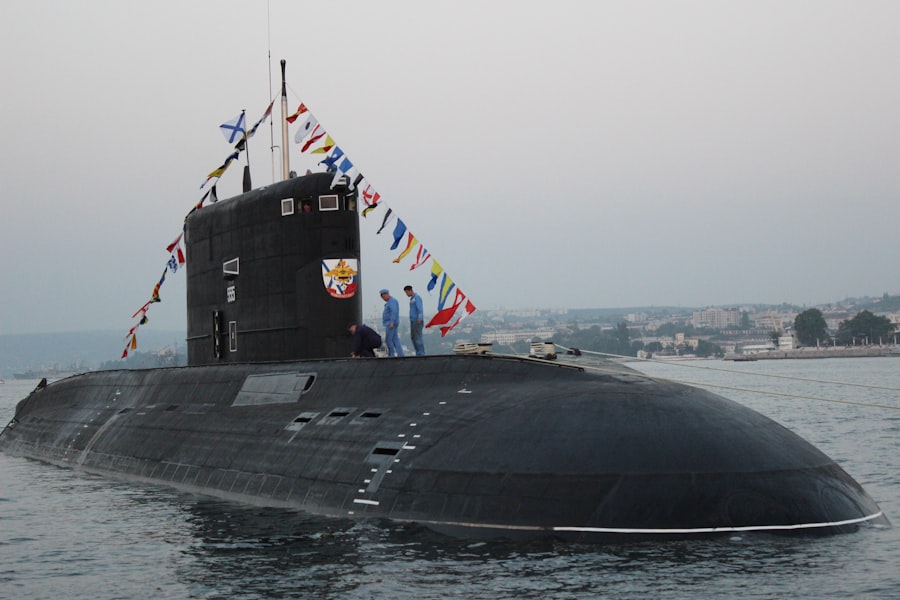
The development of silent submarine technology in the Soviet Union was characterized by a series of innovative engineering solutions aimed at reducing noise levels and enhancing stealth capabilities. Early on, Soviet designers recognized that traditional propulsion systems generated significant noise, which could easily be detected by enemy sonar systems. To address this challenge, they explored alternative propulsion methods, including the use of electric motors and advanced hull designs that minimized hydrodynamic drag.
One notable advancement was the introduction of anechoic tiles—specialized materials designed to absorb sound waves—on submarine hulls. These tiles significantly reduced the acoustic signature of submarines, making them harder to detect. Additionally, advancements in materials science allowed for the construction of quieter machinery and systems within the submarines themselves.
The combination of these technologies not only improved stealth but also enhanced operational effectiveness, allowing Soviet submarines to operate more freely in contested waters.
The Impact of the Silent Arms Race on Cold War Politics
The silent arms race had profound implications for Cold War politics, shaping diplomatic relations and military strategies on both sides of the Iron Curtain. As each superpower sought to outpace the other in submarine technology, tensions escalated, leading to an arms buildup that characterized much of the Cold War era. The competition for naval supremacy extended beyond mere military capabilities; it influenced international alliances and shaped global perceptions of power dynamics.
The presence of silent submarines also altered strategic calculations during crises. For instance, during events such as the Cuban Missile Crisis, the knowledge that both sides possessed advanced submarine capabilities added layers of complexity to decision-making processes. Leaders had to consider not only land-based missile threats but also the potential for submarine-launched attacks.
This heightened sense of uncertainty contributed to a precarious balance of power, where both superpowers were acutely aware that any miscalculation could lead to catastrophic consequences.
The Race for Stealth: Soviet Submarine Design and Construction
| Year | Country | Submarine Class | Quieting Technology | Noise Level (dB) | Significance |
|---|---|---|---|---|---|
| 1960 | USSR | November Class (Project 627) | Basic hull design, limited sound dampening | ~120 | Early Soviet nuclear submarine, relatively noisy |
| 1970 | USSR | Victor I Class (Project 671) | Improved machinery isolation, hull coatings | ~100 | First significant Soviet quieting improvements |
| 1975 | USA | Los Angeles Class | Advanced sound isolation, anechoic tiles | ~85 | Set new quieting standards, spurred Soviet efforts |
| 1980 | USSR | Akula Class (Project 971) | Advanced anechoic tiles, improved machinery mounts | ~90 | Marked Soviet catch-up in quieting technology |
| 1985 | USA | Seawolf Class | State-of-the-art quieting, pump-jet propulsion | ~80 | Further reduced noise, maintained US edge |
| 1990 | USSR/Russia | Yasen Class (Project 885) | Advanced quieting, improved hull design, pump-jet | ~85 | Modern Russian submarine with competitive quieting |
The race for stealth in submarine design and construction was marked by a series of ambitious projects undertaken by Soviet engineers and naval architects. The development of classes such as the Akula and Typhoon submarines exemplified this commitment to creating vessels that could operate undetected while carrying out their missions. These submarines were designed with advanced hydrodynamic shapes that reduced noise and improved maneuverability, allowing them to evade detection by enemy sonar systems.
Moreover, the construction process itself underwent significant changes as a result of this focus on stealth. The Soviets invested heavily in research and development facilities dedicated to submarine technology, fostering an environment where innovation could thrive.
As a result, Soviet submarines became increasingly sophisticated, incorporating cutting-edge technologies that enhanced their stealth capabilities and overall effectiveness.
The Evolution of Soviet Submarine Weapons Systems
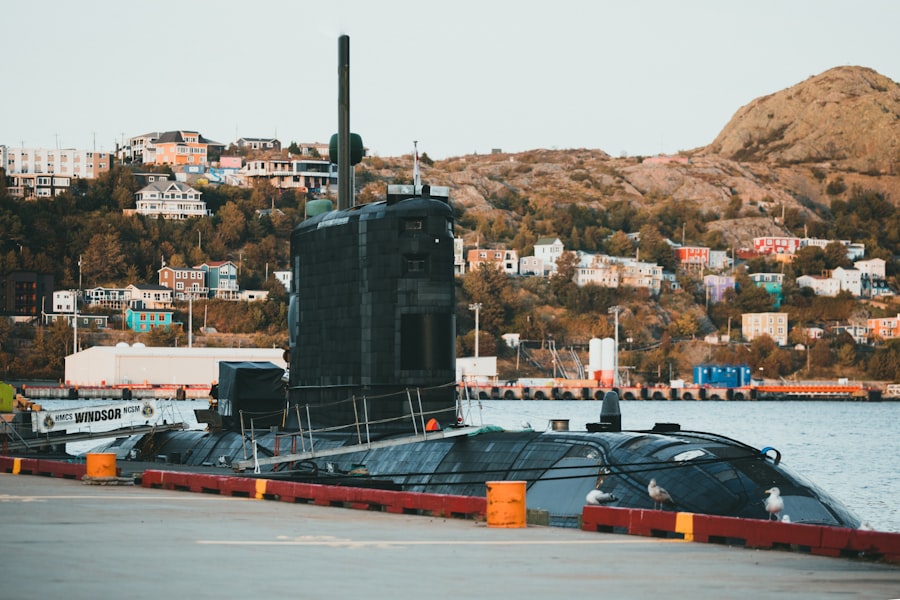
The evolution of Soviet submarine weapons systems was closely tied to advancements in submarine technology and strategic military needs. Initially focused on torpedoes and conventional armaments, Soviet designers began integrating more sophisticated missile systems into their submarines as the Cold War progressed. This shift reflected a broader understanding of naval warfare, where submarines were not only platforms for stealthy operations but also critical components of nuclear deterrence.
One significant development was the introduction of submarine-launched ballistic missiles (SLBMs), which allowed submarines to strike targets from great distances while remaining hidden beneath the waves. This capability transformed submarines into formidable strategic assets capable of delivering nuclear payloads with precision. Additionally, advancements in targeting systems and guidance technologies further enhanced the effectiveness of these weapons, ensuring that Soviet submarines could engage enemy targets with greater accuracy than ever before.
The Cat-and-Mouse Game: Soviet Submarine Operations and Western Detection
The cat-and-mouse game between Soviet submarines and Western detection systems defined much of the Cold War naval landscape. As both sides developed increasingly sophisticated technologies for detecting underwater threats, Soviet submariners had to adapt their tactics to avoid detection while carrying out their missions. This dynamic created a high-stakes environment where stealth was paramount, leading to innovative operational strategies.
Soviet submarines often employed tactics such as operating at varying depths and utilizing natural underwater features to mask their presence from enemy sonar systems. Additionally, they engaged in deceptive maneuvers designed to confuse Western detection efforts. This ongoing struggle between detection and evasion underscored the importance of intelligence gathering and counterintelligence operations on both sides, as each sought to gain an advantage over the other in this high-stakes game.
The Legacy of the Soviet Submarine Silent Arms Race
The legacy of the Soviet submarine silent arms race is evident in contemporary naval strategies and technologies employed by modern navies around the world.
Many principles established during this era—such as stealth technology and advanced weapon systems—remain central to modern underwater warfare.
Furthermore, the lessons learned from this arms race have shaped international naval policies and defense strategies. Nations recognize the importance of maintaining a credible underwater deterrent while also investing in technologies that enhance detection capabilities. The balance between offensive and defensive strategies continues to evolve as new threats emerge, reflecting the enduring impact of the Cold War submarine arms race on contemporary military thought.
The Influence of the Silent Arms Race on Modern Submarine Warfare
The influence of the silent arms race on modern submarine warfare is profound, as contemporary navies have inherited both technological advancements and strategic doctrines from this period. Today’s submarines are equipped with advanced stealth features that allow them to operate undetected in hostile environments, reflecting lessons learned from Soviet innovations. Moreover, modern naval strategies emphasize the importance of undersea warfare as a critical component of national defense.
Additionally, the proliferation of submarine technology has led to increased competition among nations seeking to enhance their underwater capabilities. Countries around the world are investing in research and development programs aimed at creating next-generation submarines that incorporate cutting-edge technologies such as artificial intelligence and unmanned systems. This ongoing evolution underscores how the silent arms race has shaped not only military capabilities but also geopolitical dynamics in an increasingly complex global landscape.
The Soviet Union’s Contribution to Global Submarine Technology
The Soviet Union’s contribution to global submarine technology cannot be overstated; its innovations have had lasting effects on naval engineering worldwide. Many countries have drawn inspiration from Soviet designs and technologies when developing their own submarine fleets. The emphasis on stealth and advanced weaponry established by Soviet engineers has become a benchmark for modern naval powers seeking to enhance their underwater capabilities.
Moreover, collaborative efforts between former Soviet states and other nations have facilitated knowledge transfer regarding submarine technology. As countries seek to modernize their fleets or develop new capabilities, they often look back at Soviet advancements as foundational elements upon which they can build their own innovations. This legacy continues to shape global naval strategies and technological developments today.
The Future of Silent Submarine Technology: Lessons from the Soviet Arms Race
Looking ahead, the future of silent submarine technology will likely be influenced by lessons learned from the Soviet arms race during the Cold War. As nations continue to invest in advanced underwater capabilities, there is an increasing recognition that stealth remains a critical factor in ensuring operational success. Emerging technologies such as quantum sensors and advanced materials may further revolutionize submarine design, allowing for even greater levels of stealth.
Additionally, geopolitical tensions will continue to drive competition among nations seeking dominance in undersea warfare capabilities. The lessons learned from past arms races will inform contemporary strategies as nations navigate complex security environments characterized by rapid technological change and evolving threats. Ultimately, understanding the historical context provided by the Soviet submarine silent arms race will be essential for shaping future developments in underwater warfare technology and strategy.
The ongoing arms race in submarine quieting technology during the Cold War has had significant implications for naval warfare and strategic balance. For a deeper understanding of the historical context and technological advancements in this area, you can read more in the article on In the War Room. This resource provides valuable insights into the developments that shaped the capabilities of Soviet submarines and their impact on global security dynamics.
WATCH THIS! 🎖️ The Silent Underwater Network That Doomed Every Soviet Submarine
FAQs
What was the Soviet submarine quieting arms race?
The Soviet submarine quieting arms race was a period during the Cold War when the Soviet Union and the United States competed to develop quieter and more stealthy submarines. This competition aimed to improve the survivability and effectiveness of their respective submarine fleets by reducing noise emissions that could be detected by enemy sonar.
Why was submarine quieting important during the Cold War?
Submarine quieting was crucial because quieter submarines were harder to detect by sonar, giving them a strategic advantage in stealth, reconnaissance, and attack capabilities. This was especially important during the Cold War, as both superpowers sought to maintain nuclear deterrence and naval superiority.
What technologies were used to quiet Soviet submarines?
The Soviets employed various technologies to reduce submarine noise, including improved hull designs, sound-absorbing coatings, quieter propulsion systems, and advanced machinery isolation techniques. They also developed anechoic tiles—rubber-like coatings that absorb sonar waves—to reduce sonar detection.
How did the Soviet submarine quieting efforts compare to those of the United States?
Initially, Soviet submarines were noisier and easier to detect than their American counterparts. However, over time, the Soviet Union made significant advancements in quieting technology, narrowing the gap. Despite improvements, many experts believe that U.S. submarines generally maintained a noise advantage throughout the Cold War.
What impact did the submarine quieting arms race have on naval strategy?
The arms race led to increased investments in anti-submarine warfare (ASW) technologies and tactics by both sides. It also influenced the design and deployment of submarines, with a focus on stealth and survivability. The competition heightened tensions but also drove technological innovation in naval warfare.
When did the Soviet submarine quieting arms race take place?
The arms race primarily occurred from the 1960s through the 1980s, coinciding with the height of the Cold War. It was part of the broader military competition between the Soviet Union and the United States during this period.
Did the Soviet submarine quieting arms race continue after the Cold War?
After the Cold War, the pace of the arms race slowed due to reduced tensions and budget constraints. However, Russia has continued to develop quieter submarines, incorporating lessons learned during the Cold War and modern technologies to maintain its submarine capabilities.