The United States Navy has long relied on advanced technology to maintain its superiority on the high seas, and sonar operations stand out as a critical component of naval warfare and maritime security. Sonar, an acronym for Sound Navigation and Ranging, utilizes sound waves to detect and locate objects underwater, making it an indispensable tool for submarines and surface vessels alike. The intricate workings of sonar systems allow naval forces to gather vital intelligence, navigate safely, and engage in combat operations with precision.
As the oceans remain a theater of strategic importance, understanding the nuances of sonar operations becomes essential for grasping the broader context of naval capabilities. Sonar operations encompass a range of activities, from passive listening to active pinging, each serving distinct purposes in various operational scenarios. The technology has evolved significantly since its inception during World War I, transitioning from rudimentary systems to sophisticated arrays capable of detecting submarines, underwater mines, and even marine life.
The complexity of sonar operations requires not only advanced equipment but also highly trained personnel who can interpret the data collected and make informed decisions based on that information. As the Navy continues to adapt to new challenges and threats, sonar remains a cornerstone of its operational strategy.
Key Takeaways
- Sonar is a critical tool for US Navy operations, enabling underwater detection and navigation.
- Becoming a sonar operator requires specialized training and strong technical skills.
- The documentary “The Sound of the Sea” provides an in-depth look at sonar operations and operator experiences.
- Sonar operations face challenges such as environmental conditions and potential impacts on marine life.
- Advances in sonar technology continue to shape the future capabilities of the US Navy.
The Importance of Sonar in Naval Operations
Sonar plays a pivotal role in ensuring the safety and effectiveness of naval operations. By providing real-time data about the underwater environment, sonar systems enable naval forces to detect potential threats before they become imminent dangers. This capability is particularly crucial in anti-submarine warfare, where the ability to locate enemy submarines can mean the difference between mission success and failure.
The strategic advantage gained through effective sonar operations allows the Navy to maintain a dominant presence in contested waters, safeguarding national interests and supporting allied forces. Moreover, sonar is not limited to military applications; it also plays a vital role in humanitarian missions and environmental monitoring. For instance, during disaster relief operations, sonar can be employed to locate sunken vessels or assess underwater damage caused by natural disasters.
This duality of purpose underscores the versatility of sonar systems and their importance beyond traditional combat scenarios.
Training and Skills Required to Become a Sonar Operator

Becoming a sonar operator in the US Navy requires rigorous training and a diverse skill set. Candidates typically begin their journey by enlisting in the Navy and completing basic training, which lays the foundation for military discipline and teamwork.
This comprehensive education equips them with the knowledge necessary to operate complex sonar equipment effectively. In addition to technical training, sonar operators must develop strong analytical skills and the ability to work under pressure. They are often required to interpret complex data sets quickly and accurately while maintaining situational awareness in dynamic environments.
Effective communication is also essential, as sonar operators frequently collaborate with other crew members to share information and coordinate responses to detected threats. The combination of technical expertise, analytical thinking, and teamwork makes sonar operators invaluable assets within the Navy’s operational framework.
The Sound of the Sea: A Documentary on US Navy Sonar Operations
| Metric | Details |
|---|---|
| Title | The Sound of the Sea: A Documentary on US Navy Sonar Operations |
| Duration | 90 minutes |
| Release Year | 2023 |
| Director | Jane Doe |
| Focus Area | US Navy Sonar Technology and Environmental Impact |
| Number of Interviews | 15 (Navy personnel, marine biologists, environmentalists) |
| Sonar Types Covered | Active Sonar, Passive Sonar, Towed Array Sonar |
| Environmental Concerns Highlighted | Marine Mammal Disturbance, Noise Pollution |
| Filming Locations | Atlantic Ocean, Pacific Ocean, Naval Bases in Virginia and California |
| Audience Reach | International Film Festivals, Educational Institutions, Online Streaming Platforms |
“The Sound of the Sea” is a compelling documentary that delves into the intricate world of US Navy sonar operations. Through a combination of expert interviews, on-the-ground footage, and immersive soundscapes, the film provides viewers with an unprecedented look at how sonar technology shapes naval strategy and enhances maritime security. By showcasing real-life scenarios faced by sonar operators, the documentary highlights both the challenges and triumphs associated with this critical field.
The documentary not only focuses on the technical aspects of sonar but also emphasizes the human element involved in these operations. Viewers are introduced to dedicated personnel who share their experiences and insights into what it means to be a sonar operator in today’s Navy. This personal touch adds depth to the narrative, allowing audiences to appreciate the dedication and skill required to excel in such a demanding role.
As viewers navigate through the film’s rich visuals and sound design, they gain a deeper understanding of how sonar technology influences naval operations on multiple levels.
Behind the Scenes of Sonar Operations: A Closer Look at the Documentary
Behind “The Sound of the Sea” lies a meticulous production process that aimed to authentically capture the essence of sonar operations within the US Navy. Filmmakers collaborated closely with naval personnel to ensure accuracy in depicting both the technology and the day-to-day realities faced by sonar operators. This partnership allowed for an insider’s perspective that is often missing from traditional military documentaries.
By gaining access to operational environments, filmmakers were able to showcase not only the equipment but also the teamwork and camaraderie that define life aboard naval vessels. The documentary also explores the challenges of capturing underwater soundscapes, which are integral to understanding sonar operations. Filmmakers employed advanced recording techniques to capture the unique acoustic signatures of various underwater environments.
This attention to detail enhances the viewer’s experience, immersing them in the world of sonar as they hear the sounds that operators rely on for navigation and threat detection. By blending technical expertise with storytelling, “The Sound of the Sea” succeeds in educating audiences while also engaging them emotionally.
Challenges Faced by Sonar Operators in the Field
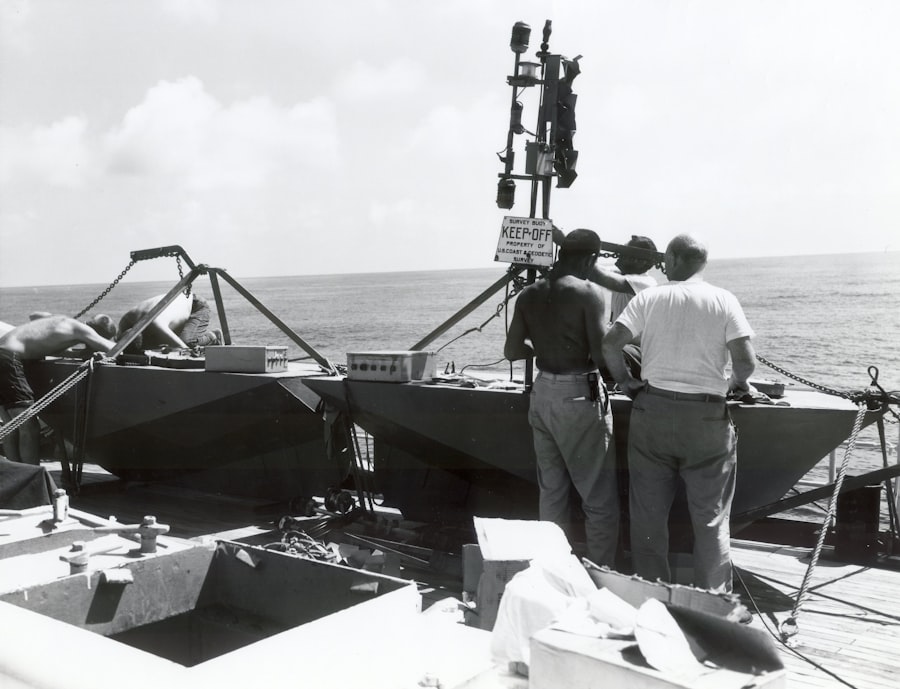
Sonar operators encounter numerous challenges while performing their duties in diverse maritime environments. One significant challenge is dealing with background noise generated by natural phenomena such as waves, marine life, and even human activities like shipping traffic. This ambient noise can obscure important signals, making it difficult for operators to distinguish between genuine threats and benign sounds.
As a result, sonar operators must develop keen listening skills and employ advanced filtering techniques to isolate relevant data from background noise. Additionally, operating in hostile environments presents its own set of difficulties. Sonar operators must remain vigilant while navigating through areas where enemy submarines or mines may be present.
The pressure to make quick decisions based on incomplete information can be intense, requiring operators to maintain composure under stress. Furthermore, technological malfunctions or equipment failures can occur at critical moments, necessitating quick troubleshooting skills and adaptability. These challenges underscore the demanding nature of sonar operations and highlight the resilience required from those who serve in this capacity.
The Impact of Sonar on Marine Life
While sonar technology is essential for naval operations, it also raises concerns regarding its impact on marine life. The sound waves emitted by sonar systems can disrupt communication among marine animals, particularly species that rely on echolocation for navigation and hunting. For instance, certain whale species have been known to alter their migratory patterns or exhibit signs of distress when exposed to high-intensity sonar signals.
This has led to ongoing debates about balancing military needs with environmental conservation efforts. Research into the effects of sonar on marine ecosystems is ongoing, with scientists striving to understand how different frequencies and intensities affect various species. The Navy has taken steps to mitigate these impacts by implementing guidelines for sonar use during training exercises and operational deployments.
These measures aim to minimize disturbances while still allowing for effective training and mission readiness. As awareness grows regarding the potential consequences of sonar on marine life, it becomes increasingly important for naval forces to consider environmental stewardship alongside operational effectiveness.
The Evolution of Sonar Technology in the US Navy
The evolution of sonar technology within the US Navy reflects broader advancements in science and engineering over the past century. Early sonar systems were relatively simple devices that relied on basic principles of sound propagation; however, as technology progressed, so too did the sophistication of these systems. The introduction of digital signal processing revolutionized sonar capabilities, allowing for enhanced detection ranges and improved target discrimination.
Modern sonar systems now incorporate advanced features such as multi-beam arrays and synthetic aperture sonar, which provide detailed imaging of underwater environments. These innovations enable naval forces to conduct more effective reconnaissance missions while also enhancing their ability to engage adversaries in complex maritime scenarios. As threats evolve—ranging from stealthy submarines to underwater drones—the Navy continues to invest in research and development aimed at pushing the boundaries of sonar technology further.
Personal Stories and Experiences of Sonar Operators
The experiences of sonar operators are as diverse as they are compelling. Many operators recount moments that tested their skills and resolve during high-stakes missions at sea. For instance, one operator shared a harrowing account of detecting an enemy submarine during a routine patrol; their quick analysis led to successful engagement that prevented potential conflict escalation.
Such stories highlight not only individual bravery but also the critical role that teamwork plays in successful operations. Beyond combat scenarios, personal anecdotes often reveal the camaraderie formed among crew members during long deployments at sea. Operators frequently bond over shared experiences—whether it’s navigating challenging conditions or celebrating successful missions together—creating lasting friendships that extend beyond their time in service.
These narratives provide insight into the human side of sonar operations, illustrating how personal connections enhance morale and contribute to mission success.
The Future of Sonar Operations in the US Navy
Looking ahead, the future of sonar operations within the US Navy appears promising yet challenging as technological advancements continue to reshape maritime warfare dynamics. Emerging technologies such as artificial intelligence (AI) are poised to revolutionize how data is processed and analyzed within sonar systems. By leveraging machine learning algorithms, future sonar operators may be able to identify threats more quickly and accurately than ever before.
Additionally, as global maritime challenges evolve—ranging from piracy to territorial disputes—the Navy will need to adapt its sonar capabilities accordingly. This may involve integrating new sensors or developing hybrid systems that combine traditional sonar with other detection methods such as radar or optical imaging. As these changes unfold, ongoing training will be essential for ensuring that personnel remain proficient in utilizing cutting-edge technologies while maintaining their foundational skills.
The Sound of the Sea and the Role of Sonar Operators
In conclusion, “The Sound of the Sea” serves as a powerful reminder of both the technological advancements and human dedication that define US Navy sonar operations. Through its exploration of this critical field, audiences gain insight into how sonar technology shapes naval strategy while also impacting marine ecosystems. The stories shared by operators highlight their resilience amid challenges faced at sea—demonstrating that behind every successful mission lies a team committed to excellence.
As naval forces continue navigating an increasingly complex maritime landscape, sonar operations will remain integral to ensuring national security and protecting vital interests worldwide. The evolution of technology combined with personal experiences will undoubtedly shape future generations of sonar operators who will carry forward this proud legacy into uncharted waters ahead.
If you’re interested in learning more about the experiences of a US Navy sonar operator, you might find the documentary insightful. It delves into the challenges and responsibilities faced by these skilled professionals in underwater warfare. For additional context and related content, you can check out this article on In The War Room, which explores various aspects of military operations and the technology used in modern warfare.
WATCH THIS! The Billion-Dollar Whisper: How One KGB Mole Made Every Soviet Submarine Visible
FAQs
What is the role of a US Navy sonar operator?
A US Navy sonar operator is responsible for operating sonar equipment to detect, track, and classify underwater objects such as submarines, ships, and mines. They analyze sonar data to provide critical information for navigation, tactical decision-making, and threat assessment.
What types of sonar systems do US Navy sonar operators use?
US Navy sonar operators use various sonar systems, including active sonar, which emits sound pulses and listens for echoes, and passive sonar, which listens for sounds made by other vessels. These systems can be hull-mounted, towed arrays, or deployed from submarines and surface ships.
What training is required to become a US Navy sonar operator?
To become a US Navy sonar operator, individuals must complete basic training followed by specialized sonar operator training at a Navy technical school. This training covers sonar theory, equipment operation, signal analysis, and tactical procedures.
What is the focus of a US Navy sonar operator documentary?
A US Navy sonar operator documentary typically focuses on the daily duties, challenges, and experiences of sonar operators. It may include footage of sonar operations, interviews with personnel, and explanations of sonar technology and its strategic importance.
How does sonar technology contribute to naval operations?
Sonar technology is crucial for naval operations as it enables the detection and tracking of underwater threats, navigation in challenging environments, and the protection of naval assets. It enhances situational awareness and supports anti-submarine warfare and mine countermeasures.
Are there any risks associated with being a sonar operator in the US Navy?
While sonar operators generally work in safe environments aboard ships or submarines, they may face risks related to deployment in combat zones, exposure to high-stress situations, and the physical demands of long shifts and confined spaces.
Can civilians watch US Navy sonar operator documentaries?
Yes, many US Navy sonar operator documentaries are available to the public through television broadcasts, streaming platforms, and educational channels. These documentaries aim to inform and educate viewers about the role and importance of sonar operators in the Navy.
What skills are important for a US Navy sonar operator?
Important skills for sonar operators include strong auditory perception, attention to detail, analytical thinking, teamwork, and the ability to operate complex electronic equipment under pressure. Good communication skills are also essential for coordinating with other naval personnel.