The chilling silence of the deep sea, a silent testament to the immense pressures and unforgiving environment, became a stage for a remarkable feat of engineering and human ingenuity. When the Soviet submarine K-129 vanished in the Pacific Ocean in 1968, it carried with it a crew of 98 men and a potent arsenal. Its loss was not merely a maritime tragedy; it was a geopolitical quandary, a ghost ship shrouded in mystery. Years later, a daring and unprecedented mission, codenamed “Project Jennifer,” would aim to unravel that mystery and reclaim the lost vessel, relying heavily on the capabilities of a revolutionary mechanical hand. This is the story of how a technological marvel plucked a lost echo from the ocean’s abyss.
The Strategic Context
In the tense geopolitical climate of the Cold War, the Soviet Union’s submarine fleet was a critical component of its military might. The K-129, a Project 629A Golf-class diesel-electric ballistic missile submarine, was one such vessel. Its operational deployment was a constant shadow cast on the naval strategies of its adversaries, particularly the United States. The loss of such a strategic asset was more than just a casualty; it represented a significant disruption in the balance of power and a potential intelligence coup for whoever could understand its fate.
The Incident: A Silent Descent
The exact circumstances leading to the K-129’s demise remain a subject of speculation. On March 8, 1968, the submarine, operating in the Pacific Ocean off the coast of Hawaii, failed to check in with its fleet. Its last known transmission was a routine report, painting a picture of a normal operational day. Then, it simply vanished. The vastness of the ocean became its tomb, a sarcophagus sealed by miles of water. Without a trace, without a distress signal, the K-129 joined the ranks of maritime legends, its fate a persistent question mark.
The Search Begins: A Needle in a Haystack
The immediate aftermath of the disappearance saw extensive search efforts, primarily by the Soviet Union. However, the sheer immensity of the Pacific Ocean made locating a submerged submarine an almost insurmountable task. The Soviets deployed considerable resources, but the K-129 remained stubbornly elusive, a spectral presence lost in the ocean’s embrace. The silence from the K-129 was a deafening roar to those searching for answers, a constant reminder of the depths that held their secrets.
In a fascinating exploration of engineering marvels, the article on the mechanical hand that raised a Soviet submarine highlights the innovative technology behind underwater recovery operations. This remarkable feat not only showcases the capabilities of modern robotics but also emphasizes the importance of such advancements in preserving historical artifacts. For more insights into this groundbreaking technology, you can read the full article here: Mechanical Hand Raises Soviet Sub.
Project Jennifer: A Bold Gambit
The Intelligence Imperative
While the Soviet Union grappled with the loss of its submarine and crew, the United States, through its sophisticated intelligence networks, became aware of the disappearance. The potential to recover sensitive Soviet technology, intelligence materials, and even understand the cause of the sinking was a prize too significant to ignore. This realization ignited the clandestine “Project Jennifer,” an ambitious and highly classified operation to locate and potentially recover the K-129. The mission was born from a desire to peer into the enemy’s closet, to understand the mechanics of their operations and the vulnerabilities that led to such a catastrophic event.
The Unconventional Approach: A Moving Mountain
Traditional salvage methods were deemed insufficient for the extreme depths at which the K-129 was presumed to lie. The ocean floor at such depths is a desolate plain, sparsely populated and subject to immense pressure, a realm where human intervention is a fragile intrusion. Project Jennifer’s architects understood that a conventional approach, akin to fishing for a submerged object, would be akin to trying to catch a whisper in a hurricane. They needed a method that could navigate these alien depths and perform delicate operations with precision.
The USS Halibut: A Special Purpose Vessel
Central to Project Jennifer was the USS Halibut, a unique submarine that had been converted from a guided missile submarine into a specialized deep-submergence research and intelligence-gathering platform. Its modifications included the installation of vast amounts of sonar equipment, advanced camera systems, and crucially, the capability to deploy and operate a sophisticated deep-sea recovery system. The Halibut was not just a ship; it was a mobile laboratory, a shepherd of the deep, tasked with an almost impossible flock.
The Key Component: The Mechanical Hand
The Genesis of the Claw
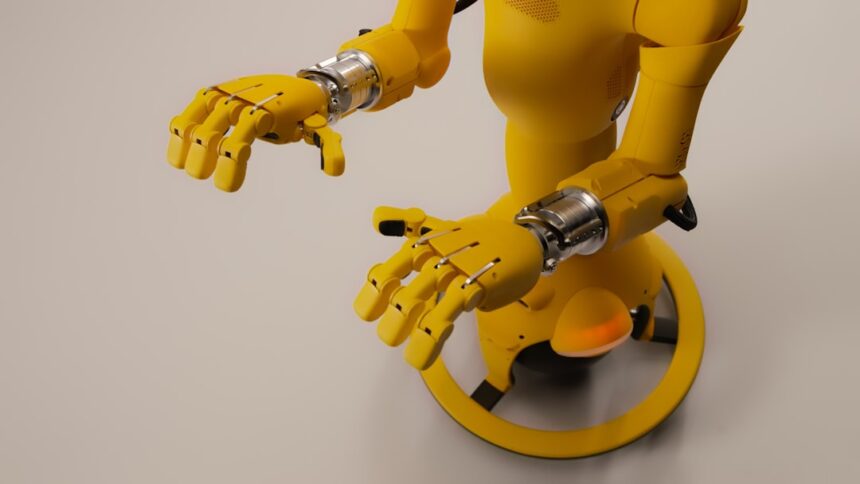
The core of Project Jennifer’s recovery capability lay in an extraordinarily complex and novel piece of engineering: a remotely operated vehicle (ROV) equipped with a specialized manipulation system. Often referred to as a “mechanical hand” or a “claw,” this device was designed to operate at depths exceeding 16,000 feet, overcoming immense water pressure that would crush conventional equipment. The development of this mechanism was a testament to human ingenuity, a carefully orchestrated dance between engineers and the unforgiving laws of physics. It was a digital extension of the human will, sent where flesh and bone could not tread.
Design and Engineering Challenges
The design of the mechanical hand was a Herculean task. Engineers had to account for extreme pressure, corrosion from saltwater, and the need for precise control over a multitude of articulated joints. The hand was not a single, rigid appendage but a series of segments, each with its own actuator and sensor, allowing for a degree of dexterity that mimicked, albeit mechanically, the nuances of human manipulation. The materials used were selected for their strength and resistance to the harsh marine environment. The success of the mission hinged on the flawless functioning of this intricate apparatus, a delicate ballet of hydraulics and electronics playing out in the abyss.
Control and Navigation: Guiding the Digital Ghost
Operating the mechanical hand required a sophisticated control system. The ROV, tethered to the USS Halibut via a robust umbilical cable, transmitted video feeds and sensor data to the surface. Operators on the Halibut would then, in real-time, issue commands to the mechanical hand. This process was like steering a ghost, a mental projection into a distant, alien body. The slight delays inherent in communicating across such vast distances demanded exceptional skill and anticipation from the human operators. Navigating a precisely controlled robotic limb through the wreckage of a submarine, at depths where visibility is near zero, was a feat akin to performing surgery in a black hole.
The Recovery Operation: A Delicate Dance with the Deep
Locating the Wreckage: The First Hurdle
After years of meticulous sonar mapping and reconnaissance by the USS Halibut, the wreck of the K-129 was finally located in the Clarion-Clipperton Zone of the Pacific Ocean, at a depth of approximately 16,000 feet. The initial discovery was a moment of profound significance, the culmination of years of intelligence gathering and technological development. The wreck lay in several large pieces, scattered across the seabed, a grim testament to the violent forces that had claimed it. The task now was to navigate this underwater graveyard.
Deploying the Claw: A Descent into the Unknown
The deployment of the ROV, carrying the mechanical hand, was a critical phase. The umbilical cable, a lifeline stretching miles from the Halibut, had to be carefully managed to avoid snagging or damage. The ROV descended slowly, its lights cutting through the perpetual darkness, illuminating the ghostly outlines of the K-129. The operators on the surface watched with bated breath as the mechanical hand approached the wreckage, a digital surgeon preparing for a momentous operation. The deep sea, with its crushing pressure and absolute darkness, was no longer an abstract concept but a tangible, hostile environment that the mechanical hand had to conquer.
The Precise Grasp: Retrieving a Lost Echo
The primary objective of the mechanical hand was to secure and lift specific sections of the K-129, particularly those containing sensitive intelligence. This required an extraordinary level of precision. The hand had to grip the metal hull without causing further damage, maneuvering around twisted debris and debris fields. It was akin to disentangling a delicate watch from inside a collapsed building, each movement calculated to avoid catastrophe. The operation was not about brute force but about finesse, a testament to the advanced control algorithms and the skill of the human operators who guided its every flex and extension.
In recent developments, the innovative mechanical hand that successfully raised a Soviet submarine has garnered significant attention for its engineering marvels and implications for underwater recovery operations. This fascinating technology not only highlights advancements in robotics but also raises questions about the future of deep-sea exploration. For those interested in learning more about the engineering challenges and breakthroughs related to this project, you can read a detailed analysis in a related article found here.
The Legacy of the Mechanical Hand
| Metric | Value | Description |
|---|---|---|
| Device Name | Mechanical Hand | Robotic manipulator used in Soviet submarine recovery |
| Operation Year | 1986 | Year when the mechanical hand was used to raise the submarine |
| Submarine Name | K-278 Komsomolets | Classified Soviet nuclear submarine raised by the mechanical hand |
| Depth of Operation | 1,680 meters | Depth at which the submarine was located and raised |
| Mechanical Hand Reach | 2 meters | Maximum extension length of the mechanical hand |
| Load Capacity | 500 kg | Maximum weight the mechanical hand could lift |
| Material | High-strength steel and titanium | Materials used to construct the mechanical hand for durability |
| Control System | Hydraulic and electronic controls | Type of control system used to operate the mechanical hand remotely |
The Spoils of the Deep: Intelligence Gains
While the full scope of Project Jennifer and its recovered intelligence remains classified, it is understood that the operation yielded significant insights into Soviet naval capabilities, technology, and potentially the causes of the K-129’s loss. The recovery of specific components and documents provided invaluable data for intelligence agencies, contributing to a deeper understanding of the Cold War adversary. The mechanical hand had not just retrieved debris; it had retrieved secrets, unlocking a vault of information previously inaccessible.
Technological Advancements
The development and successful deployment of the mechanical hand for Project Jennifer marked a significant leap forward in deep-sea exploration and salvage technology. The challenges overcome in designing and operating such a system at extreme depths paved the way for future advancements in ROV technology, remote manipulation, and underwater robotics. The lessons learned in this ambitious undertaking continue to influence the development of subsea vehicles used in scientific research, offshore energy exploration, and disaster response. The echoes of this mission resonate in the ongoing exploration of our planet’s final frontier, the ocean depths.
A Testament to Human Ingenuity
The story of the mechanical hand rescuing the Soviet submarine K-129 is a compelling narrative of human ingenuity triumphing over seemingly insurmountable odds. It highlights the power of innovation, the dedication of countless individuals, and the ability of technology to transcend physical limitations. This was not a story of a simple retrieval; it was a saga of a technological extension of the human race, reaching into the crushing embrace of the deep and bringing back a lost whisper, an echo of a lost crew, and a trove of invaluable knowledge. The mechanical hand, a silent titan in the abyss, proved that even in the most unforgiving environments, human ambition, when coupled with brilliant engineering, can achieve the extraordinary.
FAQs
What is the mechanical hand that raised a Soviet submarine?
The mechanical hand refers to a specialized robotic arm or device used in underwater operations to assist in the recovery and salvage of a Soviet submarine. It was designed to handle heavy and delicate tasks underwater, such as lifting parts of the submarine or securing it for retrieval.
Which Soviet submarine was raised using the mechanical hand?
The mechanical hand was notably used in the recovery of the Soviet submarine K-278 Komsomolets, which sank in 1989. The device played a crucial role in the complex underwater salvage operation.
Why was the mechanical hand necessary for raising the submarine?
Raising a sunken submarine is a highly challenging task due to the depth, pressure, and fragility of the wreck. The mechanical hand provided precise control and strength to manipulate heavy components underwater without causing further damage, making the salvage operation safer and more effective.
When was the mechanical hand developed and used?
The mechanical hand technology was developed during the late 20th century, with significant use in the late 1980s and early 1990s during the recovery efforts of Soviet submarines like the Komsomolets.
What impact did the mechanical hand have on underwater salvage operations?
The mechanical hand advanced underwater salvage technology by enabling more precise and safer handling of submerged objects. Its success in raising Soviet submarines demonstrated the potential of robotic assistance in deep-sea recovery missions, influencing future designs and operations worldwide.