The frigid waters of the North Atlantic held secrets deeper than any trench, and none were more enigmatic than those guarded by the Central Intelligence Agency during the Cold War. Among its most audacious and shrouded endeavors was Project Azorian, a covert operation that aimed to achieve the seemingly impossible: recovering a sunken Soviet submarine, the K-129, from the crushing depths of the Pacific Ocean. This wasn’t just a salvage mission; it was a high-stakes gamble for intelligence, a testament to American technological prowess, and a masterclass in plausible deniability. The sheer ambition and the elaborate secrecy surrounding Project Azorian cemented its place as one of the most fascinating, and still partially understood, clandestine operations in history.
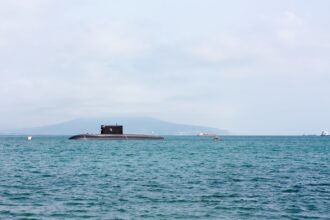
The year was 1968. The Cold War was at its zenith, a period of intense ideological struggle and proxy conflicts, where technological superiority was as crucial as any battlefield victory. The Soviet Union, a formidable naval power, operated a fleet of ballistic missile submarines, each a mobile nuclear deterrent. One such submarine, the K-129, a Golf II-class diesel-electric boat, met a catastrophic end. On March 11, 1968, the K-129, while on patrol in the Pacific Ocean, vanished without a trace. The official Soviet explanation remained vague, but the loss was significant. The submarine was not only a valuable piece of naval hardware but also carried nuclear-armed ballistic missiles, a prospect that deeply concerned the United States.
The Cold War Arms Race and the Strategic Imperative
The Cold War was characterized by an unceasing arms race, a relentless pursuit of military and technological advantage. The presence of Soviet nuclear missiles capable of reaching American shores from a submerged platform was a constant threat. The loss of the K-129, while a blow to Soviet naval power, also presented a unique opportunity for the United States. If the submarine could be recovered, the Americans could gain invaluable insights into Soviet missile technology, their operational procedures, and potentially even attempt to disarm the nuclear warheads. This was not merely an intelligence coup; it was a strategic imperative that could tip the balance of power.
The Mystery of the Deep: Initial Detection and Calculation
The exact location of the K-129’s demise was initially unknown. However, the United States, with its sophisticated network of sonar surveillance systems, detected unusual seismic activity and acoustic anomalies in the region of the Pacific where the submarine was last heard from. Through meticulous analysis of sonar data, triangulations, and the interpretation of faint distress signals, the U.S. Navy and intelligence agencies were able to narrow down the potential resting place of the K-129 to an area at a staggering depth of approximately 16,000 feet. This was a depth previously considered beyond the reach of any conventional salvage operation.
The CIA’s Project Azorian, a covert operation aimed at recovering a sunken Soviet submarine from the depths of the Pacific Ocean, has been the subject of much intrigue and analysis over the years. For those interested in delving deeper into the complexities and implications of this operation, a related article can be found at this link. This article provides a comprehensive overview of the mission, its technological innovations, and its impact on Cold War espionage tactics.
The Genesis of Azorian: A Mission of Unprecedented Audacity
The discovery of the K-129’s approximate location ignited a spark within the halls of the CIA. The idea of recovering a sunken nuclear submarine from such an extreme depth was audacious, bordering on the fantastical. Yet, the potential intelligence windfall was too significant to ignore. This led to the conception of Project Azorian, a top-secret operation that would require unprecedented levels of technological innovation, financial investment, and clandestine planning.
From Concept to Commitment: Overcoming Skepticism and Securing Resources
The initial proposals for Project Azorian were met with a considerable degree of skepticism. The engineering challenges were immense, and the risks were equally so. However, the proponents of the project, driven by the strategic implications, tirelessly advocated for its necessity. They emphasized the potential for technological breakthroughs and the invaluable intelligence that could be gained. Eventually, their persistence paid off, and the operation received the green light, with a substantial budget allocated from the CIA’s covert operations fund. The scale of the undertaking necessitated a level of secrecy that would permeate every aspect of its execution.
The Need for a Unique Solution: The Development of the Glomar Explorer
Salvaging a vessel from 16,000 feet required a vessel capable of operating at such extreme depths. No existing ships or equipment were designed for this task. The solution was to develop a bespoke technological marvel: a specially designed salvage ship. This ship, eventually named the Glomar Explorer, was a triumph of engineering. It was designed to have a massive, centrally located moon pool, a large opening in the hull through which equipment could be lowered and raised. Crucially, it was equipped with a giant, articulated mechanical arm, a “capture claw,” capable of latching onto and lifting the submarine. The development of the Glomar Explorer was a project in itself, demanding secrecy and innovation at every stage.
The Unveiling of the Glomar Explorer: A Technological Marvel at Sea
The Glomar Explorer was not just a ship; it was a mobile oceanographic research vessel designed to mask its true purpose. Built in extreme secrecy by the Global Marine Development Corporation (a CIA front company), the Glomar Explorer was ostensibly a civilian research vessel, designed to explore the ocean floor for mineral deposits. This civilian facade was crucial to the operation’s plausible deniability, allowing the U.S. to deflect any suspicion from the Soviet Union.
The Ingenious Design: A Moon Pool and a Gigantic Claw
The heart of the Glomar Explorer‘s salvage capability lay in its innovative design. The massive moon pool, situated directly beneath the ship’s central structure, provided a stable platform for lowering and raising the complex lifting mechanism. This mechanism consisted of a massive, C-shaped arm, the “capture claw,” which was lowered to the seabed. The claw was designed to grapple the hull of the K-129 with incredible precision. Upon successful engagement, the claw would then, along with the K-129, be slowly and carefully hoisted back to the surface.
The Illusion of Science: Oceanographic Research as Cover
The Glomar Explorer was outfitted with sophisticated scientific equipment, further reinforcing its cover as an oceanographic research vessel. It was equipped with sonar arrays, deep-sea cameras, and coring devices, all designed to analyze the ocean floor and extract samples. This scientific pretense served to explain the ship’s presence in remote oceanic regions and its specialized equipment, effectively camouflaging the true nature of its mission from prying eyes and ears, both at sea and on land.
The Ballet of the Deep: The Intricate Salvage Operation
The actual salvage operation was a testament to meticulous planning and flawless execution, a high-stakes ballet performed in the unforgiving environment of the deep ocean. The Glomar Explorer arrived at the calculated coordinates of the K-129, and the intricate process of lowering the salvage equipment began. This was a slow, deliberate, and nerve-wracking endeavor.
The Descent of the Giant: Lowering the Capture Claw
The massive capture claw, weighing thousands of tons, was meticulously lowered through the moon pool. The descent was agonizingly slow, each foot a victory against the immense pressure of the water. Sonar and acoustic positioning systems worked in concert to guide the claw to its target. The slightest miscalculation could result in disaster, either damaging the claw or, worse, missing the submarine entirely.
The Delicate Grasp: Securing the K-129
Once the claw reached the seabed, the operators had to precisely maneuver it to enfold the K-129. This was a task requiring immense skill and delicate control, akin to performing microsurgery with giant mechanical limbs. The immense water pressure and the limited visibility made this phase particularly challenging. The goal was to grip the submarine firmly but without causing further structural damage.
The Ascent: A Slow and Tense Reclamation
With the K-129 securely within its grasp, the Glomar Explorer began the painstaking process of lifting the submarine. The ascent was even slower and more tense than the descent. The immense weight of the submarine and the claw, combined with the lingering possibility of mechanical failure, created an atmosphere of unyielding suspense. Every inch gained was a triumph, and the world held its breath, unaware of the monumental undertaking unfolding miles below the surface.
The CIA’s Project Azorian, a covert operation aimed at recovering a sunken Soviet submarine from the depths of the Pacific Ocean, has been the subject of much intrigue and analysis over the years. For those interested in exploring the complexities and implications of this operation further, a related article can be found at In the War Room, which delves into the strategic motivations behind such clandestine missions and their impact on Cold War dynamics. This resource provides valuable insights into the lengths to which intelligence agencies will go to secure national interests.
The Unforeseen Complications and the Partial Success
| Operation Name | Project Azorian CIA operation |
|---|---|
| Location | Pacific Ocean |
| Duration | 1974-1975 |
| Objective | Recover a sunken Soviet submarine |
| Cost | Estimated at 350 million |
| Outcome | Partial success in recovering the submarine |
Project Azorian, despite its remarkable technological achievements, was not without its significant challenges and ultimately, a partial success. The sheer scale of the operation and the extreme conditions of the deep sea presented an array of unforeseen problems that tested the ingenuity and resilience of the CIA and its contractors.
The Inevitable Mishap: The Submarine Breaks Apart
As the K-129 was being hoisted, the immense stress on its already compromised hull proved too great. The submarine, weakened by its descent to the seabed and the forces of the ocean, began to break apart. A significant portion of the submarine, including the forward section containing the missile compartment, broke away and plummeted back into the abyss. This was a devastating setback, as the primary objective was to recover the intact missile compartment.
A Glimpse of the Prize: Recovering a Section of the Submarine
Despite the catastrophic structural failure, the salvage team managed to recover a significant portion of the K-129’s aft section. This section, while incomplete, still provided an invaluable treasure trove of intelligence. The successful recovery of any part of the submarine was a testament to the incredible engineering and sheer determination of the individuals involved. The CIA could claim a significant, albeit incomplete, victory.
The Intelligence Yield: Cryptography and Technical Espionage
The recovered section of the K-129, while missing the crucial missile compartment, still yielded significant intelligence. CIA analysts meticulously examined the wreckage, extracting valuable information regarding Soviet naval technology, communication systems, and cryptographic methods. They were able to gain insights into Soviet submarine design, their sonar capabilities, and the workings of their electronic warfare systems. While the ultimate prize of disarming the nuclear missiles eluded them, the intelligence gained was still substantial, furthering the U.S.’s understanding of Soviet military capabilities.
The Legacy of Azorian: Secrecy, Technology, and Enduring Questions
Project Azorian remains one of the most enigmatic and enduring operations in the annals of intelligence history. Its legacy is multifaceted, encompassing groundbreaking technological achievements, the enduring power of secrecy, and a lingering sense of unanswered questions.
The Art of Deception: Plausible Deniability and Covert Operations
Project Azorian stands as a prime example of the art of deception in covert operations. The elaborate cover story of oceanographic research, the use of a front company, and the meticulous management of information all contributed to the success of plausible deniability. This allowed the United States to pursue a highly sensitive mission without provoking a direct confrontation with the Soviet Union. The operation demonstrated the effectiveness of a well-executed misinformation campaign in the realm of international intelligence.
The Technological Leap: Innovation Born of Necessity
The challenges presented by Project Azorian spurred unprecedented technological innovation. The development of the Glomar Explorer and its sophisticated salvage mechanism was a monumental feat of engineering. This technology, born out of a specific, clandestine need, pushed the boundaries of what was believed possible in deep-sea operations. The lessons learned and the technologies developed undoubtedly had broader applications in both military and scientific endeavors.
The Shadow of Doubt: Unanswered Questions and Speculation
Despite the official accounts and published information, Project Azorian continues to be shrouded in mystery and speculation. Many questions remain unanswered. Was the broken-apart K-129 the complete story? Did the Soviets have any inkling of the U.S. operation? The inherent secrecy of the project means that a complete and definitive account may never be fully revealed. The whispers and theories surrounding Azorian add to its allure, making it a persistent topic of interest for historians, intelligence enthusiasts, and the public alike. Project Azorian, a testament to human ambition and the shadows of the Cold War, stands as a powerful reminder of the lengths to which nations will go in pursuit of strategic advantage, and the enduring secrets that lie hidden in the depths of the ocean.

How the CIA Tried to Steal a Soviet Nuclear Submarine
FAQs
What was Project Azorian?
Project Azorian was a covert CIA operation in the 1970s to recover a sunken Soviet submarine, the K-129, from the Pacific Ocean floor.
Why did the CIA undertake Project Azorian?
The CIA undertook Project Azorian in an effort to recover the K-129 submarine, which was believed to contain valuable intelligence and technology that could be used to gain insight into Soviet naval capabilities.
How did the CIA attempt to recover the K-129 submarine?
The CIA used a specially designed ship called the Glomar Explorer, equipped with a massive claw-like device, to lift the submarine from the ocean floor.
Was Project Azorian successful?
While the CIA was able to recover a portion of the K-129 submarine, the operation did not fully achieve its objectives due to technical difficulties and the loss of the submarine’s front section during the recovery process.
What was the significance of Project Azorian?
Project Azorian was significant for its ambitious and complex nature, as well as for the diplomatic and political implications of the operation, which had both successes and setbacks for the United States and the Soviet Union during the Cold War.