A chilling silence descends upon the Pacific Ocean, a vast expanse that has, throughout history, swallowed secrets whole. On 8 March 1968, the Soviet Pacific Fleet’s Project 629A diesel-electric submarine, K-129, vanished without a trace during a routine patrol. This disappearance, initially shrouded in mystery and later becoming a complex international incident, triggered one of the most audacious and covert retrieval operations in naval history. The search for K-129 was not merely an exercise in locating a lost vessel; it was a high-stakes geopolitical chess match, a testament to technological prowess, and a poignant reminder of the Cold War’s enduring tensions.
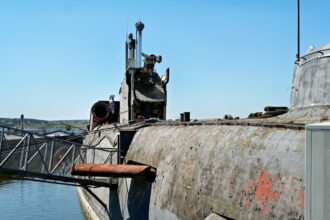
The K-129, a Golf II-class submarine, was a formidable asset to the Soviet Pacific Fleet. Armed with three R-21 nuclear-tipped ballistic missiles, it represented a strategic threat, capable of launching a devastating first strike or retaliation. Its sudden disappearance, however, was not immediately apparent to Soviet authorities. It was only after the submarine failed to report in on schedule that concerns began to mount, escalating into a full-scale search operation.
A Silent Vanishing Act
The K-129 departed its home port of Petropavlovsk-Kamchatsky on February 24, 1968, embarking on its third combat patrol. Its mission was a routine patrol in the designated patrol area near Hawaii. The submarine’s crew complement consisted of 98 men. The last confirmed communication from K-129 was on March 7, at which point it was approximately 1,200 nautical miles northwest of Oahu. After this, radio silence. The initial assumption by the Soviet command was a communication malfunction, a common enough occurrence in the vastness of the Pacific.
Soviet Efforts and Frustrations
When K-129 failed to make its scheduled report to headquarters on March 8, Soviet naval authorities initiated a communication search, attempting to re-establish contact. As days turned into weeks without any reply, a more intensive search began. The Soviet Pacific Fleet dispatched surface vessels and aircraft to the submarine’s presumed patrol area. This extensive search, involving numerous ships and aircraft, was conducted with a sense of urgency and growing alarm. However, despite their considerable resources and persistent efforts, the Soviets found no evidence of the K-129. The ocean, a vast and unforgiving mistress, had held onto its prize. Their search, after several weeks, was ultimately called off, leaving the fate of the K-129 and its crew officially unknown and a matter of internal Soviet concern.
The search for the Soviet Pacific Fleet submarine K-129, which sank in 1968, remains one of the most intriguing episodes of Cold War naval history. This operation not only highlighted the technological capabilities of the United States during that era but also underscored the lengths to which both superpowers would go to secure their military secrets. For a deeper dive into the complexities surrounding the K-129 search and its implications, you can read a related article on this topic at In the War Room.
American Intelligence and the Breakthrough
While the Soviets were grappling with their internal mystery, across the Pacific, American listening posts were picking up subtle seismic tremors that hinted at a much darker truth. The Cold War was, at its heart, a war of information, and the United States possessed a formidable array of intelligence-gathering capabilities that would prove pivotal in uncovering the K-129’s fate.
SOSUS and the Acoustic Footprint
The American Sound Surveillance System (SOSUS) was a network of underwater listening arrays strategically placed on the ocean floor. Designed to detect the acoustic signatures of Soviet submarines, SOSUS was a cornerstone of American anti-submarine warfare. In early March 1968, several SOSUS arrays independently registered a distinct, powerful acoustic event in the North Pacific. This event, characterized by two separate but closely spaced impulses, was inconsistent with natural seismic activity. Analysts at the U.S. Naval Oceanographic Office meticulously examined the data. The nature of the acoustic signature strongly suggested an implosion event, consistent with a submarine collapsing under immense pressure.
Pinpointing the Debris Field
Based on the highly accurate SOSUS data, naval intelligence was able to triangulate the approximate location of the implosion. This was a monumental achievement, considering the vastness of the Pacific. The coordinates pointed to an area in the North Pacific, roughly 750 miles northwest of Oahu, at an astonishing depth of 16,000 feet (approximately 4,900 meters). This precise location provided U.S. Navy intelligence with a significant advantage, putting them miles ahead of what the Soviets had ever achieved in their own search. The challenge then transformed from “where is it?” to “how do we find it?”.
The Covert Operation: Project Azorian
With the K-129’s approximate location established, a new and extraordinary mission began to take shape within the highest echelons of the U.S. government and intelligence agencies: Project Azorian. This was not a mere search; it was a meticulously planned and highly classified operation to retrieve the sunken submarine, or at least substantial portions of it, for its invaluable intelligence payload.
The Objective: Nuclear Secrets
The primary objective of Project Azorian was to recover the K-129’s ballistic missiles, specifically the R-21s, and their nuclear warheads. American intelligence was keen to study Soviet missile technology, warhead design, and cryptographic systems that might be onboard. The potential intelligence haul was immense, offering unparalleled insights into Soviet strategic capabilities. In addition to the missiles, the recovery of Soviet codebooks and cryptographic equipment was a high priority, as this could compromise Soviet communications and intelligence gathering efforts for years to come. The stakes were nothing short of national security for both superpowers.
The Genesis of a Technological Marvel: The Glomar Explorer
To achieve such an unprecedented recovery at such extreme depths, an entirely new class of vessel and recovery system had to be conceived and built. The challenge was formidable, akin to plucking a needle from a haystack at four miles deep, under the cover of absolute secrecy. This culminated in the design and construction of the Hughes Glomar Explorer, a deep-sea drilling and recovery vessel disguised as a commercial manganese nodule mining ship. This massive vessel, constructed with an internal moon pool, was equipped with a monstrous claw-like recovery vehicle, dubbed “Clementine” or sometimes the “mechanical jellyfish,” designed to securely grasp and lift sections of the submarine from the seabed. The engineering feats required were astounding, pushing the boundaries of what was technologically possible at the time.
The Recovery Attempt and its Unveiling

The stage was set for a dramatic and meticulously executed operation. In 1974, the Hughes Glomar Explorer sailed to the designated recovery site, its true mission hidden beneath a veneer of commercial mining. What followed was a complex and perilous dance between man, machine, and the crushing forces of the deep ocean.
The Retrieval Process
Upon arrival at the recovery site, the Glomar Explorer deployed sophisticated deep-sea cameras and sonar systems to precisely locate and survey the K-129’s wreckage. The submarine was found in multiple pieces, having disintegrated upon implosion. The massive “Clementine” claw was then carefully lowered to the ocean floor. The recovery process was excruciatingly slow and fraught with technical difficulties. The immense pressure, extreme cold, and treacherous currents at such depths posed constant threats to the delicate operation. The claw itself was an intricate piece of machinery, designed to carefully encompass and lift sections of the brittle submarine hull.
The Break-up and Partial Success
During the retrieval attempt in August 1974, a catastrophic failure occurred. As the claw began to lift a significant portion of the K-129, including its forward missile compartment, a structural failure in the claw caused a large section of the submarine to break away and plunge back to the seabed. This devastating setback meant that a substantial portion of the target intelligence, including potentially two of the three ballistic missiles, was lost. However, despite this partial failure, the Glomar Explorer did manage to retrieve a section of the K-129’s bow, encompassing approximately 38 feet of the forward section. This retrieved section contained two nuclear torpedoes, cryptographic equipment, and the remains of six Soviet submariners.
The Media Leak and Public Disclosure
The immense scale and clandestine nature of Project Azorian were almost impossible to keep entirely under wraps. Rumors and whispers began to circulate within intelligence circles and eventually reached the ears of journalists. In February 1975, a story detailing the CIA’s audacious attempt to retrieve the Soviet sub was leaked to the Los Angeles Times. This leak ignited a journalistic fervor, drawing intense public scrutiny to the shadowy world of Cold War espionage. The CIA’s attempts to suppress the story ultimately failed, and the once-secret operation became a public spectacle. President Gerald Ford’s administration, facing intense pressure, eventually acknowledged the recovery of a portion of a Soviet submarine, albeit without confirming the details of the intelligence gained. The story became a sensation, highlighting the daring and risks undertaken in the pursuit of strategic advantage.
The search for the Soviet Pacific Fleet submarine K-129, which sank in 1968, remains one of the most intriguing episodes of Cold War history. This operation not only highlighted the intense rivalry between the United States and the Soviet Union but also showcased the lengths to which both nations would go to gather intelligence. For a deeper understanding of the complexities surrounding this event, you can explore a related article that delves into the details of the mission and its implications. To read more, visit this insightful piece.
The Aftermath and Enduring Legacy
| Metric | Details |
|---|---|
| Submarine Name | K-129 |
| Fleet | Soviet Pacific Fleet |
| Incident Date | March 1968 |
| Location of Sinking | North Pacific Ocean, approximately 1,560 nautical miles northwest of Hawaii |
| Depth of Wreck | Approximately 5,200 meters (17,000 feet) |
| US Search Operation | Project Azorian (1974) |
| US Recovery Vessel | Hughes Glomar Explorer |
| Recovered Items | Partial section of the submarine, including two nuclear-tipped torpedoes |
| Search Duration | Several years of reconnaissance and planning before 1974 recovery attempt |
| Significance | Cold War intelligence operation to recover Soviet nuclear technology and cryptographic materials |
The retrieval of a section of the K-129, even a partial one, represented a triumph of technological ingenuity and a testament to the audacity of Cold War intelligence operations. However, its legacy extends far beyond the immediate intelligence gains, permeating international relations and the public imagination.
Intelligence Gains and Analysis
The analysis of the retrieved section of the K-129 provided valuable intelligence. The two nuclear torpedoes offered insights into Soviet conventional and nuclear armament capabilities. The cryptographic equipment, though likely incomplete due to the partial recovery, would have provided crucial information on Soviet communication security. Most significantly, the recovery of a secret Soviet navy codebook was a monumental intelligence coup. This codebook, confirmed to have been recovered in the retrieved section, potentially offered the U.S. insight into Soviet naval communications for a significant period. While the full extent of the intelligence gains remains classified to this day, it is clear that Project Azorian, despite its partial success, was deemed a worthwhile endeavor by U.S. intelligence agencies.
Geopolitical Ramifications
The revelation of Project Azorian sent ripples through the international community. The Soviets, while publicly downplaying the incident, were undoubtedly furious at the audacious American operation. The incident served as a stark reminder of the lengths to which both superpowers would go to gain an advantage in the shadowy world of espionage. It exacerbated Cold War tensions, demonstrating the constant vigilance and elaborate measures taken by both sides to gather intelligence and counter threats. For the United States, it solidified its reputation for technological prowess and daring covert operations.
The Final Resting Place of the Crew
A somber and profoundly moving aspect of the K-129 story concerns the fate of its crew. During the partial recovery, the remains of six Soviet submariners were found within the retrieved section. In a remarkable act of humanity amidst the geopolitical chess game, the U.S. Navy, under strict orders from President Ford, conducted a formal burial at sea for these brave men. The ceremony, filmed by the CIA and later declassified, showed the remains, carefully wrapped in canvas and weighted, being committed to the deep in accordance with naval tradition. A eulogy was read, and a military salute was performed, demonstrating a profound respect for the fallen, even those from an adversary nation. This poignant gesture stands as a powerful counterpoint to the more cynical aspects of the Cold War, acknowledging the shared humanity of those caught in its grip. The vast majority of the crew, however, remain entombed with the larger section of the K-129 at the bottom of the Pacific, their final resting place a silent testament to the unforgiving nature of the ocean and the ultimate price of service.
The search for the Soviet Pacific Fleet K-129, and the subsequent Project Azorian, remains one of the most compelling and intricate narratives of the Cold War. It is a story of advanced technology, daring espionage, high-stakes intelligence, and ultimately, a poignant reminder of the human cost of global ideological conflict. The deep ocean, a natural vault, continues to hold many secrets, but for a brief moment in history, its depths yielded a glimpse into a hidden struggle that defined an era.
WATCH NOW ▶️ The CIA’s Impossible Mission To Steal A Nuclear Submarine
FAQs
What was the Soviet Pacific Fleet K-129?
The Soviet Pacific Fleet K-129 was a Golf II-class ballistic missile submarine of the Soviet Navy that sank in the Pacific Ocean in 1968 under mysterious circumstances.
When and where did the K-129 sink?
K-129 sank in March 1968 in the North Pacific Ocean, approximately 1,560 nautical miles northwest of Hawaii.
What was the significance of the search for K-129?
The search for K-129 was significant because the submarine carried nuclear missiles and sensitive military technology, making its recovery a high priority during the Cold War for intelligence and security reasons.
What efforts were made to locate and recover K-129?
The United States conducted a secret operation called Project Azorian in the early 1970s, using the specially designed ship Hughes Glomar Explorer to attempt to recover parts of the sunken submarine from the ocean floor.
What was the outcome of the K-129 search and recovery operation?
The recovery operation partially succeeded in retrieving a section of the submarine, but much of the wreckage remained on the ocean floor. The mission remained classified for many years and is considered one of the most ambitious deep-sea recovery efforts in history.