The deep ocean, a vast and largely unexplored frontier, holds secrets that have captivated humanity for centuries. Among these enigmas, few are as compelling and fraught with geopolitical tension as the story of Soviet submarine K-129. Its vanishing act and the subsequent, ambitious efforts to recover its remains have woven a narrative of technological prowess, Cold War brinkmanship, and enduring mystery. This article delves into the known facts surrounding K-129, examining its fateful mission, its fiery demise, and the clandestine operation that sought to claw back a piece of its submerged wreckage from the abyss.
A New Generation of Underwater Power
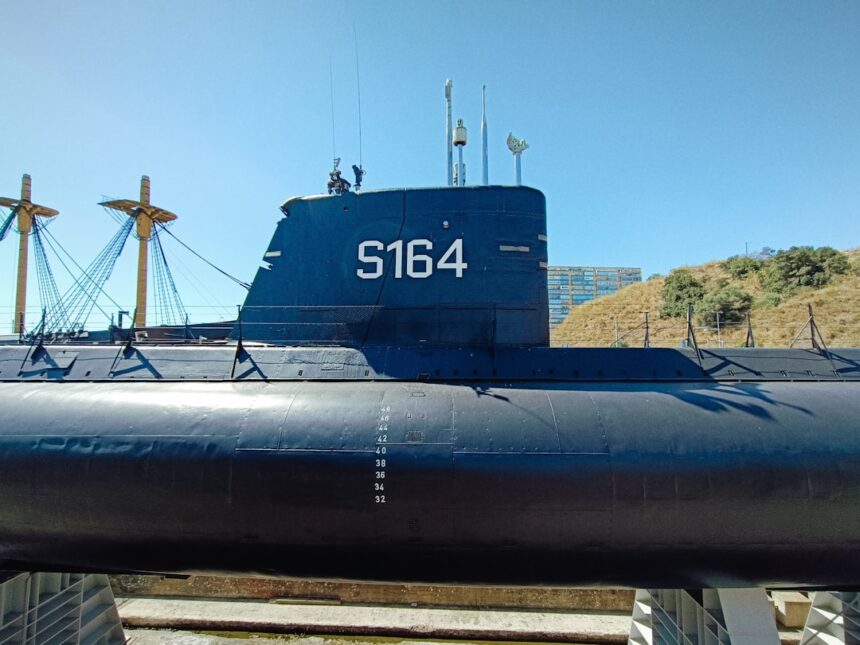
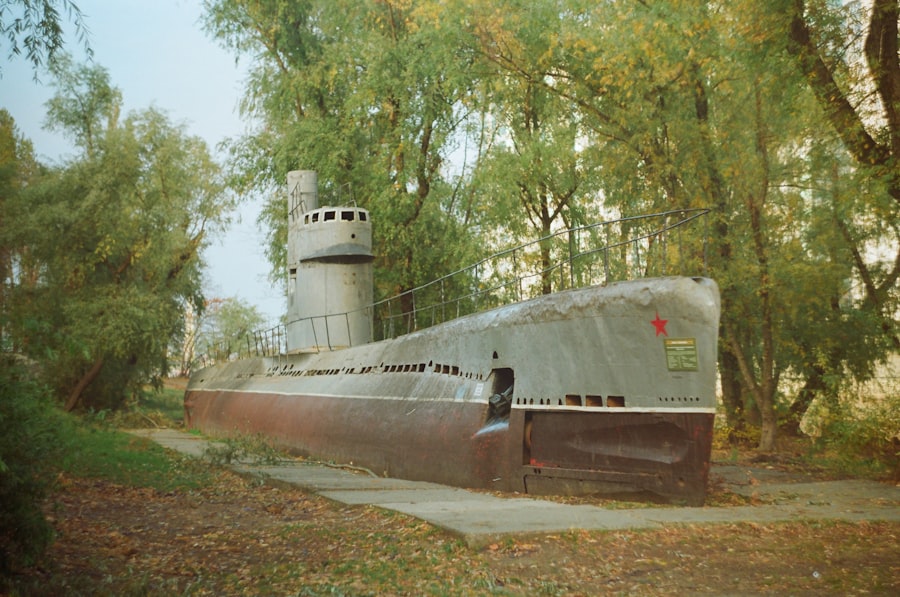
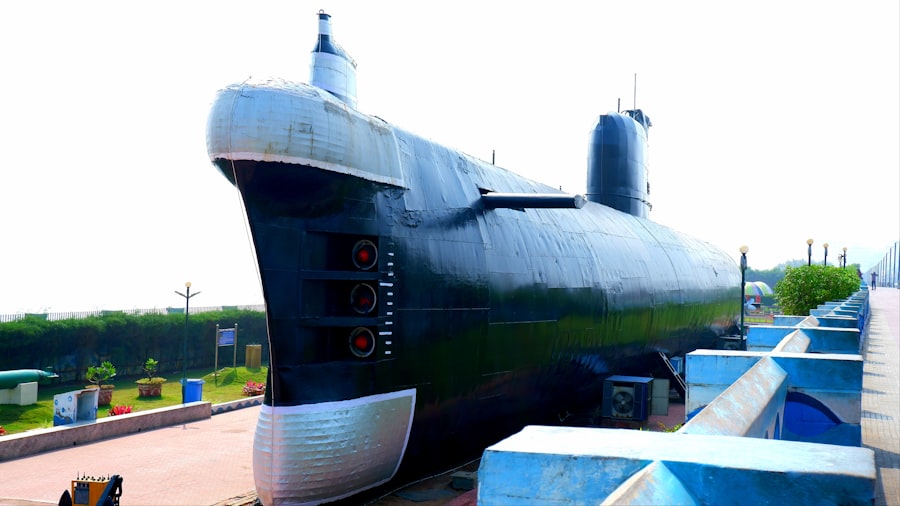
The Soviet submarine K-129, a Project 641B (NATO reporting name Foxtrot-class) diesel-electric submarine, was a formidable weapon in the Soviet Navy’s arsenal during the height of the Cold War. Launched in 1960 and commissioned in late 1963, it represented a significant advancement in Soviet submarine technology, a silent predator designed to challenge the dominance of American naval power on the world’s oceans. These submarines, often referred to as “diesel boats,” were characterized by their long endurance and their ability to operate submerged for extended periods, making them a constant, albeit often unseen, threat to enemy shipping and naval formations. K-129 was a testament to Soviet industrial might, a steel leviathan built to project power far from its home shores.
The Silent Patrol: A Covert Operational Mandate
The specific mission of K-129 when it set sail on its final voyage in February 1968 remains a subject of much speculation, but the general consensus among naval historians and intelligence analysts points to a clandestine reconnaissance operation. The prevailing theory is that K-129 was tasked with patrolling the waters off the coast of Hawaii, a strategically vital region for the United States. Its objective was likely to monitor American submarine patrols, particularly targeting Polaris missile-carrying submarines, and to gather intelligence on American naval exercises and deployments. This was a game of shadows and whispers conducted beneath the waves, where the slightest detectable ripple could signal a catastrophic encounter. The submarine, with its advanced sonar and radio equipment, was effectively a listening post, straining to catch the faintest transmissions from the enemy.
A Crew of Seasoned Sailors
K-129 was manned by a crew of 98 sailors, officers, and technicians, many of whom were veterans of the Soviet Navy. These men were the eyes and ears of the submarine’s mission, their lives entrusted to the seaworthiness of their vessel and their own expertise. They were trained to operate in the harsh and unforgiving environment of the deep sea, to endure prolonged periods of isolation, and to execute complex operational procedures with precision. The loss of K-129 meant the loss of these 98 lives, a somber statistic in the grand ledger of the Cold War. The weight of their sacrifice, unknown to their families for months, would later become a central element in the humanitarian as well as the strategic appeal of recovery efforts.
The Soviet Golf II class submarine K-129, which tragically sank in 1968, has been the subject of extensive analysis and speculation regarding its mission and the circumstances surrounding its loss. For a deeper understanding of the geopolitical implications and the mystery of its sinking, you can read a related article that explores the broader context of Cold War naval operations and the subsequent recovery efforts. Check out the article here: Soviet Golf II Class Submarine K-129.
The Cataclysm Beneath the Pacific: K-129’s Final Moments
A Silent Scream in the Depths
The exact cause of K-129’s demise is one of the most enduring mysteries surrounding the submarine. The official Soviet explanation was a catastrophic accident, a vague declaration that offered little in the way of concrete detail. However, the evidence that emerged, primarily from American intelligence assessments and later salvage efforts, points to a more specific, and terrifying, sequence of events. The most widely accepted theory is that K-129 suffered an internal explosion, likely originating in the battery compartment. Diesel-electric submarines store vast amounts of energy in their batteries, and a malfunction or damage to these systems could lead to the rapid release of explosive hydrogen gas.
The Unseen Trigger: A Cascade of Failures
The genesis of such an explosion has been the subject of intense debate. Some speculate that a collision with an American vessel, though never officially confirmed by the US, could have ruptured the hull and compromised the battery system. Others propose a catastrophic failure within the submarine’s own systems, perhaps a fire in the battery room that quickly spiraled out of control. Regardless of the precise trigger, the consequence was devastating. An explosion of this magnitude at significant depth would have been instantaneous and utterly destructive. The submarine, a vessel designed to withstand immense pressure, would have been torn apart from within, its structural integrity shattered like glass.
A Plunge into Oblivion
Following the catastrophic explosion, K-129, gravely wounded, would have begun its final, irreversible descent into the crushing blackness of the Pacific Ocean seabed. The immense pressures at such depths would have further contorted and compressed the already mangled wreckage. The submarine, once a symbol of Soviet naval might, rapidly became another lost echo in the vast, silent graveyard of the deep. Its location was unknown to the Soviets, lost in the immensity of the ocean, a secret swallowed by the waves. The sudden silence from K-129 on the Soviet monitoring stations was like a severed thread, leaving a void where a constant signal had once been.
The Echoes of Loss: Discovering the Wreckage
A Whispers on the Wind: American Intelligence Gathers Clues
While the Soviets were left to ponder the fate of their missing submarine, American intelligence agencies, ever vigilant, began to pick up on the anomaly. The prolonged radio silence from K-129, coupled with its known patrol area, raised significant alarms. The US Navy and intelligence services, already engaged in a high-stakes game of cat and mouse with their Soviet counterparts, intensified their surveillance efforts. They initiated sophisticated electronic intelligence (ELINT) operations, deploying listening posts and reconnaissance aircraft to scan the vast expanse of the Pacific. The aim was to glean any scrap of information that could pinpoint the location of the missing vessel.
The Sonar’s Touch: Pinpointing the Abyss
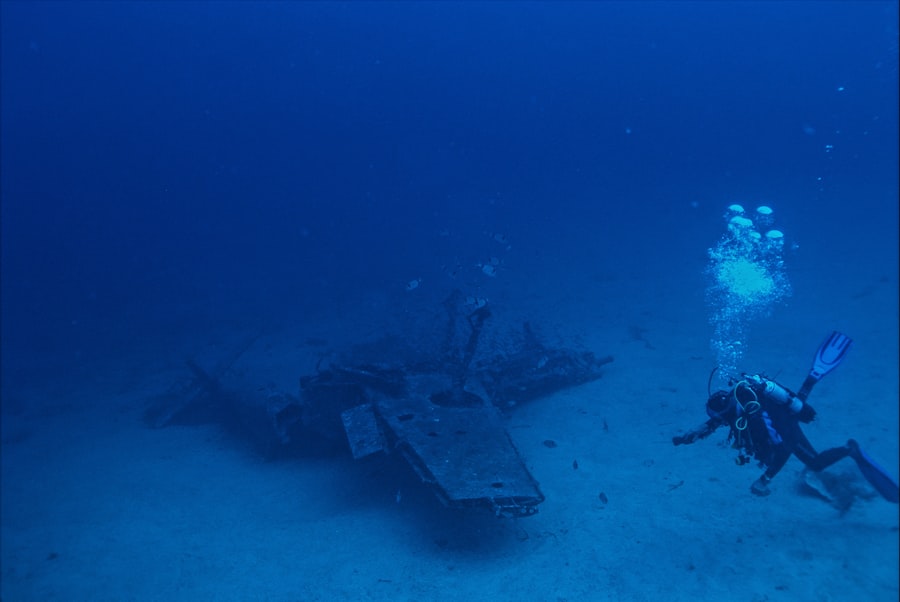
Through a combination of ELINT and oceanographic surveys, American forces eventually located what they believed to be the wreckage of K-129. Using advanced sonar technology, they painstakingly mapped the seabed in the suspected area. The results were, to put it mildly, grim. The sonar images revealed a trail of debris stretching across the ocean floor, interspersed with larger, distinct fragments of what was unmistakably a submarine. The extent of the fragmentation suggested the immense violence of the sinking, a testament to the powerful forces at play in the deep. The precise coordinates were a guarded secret, a crucial piece of intelligence in the escalating Cold War.
A Ghostly Blueprint: Analyzing the Wreckage
The initial sonar data provided a chilling blueprint of the disaster. The distribution of the debris field offered clues as to how the submarine had broken apart, suggesting the epicentre of the explosion. The depth at which the wreckage was found – over 4,900 meters (16,000 feet) – underscored the monumental challenge of any recovery effort. This was not a task for conventional equipment; it required a level of technological sophistication that was at the very edge of human capability at the time. The discovery of K-129’s resting place was a grim victory for American intelligence, but it also presented a profound dilemma: what to do with this deeply buried secret?
Project Azorian: The Audacious Retrieval Mission
The Genesis of a Grand Design: A CIA-Led Endeavor
Driven by a potent cocktail of strategic interest, technological ambition, and perhaps a touch of morbid curiosity, the United States initiated what would become one of the most audacious and secretive intelligence operations of the Cold War: Project Azorian. Spearheaded by the Central Intelligence Agency (CIA), the objective was clear and audacious: to recover a significant portion of K-129’s wreckage from the crushing depths of the Pacific Ocean. The potential intelligence gains from examining Soviet submarine technology, its weaponry, and even personal effects of the crew were deemed immense. This was not merely an archaeological dig; it was a deep-sea heist of unprecedented scale, a gamble played out in the unforgiving darkness.
The Glomar Explorer: A Vessel Built for the Deep
To achieve this seemingly impossible feat, a specialized vessel was commissioned: the R/V Glomar Explorer. Officially presented as a deep-sea mining research ship, the Glomar Explorer was, in reality, a highly sophisticated platform designed for a singular purpose: to lift enormous weights from extreme depths. Its centerpiece was the colossal “lifting cage,” a gargantuan metal structure capable of descending thousands of meters and engulfing a substantial portion of the submarine. The sheer engineering prowess behind this vessel and its lifting mechanism was a testament to American ingenuity and a reflection of the immense resources poured into Project Azorian. The Glomar Explorer itself became a floating fortress of secrecy, its true mission masked by layers of misdirection and classified operations.
The Delicate Dance: Navigating the Abyss
The recovery operation, which took place in 1974, was a tense and painstaking affair. The Glomar Explorer, guided by a team of highly skilled engineers and naval personnel, meticulously maneuvered over the wreck site. The lifting cage was carefully lowered, its immense weight a silent threat to the already fragile wreckage. The process of capturing K-129 within the cage was fraught with peril. The slightest miscalculation, a shift in currents, or a structural failure could have doomed the entire endeavor. The world watched, unaware, as this metal behemoth performed a delicate dance with death, attempting to pluck a secret from the ocean’s embrace.
The Soviet Golf II class submarine K-129, which tragically sank in 1968, has been the subject of much intrigue and speculation over the years. Its mysterious disappearance and the subsequent recovery efforts have led to numerous analyses and discussions about Cold War naval operations. For those interested in exploring more about the complexities surrounding this submarine, a related article can be found here, providing insights into the geopolitical implications of its loss and the technological advancements of the time.
The Lingering Shadows: Unanswered Questions and Lasting Legacies
| Metric | Details |
|---|---|
| Class | Golf II class (Project 629A) |
| Submarine Name | K-129 |
| Type | Diesel-electric ballistic missile submarine |
| Displacement | 4,000 tons surfaced, 5,000 tons submerged |
| Length | 98 meters (approx.) |
| Beam | 8.2 meters (approx.) |
| Draft | 6.2 meters (approx.) |
| Propulsion | Diesel-electric engines, 2 shafts |
| Speed | 15 knots surfaced, 18 knots submerged |
| Test Depth | 300 meters (approx.) |
| Armament | 3 x R-21 (SS-N-5) ballistic missiles, torpedo tubes |
| Complement | 80-90 crew members |
| Fate | Sank in 1968 under mysterious circumstances |
| Notable Event | Project Azorian recovery attempt by the US in 1974 |
A Partial Victory, a Lingering Enigma
Project Azorian achieved a partial success. A significant portion of K-129’s hull, including its missile compartment, was successfully lifted to the surface. The recovered wreckage provided invaluable intelligence to the United States, offering a glimpse into Soviet naval capabilities and technological advancements. However, the recovery was not complete. The immense force of the explosion had fractured the submarine into numerous pieces, and not all of it could be retrieved. Furthermore, the recovery of the human remains within the recovered sections was a somber reminder of the tragic loss of life. While the Americans were able to retrieve some of the Soviet sailors, they were buried at sea with full military honors, a poignant gesture of respect amidst the shadows of espionage.
The Echoes of the Crew: A Human Cost of the Cold War
The recovered personal effects and physical remains of the K-129 crew brought home the human cost of this geopolitical struggle. For the families of these sailors, the mystery of their loved ones’ fate had, for years, been a gaping wound. While the recovery offered some measure of closure, it also highlighted the immense sacrifices made by individuals in the service of their nations, often caught in the maelstrom of great power rivalries. The story of K-129 is not just about submarines and intelligence; it is also about the lives that were extinguished in the icy embrace of the deep, their stories forever intertwined with the fate of their vessel.
The enduring Legacy of a Submerged Mystery
The story of Soviet submarine K-129 remains a potent symbol of the Cold War’s hidden complexities and the enduring allure of the unknown. Project Azorian, though classified for decades, eventually came to light, revealing a remarkable chapter in maritime history and intelligence gathering. The mystery of K-129’s final moments, while largely understood, continues to fuel speculation and fascination. It serves as a stark reminder of the immense power and peril inherent in the deep ocean, a realm where secrets can lie dormant for decades, waiting to be uncovered by the insatiable curiosity of humankind, or brought to light by the relentless march of technological progress. The ocean, a vast canvas of blue, still holds its breath, guarding the remaining whispers of K-129’s tragic passage.
WATCH NOW ▶️ The CIA’s Impossible Mission To Steal A Nuclear Submarine
FAQs
What was the Soviet Golf II class submarine K-129?
The Soviet Golf II class submarine K-129 was a ballistic missile submarine operated by the Soviet Navy during the Cold War. It was part of the Project 629 class, known by NATO as the Golf class, and was equipped with nuclear ballistic missiles.
When was the K-129 submarine in service?
The K-129 submarine was commissioned in the early 1960s and was active during the Cold War period. It was part of the Soviet Union’s strategic nuclear forces until its sinking in 1968.
What happened to the K-129 submarine?
The K-129 submarine sank in March 1968 under mysterious circumstances in the Pacific Ocean. The exact cause of the sinking remains unclear, but it resulted in the loss of all 98 crew members aboard.
Was there any recovery effort for the K-129 submarine?
Yes, the United States launched a secret recovery operation called Project Azorian in the early 1970s to recover parts of the sunken K-129 submarine from the ocean floor. The operation was partially successful and remains one of the most ambitious deep-sea recovery missions in history.
Why is the K-129 submarine historically significant?
The K-129 submarine is historically significant due to its role in Cold War naval strategy, its mysterious sinking, and the subsequent secretive U.S. recovery efforts. It highlights the intense military rivalry and espionage activities between the Soviet Union and the United States during that era.