The summer of 1870 dawned with a deceptive calm over Europe. Yet, beneath the veneer of diplomatic niceties and burgeoning industrial progress, tensions simmered between two of the continent’s most powerful nations: France and Prussia. The Franco-Prussian War, ignited by a seemingly minor dynastic dispute over the Spanish throne, would prove to be far more than a localized conflict. It was a cataclysm that shattered the existing European power balance, irrevocably altered the course of military strategy, and planted the seeds for future global conflagrations. At the heart of this seismic shift lay a critical, and ultimately disastrous, undertaking: the French mobilization of 1870. This complex, deeply flawed, and ultimately fatal endeavor stands as a stark testament to the perils of underpreparedness, outdated doctrine, and the dangerous hubris that can accompany imperial ambitions.
The immediate trigger for the war was the Spanish Revolution of 1868, which deposed Queen Isabella II. In the subsequent search for a new monarch, the Spanish crown was offered to Prince Leopold of Hohenzollern-Sigmaringen, a relative of the Prussian King Wilhelm I. This prospect sent shockwaves through France.
A Perceived Encirclement
The French government, under the ambitious Emperor Napoleon III, viewed the potential enthronement of a Hohenzollern prince in Spain as a grave strategic threat. They perceived it as a calculated move by Prussia to encircle France with hostile powers, echoing historical fears of Habsburg dominance.
The “Spanish Bomb”
- The news of Prince Leopold’s potential candidacy, though initially kept quiet, eventually leaked to the French press.
- The French Foreign Minister, the Duke of Gramont, publicly declared that France would “never consent” to a Hohenzollern on the Spanish throne, framing it as an existential threat.
- This inflammatory rhetoric, amplified by nationalist sentiment, created immense pressure on Napoleon III to act decisively.
Diplomatic Maneuvering and the Ems Dispatch
Prussia, under the astute leadership of Otto von Bismarck, initially downplayed the significance of the Hohenzollern candidacy, even going so far as to suggest that Prince Leopold might decline the offer. However, the French diplomatic offensive intensified.
The Demand for Guarantees
- The French Ambassador to Prussia, Vincent Benedetti, was instructed to seek a guarantee from King Wilhelm I that Prussia would never again support a Hohenzollern candidature for the Spanish throne.
- King Wilhelm I, while on a cure at Ems, politely but firmly refused to give such a sweeping guarantee.
- Bismarck masterfully edited and released the King’s account of his meeting with Benedetti – the infamous “Ems Dispatch.” This dispatch, by subtly altering the tone and wording, made the encounter appear far more confrontational than it was, inflaming public opinion in both France and Prussia.
The Fateful Decision for War
The Ems Dispatch proved to be the final catalyst. French public opinion, whipped into a frenzy by nationalist newspapers and an overly confident government, demanded retribution. Despite some dissenting voices within the government who recognized France’s military unpreparedness, the decision to declare war on Prussia was made.
The Weight of Prestige
- Napoleon III, his health declining and his imperial prestige already showing cracks, felt compelled to assert French dominance.
- The belief that France possessed the superior army, a legacy of Napoleon I’s victories, fostered a dangerous overconfidence.
- The perceived insult from Prussia left no room for retreat without a significant loss of face.
The French mobilization of 1870 played a crucial role in the lead-up to the Franco-Prussian War, as it marked a significant shift in military strategy and national preparedness. For a deeper understanding of this pivotal moment in history, you can explore the article available at In the War Room, which delves into the implications of France’s military decisions and their impact on the course of the war.
The Illusion of Readiness: French Mobilization’s Fatal Flaws
The declaration of war on July 19, 1870, unleashed a torrent of activity within France, a whirlwind of perceived preparation that masked a deeply dysfunctional system. The mobilization of the French army, intended to be a swift and decisive display of national might, was instead a chaotic and agonizing process that foreshadowed the coming defeat.
A Theoretically Sound, Practically Deficient System
France possessed a conscription-based army, theoretically capable of raising vast numbers of men. However, the underlying infrastructure and planning required for such a rapid and large-scale deployment were woefully inadequate.
The Corps d’Armée Structure
- The French army was organized into corps d’armée, each intended to be a self-sufficient fighting unit.
- However, the system of reserves and the rapid reconstitution of these corps in wartime proved to be a significant bottleneck.
- Orders for mobilization were often vague or contradictory, leading to confusion at every level.
Transportation Nightmares: The Railway Paradox
The burgeoning railway network, a symbol of modern progress, was expected to be a vital asset for troop and supply movement. In reality, it became a major impediment.
A System Not Designed for War
- The French railway system was primarily designed for civilian passenger and freight traffic, not for the rapid and coordinated movement of millions of men and tons of equipment.
- There was a severe lack of centralized control and planning for military transport. Different railway companies operated with their own schedules and priorities, creating a logistical nightmare.
- Troops arrived at their designated mobilization points at erratic intervals, often without their equipment, supplies, or even their horses.
The “Chains of Iron” That Failed
- While Prussia had meticulously planned its railway usage for war, France had only a rudimentary understanding of how to leverage this technology for military advantage.
- The absence of pre-arranged troop trains and the reliance on civilian schedules meant that troop movements were significantly delayed.
- This delay gave Prussia, with its highly efficient mobilization, a crucial advantage in time and positioning.
Supply Chain Collapse: The Missing Ammunition and Rations
Beyond the movement of men, the effective functioning of an army hinges on its ability to be supplied. The French mobilization exposed a critical vulnerability in this area.
The Specter of Scarcity
- Units arrived at the front lines often lacking essential supplies, including ammunition, food, and medical equipment.
- The complex process of requisitioning and distributing these items proved to be cumbersome and inefficient, hampered by corruption and a lack of standardized procedures.
- The famously inadequate French rifle, the Chassepot, while superior in range to the Prussian needle gun, required specialized ammunition that was not readily available in sufficient quantities.
The Lack of Preparedness in Logistics
- While Prussia had stockpiled vast quantities of war materiel, France had not adequately invested in its reserves, assuming a short, decisive conflict where extensive resupply would not be necessary.
- The logistical infrastructure, from depots to supply wagons, was insufficient for the scale of the mobilization.
The Human Element: A Divided and Demoralized Officer Corps
The effectiveness of any army is heavily reliant on its leadership. The French officer corps in 1870 was a study in contrasts, marked by a mixture of arrogance, outdated tactical thinking, and a surprising lack of communication.
Generational Divides and Tactical Stagnation
- There was a significant divide between older, Napoleonic-era generals who clung to outdated doctrines of massed assaults and younger officers who recognized the need for more flexible tactics.
- The emphasis on élan and individual bravery often overshadowed the importance of coordinated maneuver and firepower.
- The Prussian emphasis on staff work and detailed planning was largely absent in French military education.
The Shadow of Napoleon III
- Emperor Napoleon III, though a figurehead commander, exerted an influence on military decisions that was often detrimental. His declining health and his desire to be seen as a decisive leader led to hasty and ill-conceived orders.
- The appointment of commanders based on political connections rather than proven merit further diluted the effectiveness of the officer corps.
The Prussian Juggernaut: A Model of Efficiency and Planning
In stark contrast to the French disarray, the Prussian mobilization was a triumph of meticulous planning, efficient execution, and a deep understanding of the logistical demands of modern warfare. This efficiency was not accidental; it was the product of years of careful preparation and a pragmatic approach to military organization.
The Moltke Doctrine: Superior Strategy and Staff Work
Helmuth von Moltke the Elder, the Prussian Chief of Staff, was the architect of this military machine. His genius lay in his ability to devise comprehensive plans and delegate effectively.
Centralized Planning, Decentralized Execution
- Moltke’s General Staff meticulously planned every aspect of the mobilization and campaign, from troop movements to supply lines.
- They relied on the principles of Auftragstaktik (mission-type tactics), empowering subordinate commanders to exercise initiative within the broader strategic framework.
- This ensured that even in the chaos of war, the army could adapt and react effectively.
The Power of the Rails: A Masterclass in Transport
Prussia had revolutionized its use of railways for military purposes, transforming them from simple carriers into instruments of strategic advantage.
The Railway War Plan
- The Prussian railway system was integrated into military planning to an unprecedented degree. Pre-arranged timetables and dedicated troop trains ensured rapid and orderly deployment.
- The railway network was divided into zones of responsibility, with each region meticulously mapped for troop movements and supply logistics.
- This allowed Prussian forces to concentrate their strength rapidly at critical points, overwhelming their unprepared French adversaries.
The “Iron Road” to Victory
- The speed and efficiency of Prussian troop deployment meant that they could outmaneuver and surprise the French, who were still struggling to assemble their forces.
- This logistical superiority allowed the Prussians to dictate the pace and location of battles.
Industrial Might and Strategic Reserves
Prussia’s growing industrial base, coupled with a forward-thinking approach to stockpiling, provided a crucial advantage in terms of materiel.
Ample Ammunition and Equipment
- Prussia had invested heavily in the production and storage of ammunition, artillery shells, and other essential war materials.
- Their artillery, particularly the Krupp breech-loading steel guns, was superior in range, accuracy, and rate of fire to the French muzzle-loading bronze cannons.
- The Prussian needlegun, while having a shorter range than the Chassepot, was more reliable and easier to load in prone positions, an advantage in intense firefights.
The Importance of Foresight
- The Prussian military understood that modern warfare was not just about manpower but also about sustained firepower and logistical endurance.
- They had built up substantial reserves, ensuring that their army could sustain prolonged operations without immediate shortages.
The Consequences: A New European Order and the Seeds of Future Conflict

The Franco-Prussian War, and the catastrophic failure of the French mobilization, had profound and far-reaching consequences, reshaping the political map of Europe and setting the stage for a century of global conflict.
The Birth of the German Empire
The decisive Prussian victory led to the unification of Germany. The southern German states, previously independent, joined the North German Confederation.
The Proclamation at Versailles
- On January 18, 1871, in the Hall of Mirrors at the Palace of Versailles, King Wilhelm I of Prussia was proclaimed German Emperor.
- This event was a profound humiliation for France, symbolizing the end of its dominance and the rise of a powerful new German state.
French Humiliation and the Third Republic
France was forced to cede Alsace and Lorraine to Germany, territories rich in resources and strategic importance. This territorial loss and the indemnity imposed by Germany fostered a deep and lasting sense of resentment.
The Commune and Internal Strife
- The defeat and the subsequent siege of Paris led to widespread unrest, culminating in the Paris Commune, a brief but violent socialist uprising.
- The Third Republic, established in the wake of the war, was born into an era of instability and national trauma.
The Shifting Balance of Power
The rise of a unified Germany dramatically altered the European balance of power. The former continental hegemony of France was replaced by the formidable military and economic strength of the new German Empire.
An Era of Realpolitik
- Bismarck’s successful use of “blood and iron” ushered in an era of Realpolitik, where national interests and military strength took precedence over diplomacy and idealism.
- This led to a complex web of alliances and rivalries that would eventually contribute to the outbreak of World War I.
The Dawn of Modern Warfare
The Franco-Prussian War provided a stark demonstration of the destructive potential of modern industrial warfare. The speed of mobilization, the effectiveness of new weaponry, and the logistical challenges all pointed towards a new era of conflict.
Lessons Unlearned and Lessons Learned
- While Prussia learned valuable lessons, other European powers were slow to adapt to the changing nature of warfare, clinging to outdated doctrines.
- The war foreshadowed the trench warfare and industrial-scale slaughter that would characterize the coming global conflicts.
The French mobilization of 1870 played a crucial role in the lead-up to the Franco-Prussian War, as it marked a significant shift in military strategy and national preparedness. This period saw the French government rapidly organize its forces in response to the growing threat from Prussia, ultimately leading to a series of battles that would reshape Europe. For a deeper understanding of the complexities surrounding this mobilization, you can read more in this insightful article on the topic. Check it out here.
The Enduring Legacy of the French Mobilization of 1870
| Year | Event | Metrics |
|---|---|---|
| 1870 | French mobilization | 1,000,000 soldiers mobilized |
| 1870 | French casualties | Approximately 300,000 killed or wounded |
| 1870 | French prisoners of war | Over 400,000 captured by the enemy |
The French mobilization of 1870 serves as a powerful historical case study, a chilling reminder of how even a nation with a proud military tradition can be brought low by a combination of hubris, poor planning, and a failure to adapt to the evolving realities of warfare. The image of French soldiers arriving at the front without adequate supplies, the chaotic scenes at railway stations, and the bewildered confusion of commanders all paint a grim picture of a nation stumbling blindly into disaster.
A Cautionary Tale for Future Leaders
- The events of 1870 underscore the critical importance of meticulous preparation, realistic assessment of capabilities, and flexible adaptation to changing circumstances.
- Leaders who underestimate their adversaries or overestimate their own strength do so at their peril.
The Psychology of Overconfidence
- The French belief in their own military superiority, a legacy of past glories, blinded them to the pragmatic and efficient machine that Prussia had meticulously built.
- This overconfidence, fueled by nationalist fervor, prevented them from acknowledging their deficiencies until it was far too late.
The Technological Divide
- The war highlighted the increasing importance of technology in warfare. Prussia’s superior artillery and more efficient use of railways were decisive factors.
- Nations that failed to invest in technological advancement and integrate it effectively into their military doctrine were left at a significant disadvantage.
The Shadow of Versailles and the Road to 1914
The humiliation of France and the territorial changes imposed by the Treaty of Frankfurt cast a long shadow over Franco-German relations for decades. The deep-seated resentment and the desire for revanche (revenge) became a significant factor in the complex diplomatic landscape that ultimately led to the outbreak of World War I. The failure of the French mobilization in 1870 was not merely a military defeat; it was a pivotal moment that irrevocably altered the trajectory of European history, a turning point whose reverberations would be felt for generations to come. The echoes of that ill-fated mobilization, a symphony of disarray against the disciplined march of the Prussian army, continue to resonate, serving as a timeless testament to the fragility of power and the devastating consequences of unpreparedness.
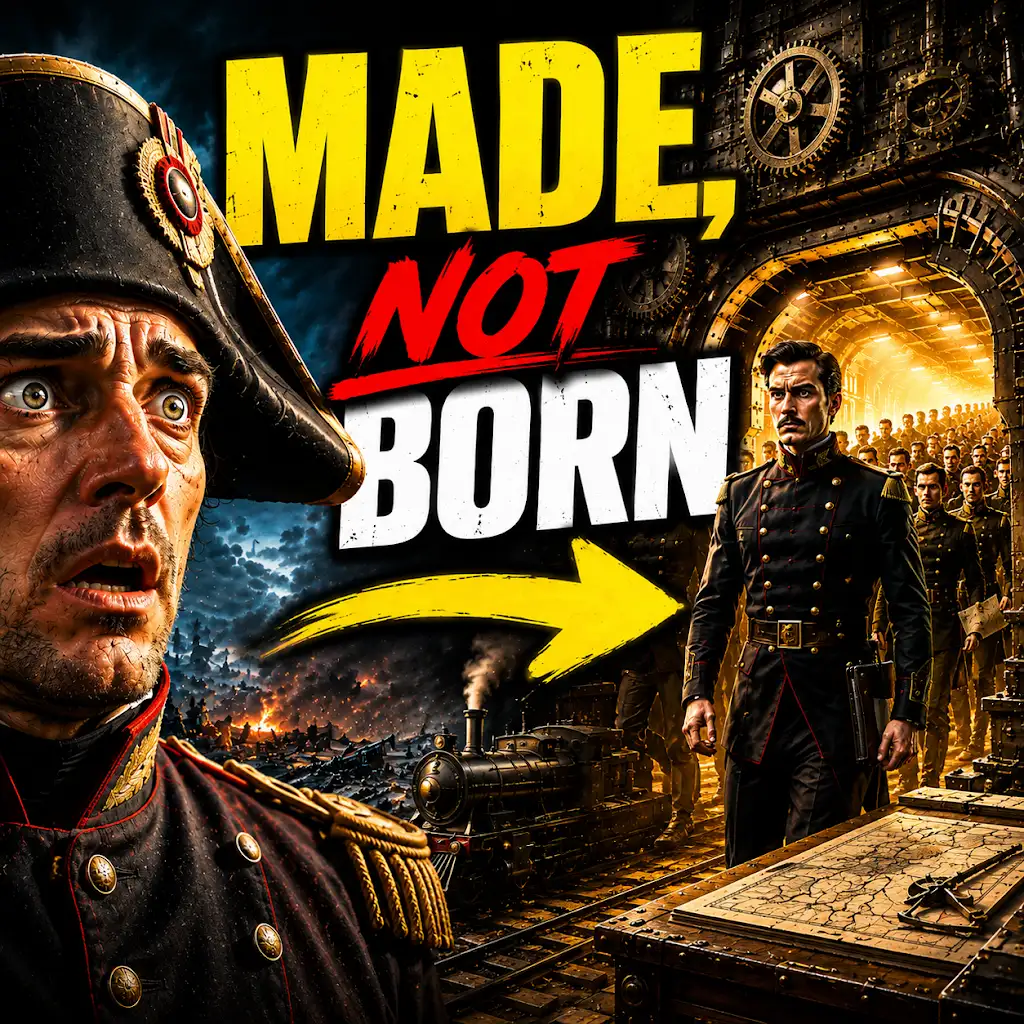
The Military Machine That Didn’t Need a Napoleon
FAQs
What was the French mobilization of 1870?
The French mobilization of 1870 refers to the mass mobilization of French military forces in response to the outbreak of the Franco-Prussian War. The war was fought between the French Empire of Napoleon III and the Kingdom of Prussia, along with its allies.
What were the causes of the French mobilization of 1870?
The main cause of the French mobilization of 1870 was the escalating tensions between France and Prussia over the issue of the Spanish succession. The candidacy of a Prussian prince for the Spanish throne led to a diplomatic crisis, ultimately leading to the outbreak of war.
How did the French mobilization of 1870 impact the war?
The French mobilization of 1870 was a massive effort to raise and deploy troops to defend against the Prussian invasion. However, the mobilization faced logistical and organizational challenges, and the French military suffered from poor leadership and coordination, ultimately leading to their defeat in the war.
What were the consequences of the French mobilization of 1870?
The consequences of the French mobilization of 1870 were significant. The defeat of the French military led to the collapse of the Second French Empire and the establishment of the Third French Republic. The war also resulted in the loss of the territories of Alsace and Lorraine to the newly formed German Empire.
How did the French mobilization of 1870 impact future military strategies?
The French mobilization of 1870 highlighted the need for modernization and reform within the French military. The defeat led to a reevaluation of military strategies and the implementation of reforms to improve the organization, training, and leadership of the French armed forces.