The disintegration of the Soviet Union, a geopolitical earthquake that reshaped the global landscape, was not a sudden implosion but rather a complex and multifaceted process. For decades, the monolithic edifice of Soviet power had appeared unassailable, a superpower locked in a tense ideological struggle with the West. Yet, beneath the surface of centralized control and propaganda, a confluence of internal weaknesses and external pressures was steadily eroding its foundations, culminating in its dissolution in December 1991. Understanding this monumental event requires an examination of its deep-seated economic failings, the suffocating grip of its political system, the resurgence of nationalist sentiments within its diverse republics, and the pivotal role of leadership and external factors.
The Soviet economy, meticulously planned and centrally controlled, was designed to prioritize heavy industry and military might. While it achieved remarkable feats in these sectors, particularly in its early decades, it ultimately proved unsustainable. The inherent inefficiencies of a command economy, coupled with a lack of innovation and consumer goods production, created a growing chasm between the promises of communism and the lived realities of its citizens.
The Inefficiency of Central Planning
At the heart of the Soviet economic woes lay the rigid system of central planning, or Gosplan. This massive bureaucratic apparatus was tasked with dictating every aspect of production, from the quantity of nails to be produced to the quotas for agricultural output. This approach, while theoretically capable of directing resources towards national priorities, proved profoundly ill-suited to the complexities of a modern economy.
Lack of Market Signals and Innovation
Without the price signals and competitive pressures of a market economy, planners lacked the crucial information needed to allocate resources efficiently. Factories were often incentivized to meet arbitrary production targets, leading to the creation of shoddy goods, surpluses of unwanted items, and shortages of essential ones. The absence of competition stifled innovation; there was little incentive for enterprises to invest in new technologies or improve their products when their existence was guaranteed by the state. This resulted in a technological gap widening between the Soviet Union and the West, particularly in crucial areas like consumer electronics and computing.
The “Shadow Economy” and Corruption
The inefficiencies and shortages fostered the growth of a significant “shadow economy” – an underground market that operated outside official state control. This black market provided goods and services that the official economy failed to deliver, but it also bred corruption at all levels of society. Party officials and enterprise managers often engaged in bribery, embezzlement, and the diversion of state resources for personal gain. This further eroded public trust and diverted resources away from legitimate production.
The Burden of Military Spending
The Cold War arms race placed an immense strain on the Soviet economy. The vast resources poured into maintaining a nuclear arsenal, a standing army, and supporting proxy conflicts diverted crucial capital and skilled labor away from civilian sectors. This military-industrial complex became a powerful vested interest within the Soviet system, resisting any significant cuts to its budget, even as the civilian economy faltered.
The Arms Race and its Economic Drain
The constant need to match or surpass Western military capabilities meant that a disproportionate share of the Soviet Union’s gross national product was dedicated to defense. This “guns over butter” policy meant that investment in infrastructure, consumer goods, and technological development lagged behind, contributing to the growing dissatisfaction among the populace.
The Cost of Global Ambition
Beyond the direct military spending, the Soviet Union also incurred significant economic costs in supporting its global network of allies and client states. This included providing economic aid, military assistance, and ideological support, further stretching its already strained resources.
The Agricultural Quagmire
Despite being a vast agricultural producer, the Soviet Union consistently struggled with food production and distribution. State-controlled collective farms (kolkhozes) and state farms (sovkhozes) were often inefficient and poorly managed.
Collectivization’s Legacy
The forced collectivization of agriculture under Stalin had devastating long-term consequences, destroying traditional farming practices and disincentivizing individual initiative. Despite later attempts at reform, the fundamental structure of Soviet agriculture remained inefficient, leading to recurrent food shortages and reliance on grain imports.
The Inability to Feed its People
The paradox of a nation with vast tracts of fertile land struggling to feed its own population was a stark testament to the failures of Soviet economic policy. This deficiency had a tangible impact on the daily lives of citizens, contributing to widespread discontent.
The collapse of the Soviet Union is a complex event influenced by various political, economic, and social factors. For a deeper understanding of this pivotal moment in history, you can explore the article titled “Understanding the Soviet Union’s Collapse” on In The War Room, which provides an in-depth analysis of the circumstances leading to the dissolution of one of the world’s superpowers. To read more about it, visit this link.
The Iron Grip Loosened: Political and Ideological Erosion
The Soviet Union was built on the bedrock of a monolithic Communist Party, which exerted absolute control over all aspects of political and social life. However, as the economic system faltered and the ideological appeals of communism began to wane, the party’s grip on power started to weaken, paving the way for internal dissent and ultimately, collapse.
The Monolithic Party and its Authoritarian Nature
The Communist Party of the Soviet Union (CPSU) was not just a political party; it was the state. Its hierarchical structure and iron discipline were designed to ensure absolute loyalty and prevent any deviation from the party line.
The Suppression of Dissent
For decades, dissent was ruthlessly suppressed through secret police, censorship, and political repression. While this maintained an outward appearance of unity, it also stifled creativity, critical thinking, and genuine participation in the political process. The absence of a genuine opposition meant that the party was insulated from feedback and unable to adapt to changing realities.
The Cult of Personality and its Aftermath
The cult of personality surrounding leaders like Lenin and Stalin, while initially effective in consolidating power, ultimately created a system where leadership was based on ideology and loyalty rather than competence or popular support. The de-Stalinization campaign initiated by Khrushchev exposed some of the party’s brutality but also created a crisis of legitimacy that was never fully resolved.
The Erosion of Ideological Legitimacy
The core ideology of Marxism-Leninism, once a powerful force that inspired millions, began to lose its appeal over time. The gap between communist ideals and the realities of Soviet life became increasingly evident, leading to cynicism and apathy.
The Promise vs. Reality
The promised utopia of a classless society and abundant prosperity never materialized. Instead, citizens experienced shortages, corruption, and a lack of personal freedoms. This disconnect between propaganda and lived experience eroded the ideological foundations of the state.
The Appeal of Western Values
As information about Western societies, with their freedoms, consumer goods, and democratic processes, gradually filtered into the Soviet Union (despite censorship), the appeal of communist ideology diminished further. The “demonstration effect” of Western prosperity and liberty proved a powerful, albeit unintended, agent of change.
Gorbachev’s Reforms: A Catalyst for Collapse
Mikhail Gorbachev, who came to power in 1985, recognized the dire state of the Soviet Union and initiated a series of reforms aimed at revitalizing the system. However, these reforms, intended to strengthen communism, inadvertently unleashed forces that led to its demise.
Glasnost and Perestroika
Gorbachev’s policies of glasnost (openness) and perestroika (restructuring) were designed to address the economic stagnation and political rigidity. Glasnost allowed for greater freedom of speech and the press, leading to a surge in public criticism of the government and a reopening of historical grievances. Perestroika, aimed at introducing market elements into the economy, proved difficult to implement and created economic dislocations.
The Unintended Consequences
Instead of breathing new life into the Soviet system, glasnost exposed its deep-seated flaws and fueled nationalist aspirations. Perestroika disrupted existing economic structures without establishing effective new ones, leading to further shortages and economic instability. Gorbachev’s reforms, by loosening the reins of control, allowed pre-existing pressures to surface and accelerate.
The Gathering Storm: Resurgent Nationalism

The Soviet Union was a vast empire built on the subjugation of numerous ethnic groups. While Moscow exerted a strong centralizing force, underlying nationalist sentiments never fully disappeared. Gorbachev’s reforms inadvertently provided the oxygen for these simmering aspirations to ignite into a powerful force for secession.
The Multi-Ethnic Fabric of the USSR
The Soviet Union comprised fifteen officially recognized union republics, each with its own distinct language, culture, and history. However, these were not independent states but constituent parts of a larger, centralized entity dominated by ethnic Russians.
The Legacy of Imperialism
The creation of the Soviet Union involved the incorporation of numerous territories and peoples, often through conquest or political maneuvering. This legacy of imperial expansion left a deep-seated resentment among many non-Russian populations, who felt their national identities were suppressed.
The Illusion of Federalism
While the Soviet Union was theoretically a federation, power was heavily concentrated in Moscow. The republics had limited autonomy, and their leaders were often appointed by the central government. This created a facade of equality that masked an underlying hierarchy.
The Rise of National Movements
With the advent of glasnost, long-suppressed national identities and grievances resurfaced. Nationalist movements gained momentum in various republics, advocating for greater autonomy, cultural preservation, and ultimately, independence.
Baltic States Lead the Way
The Baltic states – Estonia, Latvia, and Lithuania – were among the first to assert their independence. Having been forcibly annexed by the Soviet Union in 1940, they had a particularly strong historical claim to nationhood and were highly organized in their pursuit of secession.
Eastern European Echoes
The fall of the Berlin Wall in 1989 and the subsequent collapse of communist regimes in Eastern Europe created a powerful ripple effect throughout the Soviet bloc. The successful secession of these nations emboldened other Soviet republics to follow suit.
The Domino Effect of Independence
As one republic declared independence, it often emboldened others to do the same. The sheer number of republics seeking to break away created an unstoppable momentum, making it increasingly difficult for Moscow to maintain control.
The Belovezha Accords
The signing of the Belovezha Accords in December 1991 by the leaders of Russia, Ukraine, and Belarus, which declared the dissolution of the USSR and the formation of the Commonwealth of Independent States, effectively sealed the fate of the Soviet Union. This act, taken without the direct involvement of all republics, signaled the end of the old order.
The Weakening Center: The Role of Leadership and External Pressures
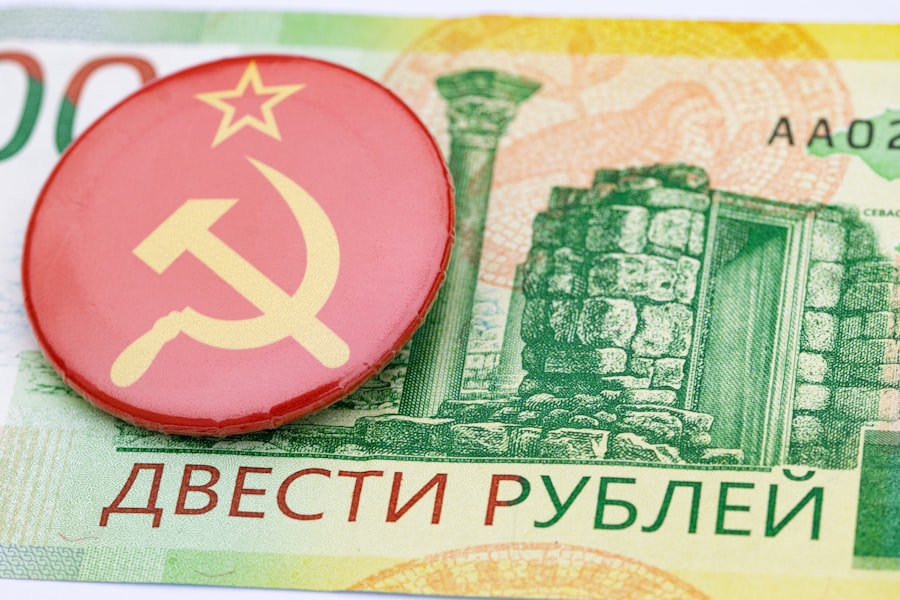
While internal factors were the primary drivers of the Soviet collapse, the actions (or inactions) of key leaders and the persistent pressures from the international arena played crucial roles in hastening its demise.
Gorbachev’s Strategic Miscalculations
Mikhail Gorbachev’s leadership, though well-intentioned in its desire for reform, was characterized by a series of strategic miscalculations that ultimately contributed to the Soviet Union’s downfall.
The Inability to Control the Reins
Gorbachev sought to reform the Soviet system without fundamentally dismantling it. He underestimated the depth of nationalist sentiments and the potential for his reforms to unleash forces that he could not control. His attempts to balance reform with the maintenance of central authority proved a difficult, and ultimately impossible, task.
The August Coup of 1991
The attempted coup by hardline communists in August 1991, aimed at reversing Gorbachev’s reforms, proved to be a fatal blow to the Soviet system. While the coup ultimately failed, it significantly weakened Gorbachev’s authority and empowered Boris Yeltsin, the president of the Russian SFSR, who emerged as a powerful counter-force.
The “Gorbachev Doctrine” and its Impact
Gorbachev’s foreign policy, often referred to as the “Gorbachev Doctrine,” marked a significant shift from the confrontational approach of his predecessors.
The Withdrawal from Afghanistan
The Soviet Union’s prolonged and costly war in Afghanistan, a quagmire that drained resources and undermined morale, was finally ended under Gorbachev’s leadership. This withdrawal was a significant victory for the anti-Soviet forces and a blow to Soviet prestige.
The Non-Intervention in Eastern Europe
Crucially, Gorbachev signaled a departure from the Brezhnev Doctrine, which had asserted the Soviet Union’s right to intervene in the affairs of its satellite states. This policy of non-intervention allowed the peoples of Eastern Europe to overthrow their communist regimes without fear of Soviet military reprisal, setting a powerful precedent for the Soviet republics themselves.
The Persistent Pressure from the West
While not directly causing the Soviet collapse, the sustained pressure from the West, particularly the United States, played a significant role in shaping the geopolitical context in which the Soviet Union found itself.
The Reagan Administration’s Stance
The Reagan administration’s assertive anti-communist stance, characterized by increased military spending and strong rhetorical opposition to Soviet influence, undoubtedly contributed to the economic strain on the Soviet Union. The Strategic Defense Initiative (SDI), while never fully realized, was seen as a technological challenge that the Soviets could not afford to ignore.
Economic Sanctions and Diplomacy
Western nations also employed economic sanctions and diplomatic pressure to isolate and weaken the Soviet Union. While the impact of these measures on the immediate collapse is debated, they contributed to the overall sense of external pressure and the growing realization within the Soviet elite that the existing system was unsustainable.
The collapse of the Soviet Union remains a pivotal moment in modern history, and understanding its complexities can be greatly enhanced by exploring related analyses. For instance, an insightful article that delves into the economic and political factors leading to this monumental event can be found at this link. By examining the various elements that contributed to the dissolution, readers can gain a deeper appreciation of how the interplay of ideology, governance, and social change ultimately shaped the fate of a superpower.
The Aftermath and Legacy: A New World Order
| Factors | Explanation |
|---|---|
| Economic Issues | The Soviet economy was struggling due to inefficiency, lack of innovation, and a focus on heavy industry. |
| Political Reforms | Gorbachev’s policies of glasnost (openness) and perestroika (restructuring) led to increased political freedom and economic restructuring. |
| Nationalism | Various ethnic groups within the Soviet Union sought independence, leading to the dissolution of the union. |
| External Pressure | The end of the Cold War and pressure from Western countries contributed to the collapse of the Soviet Union. |
| Military Spending | The Soviet Union’s heavy investment in military and defense strained the economy and contributed to its downfall. |
The fall of the Soviet Union was not merely the end of an empire; it was the catalyst for a fundamental reordering of the global political and economic landscape. The dissolution ushered in an era of unprecedented global change, with both profound opportunities and new challenges.
The Emergence of New Nations
The fifteen former Soviet republics gained their independence, leading to the creation of a host of new sovereign states. This transition was not always smooth, with many facing significant economic and political challenges as they navigated their newfound freedom.
Challenges of Nation-Building
Many of these new nations struggled with establishing stable democratic institutions, developing market economies, and addressing ethnic tensions that had been suppressed under Soviet rule. The legacy of decades of centralized control proved a difficult hurdle to overcome.
Geopolitical Realignment
The end of the Cold War bipolarity led to a unipolar world, with the United States emerging as the sole superpower. This geopolitical shift had profound implications for international relations, alliances, and the nature of global conflict.
The Transition to Market Economies
The former Soviet republics embarked on often painful transitions from centrally planned economies to market-based systems. This process was marked by privatization, liberalization, and the inevitable rise of unemployment and income inequality.
The Shock Therapy Approach
Some countries adopted a rapid “shock therapy” approach, characterized by swift privatization and deregulation. While this led to rapid economic restructuring in some cases, it also resulted in significant social disruption and the rise of oligarchic elites.
The Struggle for Stability
Other nations adopted more gradual approaches, but all faced the challenge of creating viable market economies in the absence of established legal frameworks, institutional capacity, and a culture of entrepreneurship.
The Enduring Legacy and Lessons Learned
The fall of the Soviet Union offers enduring lessons about the fragility of authoritarian regimes, the power of nationalist aspirations, and the inherent limitations of centrally planned economies.
The Importance of Democracy and Freedoms
The collapse served as a powerful testament to the human desire for freedom, self-determination, and democratic governance. The inability of the Soviet system to meet these fundamental needs ultimately proved to be its undoing.
The Perils of Unchecked Power
The Soviet experience highlighted the dangers of unchecked political and economic power concentrated in the hands of a few. The lack of accountability and transparency inherent in the system led to widespread corruption and a disregard for the well-being of the populace. The fall of the Soviet Union remains a pivotal event in modern history, a complex tapestry woven from economic failure, political repression, resurgent nationalism, and the consequences of reform. Its unraveling was a slow burn, a gradual erosion of foundational principles that ultimately led to a seismic shift in the global order, the reverberations of which continue to shape our world today.

The $17 Million That Helped Destroy an Empire
FAQs
1. What were the main factors that led to the collapse of the Soviet Union?
The collapse of the Soviet Union was influenced by a combination of economic, political, and social factors. These included economic stagnation, political repression, nationalist movements in the republics, and the arms race with the United States.
2. When did the Soviet Union officially collapse?
The Soviet Union officially collapsed on December 26, 1991, when the leaders of Russia, Ukraine, and Belarus signed the Belavezha Accords, declaring the dissolution of the Soviet Union and establishing the Commonwealth of Independent States (CIS).
3. What were the immediate consequences of the Soviet Union’s collapse?
The immediate consequences of the Soviet Union’s collapse included the emergence of independent states in the former Soviet republics, the end of the Cold War, and the transition to a market economy in many of the newly independent countries.
4. How did the collapse of the Soviet Union impact global politics?
The collapse of the Soviet Union led to a significant shift in global politics, with the United States emerging as the world’s sole superpower. It also led to the expansion of NATO and the European Union, as well as changes in international alliances and geopolitical dynamics.
5. What is the legacy of the Soviet Union’s collapse today?
The legacy of the Soviet Union’s collapse continues to shape the political, economic, and social landscape of the former Soviet republics. It has also had a lasting impact on global geopolitics, with ongoing tensions between Russia and the West and the enduring influence of the Cold War era.