The swift, decisive victories promised by Blitzkrieg – “lightning war” – captivated military strategists and the public alike in the early years of World War II. This innovative doctrine, a synchronized employment of tanks, motorized infantry, and close air support, aimed to achieve breakthroughs by rapidly overwhelming enemy defenses, encircling their forces, and avoiding protracted attrition. It delivered stunning successes in Poland and France, painting a picture of an invincible German military machine. Yet, as the conflict wore on, the inherent limitations and strategic miscalculations embedded within Blitzkrieg’s very design began to manifest, ultimately contributing to its failure as a sustainable long-term warfare strategy.
Blitzkrieg’s initial triumphs were undeniable. The psychological impact of its speed and ferocity was immense, often leading to the collapse of enemy morale and strategic paralysis before substantial resistance could be mounted. This was not merely about the brute force of tanks, but the intelligent application of combined arms. Armored divisions, spearheaded by panzer units, would punch through enemy lines at pre-selected weak points, often supported by Stuka dive bombers that shattered enemy defenses and sowed terror. Motorized infantry would follow closely, consolidating the gains, while artillery and air power provided crucial suppressive fire and interdiction. The key was the exploitation of speed and surprise, creating a dynamic battlefield where the defender was constantly reacting to unforeseen threats.
The Art of the Breakthrough
Central to the Blitzkrieg concept was the ability to achieve a deep penetration of enemy lines. This was not a frontal assault, but an elegant maneuver designed to bypass strong points and isolate enemy formations. The panzer divisions were the instruments of this breakthrough, their speed and armored protection allowing them to penetrate deep into enemy territory. The emphasis was on maintaining momentum, pushing forward relentlessly to achieve operational objectives rather than tactical ones. This meant that units were often operating far ahead of their logistical support, a calculated risk that paid dividends when the enemy had no cohesive reserve to counter the thrust.
The Role of Air Superiority
Close air support, particularly from the Luftwaffe’s dive bombers like the Stuka, was an indispensable component of Blitzkrieg. These aircraft acted as a mobile artillery, able to quickly redeploy and engage any enemy strongholds or counterattacks threatening the advancing panzer columns. Their terrifying sirens were as much a weapon of psychological warfare as their bombs were of destruction. However, this reliance on air superiority proved to be a double-edged sword. As the war progressed and Allied air forces grew in strength and sophistication, the Luftwaffe’s ability to maintain this crucial support diminished, directly impacting the effectiveness of Blitzkrieg operations.
Psychological Warfare as a Force Multiplier
Beyond the physical destruction caused by tanks and bombs, Blitzkrieg leveraged psychological warfare to its advantage. The speed of the advance, the apparent invincibility of the armored spearheads, and the terror inspired by the Stukas were designed to shatter enemy morale. Collapse in one sector could create a domino effect, leading to widespread panic and a breakdown of command and control. This psychological element was often as devastating as any military engagement, contributing to the rapid capitulation of armies that were, in some cases, not yet strategically defeated.
The concept of Blitzkrieg, or “lightning war,” was initially successful for the German military during the early stages of World War II; however, its effectiveness diminished over time due to various factors. A related article that delves into the reasons behind the failure of Blitzkrieg strategies can be found at In The War Room. This article explores the limitations of rapid warfare, the challenges of sustaining supply lines, and the evolving tactics of the Allied forces that ultimately contributed to the decline of this once-dominant military approach.
The Limits of Expansion and Overextension
While Blitzkrieg proved effective in campaigns fought in relatively contained theaters with limited logistical challenges, its inherent reliance on speed and momentum made it vulnerable to overextension. The further German forces pushed, the longer their supply lines became, and the more exposed they were to counterattacks. This became particularly apparent in the vast expanse of the Soviet Union, where distances were immense and infrastructure was often poor. The doctrine, designed for swift decisive victories, struggled to adapt to campaigns of attrition and prolonged occupation.
The Vastness of the Eastern Front
The invasion of the Soviet Union in 1941, codenamed Operation Barbarossa, represented the ultimate test of Blitzkrieg. The initial gains were spectacular, with massive Soviet armies encircled and destroyed. However, the sheer scale of the Soviet Union, its unforgiving terrain, and its seemingly inexhaustible manpower began to expose the limitations of the German approach. The Red Army, though initially outmaneuvered, was able to absorb tremendous losses and mount counteroffensives, turning the tide of the war. The vast distances also severely strained German logistics, which were never designed for such an extended campaign.
The Importance of Logistics and Infrastructure
Blitzkrieg’s success was heavily dependent on the availability of adequate infrastructure, such as good roads and railways, to support the rapid movement of troops and supplies. In the initial campaigns in Western Europe, this infrastructure was largely intact. However, in the Soviet Union, and later in North Africa, the Germans faced significant challenges due to poor infrastructure and deliberate scorched-earth tactics employed by the retreating Soviets. The strain on German logistical capabilities became a critical bottleneck, preventing them from sustaining their offensives and adequately reinforcing their forward units.
The Unintended Consequences of Deep Incursions
The strategy of deep penetrations, while initially effective in encircling and destroying enemy formations, also had unintended consequences. German spearheads often found themselves deep behind enemy lines, isolated and vulnerable to partisan activity and counterattacks from enemy units that had avoided encirclement. This stretched German resources thin, forcing them to divert troops from offensive operations to maintain security and establish a broader defensive perimeter.
The Enemy Adapts: Countering the Lightning War
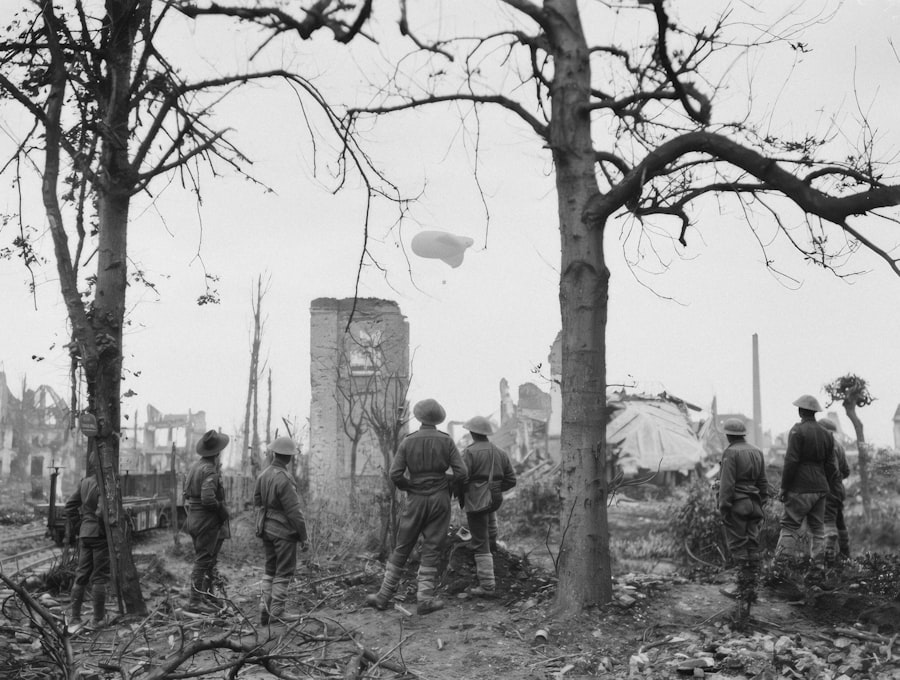
As the war progressed, both Allied and Soviet forces learned from their early defeats. They analyzed the tactics of Blitzkrieg and developed effective countermeasures. This involved a combination of improved defensive strategies, the development of new anti-tank weaponry, and a greater emphasis on coordinated defense and counterattacks. The element of surprise, so crucial to Blitzkrieg, began to erode as enemy forces became more adept at anticipating and reacting to German thrusts.
Improved Defensive Formations
Defending against Blitzkrieg required a fundamental shift in defensive doctrine. Instead of static trench lines that were easily bypassed, defenders began to adopt more fluid and dynamic formations. They dispersed their forces, creating deep defensive belts rather than relying on a single, easily broken front. Key to this was the development of anti-tank strongpoints and hedgehog defenses that could absorb and channel the attacker’s penetration, allowing for flanking counterattacks. The objective was no longer to hold a fixed line but to inflict maximum casualties on the attacking forces and disrupt their momentum.
The Rise of Anti-Tank Warfare
The tank, the spearhead of Blitzkrieg, became increasingly vulnerable as anti-tank technology evolved. Allied and Soviet forces developed more potent anti-tank guns, both towed and self-propelled, capable of destroying German armor at longer ranges. Anti-tank mines became more widely deployed and effective, creating dangerous obstacles for advancing panzer columns. Furthermore, tactics of ambushing and concentrating anti-tank fire on breakthroughs became increasingly common, turning the tanks’ speed into a disadvantage as they became isolated targets.
The Importance of Reserves and Counter-Offensives
Early Blitzkrieg successes often stemmed from the absence of effective enemy reserves to plug breakthroughs and launch counterattacks. As the war progressed, Allied and Soviet armies made a conscious effort to maintain well-trained and well-equipped reserves. These reserves were held back and committed at critical points to blunt German offensives, isolate penetrating forces, and launch counterattacks that could seize back the initiative. The ability to mass reserves for decisive counterstrokes proved to be a significant factor in countering Blitzkrieg’s momentum.
The Strategic Disconnect: Operational Success vs. Strategic Goals
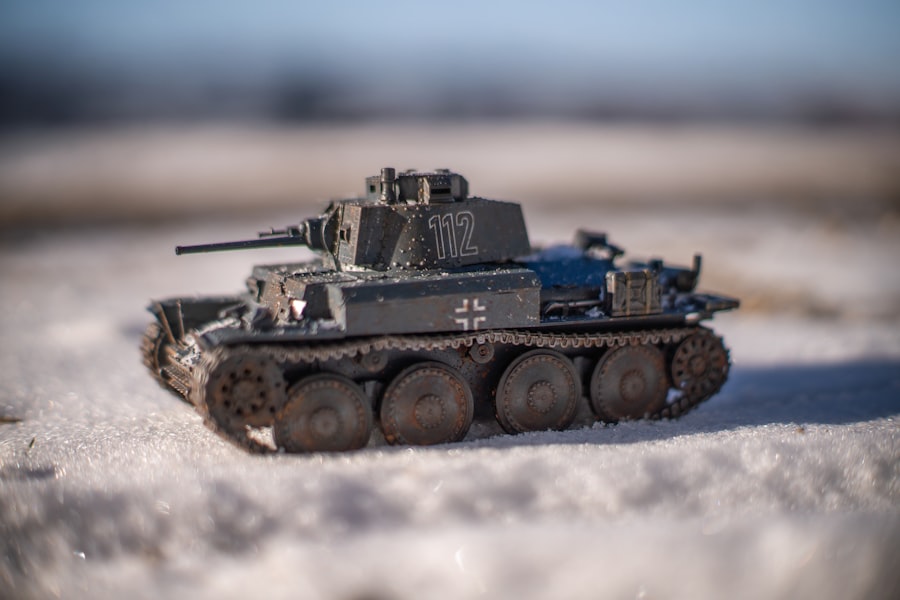
While Blitzkrieg often achieved impressive operational successes – the destruction of enemy armies and the capture of territory – these gains did not always translate into achieving Germany’s broader strategic war aims. The doctrine was fundamentally a tactical and operational one, lacking a coherent strategic vision that could secure long-term victory. The focus on rapid conquest and decisive battles often overshadowed the need for sustainable occupation, economic warfare, and the diplomatic isolation of enemies.
The Lack of a Grand Strategy
Blitzkrieg was a brilliant tactical and operational concept, but it was not supported by a comparable grand strategy for winning the war. Germany lacked the industrial capacity and manpower to engage in a prolonged, multi-front war against the combined might of the Allied powers. The rapid conquests, while impressive, did not cripple the enemy’s ability to wage war or achieve Germany’s ultimate political and territorial objectives. The focus remained on battlefield victories rather than the comprehensive exhaustion of the enemy’s war-making potential.
The Failure to Achieve Decisive Strategic Outcomes
The “decisive battle” concept inherent in Blitzkrieg often failed to deliver its promise on a strategic level. Even after devastating battlefield defeats, Allied and Soviet nations possessed the resources and resilience to continue fighting. The objective of Blitzkrieg was often to force an enemy to surrender after a decisive tactical defeat, but the major Allied powers, particularly Britain and the Soviet Union, proved unwilling or unable to capitulate. This left Germany locked in a war of attrition that its industrial and economic base was ill-equipped to sustain.
The Overestimation of Enemy Weakness
A recurring theme in Germany’s strategic miscalculations was an overestimation of the inherent weakness and fragility of its opponents. The initial successes against Poland and France led to a belief that other nations would also crumble under the weight of Blitzkrieg. This proved to be a grave error, particularly in the case of the Soviet Union, which demonstrated an astonishing capacity for endurance and sacrifice. This underestimation of enemy resolve contributed to Germany’s continued pursuit of a doctrine that was increasingly ill-suited to the realities of a prolonged global conflict.
The concept of Blitzkrieg, or “lightning war,” was initially successful for the German military during the early stages of World War II, but its effectiveness diminished as the war progressed. Factors such as logistical challenges, overextended supply lines, and the resilience of Allied forces contributed to its eventual failure. For a deeper understanding of the complexities surrounding this military strategy, you can read a related article that explores these themes in detail at this link.
The Unraveling: When Blitzkrieg Met its Match
| Reasons for Blitzkrieg Failure | Explanation |
|---|---|
| Lack of Supplies | The rapid advance of Blitzkrieg tactics often outstripped the supply lines, leading to logistical problems and shortages of fuel, ammunition, and other essential resources. |
| Unfavorable Terrain | Blitzkrieg tactics were less effective in heavily forested or urban areas, where the rapid movement and coordination of forces were hindered. |
| Resistance and Resilience of Enemy Forces | In some cases, the enemy forces were able to regroup and mount effective resistance, slowing down the Blitzkrieg advance and causing setbacks. |
| Overextended Supply Lines | The rapid advance often led to overextended supply lines, making it difficult to sustain the momentum of the Blitzkrieg and leaving the forces vulnerable to counterattacks. |
| Weather Conditions | Adverse weather conditions, such as heavy rain or snow, could hamper the mobility of the Blitzkrieg forces and disrupt their coordination and communication. |
Ultimately, the failure of Blitzkrieg was not a single event but a gradual unraveling driven by a confluence of factors. The limitations of the doctrine itself, combined with the adaptability of its adversaries and Germany’s own strategic overreach, paved the way for its eventual obsolescence. The initial awe-inspiring successes gave way to grinding attrition, where the principles of Blitzkrieg were increasingly honored in the breach rather than in practice.
The Turning Tides of War
The Battle of Stalingrad marked a pivotal turning point, not just in the East, but for the future of Blitzkrieg. The brutal, protracted urban combat exposed the limitations of fast-moving armored warfare in a heavily defended environment. The loss of the entire German Sixth Army was a devastating blow, both in terms of manpower and morale, and signaled the beginning of the end of German strategic initiative. Subsequent Allied offensives in North Africa and Italy also demonstrated the increasing difficulty of applying Blitzkrieg principles against well-prepared and well-supplied defenders.
The Rise of Allied Industrial Might
A significant factor in the demise of Blitzkrieg was the overwhelming industrial capacity of the United States and the Soviet Union. As the war progressed, the Allies were able to produce tanks, aircraft, and other war materiel in numbers that Germany simply could not match. The quantitative superiority of Allied forces, coupled with increasingly effective qualitative improvements in their weaponry and tactics, gradually eroded the effectiveness of Blitzkrieg. The ability to replace losses and sustain offensives became increasingly one-sided.
The Shift Towards Attrition Warfare
By the later stages of the war, the battlefield had fundamentally changed. The emphasis shifted from rapid breakthroughs and strategic encirclement to attritional warfare, where the ability to sustain long offensives and inflict casualties on the enemy became paramount. Blitzkrieg, designed for swift, decisive outcomes, was ill-suited to this new reality. German forces, increasingly outnumbered and outgunned, found themselves fighting defensive battles and attempting to hold ground rather than achieving daring maneuver warfare. The lightning war had been extinguished, replaced by the brutal grinding reality of total war.

Why Hitler Lost Because of Fuel
FAQs
What was Blitzkrieg?
Blitzkrieg, meaning “lightning war” in German, was a military strategy used by the German army during World War II. It involved rapid and coordinated attacks using tanks, aircraft, and infantry to quickly overwhelm and disorient the enemy.
Why did Blitzkrieg fail?
Blitzkrieg ultimately failed due to a combination of factors, including logistical challenges, overextension of supply lines, and underestimation of the enemy’s resilience. Additionally, the harsh Russian winter and the vastness of the Soviet Union posed significant challenges for the German forces.
What were the key weaknesses of Blitzkrieg?
Some key weaknesses of Blitzkrieg included its reliance on speed and surprise, which made it vulnerable to logistical issues and the need for constant momentum. Additionally, the strategy was less effective in prolonged conflicts and against enemies with strong defensive positions.
What impact did the failure of Blitzkrieg have on World War II?
The failure of Blitzkrieg marked a turning point in World War II, as it demonstrated the limitations of the strategy and forced the German army to adapt to a more defensive and attritional style of warfare. It also allowed the Allied forces to gain momentum and ultimately achieve victory.
What lessons were learned from the failure of Blitzkrieg?
The failure of Blitzkrieg highlighted the importance of logistical planning, adaptability, and the need to consider the long-term sustainability of military strategies. It also emphasized the significance of understanding the terrain and climate of the battlefield, as well as the resilience of the enemy forces.