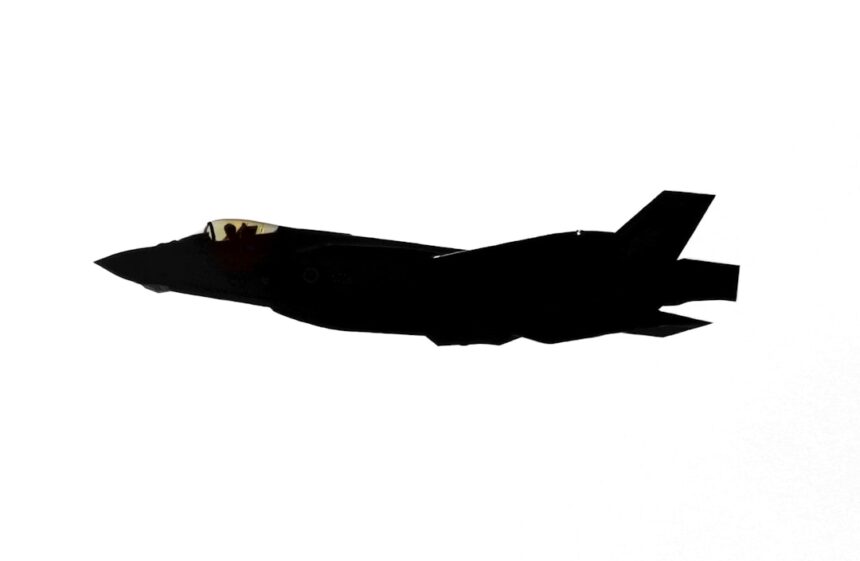
The shimmering heat haze rising from the dusty asphalt of a remote airbase in the former Yugoslavia was not the only distortion in the air. Something far more profound, a paradigm shift in military aviation, had just been revealed. The F-117 Nighthawk, a black, angular phantom, was no longer Rome’s whispered legend. Its appearance in combat, specifically in operations over Serbia in 1999, marked a turning point, a stark and undeniable testament to the technological prowess that had propelled the United States forward while the Soviet Union faltered. Its presence was not merely a weapon; it was a symbol, a digital ghost haunting the twilight of an empire.
The very concept of stealth technology, of making an aircraft virtually disappear from radar, was born out of the anxieties of the Cold War. The Soviet Union, a formidable adversary, possessed vast air defense networks, sophisticated radar systems designed to track and intercept any airborne threat. For the United States Air Force, the idea of penetrating this layered defense without detection was not a desire, but a necessity. The F-117 Nighthawk was the physical manifestation of this strategic imperative, a technological leap forged in the crucible of geopolitical tension.
The Need for the Unseen
Throughout the Cold War, the potential for a large-scale conflict between the NATO and Warsaw Pact alliances loomed large. The Soviet Union’s military machine, particularly its air power and integrated air defense systems (IADS), presented a significant challenge. Radar, the all-seeing eye of modern warfare, was the primary enabler of these systems. The ability to negate the effectiveness of radar was, therefore, a critical objective for any air force hoping to gain an advantage. The F-117 was conceived as a solution to this problem, a means to achieve air superiority by denying the enemy the ability to see the threat.
Early Forays into Stealth: From Theory to Form
The theoretical underpinnings of stealth technology, focusing on shaping an aircraft’s form to deflect radar signals away from the source rather than reflecting them back, had been explored for decades. Early experiments, often conducted in a highly classified environment, involved shaping simple objects and measuring their radar cross-section. These were the initial sketches on the canvas of technological possibility. The development of advanced materials, such as radar-absorbent coatings, further bolstered these theoretical concepts. The Canting of the F-117’s surfaces, its faceted design, was a radical departure from the flowing, aerodynamic lines of traditional aircraft. It was a deliberate embrace of angularity, a geometric statement of defiance against the invisible waves of radar.
Skunk Works: The Cradle of Innovation
The development of the F-117 was entrusted to Lockheed’s legendary Skunk Works division, a unit renowned for its ability to develop groundbreaking aircraft under extreme secrecy and compressed timelines. This hothouse of innovation, accustomed to pushing the boundaries of what was considered possible, was the perfect incubator for such a revolutionary project. The engineers and designers at Skunk Works were not just building an airplane; they were weaving a tapestry of cutting-edge science and engineering, each thread representing a new challenge overcome.
The F-117 Nighthawk, known for its stealth capabilities, played a pivotal role in modern aerial warfare, particularly during the Gulf War, showcasing the technological advancements of the United States in the late 20th century. This period also coincided with the fall of the USSR, which marked a significant shift in global power dynamics. For a deeper understanding of how these events are interconnected, you can read more in this related article: here.
The Black Diamond: Design and Technology
The F-117 Nighthawk defied conventional aircraft aesthetics. Its angular, faceted design, reminiscent of a cut gemstone, was not an aesthetic choice but an engineering imperative. Every facet, every angle, was meticulously calculated to minimize its radar signature. This was a machine designed to be seen only by the enemy’s mistakes, a digital phantom designed to slip through the cracks of their awareness.
Shaping the Silhouette: The Geometry of Evasion
The most striking feature of the F-117 was its distinctive shape. Unlike the smooth, curved surfaces of conventional aircraft, the F-117 was composed of flat, angular panels. These facets were precisely angled to reflect radar waves away from the radar source, minimizing the amount of energy that would return and be detected. Imagine a perfectly cut diamond, its many facets designed to refract light in specific directions. The F-117 was a similar concept applied to radar waves, each surface acting as a carefully angled mirror, redirecting the enemy’s gaze elsewhere. This was a deliberate departure from the aerodynamic efficiency that had traditionally governed aircraft design, prioritizing stealth over speed and agility in certain flight regimes.
Radar-Absorbent Materials: The Cloak of Invisibility
Beyond its shape, the F-117 was coated with advanced radar-absorbent materials (RAM). These materials were designed to absorb radar energy rather than reflect it, further diminishing the aircraft’s radar cross-section. Think of it as a sponge for radar waves, soaking them up before they could bounce back. The application and maintenance of these coatings were incredibly sensitive processes, requiring specialized facilities and a highly skilled workforce. The unique black paint also helped to reduce infrared detectability, another crucial element of its stealth profile.
Internal Weapons Bay: Concealing the Sting
To maintain its stealthy profile, the F-117 carried its armament internally. The weapons bay doors were designed to lie flush with the aircraft’s skin, creating a smooth, uninterrupted surface when closed. This meant that when the F-117 was on patrol, its weapons were hidden, adding another layer to its deception. It was a predator that revealed its fangs only at the moment of attack, ensuring that its presence remained unknown until it was too late for the target.
Fly-by-Wire: A New Kind of Control
Given its unconventional design and inherently unstable aerodynamic characteristics, the F-117 relied on a highly sophisticated fly-by-wire (FBW) flight control system. This system, essentially an electronic intermediary between the pilot’s controls and the aircraft’s control surfaces, allowed for precise manipulation of the aircraft’s flight, compensating for its unusual configuration. The pilot was, in essence, engaging in a constant dialogue with the computer, guiding the machine through its complex dance of evasion.
First Blood Drawn: The F-117 Enters the Arena
The F-117 Nighthawk’s operational debut was shrouded in secrecy, a fitting prelude to its legendary status. Its early missions were not the thunderous pronouncements of dominance, but the silent strikes that began to rewrite the rules of air warfare. Its very existence, once revealed, sent ripples of unease through military strategists worldwide.
Operation Just Cause: The Panama Prelude
The F-117’s first combat deployment occurred during Operation Just Cause in Panama in 1989. While its presence was largely unacknowledged at the time, these early missions provided invaluable operational experience and further validated the stealth technology. The ghost had begun to stir, testing the waters of a world not yet ready to comprehend its capabilities.
Operation Desert Storm: The Unveiling
The true unveiling of the F-117 Nighthawk to the world came during Operation Desert Storm in 1991. Flying over 1,200 sorties and dropping roughly 40% of the precision-guided munitions used by coalition forces, the F-117 achieved an unprecedented success rate. It struck high-value targets with remarkable impunity, hitting command centers, air defense sites, and communication nodes deep within enemy territory. It was the ultimate opening act, a grand revelation that sent shockwaves through the global military community.
The Psychological Impact: A New Era of Fear
The F-117’s dominance in Desert Storm had a profound psychological impact. For the Iraqi air defenses, designed to detect and engage traditional aircraft, the F-117 was an enemy they could not see, an unseen hand striking at will. This created a new level of uncertainty and fear, demonstrating the vulnerability of even seemingly impregnable defense systems. The Black Diamond was not just a weapon; it was a harbinger of a new kind of warfare, one that relied on deception and invisibility.
The Shadow Lengthens: The F-117 and the USSR’s Declining Star
While the F-117 did not directly engage Soviet aircraft or units, its very existence and successful deployment served as a potent symbol of the widening technological gap between the United States and the Soviet Union. As the Soviet Union grappled with internal strife and economic stagnation, its ability to match such advanced technological leaps was severely diminished. The F-117 was a flashing beacon, illuminating the path the USSR was no longer able to follow.
A Technological Chasm: The Arms Race Redefined
The development and successful deployment of the F-117 represented a significant advancement in military aviation technology, one that the Soviet Union struggled to replicate. The immense financial and technological resources required to develop and field such a complex aircraft were a luxury the ailing Soviet economy could no longer afford. The arms race, once a breathless sprint, had become a marathon the USSR was visibly losing. The F-117 was not so much a dagger aimed at the USSR’s heart, but a stark demonstration that the West was running a faster, more innovative race.
The Soviet Response: A Difficult Catch-Up
While Soviet engineers and scientists were undoubtedly aware of the theoretical principles behind stealth technology, the practical implementation proved to be a monumental challenge. The Soviet Union had historically excelled in brute force and mass production, but the intricate, low-observable technologies required for stealth demanded a different kind of innovation, a shift in their research and development paradigm that was difficult to engineer. They had the blueprints for how to build a faster car, but the F-117 was a different beast altogether, one that required an entirely new engine and chassis.
The Signal of Decline: A Technological Omen
The F-117’s operational success arrived at a critical juncture for the Soviet Union. As internal dissent grew and economic pressures mounted, the perceived technological superiority of the West, embodied by the F-117, further eroded the Soviet Union’s international standing and internal confidence. It was a tangible, undeniable sign that the technological tide had turned, and the USSR was being left behind. The Black Diamond, soaring unseen over battlefields, cast a long shadow over the fading grandeur of the Soviet empire.
The F-117 Nighthawk, known for its stealth capabilities, played a significant role in modern warfare, particularly during the Gulf War, which coincided with the decline of the USSR. This aircraft symbolized a shift in military technology that emerged in the late 20th century, highlighting the changing dynamics of global power. For a deeper understanding of how advancements like the F-117 influenced military strategies during this pivotal time, you can read more in this insightful article on military technology and its impact on the fall of the USSR.
The F-117’s Legacy: More Than Just a Black Jet
| Metric | F-117 Nighthawk | Fall of the USSR |
|---|---|---|
| Introduction Year | 1983 (first flight), 1988 (operational) | 1991 (official dissolution) |
| Role | Stealth attack aircraft | Political and economic collapse of a superpower |
| Stealth Technology | First operational aircraft designed with stealth technology | Not applicable |
| Impact on Cold War | Enhanced US military capabilities, contributed to air superiority | Marked the end of the Cold War era |
| Operational Use | Used in Panama (1989), Gulf War (1991) | Collapse led to geopolitical shifts and new independent states |
| Number Built | 59 aircraft | Not applicable |
| Significance | Revolutionized stealth and precision strike capabilities | End of Soviet Union, emergence of Russia and other republics |
The F-117 Nighthawk’s contribution extends far beyond its combat record. It irrevocably altered the landscape of military aviation, paving the way for future stealth aircraft and forever changing how nations approach air defense. Its legacy is etched not only in the history books of warfare but in the very fabric of modern military strategy.
The Dawn of the Stealth Era
The F-117 Nighthawk was not an isolated achievement but the vanguard of a new era. Its success spurred the development of other stealth platforms, including the B-2 Spirit bomber and the F-22 Raptor fighter jet. The concept of stealth transitioned from a niche capability to a fundamental requirement for advanced air combat. The path forged by the F-117 led directly to the stealth bombers and fighters that dominate today’s skies, aircraft that continue to push the boundaries of invisibility.
The Evolution of Air Defense
In response to the threat posed by stealth aircraft, air defense systems have also evolved dramatically. Modern air defense systems now incorporate a wider range of sensor technologies, including infrared sensors and passive radar detection, designed to detect low-observable aircraft through means other than traditional radar. The F-117 forced a reckoning, compelling nations to think beyond the radar, to develop defenses that could see beyond the visible spectrum.
A Symbol of Technological Dominance
The F-117 Nighthawk remains a powerful symbol of American technological innovation and military might during a pivotal period in global history. Its impact on the Cold War’s twilight and its role in demonstrating a clear technological advantage over the declining Soviet Union cannot be overstated. It was a silent, black bird that sang a clear song of change, a song that echoed the quiet dismantling of an empire and the rise of a new era in air power. It was, in its own unobtrusive way, a spectral herald of the USSR’s fall.

SHOCKING: How Stealth Technology Bankrupted An Empire
FAQs
What is the F-117 Nighthawk?
The F-117 Nighthawk is a stealth attack aircraft developed by the United States Air Force. It was the first operational aircraft designed around stealth technology to evade radar detection, primarily used for precision strikes.
When was the F-117 Nighthawk first introduced?
The F-117 Nighthawk was officially introduced into service in 1983, although it remained classified for several years before its existence was publicly acknowledged in 1988.
How did the F-117 Nighthawk impact the Cold War dynamics?
The F-117’s stealth capabilities gave the United States a significant technological advantage during the Cold War, allowing for covert operations and precision strikes that could bypass Soviet radar defenses, thereby influencing military strategies and deterrence.
What role did the F-117 play in the events leading to the fall of the USSR?
While the F-117 did not directly cause the fall of the USSR, its advanced technology symbolized the technological and military edge the United States held. This edge contributed to the strategic pressures and arms race that were factors in the eventual dissolution of the Soviet Union.
Is the F-117 Nighthawk still in service today?
The F-117 was officially retired in 2008, replaced by more advanced stealth aircraft like the F-22 Raptor and F-35 Lightning II. However, some F-117s have been kept in reserve or used for training purposes.