
The watchful eye of the state has a long and complex history, stretching back to the very dawn of organized societies. From the meticulous record-keeping of ancient empires to the sophisticated digital networks of modern nation-states, governments have consistently sought to understand and manage their populations. This evolution of government surveillance is not merely a technological progression; it reflects shifting political philosophies, societal anxieties, and the ever-present human desire for control and security.
Even before the advent of sophisticated technology, rulers understood the value of information. The earliest forms of government surveillance were rooted in the practical necessities of managing large territories, collecting taxes, and maintaining order. These methods, though rudimentary by today’s standards, laid the groundwork for future developments.
Information Gathering in Empires
The vast empires of antiquity, such as the Persian and Roman Empires, relied on a network of informants and scribes to gather intelligence. Messengers traversed long distances, carrying reports from distant provinces back to the central authorities. These reports detailed everything from agricultural yields and trade movements to potential rebellions and the disposition of local populations. The sheer scale of these empires necessitated a degree of oversight to ensure loyalty and efficient administration.
The Persian Royal Road and its Informants
The Achaemenid Persian Empire, renowned for its administrative prowess, utilized its extensive road system not just for troop movement and trade, but also for the rapid dissemination of information. Royal couriers, supported by a network of way stations and sympathetic individuals, carried dispatches that kept the central government informed about the goings-on in its far-flung satrapies. These couriers were effectively early forms of intelligence operatives, reporting on the loyalty and activities of local governors and the general populace.
Roman Census and Social Control
The Roman Empire’s recurring censuses were more than just a demographic exercise; they were a powerful tool of social and political control. By meticulously recording the wealth, status, and citizenship of every free Roman, the census allowed the state to allocate resources, levy taxes, and maintain a clear understanding of who was who within the empire’s complex social hierarchy. This data also helped in identifying potential threats and ensuring that individuals fulfilled their civic duties.
Early Forms of Social Sorting and Discipline
Beyond mere information gathering, ancient governments also employed methods that could be construed as early forms of social sorting and discipline, precursors to later surveillance techniques. Identifying individuals who deviated from norms or posed a threat was a constant concern for rulers.
Public Shaming and Edicts
In some ancient societies, public shaming and the posting of edicts served as a form of social control. Laws and decrees were publicly displayed, and individuals who violated them could face public denunciation or punishment. While not direct surveillance in the modern sense, this created an environment where citizens were aware of the state’s presence and its expectations, fostering a self-policing behavior.
The Role of Religious Institutions
In many ancient societies, religious institutions were deeply intertwined with the state. Priests and religious leaders often served as conduits of information and played a role in enforcing moral and social codes. Their pronouncements and interpretations of divine will could influence public behavior and provide the ruling elite with insights into the collective consciousness of the populace.
The history of government surveillance is a complex and evolving topic that has significant implications for privacy and civil liberties. For those interested in exploring this subject further, a related article can be found at this link, which delves into the various methods and technologies used by governments throughout history to monitor their citizens. This article provides valuable insights into the balance between national security and individual rights, highlighting key events that have shaped the landscape of surveillance practices today.
The Rise of the Modern State and Bureaucratic Oversight
The Enlightenment and the subsequent rise of the modern nation-state brought about a fundamental shift in the nature of governance. As states became more centralized and bureaucratic, their capacity for oversight increased dramatically. The emphasis shifted from the personal whims of monarchs to the systematic application of laws and regulations, which in turn required more systematic ways of monitoring citizens.
The Dawn of Record-Keeping and Documentation
The growth of bureaucracy in the 17th and 18th centuries necessitated more formal methods of record-keeping. Births, deaths, marriages, property ownership, and criminal activity were increasingly documented. These records, while initially intended for administrative purposes, provided the state with a growing body of information about its citizens, creating a foundation for more comprehensive surveillance.
Parish Registers and Civil Registration
The establishment of parish registers and later, civil registration systems, marked a significant step in the state’s ability to track its population. These records, initially managed by religious bodies, gradually came under state control, providing a standardized way to document the lives of individuals from birth to death. This data became invaluable for taxation, conscription, and identifying individuals.
The Development of Police Forces
The formation of organized police forces in the 18th and 19th centuries, particularly in urban centers, represented a more direct and visible form of state surveillance. These forces were tasked with maintaining order, investigating crimes, and patrolling public spaces, thereby monitoring the activities of citizens on a daily basis.
The Panopticon and the Psychology of Surveillance
The concept of the Panopticon, a prison design conceived by philosopher Jeremy Bentham in the late 18th century, offered a powerful theoretical framework for understanding the psychological impact of surveillance. While originally intended for penal institutions, its principles have been widely applied to broader societal surveillance.
Bentham’s Panopticon: The Power of the Unseen Observer
Bentham’s design proposed a circular building with cells arranged around a central observation tower. Inmates, unsure if they were being watched at any given moment, would internalize the gaze of the observer, leading to self-discipline and obedience. This concept highlights how the mere possibility of being watched can shape behavior, even without constant direct observation.
Foucault’s Analysis: Discipline and Punish
Michel Foucault, in his seminal work “Discipline and Punish,” extensively analyzed the principles of the Panopticon and their application in shaping modern society. He argued that surveillance is not merely about control, but also about the creation of docile bodies and normalized individuals, molded by the constant threat of examination and judgment. This idea suggests that surveillance contributes to the construction of identity and behavior.
The Technological Leap: From the Telegraph to the Internet

The advent of new technologies in the 19th and 20th centuries revolutionized the scale and scope of government surveillance. Innovations that allowed for faster communication and more efficient data collection transformed the state’s ability to monitor its citizens.
Wiretapping and Interception Technologies
The invention of the telegraph and later the telephone opened up new avenues for state interception. Governments realized they could listen in on private conversations, gaining access to sensitive information that could be used for intelligence gathering or to quell dissent.
The Early Days of Telegraph Interception
In the late 19th and early 20th centuries, authorities began to develop methods for intercepting telegraph messages. This often involved skilled operators tapping into telegraph lines and decoding the messages in real-time or by obtaining copies of transmitted telegrams. This represented a significant leap in the ability to gain access to private communications.
The Rise of Telephone Wiretapping
As the telephone became more widespread, wiretapping evolved to include voice communications. Sophisticated equipment was developed to allow authorities to listen in on phone calls, often with legal frameworks that were sometimes vague or permissive. This technology became a staple of intelligence agencies and law enforcement.
The Information Age and Mass Data Collection
The latter half of the 20th century and the beginning of the 21st century have witnessed an unprecedented explosion in data generation and collection. The digital revolution has created a vast ocean of information about individuals, making mass surveillance a tangible reality.
The Role of National Security Agencies
Following major geopolitical events like World War II and the Cold War, national security agencies in many countries were empowered and equipped with advanced surveillance capabilities. The perceived threat of espionage and subversion fueled the development of technologies for intercepting communications, tracking movements, and analyzing vast amounts of data.
The Digital Footprint: Every Click a Clue
The internet and the proliferation of digital devices have created an intricate digital footprint for most individuals. Every email sent, every website visited, every social media post, and every transaction leaves a trail of data. Governments, equipped with powerful analytical tools, can now collect and analyze this information on an unprecedented scale, often without the explicit knowledge or consent of the individuals involved.
The Era of Big Data and Predictive Surveillance
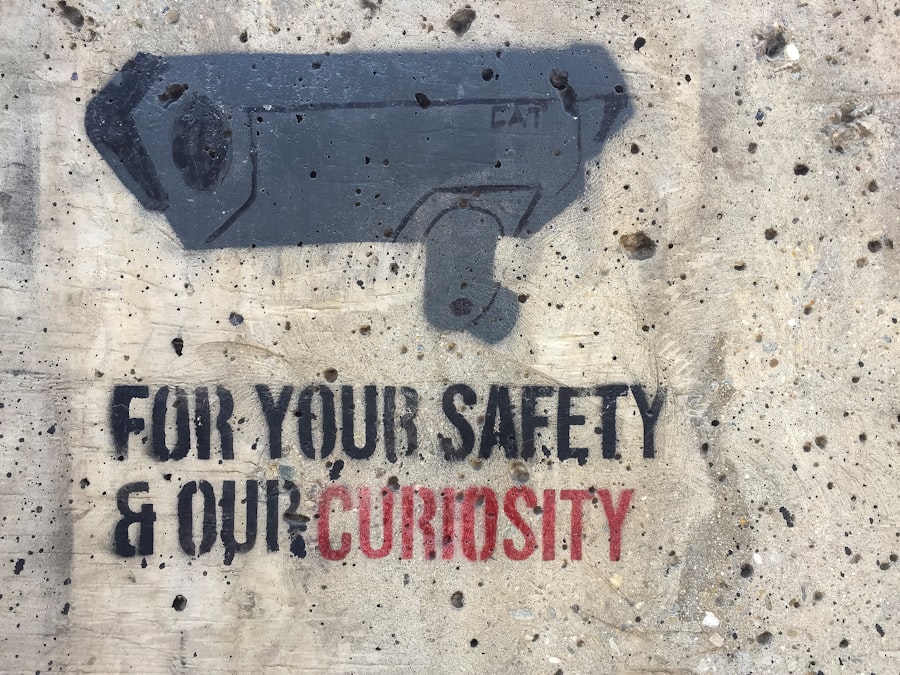
Today, government surveillance has entered an era defined by “big data” and the aspiration of predictive analysis. The sheer volume of information available, coupled with advancements in artificial intelligence and machine learning, allows governments to not only monitor current activities but also to attempt to predict future behavior.
Algorithms and the Prediction of Behavior
The use of algorithms and machine learning has become central to modern surveillance. These sophisticated computational tools can analyze patterns in vast datasets to identify individuals who may pose a risk or are engaged in suspicious activities. This can range from identifying potential terrorists to predicting crime hotspots.
Facial Recognition and Biometric Surveillance
Facial recognition technology, now integrated into public surveillance systems in many cities, allows for the identification and tracking of individuals in real-time. Coupled with other biometric data, such as gait analysis or fingerprints, this creates a powerful tool for monitoring the movement and activities of entire populations.
Social Media Monitoring and Sentiment Analysis
Governments increasingly monitor social media platforms to gauge public sentiment, identify potential unrest, and track the activities of individuals or groups of interest. Sentiment analysis tools can be used to understand the emotional tone of online discussions, providing insights into public opinion and potential threats.
The Blurring Lines Between Security and Privacy
The advancements in surveillance technology have inevitably led to a growing tension between national security and individual privacy. The ability of states to collect and analyze vast amounts of personal data raises profound ethical and legal questions about the boundaries of government power and the fundamental right to privacy.
The Snowden Revelations and Public Awareness
The revelations by Edward Snowden in 2013 exposed the vast scale of global surveillance programs conducted by intelligence agencies, sparking a widespread public debate about privacy and government overreach. These revelations brought to light the extent to which personal data was being collected and analyzed, often without public knowledge or consent.
Debates on Encryption and Data Access
The increasing use of encryption by individuals and companies to protect their communications presents a challenge for governments seeking to conduct surveillance. This has led to ongoing debates about the need for backdoors or other mechanisms to allow law enforcement and intelligence agencies to access encrypted data, further highlighting the struggle to balance security and privacy.
The history of government surveillance reveals a complex interplay between security and privacy, highlighting how the balance has shifted over time. For those interested in exploring this topic further, an insightful article can be found at In the War Room, which delves into the evolution of surveillance practices and their implications for civil liberties. Understanding these developments is crucial as we navigate the modern landscape of technology and privacy concerns.
The Future of Surveillance: Ethical Dilemmas and Emerging Challenges
| Year | Event |
|---|---|
| 1791 | The Fourth Amendment to the United States Constitution is ratified, protecting citizens from unreasonable searches and seizures. |
| 1917 | The Espionage Act is passed in the United States, allowing for surveillance of individuals suspected of espionage or sabotage. |
| 1945 | The United States creates the CIA, which becomes involved in surveillance activities both domestically and internationally. |
| 2001 | Following the 9/11 attacks, the USA PATRIOT Act is passed, expanding the government’s surveillance powers in the name of national security. |
| 2013 | Edward Snowden leaks classified information revealing the extent of the NSA’s surveillance programs, sparking a global debate on privacy and government surveillance. |
The evolution of government surveillance is far from over. As technology continues to advance at an exponential rate, so too will the capabilities of states to monitor their populations. This raises critical ethical dilemmas and presents new challenges that societies will need to confront.
The Rise of AI-Powered Surveillance and Autonomous Systems
Artificial intelligence is poised to play an even more significant role in future surveillance. AI-powered systems can automate complex analytical tasks, enabling even more sophisticated monitoring and potentially leading to the development of autonomous surveillance systems that can make decisions without direct human intervention.
Drones and Persistent Aerial Surveillance
The deployment of drones for surveillance purposes, from border monitoring to urban policing, is becoming increasingly common. These unmanned aerial vehicles offer persistent aerial observation capabilities, raising concerns about constant aerial monitoring and the potential for intrusive surveillance of private spaces.
The Internet of Things (IoT) and Ubiquitous Data Collection
The proliferation of Internet of Things (IoT) devices – smart home appliances, wearable technology, connected cars – is creating a new frontier for data collection. These devices are constantly gathering information about their users’ habits, routines, and environments, which could potentially be accessed by governments, further expanding the scope of surveillance.
The Need for Transparency, Accountability, and Oversight
As surveillance capabilities grow, so too does the need for robust mechanisms of transparency, accountability, and oversight. Without these safeguards, the potential for abuse of power and the erosion of democratic freedoms becomes a significant concern.
Legal Frameworks and Human Rights
Developing and enforcing strong legal frameworks that protect individual privacy while allowing for legitimate security needs is crucial. This requires a continuous re-evaluation of existing laws and the creation of new ones that are adaptable to emerging technologies and their implications.
The Role of Civil Society and Public Discourse
Civil society organizations, advocacy groups, and informed public discourse play a vital role in holding governments accountable and advocating for the protection of civil liberties. Open and honest conversations about the trade-offs between security and privacy are essential for shaping responsible surveillance policies.
The history of government surveillance is a testament to humanity’s enduring quest for order and control. From the scribes of ancient empires meticulously recording tribute to the algorithms of modern states analyzing our every digital interaction, the methods have evolved dramatically. Yet, the underlying motivations – security, stability, and power – remain remarkably consistent. As we navigate the ever-evolving landscape of surveillance, a critical understanding of its past is essential for shaping a future where the benefits of security do not come at the unacceptable cost of freedom and privacy. The watchful eye of the state is a powerful force, and its trajectory demands our continuous scrutiny and thoughtful engagement.

The Stasi Made You Suspect Everyone
FAQs
What is government surveillance?
Government surveillance refers to the monitoring, collection, and analysis of information and activities of individuals or groups by government authorities. This can include the use of technology such as cameras, wiretapping, and internet monitoring.
When did government surveillance begin?
Government surveillance has been practiced for centuries, but modern surveillance techniques began to develop in the 20th century with the advent of new technologies such as telecommunication and the internet. The use of surveillance has increased significantly in the digital age.
What are some examples of government surveillance in history?
Some historical examples of government surveillance include the use of secret police forces in authoritarian regimes, the interception of telegraph communications during wartime, and the monitoring of political dissidents and activists.
How has government surveillance evolved over time?
Government surveillance has evolved from traditional methods such as physical surveillance and wiretapping to more sophisticated techniques including mass data collection, facial recognition technology, and internet monitoring. The digital age has significantly expanded the capabilities of government surveillance.
What are the implications of government surveillance on privacy and civil liberties?
Government surveillance has raised concerns about privacy and civil liberties, as it can infringe on individual rights and freedoms. The balance between national security and personal privacy is a complex and ongoing debate in many countries.