
The journey of managing access to physical spaces has undergone a profound transformation, evolving from cumbersome mechanical devices to sophisticated digital ecosystems. This evolution of electronic key management systems (EKMS) is not merely an upgrade; it represents a paradigm shift in how security, efficiency, and control are achieved within organizations. Understanding this trajectory reveals the technological advancements and changing security landscapes that have shaped these essential systems.
Before the advent of electronics, the world of key management was firmly rooted in the mechanical realm. The physical key, a simple yet ingenious design, served as the sole arbiter of access for centuries. Its effectiveness relied on the intricate interplay of pins and tumblers within a lock, a symphony of metal parts that only the precisely cut teeth of a corresponding key could orchestrate.
The Simplicity and Limitations of Traditional Locks
For millennia, mechanical locks were the bedrock of security. Their design, while elegant in its simplicity, offered limited flexibility. Copying physical keys was a straightforward process, making unauthorized duplication and subsequent access a persistent vulnerability. The loss of a single key could necessitate the costly and time-consuming rekeying of an entire lock system, a laborious undertaking akin to performing open-heart surgery on an entire building’s security infrastructure.
The Rise of Master Key Systems
As organizations grew in complexity, so did the need for more nuanced access control. The master key system emerged as a partial solution. This hierarchical design allowed for a primary key to grant access to all locks within a system, while individual keys provided access to specific locks. This offered a degree of scalability beyond simple keyed locks, but it also introduced its own set of challenges. The more levels of master keying, the more complex the system became, increasing the potential for errors and further compounding the security risks associated with lost or stolen master keys. The “master key” was like a king’s decree – powerful, all-encompassing, yet prone to rebellion if it fell into the wrong hands.
Basic Key Control and Auditing
Auditing access in a purely mechanical system was a rudimentary and often manual affair. Tracking who had possession of which key relied heavily on logbooks and the trust placed in individuals responsible for key custodianship. This process was inherently prone to human error and could be easily circumvented. Imagine trying to reconstruct a complex story from a handful of faded diary entries; the picture could be incomplete and unreliable.
The development history of electronic key management systems has evolved significantly over the years, driven by advancements in technology and the increasing need for security in various sectors. For a deeper understanding of this evolution, you can explore the article available at In the War Room, which discusses the critical milestones and innovations that have shaped the landscape of electronic key management. This resource provides valuable insights into how these systems have adapted to meet the demands of modern security challenges.
The Dawn of Electronics: The First Steps Towards Digital Key Control
The mid-to-late 20th century witnessed the burgeoning power of electronics, and the realm of key management was no exception. Early electronic systems began to emerge, offering a glimpse into a more automated and potentially more secure future. While rudimentary by today’s standards, these systems laid the groundwork for the sophisticated EKMS we see today.
Proximity Cards and Early Keypad Systems
One of the first significant steps away from physical keys was the introduction of proximity cards. These cards, often based on magnetic stripe technology, could store a unique identifier that would be read by a sensor at the access point. Similarly, early electronic keypads allowed users to enter a numerical code to gain entry. These systems offered a step up in convenience and a slight improvement in auditability, as access events could be logged electronically. However, the “secrets” stored on these cards and the codes entered were still relatively easy to compromise. A magnetic stripe can be swiped, and a keypad code can be observed; these were like rudimentary passwords, easily deciphered with a keen eye.
The Concept of Centralized Control
The true innovation of early electronic systems lay in their ability to facilitate centralized control. Instead of managing individual locks and their corresponding keys, organizations could now manage access permissions from a central point. This meant that changes to access could be implemented almost instantaneously across multiple doors, a significant improvement over the manual rekeying of mechanical systems. This was akin to moving from individual whispers to a central command announcement – much more efficient for broadcasting decisions.
Early Data Logging and Reporting
Even these early electronic systems began to offer basic data logging capabilities. Access events, such as when a card was presented or a code was entered, could be recorded. This provided a rudimentary audit trail, allowing for some level of accountability and investigation into access anomalies. However, the sophistication of the data and the ease of analysis were limited compared to modern systems.
The Digital Revolution: Sophistication and Centralization Take Hold

The late 20th and early 21st centuries brought about a true digital revolution, and EKMS were at the forefront of this transformation. The integration of advanced computing power, networked communication, and robust data management capabilities fundamentally reshaped how keys and access were managed. This era saw the proliferation of more intelligent and integrated systems.
Smart Cards and Biometric Authentication
The evolution from simple proximity cards to “smart cards” marked a significant leap forward. These cards contained embedded microprocessors, allowing them to store more data and perform more complex functions. This paved the way for enhanced security features such as encryption and multi-factor authentication. Furthermore, the integration of biometric technologies – fingerprint scanners, iris scanners, and facial recognition – began to offer a level of authentication that was virtually impossible to replicate. Biometrics turned the user themselves into the key, a concept that was until then confined to the realm of science fiction. The challenge shifted from protecting a physical object to safeguarding the unique biological identifiers of individuals.
Networked Systems and Centralized Management Platforms
The advent of networked EKMS allowed for complete centralization of access control. Access permissions could be managed from a single console, and these permissions could be dynamically updated in real-time across an entire organization, regardless of geographical dispersion. This networked architecture transformed key management from a room-by-room task to an enterprise-wide strategic function. Think of it as moving from individually tending to each plant in a garden to managing the entire ecosystem from a central greenhouse control panel.
Advanced Auditing and Reporting Capabilities
The digital age brought about sophisticated auditing and reporting capabilities. EKMS could now generate detailed logs of every access event, including who accessed what, when, and where. These logs could be analyzed to identify patterns, detect anomalies, and conduct thorough investigations. This move from basic logging to comprehensive analytics provided an unprecedented level of insight and accountability. The raw data could be transformed into actionable intelligence, like a skilled cartographer turning topographical readings into a detailed map.
Modern Electronic Key Management Systems: The Ecosystem of Access Control
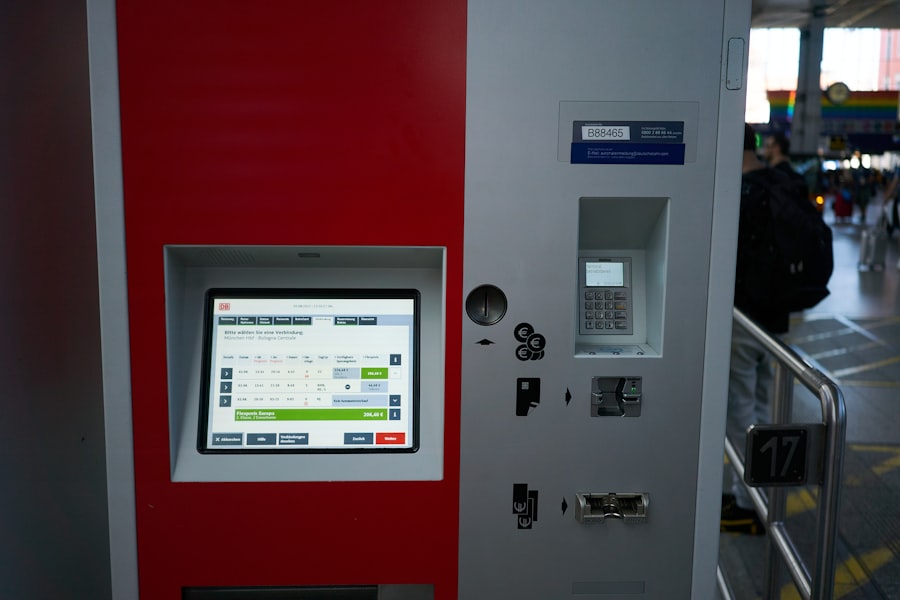
Today’s EKMS are no longer simply about managing keys; they are comprehensive ecosystems designed to provide granular control, robust security, and seamless integration with other building and security systems. The focus has shifted from mere access granting to intelligent, proactive security and operational efficiency.
Cloud-Based Solutions and Remote Management
The proliferation of cloud computing has dramatically impacted EKMS. Cloud-based solutions offer organizations the flexibility of remote management, allowing administrators to monitor and control access from anywhere with an internet connection. This scalability and accessibility are particularly beneficial for organizations with multiple locations or a mobile workforce. The cloud acts as a vast, ever-present digital vault, making access control universally attainable.
Integration with Other Security and Building Management Systems
Modern EKMS are designed for seamless integration with a wide array of other security and building management systems. This includes video surveillance, alarm systems, human resources databases, and even energy management platforms. By interlocking with these systems, EKMS can trigger automated responses, create more comprehensive security scenarios, and offer a holistic view of building operations. This integration is like weaving together different threads to create a stronger, more resilient fabric of security and operational awareness.
Advanced Features: Geofencing, Time-Based Access, and Role-Based Permissions
Current EKMS boast a suite of advanced features that offer unprecedented levels of control. Geofencing allows access to be granted or denied based on the physical location of a user or a credential. Time-based access restricts entry to specific times of the day or week, further enhancing security and operational efficiency. Role-based permissions ensure that individuals only have access to the areas and resources necessary for their specific roles, adhering to the principle of least privilege. These features allow for a highly tailored and dynamic approach to access, akin to a concierge who knows exactly who should be where and when.
The Physical Key’s Enduring, Yet Transformation Role
While electronic systems have largely supplanted traditional mechanical keys, the physical key has not entirely disappeared. In many EKMS, electronic keys – often in the form of RFID cards, fobs, or even mobile credentials on smartphones – have taken its place. In some instances, traditional physical keys may still be used for legacy systems or as a backup in emergency situations, often managed within an electronic system to maintain a central record of their location and use. The physical key is no longer the sole guardian but an integrated component within a larger, intelligence-driven system.
The development history of electronic key management systems has evolved significantly over the years, driven by advancements in technology and the increasing need for security in various sectors. For a deeper understanding of this evolution, you can explore a related article that discusses the key milestones and innovations in this field. This comprehensive overview highlights how these systems have transformed from simple mechanical locks to sophisticated digital solutions that enhance security and efficiency. To read more about this fascinating topic, visit this article.
The Future of Electronic Key Management: Predictive Security and the Internet of Things
| Year | Development Milestone | Key Features Introduced | Impact on Security |
|---|---|---|---|
| 1980s | Introduction of Basic Electronic Key Systems | Simple electronic locks with keypad access | Replaced mechanical keys, reduced unauthorized duplication |
| 1990s | Integration of RFID Technology | Contactless key cards and fobs | Improved convenience and access control logging |
| 2000s | Development of Networked Key Management Systems | Centralized control and real-time monitoring | Enhanced audit trails and remote management |
| 2010s | Introduction of Biometric Authentication | Fingerprint and facial recognition integration | Increased security by ensuring user identity |
| 2020s | Cloud-Based Electronic Key Management | Mobile app control and cloud data storage | Greater flexibility and scalability in key management |
As technology continues its relentless march, the future of EKMS promises even greater innovation. The convergence of advanced AI, the Internet of Things (IoT), and evolving security threats will sculpt the next generation of access control.
AI-Powered Predictive Security and Anomaly Detection
The integration of Artificial Intelligence (AI) into EKMS will usher in an era of predictive security. AI algorithms will be able to analyze vast amounts of access data, identify subtle patterns of behavior, and proactively detect potential security threats before they materialize. This move from reactive incident response to proactive threat prevention is a significant paradigm shift. Imagine an AI acting as an expert detective, sifting through clues and predicting a crime before it occurs.
IoT Integration and Smart Building Ecosystems
The expansion of the Internet of Things (IoT) will further embed EKMS within smart building ecosystems. Devices throughout a building will communicate with the EKMS, creating a truly responsive and intelligent environment. This could include doors that automatically unlock for authorized personnel when they enter a specific zone, or lighting and climate control systems that adjust based on occupancy detected by access events. The building itself will become a responsive entity, working in concert with its access control system.
Blockchain for Enhanced Security and Auditability
The potential application of blockchain technology in EKMS is an exciting frontier. Blockchain’s inherent immutability and distributed ledger capabilities can provide an unparalleled level of security and transparency for access logs. This could create tamper-proof records of every access event, significantly enhancing auditability and trust. The data recorded on a blockchain is like a stone inscription – permanent, transparent, and virtually impossible to alter.
Mobile-First Access and Biometric Advancements
The trend towards mobile-first access, where smartphones act as primary credentials, will continue to accelerate. Coupled with ongoing advancements in biometric authentication, such as behavioral biometrics that analyze user movements and typing patterns, the lines between physical and digital identity will become increasingly blurred. The smartphone, a ubiquitous tool, will become an even more powerful and integral component of our security.
The Persistent Challenge of Human Factor and Data Privacy
Despite the technological leaps, the human factor and data privacy will remain critical considerations. Ensuring user adoption, providing adequate training, and maintaining robust data privacy protocols will be paramount. As EKMS become more sophisticated, the responsible management of the data they collect will be as crucial as the security they provide. The most advanced lock is only as good as the person holding the key, and the privacy of their identity is a non-negotiable facet of trust.

SHOCKING: How the KGB Read Our Nuclear Codes for 18 Years
FAQs
What is an electronic key management system?
An electronic key management system is a technology designed to securely store, track, and control access to physical keys using electronic methods such as software and hardware integration.
When was the electronic key management system first developed?
The development of electronic key management systems began in the late 20th century, with early versions emerging in the 1980s and 1990s as digital technology advanced.
What were the main drivers behind the development of electronic key management systems?
The primary drivers included the need for enhanced security, improved accountability, and efficient management of keys in organizations such as government facilities, corporations, and institutions.
How has electronic key management technology evolved over time?
The technology has evolved from simple electronic lockboxes to sophisticated systems integrating RFID, biometric authentication, real-time tracking, and network connectivity for remote management.
What industries commonly use electronic key management systems today?
Industries such as automotive, healthcare, hospitality, government, and property management widely use electronic key management systems to ensure secure and efficient key control.