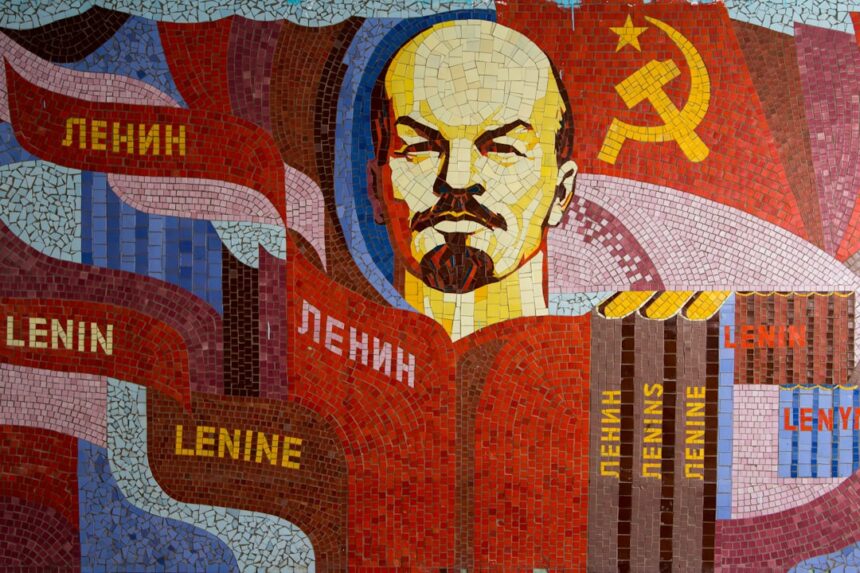
In the aftermath of the Russian Revolution of 1917, the newly established Soviet government faced the daunting task of transforming a war-torn and economically devastated nation into a socialist state. The early years of Soviet economic policy were characterized by radical changes aimed at dismantling the capitalist structures that had previously dominated Russian society. Under the leadership of Vladimir Lenin, the Bolsheviks implemented War Communism, a series of emergency measures designed to control the economy during the Civil War.
This included the nationalization of industry and the requisitioning of agricultural products from peasants, which aimed to ensure that the Red Army was adequately supplied. However, War Communism proved to be unsustainable in the long run. The harsh policies led to widespread discontent among the peasantry and urban workers alike, culminating in food shortages and economic collapse.
By 1921, it became clear that a new approach was necessary.
This pragmatic shift aimed to stabilize the economy and rebuild agricultural production, ultimately laying the groundwork for future industrialization efforts.
The NEP marked a significant departure from the earlier policies, reflecting a blend of socialist ideals with practical economic needs.
Key Takeaways
- The early years of Soviet economic policy focused on transitioning from a feudal agrarian society to a modern industrialized state.
- The First Five-Year Plan and industrialization aimed to rapidly develop heavy industry and infrastructure, leading to significant economic growth but also widespread hardship and human suffering.
- Collectivization and agricultural policy resulted in the forced consolidation of small farms into large collective farms, causing widespread famine and resistance from the peasantry.
- The impact of World War II on the Soviet economy led to massive destruction of infrastructure and loss of life, but also spurred rapid industrialization and military development.
- The post-war recovery and the Cold War saw the Soviet Union emerge as a global superpower, but also faced economic challenges and competition with the capitalist West.
The First Five-Year Plan and Industrialization
The First Five-Year Plan, launched in 1928 under Joseph Stalin’s leadership, marked a pivotal moment in Soviet economic history. The plan aimed to rapidly industrialize the Soviet Union and transform it into a major global power. It set ambitious targets for heavy industry, including steel, coal, and machinery production, while largely neglecting consumer goods.
The plan’s architects believed that rapid industrialization was essential for achieving self-sufficiency and strengthening the nation against external threats. To achieve these goals, the Soviet government employed a combination of state control, forced labor, and massive investment in infrastructure. The construction of new factories and the expansion of existing ones were prioritized, often at the expense of living conditions for workers.
While the First Five-Year Plan did succeed in increasing industrial output significantly, it also resulted in widespread hardship and suffering. Workers faced grueling hours and harsh conditions, while agricultural production lagged behind due to the focus on industrialization. Despite these challenges, the plan laid the foundation for a more industrialized Soviet economy and set the stage for subsequent economic initiatives.
Collectivization and Agricultural Policy
Alongside industrialization efforts, collectivization emerged as a central component of Soviet agricultural policy during the late 1920s and early 1930s. The goal was to consolidate individual peasant farms into large collective farms (kolkhozes) that would be more efficient and easier to manage under state control. Stalin believed that collectivization would not only increase agricultural productivity but also eliminate the class of wealthy peasants known as kulaks, whom he viewed as obstacles to socialist progress.
The implementation of collectivization was met with fierce resistance from many peasants, leading to violent confrontations and widespread famine. The government’s aggressive tactics included confiscating grain and livestock from those who resisted joining collective farms. The most devastating consequence of this policy was the Great Famine of 1932-1933, which resulted in millions of deaths across Ukraine and other regions.
Despite its catastrophic human cost, collectivization ultimately transformed Soviet agriculture by creating a system that allowed for greater state control over food production and distribution.
The Impact of World War II on the Soviet Economy
| Metrics | Data |
|---|---|
| GDP Decline | 25% |
| Industrial Output Decline | 40% |
| Population Loss | 27 million |
| Infrastructure Damage | 128 billion |
| Debt Increase | 400% |
World War II had a profound impact on the Soviet economy, reshaping its structure and priorities in ways that would resonate for decades. The war effort necessitated a massive mobilization of resources and labor, leading to significant changes in industrial production. Factories were relocated eastward away from the front lines, and new industries were established to meet wartime demands for weapons, ammunition, and supplies.
This shift not only bolstered military capabilities but also laid the groundwork for post-war industrial growth. However, the war also inflicted severe damage on the Soviet economy. Cities were devastated, infrastructure was destroyed, and millions of lives were lost.
The human cost was staggering, with estimates suggesting that around 27 million Soviet citizens perished during the conflict. In the aftermath of World War II, the Soviet Union faced the daunting task of rebuilding its economy while also addressing the social and psychological scars left by years of warfare. The wartime experience fostered a sense of unity and resilience among the population, which would play a crucial role in the subsequent recovery efforts.
The Post-War Recovery and the Cold War
The post-war recovery period in the Soviet Union was marked by ambitious reconstruction efforts aimed at revitalizing an economy that had been ravaged by conflict. The government prioritized heavy industry once again, focusing on rebuilding factories and infrastructure while also investing in new technologies. The implementation of the Fourth Five-Year Plan in 1946 sought to restore pre-war production levels and improve living standards for citizens.
This period saw significant advancements in sectors such as steel production, machinery manufacturing, and energy generation.
The arms race with the United States prompted increased investment in defense industries and research initiatives.
While this focus on military capabilities contributed to impressive achievements in areas such as space exploration—culminating in the launch of Sputnik in 1957—it also diverted resources away from consumer goods and agriculture, leading to persistent shortages in everyday life for Soviet citizens.
The Khrushchev Era and Economic Reforms
The leadership of Nikita Khrushchev marked a significant turning point in Soviet economic policy during the 1950s and early 1960s. Following Stalin’s death in 1953, Khrushchev sought to distance himself from his predecessor’s repressive policies while also addressing some of the economic challenges that had emerged during Stalin’s rule. One of his key initiatives was to decentralize economic planning by transferring some decision-making powers from central authorities to regional managers.
This shift aimed to increase efficiency and responsiveness within various sectors of the economy. Khrushchev also emphasized agricultural reform as a means to improve food production and alleviate shortages. He introduced initiatives such as the Virgin Lands Campaign, which aimed to cultivate previously unused land in Kazakhstan and Siberia.
While this campaign initially yielded positive results, it ultimately faced challenges related to soil degradation and inadequate infrastructure. Despite these setbacks, Khrushchev’s era was characterized by an increased focus on consumer goods and living standards, reflecting a desire to improve quality of life for Soviet citizens.
The Brezhnev Era and Stagnation
The Brezhnev era, which began in 1964 with Leonid Brezhnev’s rise to power, is often associated with economic stagnation and a lack of innovation within the Soviet system. Brezhnev’s leadership prioritized stability over reform, leading to a continuation of existing policies rather than bold new initiatives. While there were some successes in heavy industry and military production during this period, overall economic growth began to slow significantly.
One of the defining features of Brezhnev’s tenure was an emphasis on maintaining full employment at all costs, which often resulted in inefficiencies within state enterprises. Managers were incentivized to meet production quotas rather than focus on quality or innovation, leading to widespread wastefulness within the economy. Additionally, agricultural policies remained largely unchanged from previous decades, resulting in persistent food shortages despite efforts to increase output through mechanization and state support for collective farms.
Gorbachev’s Perestroika and the Fall of the Soviet Union
Mikhail Gorbachev’s ascent to power in 1985 heralded a new era for Soviet economic policy characterized by attempts at reform through his policies of perestroika (restructuring) and glasnost (openness). Gorbachev recognized that stagnation had become entrenched within the economy and sought to introduce market-oriented reforms aimed at revitalizing growth. He encouraged greater autonomy for state enterprises and sought to reduce bureaucratic control over economic decision-making.
However, Gorbachev’s reforms faced significant resistance from entrenched interests within the Communist Party and state apparatus. As economic conditions continued to deteriorate amid rising inflation and shortages, public discontent grew. The loosening of censorship under glasnost led to increased criticism of government policies and calls for greater political freedoms.
Ultimately, Gorbachev’s attempts at reform failed to stabilize the economy or quell public unrest, contributing to a loss of faith in the Communist Party’s ability to govern effectively.
The Legacy of Soviet Economic Policies
The legacy of Soviet economic policies is complex and multifaceted, reflecting both achievements and failures over several decades. On one hand, the Soviet Union successfully transformed itself from an agrarian society into an industrial superpower capable of competing on a global scale. Major advancements were made in fields such as space exploration, military technology, and heavy industry during this period.
On the other hand, systemic inefficiencies rooted in central planning led to chronic shortages of consumer goods and a lack of innovation within many sectors of the economy. The emphasis on heavy industry often came at the expense of quality of life for ordinary citizens, resulting in widespread dissatisfaction with living conditions by the late 1980s. As such, while Soviet economic policies achieved certain strategic goals, they ultimately contributed to social unrest and political instability that culminated in the dissolution of the Soviet Union in 1991.
Comparisons with Capitalist Economies
When comparing Soviet economic policies with those of capitalist economies, several key differences emerge that highlight contrasting approaches to resource allocation and production incentives. In capitalist systems, market forces drive competition among businesses, fostering innovation and responsiveness to consumer demand. This dynamic often leads to greater efficiency in resource allocation as firms strive to meet market needs.
In contrast, Soviet economic policies relied heavily on central planning and state control over production decisions. While this approach allowed for rapid industrialization during certain periods, it often resulted in inefficiencies due to bureaucratic inertia and lack of competition among state enterprises. Additionally, consumer choice was limited under socialism compared to capitalist economies where diverse products are available based on market demand.
Lessons Learned from the Economic History of the Soviet Union
The economic history of the Soviet Union offers valuable lessons for contemporary policymakers grappling with issues related to central planning versus market-oriented reforms. One key takeaway is that while ambitious goals can drive rapid development, they must be balanced with considerations for sustainability and human welfare. The catastrophic consequences of collectivization serve as a stark reminder that policies must be implemented with sensitivity to social realities.
Furthermore, Gorbachev’s experience underscores the importance of gradual reform rather than abrupt shifts that can destabilize existing systems. Successful economic transformation requires not only effective policies but also public support and engagement with citizens’ needs. Ultimately, understanding both successes and failures within Soviet economic history can inform future approaches to governance and development across diverse contexts worldwide.
The economic history of the Soviet Union is a complex narrative that intertwines with various political and social factors. For a deeper understanding of this topic, you can explore the article on the economic policies during the Soviet era, which provides valuable insights into the planning and challenges faced by the state. To read more, visit this article.
WATCH THIS! The War That Secretly Bankrupted An Empire: How Afghanistan Destroyed the USSR
FAQs
What is the economic history of the Soviet Union?
The economic history of the Soviet Union refers to the development of the economy of the Soviet Union from its establishment in 1922 to its dissolution in 1991. It encompasses the various economic policies, reforms, and challenges faced by the Soviet government during this period.
What were the main economic policies of the Soviet Union?
The main economic policies of the Soviet Union included central planning, collectivization of agriculture, nationalization of industry, and the establishment of a command economy. These policies aimed to achieve rapid industrialization and economic self-sufficiency.
What were the key industries in the Soviet Union?
The key industries in the Soviet Union included heavy industry, such as steel, coal, and machinery production, as well as the military-industrial complex. The Soviet economy also focused on sectors like energy, transportation, and agriculture.
What were the major challenges faced by the Soviet economy?
The Soviet economy faced challenges such as inefficiency, shortages, lack of consumer goods, technological stagnation, and a rigid bureaucratic system. Additionally, the centrally planned economy struggled to adapt to changing global economic conditions.
What impact did the Soviet economic system have on the country?
The Soviet economic system led to significant achievements in industrialization, education, and scientific research. However, it also resulted in widespread inefficiency, shortages, and a lack of consumer choice. The system ultimately contributed to the economic stagnation and eventual collapse of the Soviet Union.