The year 1962 crackled with an almost palpable tension. The world held its breath as the United States and the Soviet Union teetered on the precipice of nuclear war. The Cuban Missile Crisis, a 13-day confrontation that brought humanity closer to annihilation than ever before or since, was a stark reminder of the terrifying power unleashed by the nuclear age. While the iconic images of U.S. naval blockades and tense diplomatic exchanges often dominate our understanding of this pivotal moment, the silent, unseen world of submarines played a crucial, often overlooked, role. Among these submerged guardians of strategic interests, the diesel-electric submarine, a workhorse of naval power for decades, emerged as a critical, albeit sometimes clumsy, participant in the shadow of the mushroom cloud.
The crisis was born from a clandestine Soviet operation to deploy medium-range and intermediate-range ballistic missiles to Cuba, just 90 miles off the coast of Florida. This audacious move, designed to counterbalance U.S. missile installations in Turkey and Italy and to bolster Cuba’s defense against a potential U.S. invasion, was discovered by U.S. reconnaissance flights on October 14, 1962. The subsequent discovery ignited a firestorm of diplomatic maneuvering, military posturing, and ultimately, a chilling game of brinkmanship. The world watched, horrified, as the superpowers engaged in a high-stakes chess match, each move carrying the potential to trigger unimaginable devastation. Within this perilous landscape, the quiet hum of diesel engines and the stealthy glide of submarines became an integral, if underappreciated, element of the unfolding drama.
The Pre-Crisis Submarine Landscape
The era of the Cuban Missile Crisis was a transitional period for submarine technology. While the United States was rapidly embracing nuclear-powered submarines, boasting unparalleled endurance and speed, the Soviet Union still relied heavily on its considerable fleet of diesel-electric submarines. These vessels, though lacking the strategic reach and operational freedom of their nuclear counterparts, possessed distinct advantages that made them formidable assets, particularly in specific operational environments.
Soviet Diesel-Electric Dominance
The Soviet Navy in 1962 possessed a vast and varied submarine force, with diesel-electric boats forming the backbone of their operations. These submarines, often built in large numbers, were designed for specific roles, ranging from coastal defense to anti-shipping strikes.
Classes and Capabilities
The Soviet diesel-electric fleet comprised numerous classes, each with its own strengths and weaknesses. The Whiskey-class submarines, a post-World War II design based on German technology, were numerous but relatively slow and had limited range. The Zulu-class, an improvement on the Whiskey, offered better performance. More advanced were the Romeo-class, also heavily influenced by captured German designs, and the newer, more capable Foxtrot-class, which represented a significant step forward in Soviet submarine technology. These Foxtrot-class submarines, in particular, were the most modern and capable diesel-electric boats in the Soviet inventory at the time of the crisis. They offered improved silencing, better sonar, and a more substantial armament of torpedoes.
Operational Limitations
Despite their numerical superiority, Soviet diesel-electric submarines faced inherent limitations. Their reliance on snorkeling to recharge batteries meant they had to surface or operate at shallow depths regularly, making them vulnerable to detection. Their speed underwater was significantly slower than nuclear submarines, limiting their ability to pursue fast-moving targets or evade pursuers. Furthermore, their operational range was constrained by the need for frequent refueling and battery recharging.
The Dawn of the Nuclear Age
The United States, conversely, was at the forefront of nuclear submarine technology. The commissioning of the USS Nautilus in 1954 heralded a new era of underwater warfare, offering unprecedented endurance and the ability to remain submerged for extended periods.
U.S. Nuclear Advantages
The U.S. Navy’s nuclear-powered submarines, such as the Skipjack and George Washington classes, possessed a decisive advantage in speed, stealth, and operational range. They could patrol vast ocean areas for months without surfacing, making them incredibly difficult to track and engage. This technological disparity created a strategic imbalance that the Soviets sought to address with their bold deployment of missiles to Cuba.
Complementary Roles
While nuclear submarines were clearly the future, the U.S. also maintained a substantial fleet of diesel-electric submarines. These boats often served in roles where their characteristics were still valuable, such as anti-submarine warfare training, coastal patrols, and operating in shallower waters where the larger nuclear submarines might be less effective.
The Cuban Missile Crisis of 1962 was a pivotal moment in Cold War history, showcasing the intense standoff between the United States and the Soviet Union. One fascinating aspect of this crisis was the role of diesel-electric submarines, which were crucial for stealth operations during the tense standoff. For a deeper understanding of the strategic implications of these submarines during the crisis, you can read a related article that explores their impact on naval warfare and international relations at this link.
Submerged Sentinels: The Role of Submarines in the Blockade
The U.S. response to the discovery of the Soviet missiles was the imposition of a naval “quarantine” (a term preferred over “blockade” to avoid an act of war) around Cuba. This quarantine was designed to prevent further Soviet shipments of offensive weapons from reaching the island. Here, both U.S. and Soviet submarines found themselves thrust into the heart of the crisis, operating in a tense and highly charged maritime environment.
The U.S. Quarantine and its Submarine Component
The U.S. Navy’s commitment to enforcing the quarantine was massive, involving hundreds of warships, including a significant number of submarines. These submerged assets were tasked with a variety of critical missions.
Intelligence Gathering and Surveillance
U.S. submarines, both nuclear and diesel-electric, were deployed to patrol the approaches to Cuba. Their primary mission was to detect and identify any Soviet vessels attempting to breach the quarantine. Sonar capabilities, though evolving, were paramount in this role. They acted as the eyes and ears of the blockade, providing vital intelligence on the movements of Soviet shipping.
Anti-Submarine Warfare (ASW) Operations
A crucial, and often dangerous, aspect of the quarantine was the U.S. Navy’s ASW efforts. The U.S. feared that Soviet submarines might be tasked with attacking quarantine ships or attempting to break through the blockade. Therefore, U.S. submarines were actively hunting for any Soviet submerged threats. This led to tense cat-and-mouse games, with each submarine trying to detect and track the other without revealing its own position.
Deterrence and Offensive Potential
Beyond passive intelligence gathering and defense, U.S. submarines also served as a deterrent. Their presence signaled the seriousness of the U.S. resolve and their potential offensive capabilities were a constant threat to any Soviet vessel, including submarines. The psychological impact of a lurking U.S. submarine, capable of delivering a devastating torpedo attack, was significant.
Soviet Submarines Operating Under the Quarantine
The Soviet Union, caught off guard by the U.S. discovery and the ensuing blockade, reacted by ordering its submarines in the vicinity to take evasive action and, in some cases, to attempt to break through the quarantine line. This led to some of the most tense moments of the entire crisis.
The Foxtrot and the Brink of War
Perhaps the most infamous incident involved a Soviet Foxtrot-class submarine, B-59. While on a mission to deliver nuclear torpedoes to Cuba, B-59 found itself surrounded by U.S. Navy destroyers that were dropping practice depth charges to signal it to surface. Unaware that these were practice charges and cut off from communication with Moscow, the submarine’s captain, Valentin Savitsky, believed war had broken out. In this desperate situation, Savitsky, along with two other officers, considered launching a nuclear torpedo. It was only through the courage and dissent of Vasili Arkhipov, a flotilla commander also aboard, that the nuclear launch was prevented. Arkhipov’s calm reasoning and refusal to concur with the launch order averted a catastrophic escalation.
Other Engagements and Close Calls
While the B-59 incident is the most well-documented, there were other instances of Soviet diesel-electric submarines attempting to navigate the U.S. blockade. These submarines, often operating at the edge of their capabilities, faced constant pressure from U.S. ASW forces. The risk of accidental engagement or miscalculation was extremely high. The limited communications capabilities of many Soviet diesel-electric submarines meant that their crews often had to make critical decisions in isolation, relying on their own interpretations of the unfolding situation.
The Technological Disparity and its Implications
The Cuban Missile Crisis starkly highlighted the technological gap between the U.S. and Soviet submarine forces. This disparity had profound implications for the strategic calculus of both nations.
U.S. Nuclear Supremacy
The U.S. Navy’s growing fleet of nuclear-powered submarines provided an unparalleled strategic advantage. These submarines could operate deep and undetected for extended periods, making them a potent threat to Soviet naval assets and, crucially, a secure second-strike capability in the event of a Soviet nuclear attack.
Strategic Deterrence and First Strike Capability
The U.S. nuclear submarines, particularly those armed with Polaris ballistic missiles, formed the backbone of America’s nuclear deterrent. Their ability to remain hidden and strike with little warning provided a credible threat of retaliation, a key element of the doctrine of Mutually Assured Destruction (MAD).
Tactical ASW Dominance
In a direct confrontation, U.S. nuclear submarines possessed a significant tactical advantage in anti-submarine warfare. Their superior speed, sonar capabilities, and endurance allowed them to track and engage Soviet diesel-electric submarines with greater effectiveness.
Soviet Reliance on Conventional Submarines
Despite the technological gap, the sheer number of Soviet diesel-electric submarines remained a significant factor. While individually less capable, a large swarm of submarines could pose a considerable threat, particularly in the confined waters around Cuba.
The ‘Sleeper’ Threat
Soviet diesel-electric submarines were often referred to as “sleepers” by the U.S. Navy. Their ability to operate relatively quietly on batteries and to stay submerged for extended periods made them a persistent and potentially dangerous threat, especially in areas where U.S. sonar nets might be less effective.
Adapting to Constraints
The Soviet Navy worked to mitigate the limitations of its diesel-electric fleet. This included developing advanced torpedoes and improving submarine silencing techniques. However, the fundamental constraints of diesel-electric propulsion remained.
The Silent Struggle: Submarine Operations and Rules of Engagement
The operational environment during the Cuban Missile Crisis was fraught with danger, not just from deliberate attack, but from accidental encounters and misinterpretations. Strict rules of engagement were essential to prevent a localized incident from spiraling into global conflict.
Navigating the Tense Waters
Both sides operated their submarines with extreme caution. The primary objective was to avoid any engagement that could be perceived as an act of aggression.
U.S. Rules of Engagement
U.S. submarines enforcing the quarantine were under strict orders. While authorized to investigate and, if necessary, engage Soviet vessels posing a direct threat to the quarantine, the threshold for using lethal force was very high. The emphasis was on identification, signaling, and, if possible, disabling rather than destroying.
Soviet Counter-Operations
Soviet submarines were under orders to avoid confrontation and to maintain their operational integrity. However, their presence in the blockade zone, especially those carrying offensive weapons, was inherently provocative. Their crews were trained to evade detection and, if cornered, to defend themselves.
The Cuban Missile Crisis marked a pivotal moment in Cold War history, particularly highlighting the strategic importance of diesel-electric submarines in naval warfare. For a deeper understanding of how these submarines played a crucial role during this tense period, you can explore an insightful article on the subject. The analysis provides a comprehensive overview of the operational capabilities and limitations of diesel-electric submarines during the crisis. To read more about this fascinating topic, visit this article.
The Unseen Impact on De-escalation
While the public narrative of the crisis focused on missiles in Cuba, aerial reconnaissance, and diplomatic negotiations, the silent, submerged struggle played a vital, albeit largely unseen, role in the ultimate de-escalation of the crisis.
The Risk of Escalation and the De-escalation of Submarine Activity
The constant presence of submarines on both sides, especially the Soviet submarines potentially armed with nuclear torpedoes, represented a significant risk of unintended escalation. The knowledge of these submerged threats likely influenced the decision-making processes of both U.S. and Soviet leaders.
The “What If” Scenario
Consider the potential consequences if the B-59 incident had resulted in the launch of a nuclear torpedo. The U.S. Navy’s response would have been immediate and severe, almost certainly leading to a catastrophic exchange. The fact that such an outcome was averted, thanks in large part to the actions of Vasili Arkhipov, underscores the critical role of individual decisions in high-stakes situations.
The Power of Restraint
The successful evasion of major submarine-on-submarine conflict, despite the intense pressure and proximity, demonstrated a remarkable degree of restraint on both sides. This restraint, born out of the shared understanding of the catastrophic consequences of escalation, was a crucial element in the eventual resolution of the crisis. The presence of these submerged forces, a constant reminder of the destructive potential, paradoxically contributed to a cautious approach by the leadership. The fear of what could happen if a submarine engagement went wrong likely made both sides more willing to seek diplomatic solutions.
Lessons Learned and the Future of Submarine Warfare
The Cuban Missile Crisis served as a profound learning experience for naval strategists and policymakers worldwide. The role of diesel-electric submarines, while at times outmatched by their nuclear counterparts, proved to be a critical factor in the complex maritime theater of the crisis.
The Enduring Value of Conventional Submarines
The crisis demonstrated that even in an era of nuclear weapons, conventional submarines retained their relevance. Their ability to operate in shallower waters, their lower operational cost, and their inherent stealth when running on batteries made them valuable assets for intelligence gathering, coastal defense, and specific operational roles.
The Importance of Communication and Command and Control
The near-disaster involving the B-59 highlighted the critical importance of robust command and control structures and reliable communication systems for submarines, especially those operating in contested environments. The lack of communication with Moscow forced the B-59’s crew to make assumptions that nearly led to global catastrophe.
The Evolution of ASW and Submarine Technology
The crisis spurred further advancements in anti-submarine warfare technology on the U.S. side, aiming to better detect and track even the most sophisticated diesel-electric submarines. For the Soviet Union, it likely reinforced the need to continue developing more advanced diesel-electric submarines and to explore technologies that could reduce their reliance on snorkeling.
In conclusion, the Cuban Missile Crisis was a moment when the world peered into the abyss. While the dramatic standoff between superpowers played out on the world stage, the silent, submerged world of diesel-electric submarines played a critical, if often unacknowledged, role. These vessels, with their distinct capabilities and limitations, navigated a treacherous landscape of geopolitical tension. They were instruments of intelligence, tools of deterrence, and, in the case of the B-59, the silent witnesses to a near-catastrophe that ultimately underscored the profound responsibility of leadership in the nuclear age. The lessons learned from their submerged struggles continue to inform naval strategy and the ongoing quest for global security.
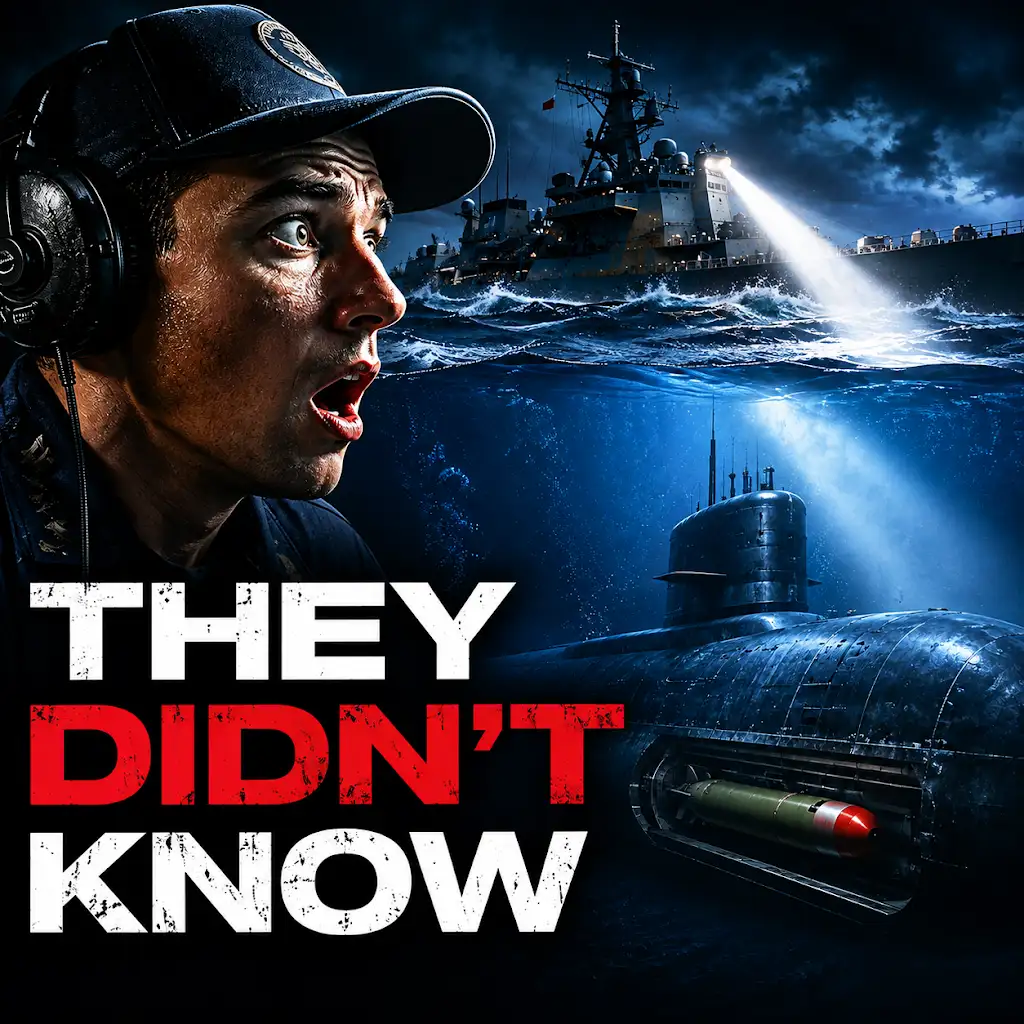
The U.S. Navy Didn’t Know This Submarine Had a Nuclear Torpedo
FAQs

What is a diesel electric submarine?
A diesel electric submarine is a type of submarine that uses diesel engines to charge batteries, which then power electric motors for propulsion. This type of submarine is known for its stealth and quiet operation.
What role did diesel electric submarines play in the Cuban Missile Crisis?
During the Cuban Missile Crisis, diesel electric submarines played a crucial role in the standoff between the United States and the Soviet Union. Soviet diesel electric submarines were deployed to the Caribbean to provide support and protection for the Soviet Union’s ballistic missile submarines.
How did diesel electric submarines contribute to the tension during the Cuban Missile Crisis?
The presence of Soviet diesel electric submarines in the Caribbean added to the tension during the Cuban Missile Crisis. The submarines were used to monitor and potentially engage with any American naval forces that might attempt to interfere with the Soviet Union’s activities in the region.
What were the capabilities of diesel electric submarines during the Cuban Missile Crisis?
Soviet diesel electric submarines were capable of carrying torpedoes and were equipped with advanced sonar systems for detecting and tracking enemy vessels. Their stealthy nature made them a formidable threat to American naval forces in the region.
How did the Cuban Missile Crisis impact the use and development of diesel electric submarines?
The Cuban Missile Crisis highlighted the strategic importance of diesel electric submarines in naval warfare. It led to increased investment in the development of more advanced and capable diesel electric submarines by both the United States and the Soviet Union.