The Cuban Missile Crisis stands as a chilling testament to how close the world came to catastrophic nuclear annihilation. For thirteen days in October 1962, humanity held its breath as two superpowers, the United States and the Soviet Union, engaged in a high-stakes confrontation that threatened to engulf the globe in flames. The discovery of Soviet nuclear missile sites in Cuba, just ninety miles off the coast of Florida, triggered a chain of events that pushed the world to the precipice of mutually assured destruction. The sheer audacity of the Soviet move, coupled with the unwavering resolve of the American response, created a powder keg situation where a single misstep could have ignited World War III.
The foundation of the Cuban Missile Crisis was laid in the complex geopolitical landscape of the early Cold War. The Soviet Union, under the leadership of Nikita Khrushchev, harbored a deep-seated desire to shift the global balance of power and project its influence. Cuba, having undergone a communist revolution in 1959 and aligning itself with the Soviet bloc, became a crucial pawn in this strategic game.
The Cuban Revolution and its Aftermath
The overthrow of the Batista regime in Cuba by Fidel Castro’s revolutionary forces was a significant development that immediately concerned the United States. The new Cuban government’s nationalization of American-owned businesses and its increasing embrace of socialist ideology were seen as a direct threat to American interests in the Western Hemisphere.
The Bay of Pigs Fiasco and its Lingering Scars
A pivotal event that fueled Cuban and Soviet distrust of the United States was the disastrous Bay of Pigs invasion in April 1961. This failed attempt by U.S.-backed Cuban exiles to overthrow Castro’s government was a major embarrassment for the Kennedy administration and emboldened the Soviets to believe that the U.S. was unwilling to risk a direct military confrontation. It also solidified Castro’s fears for his regime’s survival, making him more receptive to Soviet overtures.
Khrushchev’s Strategic Calculations
Nikita Khrushchev saw the deployment of nuclear missiles in Cuba as a multifaceted strategic advantage. He aimed to redress the strategic imbalance, as the U.S. had deployed Jupiter missiles in Turkey, close to the Soviet border. Placing similar offensive weapons in Cuba would significantly shorten the warning time for a potential U.S. attack, offering a deterrent and a bargaining chip.
Deterring an Invasion of Cuba
Furthermore, Khrushchev believed that the presence of nuclear missiles would serve as a powerful deterrent against any future American attempts to invade Cuba, thus protecting a valuable Soviet ally. The perception of American aggression, particularly after the Bay of Pigs, made this a critical concern for the Soviet leadership.
The Missiles as a Bargaining Chip
Beyond immediate defense concerns, Khrushchev likely viewed the missiles as a powerful bargaining chip in the broader context of the Cold War. They could be used to extract concessions from the U.S. on other issues, such as the status of Berlin, where tensions were perpetually high.
The Cuban Missile Crisis, which unfolded in October 1962, brought the world to the brink of nuclear war as the United States and the Soviet Union faced off over the presence of Soviet missiles in Cuba. The tension during this 13-day standoff was palpable, with both superpowers on high alert and military readiness at its peak. For a deeper understanding of how close the world came to a catastrophic conflict during this period, you can read a related article that explores the intricacies of the crisis and its potential consequences at this link.
The Shock of Discovery: U-2 Flights and the Terrifying Reality
The world remained largely unaware of the impending crisis until the undeniable evidence of Soviet missile deployment was obtained through high-altitude reconnaissance flights. The U-2 spy plane, a marvel of Cold War technology, played a crucial role in exposing the Soviet plan.
The U-2’s Crucial Role
On October 14, 1962, a U.S. Air Force U-2 reconnaissance aircraft, flying over Cuba, captured photographic evidence of Soviet medium-range and intermediate-range ballistic missile sites under construction. These missiles, capable of carrying nuclear warheads, had the range to reach major cities across the United States, including Washington D.C., within minutes.
Analyzing the Photographic Evidence
The intelligence gathered by the U-2 was immediately analyzed by experts at the CIA and other intelligence agencies. The clear and unmistakable images revealed missile launchers, mobile erector cranes, and associated military infrastructure, leaving no room for doubt about the Soviet intentions.
The ExComm: A Council of War and Diplomacy
President John F. Kennedy was informed of the discovery on October 16th. He immediately convened a group of his closest advisors, known as the Executive Committee of the National Security Council, or ExComm. This group grappled with the monumental decision of how to respond to such a grave threat.
The Intense Debates within ExComm
The discussions within ExComm were fraught with tension and disagreement. Several options were debated, ranging from immediate air strikes and invasion to diplomatic negotiations. The potential for escalation and nuclear war loomed large over every conversation.
The Hawks vs. the Doves
Within ExComm, a clear division emerged between the “hawks,” who advocated for immediate military action, and the “doves,” who favored a more cautious, diplomatic approach. The hawks argued that inaction would be seen as weakness and embolden the Soviets further. The doves, on the other hand, warned that an aggressive response could trigger a full-scale nuclear war.
The Thirteen Days: A Descent into Brinkmanship
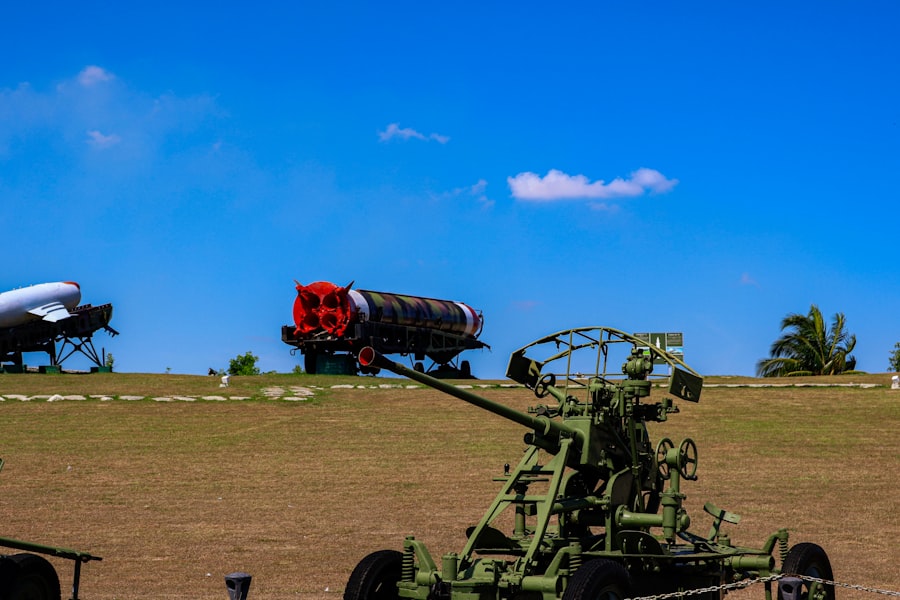
The period from October 16th to October 28th, 1962, became known as the “thirteen days,” a period of intense diplomatic maneuvering and military posturing that held the world captive. Each day brought new anxieties and the ever-present fear of miscalculation.
Kennedy’s Chosen Path: The Naval Blockade
After much deliberation, President Kennedy opted for a naval blockade, or “quarantine” as he termed it, of Cuba. This was a measured response designed to prevent further Soviet offensive weapons from reaching the island without immediately resorting to direct military conflict.
The Imposition of the Quarantine
On October 22nd, President Kennedy addressed the nation, revealing the existence of the missile sites and announcing the naval quarantine. This televised announcement sent shockwaves across the globe, as the gravity of the situation became starkly apparent. The U.S. Navy was ordered to intercept any Soviet ships carrying offensive weapons.
The U.S. Navy’s Stance
The U.S. Navy was placed on high alert, ready to enforce the quarantine. The sight of American warships surrounding Cuba, confronting Soviet vessels, created a palpable sense of dread. The possibility of a naval engagement, which could quickly escalate, was a terrifying prospect.
Soviet Responses and Escalation
The Soviet Union initially responded defiantly to the quarantine. Soviet ships continued to steam towards Cuba, and there was a tense standoff as they approached the blockade line. The world watched with bated breath to see if they would turn back or challenge the U.S. Navy.
The U-2 Incident and its Dire Implications
A critical moment of escalation occurred on October 27th, often referred to as “Black Saturday.” A U-2 reconnaissance plane was shot down over Cuba by a Soviet surface-to-air missile, killing the pilot, Major Rudolf Anderson Jr. This incident significantly heightened tensions and pushed many within the U.S. administration to advocate for immediate retaliation.
The Pressure for Air Strikes
The shooting down of the U-2 intensified the pressure on Kennedy to authorize air strikes against the missile sites, followed by a potential invasion. The argument was that the Soviets had crossed a red line and that further appeasement would be disastrous.
Backchannel Communications and Diplomatic Efforts
Amidst the public posturing and military readiness, crucial backchannel communications were underway. Secret negotiations and exchanges of letters between Kennedy and Khrushchev played a vital role in de-escalating the crisis.
The Khrushchev-Kennedy Correspondence
Throughout the crisis, a series of increasingly urgent letters were exchanged between the two leaders. These letters, often reflecting the immense pressure they were under, were instrumental in finding a path towards resolution.
The Two Soviet Proposals
Khrushchev sent two different proposals. The first, more conciliatory, offered to remove the missiles in exchange for a U.S. pledge not to invade Cuba. The second, more aggressive, also demanded the removal of U.S. Jupiter missiles from Turkey.
The Resolution: A Compromise and a World Saved
The Cuban Missile Crisis was ultimately resolved through a complex and delicate process of negotiation and compromise. The world stepped back from the brink of nuclear war, but not without significant concessions and lingering anxieties.
The U.S. Pledge and the Secret Deal
The Kennedy administration publicly accepted the terms of Khrushchev’s first proposal: the Soviets would remove their missiles from Cuba under UN supervision, and the U.S. would publicly pledge not to invade Cuba. However, a crucial element of the resolution was a secret agreement.
The Removal of U.S. Missiles from Turkey
In return for the Soviet missile withdrawal, the U.S. secretly agreed to remove its Jupiter missiles from Turkey at a later date. This reciprocal action, though not publicly acknowledged at the time, was essential for Khrushchev to save face and justify the withdrawal to his own hardliners.
The De-escalation and Aftermath
The world breathed a collective sigh of relief as the crisis subsided. The Soviet ships turned back, and the missile sites in Cuba were dismantled. The immediate threat of nuclear war receded, but the experience left an indelible mark on international relations.
The Establishment of the “Hotline”
As a direct consequence of the crisis, the “hotline” – a direct communication link between Washington D.C. and Moscow – was established in 1963. This was designed to prevent future crises from escalating due to miscommunication or delays in communication between the two superpowers.
Improving Direct Communication
The agonizing delays and potential for misunderstanding during the Cuban Missile Crisis highlighted the critical need for immediate and secure communication channels. The hotline was a tangible step towards ensuring that leaders could communicate directly and quickly during times of extreme tension.
The Nuclear Non-Proliferation Treaty
The fear of nuclear proliferation, heightened by the crisis, also contributed to the momentum for arms control efforts. The Cuban Missile Crisis served as a stark reminder of the devastating consequences of nuclear weapons and the urgent need to prevent their spread.
A Shared Fear of Nuclear Annihilation
The shared experience of staring into the abyss of nuclear war fostered a sense of common vulnerability. This realization paved the way for future arms control agreements, most notably the Nuclear Non-Proliferation Treaty (NPT) in 1968.
The Cuban Missile Crisis stands as one of the most tense moments in history, bringing the world perilously close to nuclear war. An insightful article on this topic can be found at In the War Room, where it explores the intricate decisions made by leaders during those critical days. The article delves into the strategies employed by both the United States and the Soviet Union, highlighting how close the situation came to escalating into a full-blown conflict. Understanding these events is crucial for grasping the delicate balance of power during the Cold War era.
Lessons Learned: The Fragility of Peace and the Perils of Brinkmanship
“`html
| Event | Details |
|---|---|
| Date | October 16-28, 1962 |
| Duration | 13 days |
| Closest point to nuclear war | October 27, 1962 |
| Number of nuclear warheads in Cuba | 42 |
| Number of US naval vessels enforcing quarantine | 180 |
| Resolution | Agreement for the removal of missiles from Cuba in exchange for the removal of US missiles from Turkey |
“`
The Cuban Missile Crisis serves as a profound historical lesson about the immense dangers of nuclear proliferation and the precarious nature of peace in a world armed with such destructive power. It underscores the importance of diplomacy, communication, and the courage of leaders to de-escalate conflicts even in the face of immense pressure.
The Importance of Communication
The crisis underscored the critical need for clear, direct, and reliable communication between nuclear powers. The lack of immediate access to direct lines of communication during moments of extreme tension proved to be a significant vulnerability.
The Dangers of Miscalculation and Misinterpretation
The events of October 1962 demonstrated how easily miscalculations and misinterpretations could lead to catastrophic outcomes. The breakdown of trust and the high stakes involved meant that every action and reaction was scrutinized with extreme caution.
The Perils of Nuclear Brinkmanship
The crisis served as a stark warning against the dangers of nuclear brinkmanship – the practice of pushing dangerous situations to the verge of disaster to achieve political objectives. The world witnessed firsthand how such tactics could backfire and lead to unintended and devastating consequences.
The Moral and Ethical Imperative of Peace
Beyond strategic considerations, the Cuban Missile Crisis ignited a global discussion about the moral and ethical imperative of preventing nuclear war. The sheer scale of potential destruction forced humanity to confront the profound responsibility of safeguarding its own existence.
The Enduring Legacy of the Crisis
The Cuban Missile Crisis remains a pivotal moment in 20th-century history, a sobering reminder of humanity’s capacity for both self-destruction and remarkable restraint. It reshaped the dynamics of the Cold War, leading to a period of détente and a greater emphasis on arms control. The lessons learned from those thirteen days continue to resonate, urging leaders and citizens alike to prioritize diplomacy and work tirelessly towards a world free from the existential threat of nuclear annihilation. The world, on that autumn of 1962, truly teetered on the precipice of oblivion, a stark testament to the fragile balance of power and the ever-present danger of the nuclear age.

The U.S. Navy Didn’t Know This Submarine Had a Nuclear Torpedo
FAQs
1. What was the Cuban Missile Crisis?
The Cuban Missile Crisis was a 13-day confrontation in October 1962 between the United States and the Soviet Union over Soviet ballistic missiles deployed in Cuba.
2. How close was the Cuban Missile Crisis to nuclear war?
The Cuban Missile Crisis was extremely close to escalating into nuclear war. Both the United States and the Soviet Union were on high alert, and there were several instances where a nuclear exchange seemed imminent.
3. What were the key events that brought the world to the brink of nuclear war during the Cuban Missile Crisis?
Key events during the Cuban Missile Crisis included the discovery of Soviet missiles in Cuba, President Kennedy’s establishment of a naval blockade around Cuba, and the tense negotiations between the two superpowers.
4. What actions were taken to prevent nuclear war during the Cuban Missile Crisis?
To prevent nuclear war, President Kennedy and Soviet Premier Khrushchev engaged in intense diplomatic negotiations. Additionally, both sides exercised restraint and avoided provocative actions that could have escalated the situation.
5. What was the outcome of the Cuban Missile Crisis?
The outcome of the Cuban Missile Crisis was a diplomatic resolution, with the Soviet Union agreeing to remove its missiles from Cuba in exchange for the United States pledging not to invade the island. This crisis also led to the establishment of a direct communication link between the US and the Soviet Union, known as the “hotline,” to prevent future misunderstandings and crises.