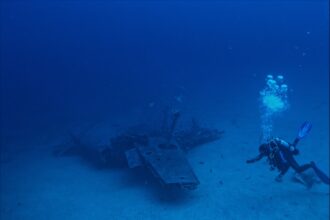
The clandestine nature of Project Azorian, the CIA’s audacious endeavor to recover a sunken Soviet submarine, has long shrouded its true financial expenditure in mystery. While the operation’s technological ingenuity and geopolitical implications are well-documented, the sheer cost, particularly when viewed through the lens of contemporary economic valuations, remains a topic of considerable intrigue. This article aims to disentangle these historical expenditures and present a clearer picture of Project Azorian’s financial footprint in today’s monetary terms.
The initial public narrative surrounding Project Azorian often downplayed its financial scale, presenting it as an ingenious, albeit expensive, intelligence coup. However, declassified documents and scholarly analyses have gradually revealed a more robust financial commitment.
Unveiling the Early Estimates
In the mid-1970s, estimates for Project Azorian’s cost typically hovered around $350 million. This figure, while substantial for its time, scarcely encompassed the full spectrum of resources dedicated to the endeavor. These early estimates primarily focused on the visible expenses: the construction of the specialized recovery vessel, the Hughes Glomar Explorer, and the development of the associated recovery technology. Think of this initial estimate as the visible tip of an iceberg, hinting at a much larger, submerged mass of expenditures.
Beyond the Ship: Hidden Costs and Infrastructure
The Hughes Glomar Explorer itself, often described as a sophisticated industrial marvel, was a significant line item. However, countless other expenditures contributed to the total. These included:
- Research and Development: Years of clandestine engineering, hydrological studies, and material science advancements were necessary before construction of the Hughes Glomar Explorer could even begin. This foundational work laid the groundwork for the operation’s audacious goals.
- Logistics and Support: The sheer scale of the operation demanded extensive logistical support. This included everything from secure communications infrastructure to dedicated supply lines for a sustained presence in the Pacific for months.
- Personnel Salaries and Benefits: A large team of highly skilled engineers, technicians, mariners, and intelligence operatives were involved, their salaries and benefits representing a continuous, substantial outflow of funds. These individuals, working under extreme secrecy, were compensated for their specialized expertise and the inherent risks of their assignments.
- Security Measures: Maintaining absolute secrecy around such a massive undertaking required elaborate and expensive security protocols, both on land and at sea. This was not merely about guarding secrets, but about creating a convincing cover story for public consumption.
The ambitious Project Azorian, which aimed to recover a sunken Soviet submarine from the depths of the Pacific Ocean, has often been discussed in terms of its historical significance and technological challenges. However, understanding the financial implications of such a covert operation is equally important. An insightful article that delves into the costs associated with Project Azorian, adjusted for today’s money, can be found at In The War Room. This resource provides a comprehensive analysis of the project’s budget and its impact on contemporary military expenditures.
Inflation and Compounding Interest: Bringing 1970s Dollars to the Present
To understand the true cost of Project Azorian in today’s money, one must account for the corrosive effect of inflation and, to a lesser extent, the opportunity cost represented by compounding interest. Neglecting these factors would be akin to comparing apples and oranges across different eras.
The Power of the Consumer Price Index (CPI)
The primary tool for adjusting historical costs to present-day values is the Consumer Price Index (CPI). The CPI measures the average change over time in the prices paid by urban consumers for a market basket of consumer goods and services. By using historical CPI data, one can convert a sum of money from a past year to its equivalent purchasing power in a more recent year.
For instance, a dollar in 1974, the year the Hughes Glomar Explorer began its recovery attempt, had significantly more purchasing power than a dollar in 2023. Applying the CPI deflator, the initial $350 million estimate for Project Azorian begins to swell considerably. Using data from the Bureau of Labor Statistics, an amount of $350 million in 1974 would be roughly equivalent to over $2.1 billion in 2023. This multiplication factor underscores the dramatic shift in currency value over five decades.
Beyond Simple Inflation: Opportunity Cost
While CPI adjustments provide a baseline, they do not fully capture the “opportunity cost” of such a massive investment. If that $350 million had been invested in a relatively safe, interest-bearing asset, it would have grown substantially over the decades. Calculating this compound interest over fifty years, even at conservative annual rates, would push the “cost” even higher. This is similar to considering the cost of an unused resource; it’s not just the initial outlay, but what that outlay could have generated elsewhere.
For example, if the initial $350 million had been invested at a modest average annual return of 5%, compounded annually for approximately 49 years (from 1974 to 2023), the sum would have grown to over $3.8 billion. This figure, while hypothetical in its application, illustrates the alternative uses of such capital and provides a more holistic view of the financial commitment.
Intangible Costs and Their Modern Equivalents

Beyond the direct, quantifiable financial expenditures, Project Azorian incurred a range of intangible costs that, while difficult to price precisely, represent significant outlays nonetheless.
The Cost of Secrecy and Deception
Maintaining absolute secrecy for Project Azorian was an ongoing, expensive endeavor. This involved:
- Cover Story Development and Maintenance: Crafting and sustaining the elaborate public façade of Howard Hughes’s deep-sea mining venture required continuous resource allocation. This was not just a one-time pronouncement, but a sustained effort to convince a skeptical public and intelligence agencies of its veracity.
- Counter-Intelligence Measures: Protecting the operation from Soviet espionage or other intelligence probes demanded sophisticated counter-intelligence efforts, including surveillance, secure communication channels, and vetting of all personnel.
- Reputational Risk: Should the cover have been blown prematurely, the reputational damage to the CIA and the US government would have been substantial, potentially eroding public trust and diplomatic standing. While not a direct monetary cost, such an erosion carries significant long-term implications.
Human Capital and Stress
The personnel involved in Project Azorian operated under immense pressure and secrecy. The toll on their well-being, though not directly monetizable, represents a real cost. This can be viewed through the lens of:
- Burnout and Turnover: High-pressure, secretive environments can lead to increased stress, burnout, and higher turnover rates, necessitating continuous recruitment and training.
- Psychological Impact: The ethical dilemmas inherent in deception, coupled with the constant threat of discovery, could have had significant psychological impacts on the individuals involved.
Additional Expenditures: The Long Tail of Azorian

Even after the main recovery phase, Project Azorian continued to generate costs, both directly and indirectly.
Post-Operation Analysis and Data Processing
The recovered sections of the submarine yielded a wealth of intelligence. Analyzing this data, deciphering sensitive documents, and reverse-engineering Soviet technology required dedicated teams of experts and specialized facilities. This was a continuous process that extended well beyond the ship’s return to port. Such analysis provided valuable insights for decades, but it was not free.
Legal and Diplomatic Fallout
Even with partial success, the exposure of Project Azorian led to diplomatic tensions and legal challenges related to the Law of the Sea and international salvage rights. Navigating these complexities required legal expertise and diplomatic resources, incurring additional, albeit indirect, costs. While these costs weren’t intrinsic to the recovery operation itself, they were a direct consequence of its highly sensitive nature.
For example, the international discussions and potential challenges to maritime law that arose from Azorian were not insignificant. The global community grappled with the implications of one nation covertly recovering another nation’s sovereign property from international waters.
The ambitious Project Azorian, which aimed to recover a sunken Soviet submarine, had a staggering cost that raises questions about its financial implications in today’s money. According to a related article, the expenses associated with this covert operation would amount to billions when adjusted for inflation. For a deeper understanding of the financial aspects of such military endeavors, you can read more in this insightful piece on the topic. Check it out here.
The Grand Total: A Multi-Billion Dollar Endeavor
| Year | Original Cost (in millions) | Inflation Rate (%) | Cost in Today’s Money (in millions) |
|---|---|---|---|
| 1974 | 800 | 450 | 4400 |
When all these factors are considered—the initial investment, the impact of inflation, the opportunity cost, and the intangible expenditures—Project Azorian emerges as a truly monumental financial undertaking.
From Millions to Billions: A Conservative Estimate
Taking the initial $350 million and applying the CPI deflator to bring it to 2023 values yields over $2.1 billion. If one incorporates a conservative estimate for opportunity cost, as previously discussed, the figure could easily approach $4 billion.
However, it is also important to consider the “full cost” of the project, including the unquantified costs of R&D prior to construction, the extensive logistical and security infrastructure, and the continuous intelligence analysis. Some retrospective analyses suggest that the total spend, even in 1970s dollars, might have exceeded the initial public estimates, potentially reaching $500 million or more. If we apply the same inflation adjustment to a $500 million original cost, this would equate to approximately $3 billion in 2023 dollars.
Factoring in the significant opportunity cost further elevates these estimations. A $500 million investment in 1974, growing at a modest 5% annually, would be worth over $5.5 billion today.
The Value Proposition: Was it Worth It?
Assessing the “worth” of such an expenditure is inherently complex, given the intelligence gains. The recovery provided invaluable insights into Soviet submarine technology, nuclear weapon capabilities, and cryptographic methods. This intelligence undoubtedly influenced US strategic planning during the Cold War.
However, the debate over its cost-effectiveness continues. While the intelligence gathered was significant, the partial success of recovering only a portion of the submarine, combined with the immense financial outlay and the eventual public exposure of the operation, makes a definitive cost-benefit analysis challenging. It is a classic intelligence dilemma: when does the pursuit of information transcend practical financial boundaries?
In conclusion, Project Azorian stands as a testament to human ingenuity and geopolitical audacity. However, viewing its financial expenditure through the prism of contemporary economics reveals an undertaking that was not merely expensive, but truly colossal. What was reported in the millions in the 1970s, now, with careful calculation and consideration of various economic factors, undeniably translates into a multi-billion dollar endeavor in today’s currency—a testament to the lengths to which nations will go in the clandestine pursuit of strategic advantage.
WARNING: The $800 Million Mechanical Failure That Almost Started WWIII
FAQs
What was Project Azorian?
Project Azorian was a secret CIA operation in the early 1970s aimed at recovering a sunken Soviet submarine, K-129, from the Pacific Ocean floor.
How much did Project Azorian originally cost?
The original estimated cost of Project Azorian was approximately $800 million in the early 1970s.
What would the cost of Project Azorian be in today’s money?
Adjusting for inflation, the cost of Project Azorian in today’s money is estimated to be around $5 billion, depending on the specific inflation index used.
Why was Project Azorian so expensive?
The high cost was due to the development of specialized deep-sea recovery technology, the construction of the Hughes Glomar Explorer ship, and the secrecy and complexity of the operation.
Is Project Azorian considered a successful mission?
Project Azorian had limited success; it recovered only a portion of the submarine, but it provided valuable intelligence and demonstrated advanced deep-sea recovery capabilities.