The echoes of revolution and the whispers of ideological titans were a constant hum for decades, defining a global landscape shaped by the looming threat of nuclear annihilation. The Cold War, a protracted geopolitical struggle between the United States and the Soviet Union, was more than just a conflict of military might; it was a clash of visions for the future of humanity. For over forty years, the world held its breath, caught in the gravitational pull of these two superpowers. Then, in a remarkably swift and relatively bloodless fashion, the Soviet Union fractured, and with it, the Cold War effectively ceased to be. The question that has captivated historians and analysts ever since is not if it ended, but what really brought about its conclusion. Was it a singular event, a slow erosion, or a confluence of multifaceted pressures? The reality, as often is the case with monumental historical shifts, is that the collapse of the Soviet Union, and thus the end of the Cold War, was the product of a complex interplay of internal weaknesses, external challenges, and the decisive actions of individuals.
The Soviet system, for all its ideological fervor and military prowess, was inherently unsustainable. Beneath the veneer of communist solidarity and planned economic triumphs lay deep-seated structural flaws that gradually, inexorably, undermined its foundations. The centrally planned economy, hailed as a superior alternative to capitalism, proved to be a rigid and inefficient engine.
The Tyranny of Central Planning
The bedrock of the Soviet economy was its command-and-control system. Every aspect of production, distribution, and consumption was dictated by state planners in Moscow. While this system could mobilize resources for specific goals, such as heavy industry and military development, it struggled with the nuanced demands of consumer goods and innovation. Bureaucratic inertia, a lack of responsiveness to market signals, and the stifling of individual initiative led to chronic shortages, shoddy quality, and widespread inefficiency. Factories churned out goods that nobody wanted, while essential items remained elusive. The very mechanisms designed to ensure equitable distribution often resulted in widespread dissatisfaction and a burgeoning black market.
The Burden of the Arms Race
The relentless arms race with the United States placed an immense strain on the Soviet economy. The vast sums poured into developing and maintaining a nuclear arsenal, a blue-water navy, and an army capable of projecting power globally diverted resources that could have been invested in civilian infrastructure, technological advancement, and improving the quality of life for ordinary citizens. The Soviet Union, with its significantly smaller economic base, found it increasingly difficult to keep pace with the technological innovation and sheer productive capacity of the West. This military overstretch acted as a constant drain, exacerbating existing economic weaknesses.
The Rot of Corruption and Cronyism
Over time, the Soviet system became riddled with corruption and cronyism. The nomenklatura, the elite class of Communist Party officials, enjoyed privileges and access to resources denied to the general population. This bred resentment and a pervasive sense of unfairness. The lack of accountability and transparency within the system allowed for the siphoning of state resources for personal gain, further hindering economic development and eroding public trust in the government. The disconnect between official propaganda and the lived realities of the people created a growing cynicism.
The question of what truly ended the Cold War has been the subject of extensive debate among historians and political analysts. While many attribute the conclusion of this prolonged geopolitical tension to the policies of leaders like Mikhail Gorbachev and Ronald Reagan, others argue that underlying economic factors and grassroots movements played a crucial role. For a deeper exploration of these perspectives, you can read the insightful article available at In the War Room, which delves into the multifaceted reasons behind the Cold War’s resolution.
The Winds of Change: Gorbachev’s Reforms and Their Unintended Consequences
Mikhail Gorbachev ascended to power in 1985 with a clear understanding that the Soviet Union was in deep trouble. He recognized the need for significant reform, but his attempts to revitalize the system ultimately unleashed forces that he could not control. His policies of Glasnost and Perestroika, while intended to strengthen the Soviet Union, inadvertently accelerated its demise.
Glasnost: The Unveiling of Truth
Glasnost, meaning “openness,” was Gorbachev’s policy of increased transparency and freedom of information. It aimed to foster a more open and honest dialogue within society, allowing for criticism of the government and the airing of long-suppressed grievances. This was a radical departure from the tightly controlled information environment of the past. Suddenly, previously taboo subjects were discussed openly: the environmental disasters like Chernobyl, the failures of the Soviet-Afghan War, the historical atrocities committed by the Soviet regime, and the rampant corruption.
The impact of Glasnost was profound. It shattered the carefully constructed facade of Soviet invincibility and exposed the deep-seated problems that had been hidden from public view for decades. It empowered citizens, allowing them to question authority and demand accountability. It also opened the floodgates for nationalist sentiments that had been simmering beneath the surface in the various Soviet republics.
Perestroika: Restructuring the Economy
Perestroika, meaning “restructuring,” was Gorbachev’s attempt to reform the Soviet economy. It involved introducing market-like mechanisms, decentralizing decision-making, and encouraging private enterprise. The intention was to inject efficiency and innovation into a stagnant system. However, Perestroika proved to be a difficult and often contradictory process.
The transition from a centrally planned economy to a more market-oriented one was not a smooth one. The dismantling of old structures without fully established new ones created economic dislocation and uncertainty. Old supply chains broke down, while new ones struggled to emerge. This led to increased inflation, shortages of goods, and a decline in living standards for many. The reforms also created winners and losers, fueling social unrest and discontent. Furthermore, the partial liberalization of the economy allowed for the emergence of a new class of entrepreneurs who often benefited from the ensuing chaos.
The Unraveling of Party Control
The very reforms Gorbachev implemented began to erode the absolute control of the Communist Party. Glasnost allowed for the emergence of independent political organizations and movements, challenging the Party’s monopoly on power. Perestroika, by introducing market forces, weakened the Party’s grip on economic levers. As the Party’s legitimacy waned, so too did its ability to enforce its will across the vast Soviet empire. This created a power vacuum that other forces, particularly nationalist movements, were eager to fill.
The Rise of Nationalism: The Republics Seek Independence
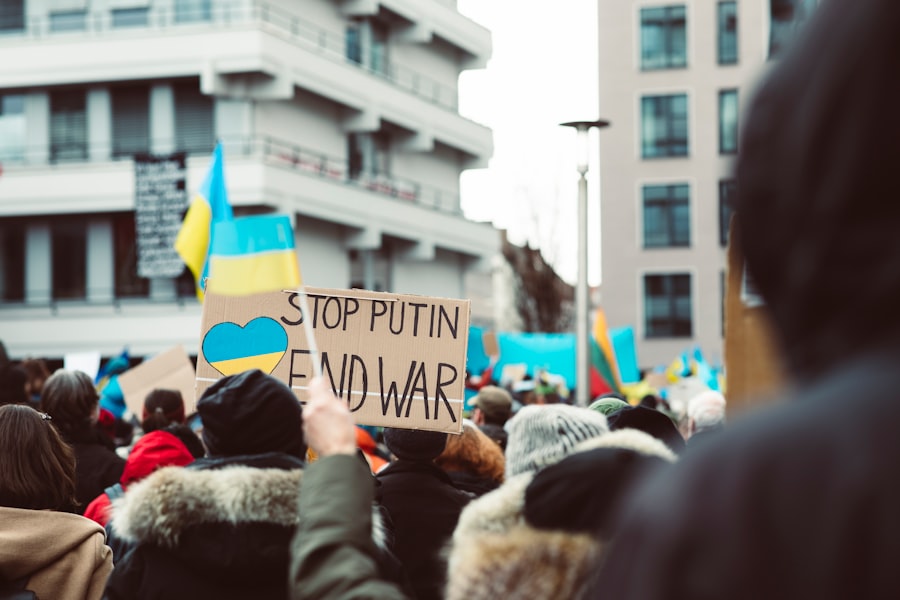
For decades, the Soviet Union presented a united front, a monolithic entity held together by ideology and the iron fist of Moscow. However, beneath this outward appearance lay a diverse tapestry of nations and ethnicities, each with its own history, language, and aspirations for self-determination. Glasnost acted as a catalyst, igniting these long-dormant nationalistic sentiments.
The Baltic States: Pioneers of Independence
The Baltic states of Estonia, Latvia, and Lithuania, having been forcibly annexed by the Soviet Union in 1940, were among the first to assert their independence. Their pre-Soviet histories as independent nations, coupled with their proximity to Western Europe, fueled a strong desire to break free from Soviet rule. Mass demonstrations, the formation of popular fronts, and the singing of forbidden national anthems became powerful symbols of their resistance. Their determined pursuit of independence served as an inspiration and a blueprint for other republics.
The Russian Federation’s Own Ambitions
Even within the heart of the Soviet Union, the Russian Federation, the largest and most dominant republic, began to assert its own interests. Boris Yeltsin, elected chairman of the Russian parliament, became a powerful voice for Russian sovereignty within the USSR. He challenged Gorbachev’s authority and advocated for greater autonomy for Russia, further destabilizing the central government. This was a critical turning point, as the very core of the Soviet Union was beginning to fracture.
The Domino Effect Across the Republics
As the Baltic states pushed for independence, and Russia asserted its own claims, a domino effect began to ripple across the Soviet republics. Ukraine, Georgia, Armenia, and other nations, emboldened by the weakening of central authority and the growing possibilities for self-governance, also began to declare their sovereignty or independence. The intricate web of Soviet control, built over decades, was unraveling at an unprecedented pace. The fear of reprisal from Moscow diminished with each successful declaration of independence.
External Pressures and the End of the Arms Race
While internal factors were the primary drivers of the Soviet collapse, external pressures also played a significant role in shaping the geopolitical landscape and contributing to the end of the Cold War. The sustained competition with the West, particularly under the Reagan administration, created an environment where the Soviet Union’s weaknesses were magnified.
Reagan’s Strategic Defense Initiative (SDI)
President Ronald Reagan’s proposed Strategic Defense Initiative, or “Star Wars,” was a highly ambitious and controversial plan to create a missile defense system. While its feasibility was debated, the sheer audacity of the proposal placed immense psychological and economic pressure on the Soviet Union. The Soviets feared that if SDI were successful, it could render their nuclear arsenal obsolete, thus fundamentally altering the strategic balance of power. The cost of trying to counter such a system, even if it proved to be technologically unachievable for the US, was a significant burden for the already strained Soviet economy.
The Reagan Doctrine and Support for Anti-Communist Movements
The Reagan administration actively supported anti-communist movements around the world, challenging Soviet influence in various regions. This included financial and military aid to groups fighting Soviet-backed regimes in Afghanistan, Nicaragua, and Angola. These proxy wars, while often costly and controversial, drained Soviet resources and manpower, contributing to their perception of a losing struggle on the global stage. The continuous engagement in these conflicts further highlighted the economic limitations of the Soviet Union.
The Appeal of Western Prosperity and Democracy
The stark contrast between the economic prosperity and freedoms enjoyed in the West and the stagnation and repression within the Soviet bloc was increasingly evident. As information flowed more freely, the appeal of Western capitalism and democracy became undeniable for many Soviet citizens and those in satellite states. This created a constant pressure on the Soviet system to reform or face further erosion of its legitimacy. The “demonstration effect” of Western success was a powerful, albeit intangible, force.
The end of the Cold War remains a topic of extensive debate among historians, with various factors contributing to the eventual dissolution of tensions between the East and West. While many point to the economic struggles of the Soviet Union as a primary reason, others highlight the role of diplomatic efforts and grassroots movements in Eastern Europe. For a deeper understanding of these dynamics, you can explore a related article that delves into the complexities of this pivotal period in history. To read more about the various influences that shaped the end of the Cold War, visit this insightful piece.
The Coup and the Final Dissolution: The Unraveling of the Union
| Event/Metric | Description |
|---|---|
| Strategic Arms Limitation Talks (SALT) | Negotiations between the US and the Soviet Union to limit the number of nuclear weapons. |
| Reagan’s “Tear Down This Wall” speech | President Reagan’s famous speech at the Berlin Wall, challenging Gorbachev to tear down the barrier. |
| Perestroika and Glasnost | Gorbachev’s policies of restructuring and openness, leading to political and economic reforms in the Soviet Union. |
| Fall of the Berlin Wall | The symbolic event marking the end of the division between East and West Germany. |
| Breakup of the Soviet Union | The dissolution of the USSR into independent states, marking the end of the Cold War era. |
The most dramatic and definitive act in the collapse of the Soviet Union was the failed coup attempt in August 1991, followed by the formal dissolution of the Union itself. These events marked the final nail in the coffin of the Soviet empire.
The August Coup: A Desperate Attempt to Reassert Control
Hardline communist officials, alarmed by Gorbachev’s reforms and the growing independence movements, launched a coup in August 1991, detaining Gorbachev and attempting to seize control of the government. Their aim was to reverse the democratic reforms and reassert centralized authority. However, their actions were met with widespread popular resistance, led by figures like Boris Yeltsin, who rallied citizens to defend the nascent democratic gains.
The coup was poorly organized and lacked widespread support. Its failure exposed the deep divisions within the Soviet leadership and further delegitimized the Communist Party. The image of the old guard attempting to violently suppress the will of the people was a powerful one that resonated across the republics.
The Rise of Boris Yeltsin and the Independence of Russia
The August coup proved to be a turning point. Boris Yeltsin emerged as a national hero, having bravely stood against the coup plotters. His popularity and influence soared, and he effectively sidelined Gorbachev. The failure of the coup convinced many republics that the central Soviet government was no longer capable of maintaining control, and the momentum towards independence became unstoppable. Russia, under Yeltsin, declared its full independence from the Soviet Union, a symbolic and practical blow that signaled the end was near.
The Belovezha Accords and the Birth of Independent Nations
In December 1991, the leaders of Russia, Ukraine, and Belarus met at the Belovezha Forest and signed an agreement that declared the Soviet Union dissolved and established the Commonwealth of Independent States (CIS) in its place. This act, essentially a formal acknowledgment of the inevitable, marked the official end of the Soviet Union. Gorbachev resigned as president on December 25, 1991, and the Soviet flag was lowered from the Kremlin for the last time. The Cold War, a defining feature of the 20th century, was over.
In conclusion, the collapse of the Soviet Union and the end of the Cold War were not the result of a single decisive blow but rather a complex and multifaceted process. The internal decay of a rigid and inefficient economic system, exacerbated by the unsustainable burden of the arms race and pervasive corruption, created deep-seated vulnerabilities. Mikhail Gorbachev’s well-intentioned reforms, Glasnost and Perestroika, while aimed at revitalization, inadvertently unleashed powerful forces of nationalism and dissent that the Soviet system could no longer contain. External pressures from the West, including sustained economic and ideological competition, further highlighted these weaknesses. Ultimately, the failed August Coup acted as the final catalyst, demonstrating the Soviet Union’s irreparable fragmentation and paving the way for the birth of independent nations and the definitive end of the bipolar world order. The Cold War’s conclusion was a testament to the enduring human desire for freedom and self-determination, a desire that ultimately proved more powerful than the might of any empire.

The $17 Million That Helped Destroy an Empire
FAQs
1. What were the main factors that led to the end of the Cold War?
The end of the Cold War was primarily influenced by the economic and political stagnation of the Soviet Union, the reforms initiated by Soviet leader Mikhail Gorbachev, and the increasing pressure from the United States and its allies.
2. How did the economic situation in the Soviet Union contribute to the end of the Cold War?
The economic stagnation in the Soviet Union, exacerbated by the arms race and the cost of maintaining its satellite states, weakened the Soviet economy and contributed to the eventual collapse of the Soviet Union.
3. What role did the policies of Mikhail Gorbachev play in ending the Cold War?
Mikhail Gorbachev’s policies of glasnost (openness) and perestroika (restructuring) aimed to reform the Soviet Union’s political and economic systems, but inadvertently led to the loosening of control over Eastern European satellite states and the eventual dissolution of the Soviet Union.
4. How did the United States and its allies contribute to the end of the Cold War?
The United States and its allies, through a combination of military, economic, and diplomatic strategies, exerted pressure on the Soviet Union and supported movements for independence in Eastern European countries, ultimately contributing to the collapse of the Soviet bloc.
5. What were the key events that marked the end of the Cold War?
The fall of the Berlin Wall in 1989, the reunification of Germany, the dissolution of the Warsaw Pact, and the eventual dissolution of the Soviet Union in 1991 were key events that marked the end of the Cold War.