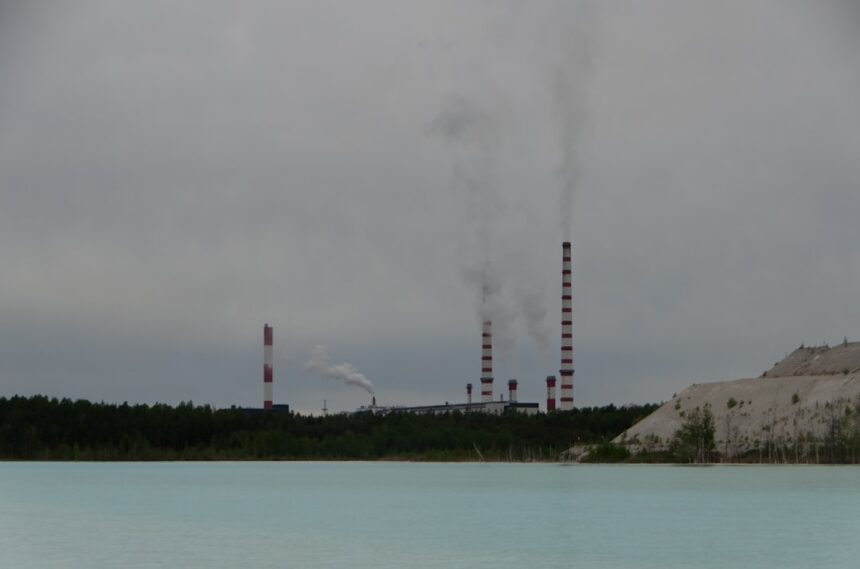
The Oak Ridge Reservation, a landscape etched by decades of nuclear industrial activity, carries a complex legacy. Among its environmental challenges, the story of mercury pollution, significantly linked to the Colex Process, stands out as a potent reminder of past industrial practices and their enduring impact on ecosystems. This article delves into the Colex Process, its application at Oak Ridge, the resulting mercury contamination, and the ongoing efforts to address this persistent environmental concern.
Genesis and Purpose
The Colex Process, a chemical separation technique, emerged from the urgent demands of the Manhattan Project during World War II. Its primary objective was the separation of isotopes, specifically to enrich uranium-235, a crucial component for the development of nuclear weapons. While the intricacies of isotope separation are a deep dive into nuclear physics, it is essential to understand that this process relied on sophisticated chemical engineering to achieve its goal. The need for efficient and large-scale separation led to the development of specialized technologies, and Colex was one such innovation. It was a testament to the ingenuity and rapid technological advancement driven by wartime necessity.
The Chemical Heart of the Process
At its core, the Colex Process employed a liquid-liquid extraction method. This involved using a solvent, typically a mixture of nitric acid and bismuth nitrate, to selectively pull uranyl nitrate from an aqueous solution containing a mixture of uranium isotopes. The key differentiator of Colex was its use of bismuth nitrate, a choice motivated by the desire to minimize neutron absorption, a desirable characteristic in nuclear applications. Imagine this as a meticulous sorting process, where a specific chemical handshake between the solvent and the desired uranium isotope allowed them to migrate together, leaving the less enriched isotopes behind. The process was cyclical, with the solvent being repeatedly brought into contact with the uranium-bearing solution to achieve increasing levels of enrichment.
Operational Stages and Byproducts
The Colex Process unfolded in a series of interconnected stages. Initially, uranium ore was dissolved in nitric acid. This acidic solution then entered contact with the bismuth nitrate solvent in specialized extraction equipment. Through careful control of flow rates and chemical concentrations, the uranyl nitrate would transfer into the organic phase. This solvent phase then underwent further processing to strip the uranium from the solvent, concentrating it and preparing it for subsequent stages of enrichment or for conversion into weapons-grade material. However, like many large-scale chemical operations, the Colex Process was not without its inefficiencies and byproducts. Significant volumes of waste were generated, and it is within these waste streams that the seeds of future environmental problems were sown.
Evolution and Obsolescence
As nuclear technology advanced, so too did the methods for uranium enrichment. While the Colex Process played a vital role in the early stages of nuclear weapons development, it was eventually superseded by more efficient and advanced techniques. The development of gas diffusion and later, gas centrifuge technologies, offered greater enrichment capabilities and reduced the reliance on the complex liquid-liquid extraction methods of Colex. The transition away from Colex was a natural progression of technological evolution, driven by the pursuit of greater efficiency and reduced operational complexity. However, the infrastructure and waste materials associated with its operation remained.
The colex process, which is utilized for the extraction of mercury, has raised significant concerns regarding mercury pollution, particularly in areas like Oak Ridge. An insightful article that delves into the implications of this process and its environmental impact can be found at In The War Room. This resource provides a comprehensive overview of the challenges associated with mercury contamination and the ongoing efforts to mitigate its effects on local ecosystems and public health.
Mercury’s Unwanted Entry: The Link Between Colex and Contamination
Uranium Production and Chemical Reagents
The connection between the Colex Process and mercury pollution is not a direct causal link in the sense that mercury was a primary reagent in the Colex Process itself. Rather, the contamination arose from the broader context of historical uranium production facilities, where mercury played a role in various stages of ore processing and chemical treatments that often preceded or ran parallel to the separation processes like Colex. Think of it as a sprawling industrial complex. While one specific building might have been dedicated to Colex, other operations within the same complex, or even at different sites contributing to the overall uranium supply chain, were utilizing mercury.
Amalgamation and Mercury Usage
In the early days of uranium ore processing, mercury was often employed in an amalgamation process. This technique utilized mercury’s unique ability to form alloys with certain metals. In the context of uranium extraction, mercury was sometimes used to extract uranium from ores by forming an amalgam. This amalgam, essentially a mercury-uranium alloy, was then further processed to recover the uranium. This method, while effective for extraction in some instances, inherently introduced mercury into the waste streams generated by these operations. Furthermore, mercury was also used in other analytical and laboratory settings within early nuclear facilities, contributing to its overall presence.
Waste Management Practices of the Era
Perhaps the most significant factor contributing to mercury pollution from sites associated with the Colex Process was the waste management practices prevalent during the mid-20th century. Environmental regulations as we know them today were virtually non-existent. Large volumes of chemical waste, often containing residual mercury from various upstream processes, were discharged or stored with minimal containment. These waste streams, like uncontrolled arteries, carried their toxic payload into the surrounding environment. Ponds, unlined pits, and direct discharge into watercourses were common, allowing mercury to infiltrate soil, groundwater, and surface water bodies.
Accumulation and Persistence
Mercury, once introduced into the environment, exhibits a remarkable persistence. Unlike many other contaminants, it does not readily break down into less harmful substances. Instead, it can cycle through ecosystems, transforming into more toxic forms, most notably methylmercury, through the action of microorganisms. This persistent nature meant that even once the mercury-releasing operations ceased, the contamination remained a long-term legacy, a chemical ghost haunting the landscape. The historical practice of simply releasing waste meant that these mercury-laden effluents became the starting point for a slow-moving environmental crisis.
The Environmental Footprint: Mercury’s Impact on Oak Ridge

Contamination Hotspots and Pathways
The Oak Ridge Reservation, a vast tract of land housing numerous former industrial facilities, bears the scars of mercury contamination. Specific areas, particularly those associated with former uranium processing plants and waste disposal sites, have been identified as significant mercury hotspots. The contamination didn’t remain confined to these initial points of release. Through various environmental pathways, mercury has migrated throughout the site and into surrounding ecosystems. This migration occurs via several routes: surface runoff carrying contaminated soil and water into streams and rivers, leaching from waste disposal areas into groundwater, and atmospheric deposition from historical mercury emissions. Imagine spilled ink on a tablecloth; the stain spreads outwards, often in unpredictable patterns.
Aquatic Ecosystems Under Threat
Aquatic ecosystems are particularly vulnerable to mercury pollution. Once in waterways, mercury can be converted by bacteria into methylmercury, an organic form that is readily absorbed by living organisms. Fish, at the top of many aquatic food chains, accumulate high concentrations of methylmercury through their diet. This bioaccumulation means that the mercury concentration increases as it moves up the food chain, posing a significant risk to both aquatic life and the humans who consume contaminated fish. Local rivers and reservoirs have become a crucial focus of these investigations, as they are direct recipients of historical discharges and potential pathways to wider environmental diffusion.
Terrestrial and Biological Impacts
While aquatic systems receive much attention, mercury contamination also impacts terrestrial environments. Contaminated soil can affect plant growth, and foraging animals can ingest mercury-laden soil or vegetation. In birds and mammals, mercury poisoning can lead to neurological damage, reproductive problems, and even death. The long-term health of wildlife populations within and around Oak Ridge is thus intrinsically linked to the extent and management of mercury contamination. The delicate balance of the food web, from the smallest invertebrates to larger predators, can be disrupted by this persistent toxin.
Human Health Concerns
The primary human health concern associated with mercury contamination is through the consumption of contaminated fish and shellfish. Methylmercury is a potent neurotoxin, particularly harmful to developing fetuses and young children. Exposure can lead to developmental delays, cognitive impairments, and other neurological problems. While direct contact with contaminated soil or water can also pose risks, dietary intake from bioaccumulated mercury in the food chain is generally considered the most significant pathway for widespread human exposure. This makes the monitoring and management of mercury levels in local fisheries a critical public health imperative.
Remediation Efforts: A Long and Winding Road

Characterization and Monitoring
The first crucial step in addressing any environmental pollution is comprehensive characterization. At Oak Ridge, extensive efforts have been undertaken to map the extent and concentration of mercury contamination across the reservation and its surrounding areas. This involves soil sampling, water quality monitoring, and sediment analysis in affected water bodies. This data forms the bedrock upon which remediation strategies are built, serving as a constant scorecard to track progress and identify persistent problem areas. Imagine a doctor meticulously diagnosing a patient before prescribing treatment; the characterization of the contamination is that essential diagnosis.
Engineered Containment and Excavation
Several remediation strategies have been employed to manage mercury contamination. One approach involves engineered containment, where contaminated soils or sediments are isolated to prevent further migration. This can include capping waste sites with impermeable barriers or constructing physical containment structures. In cases of severe contamination, excavation and off-site disposal of contaminated material at specialized hazardous waste facilities may be necessary. This is akin to surgically removing a diseased organ to prevent further harm to the body.
In-Situ Treatment Technologies
The development and application of in-situ treatment technologies represent a more innovative approach to mercury remediation. These methods aim to treat the contamination in place, reducing the need for extensive excavation and disposal. Technologies such as bioremediation, where microorganisms are used to transform mercury into less toxic forms, or chemical stabilization, where mercury is chemically bound to reduce its mobility, are being explored and implemented. This is like using natural healing processes or targeted chemical interventions to mend the affected environment without major disruption.
Long-Term Stewardship and Monitoring
Even after remediation efforts are completed, mercury contamination at Oak Ridge requires long-term stewardship and ongoing monitoring. Due to mercury’s persistence and potential for re-mobilization, continued oversight is essential to ensure that remediation remains effective and that new contamination does not arise. This includes regular monitoring of environmental conditions, maintenance of engineered containment systems, and public advisement regarding consumption of local fish. It is a commitment to vigilance, ensuring that the improvements made are sustained and that the environment is safeguarded for generations to come. This is the marathon, not the sprint, of environmental cleanup.
The colex process, which has been a topic of discussion due to its implications for mercury pollution in Oak Ridge, highlights the need for effective environmental management strategies. Recent studies have shown that the legacy of mercury contamination in this area poses significant risks to both human health and local ecosystems. For further insights into this pressing issue, you can read more in this related article on the subject. To explore the details, visit this link.
Looking Ahead: The Enduring Legacy of Responsible Management
| Metric | Value | Unit | Notes |
|---|---|---|---|
| Mercury Emissions from COLEX Process | 150 | kg/year | Estimated mercury released during peak operation at Oak Ridge |
| Soil Mercury Concentration near Oak Ridge | 2.5 | mg/kg | Average mercury concentration in contaminated soil samples |
| Water Mercury Concentration in Nearby Streams | 0.8 | µg/L | Mercury levels exceeding EPA safe limits for aquatic life |
| Duration of COLEX Process Operation | 1950-1963 | Years | Period during which mercury was used in Oak Ridge COLEX plants |
| Mercury Removal Efficiency in Cleanup Efforts | 85 | % | Effectiveness of remediation technologies applied post-operation |
Lessons Learned and Future Precedents
The story of mercury pollution at Oak Ridge, intertwined with the legacy of the Colex Process and earlier uranium production technologies, offers profound lessons for environmental management. It underscores the critical importance of understanding the full lifecycle of industrial processes, including the generation and long-term implications of waste products. The challenges faced at Oak Ridge have paved the way for more stringent environmental regulations, improved waste management practices, and a greater emphasis on life-cycle assessment in industrial development. The mistakes of the past serve as guideposts for the future, illuminating the path towards more sustainable industrial practices.
The Scientific and Technological Frontier
The ongoing remediation efforts at Oak Ridge continue to push the boundaries of environmental science and technology. Researchers and engineers are constantly developing and refining methods to detect, assess, and treat persistent contaminants like mercury. Innovations in areas such as advanced sensing technologies, novel bioremediation strategies, and more effective containment systems are crucial for tackling complex environmental challenges. The pursuit of effective solutions at Oak Ridge contributes to a global knowledge base for managing inherited environmental burdens.
Community Engagement and Public Awareness
Addressing historical contamination like that found at Oak Ridge requires robust community engagement and sustained public awareness. Transparency about the nature of the contamination, the remediation process, and the associated risks is vital for building trust and fostering informed decision-making. Educating the public about the impacts of mercury pollution and the importance of environmental stewardship is essential for long-term success. An informed and engaged community becomes a powerful ally in the effort to protect and restore the environment.
A Commitment to Restoration
Ultimately, the goal at Oak Ridge is not simply to manage contamination but to strive for restoration of the environment. This involves a long-term commitment to scientific research, technological innovation, and responsible land management. The remediation of mercury pollution is a testament to the enduring human capacity to learn from the past and to work towards a healthier and more sustainable future. The journey may be arduous, but the commitment to restoring the ecological integrity of the Oak Ridge landscape remains a guiding principle.
FAQs
What is the Colex process?
The Colex process is a chemical method used for the separation of lithium isotopes. It involves the use of mercury as a medium to facilitate the isotope exchange between lithium amalgam and aqueous lithium hydroxide.
How did the Colex process contribute to mercury pollution at Oak Ridge?
At Oak Ridge, the Colex process used large quantities of mercury, which led to mercury contamination in the environment. Mercury was released into local waterways and soil due to leaks, spills, and improper disposal during the operation of the process.
What environmental impacts resulted from mercury pollution at Oak Ridge?
Mercury pollution at Oak Ridge caused contamination of water bodies and soil, posing risks to aquatic life and human health. Mercury is a toxic heavy metal that can bioaccumulate in the food chain, leading to neurological and developmental problems in wildlife and humans.
What measures have been taken to address mercury pollution from the Colex process at Oak Ridge?
Cleanup efforts at Oak Ridge have included soil remediation, removal of contaminated sediments, and treatment of polluted water. The Department of Energy and environmental agencies have implemented monitoring programs and remediation projects to reduce mercury levels and prevent further contamination.
Is the Colex process still used today?
The Colex process is no longer widely used due to environmental concerns, particularly mercury pollution. Alternative methods for lithium isotope separation that do not involve mercury have been developed and are preferred for modern applications.