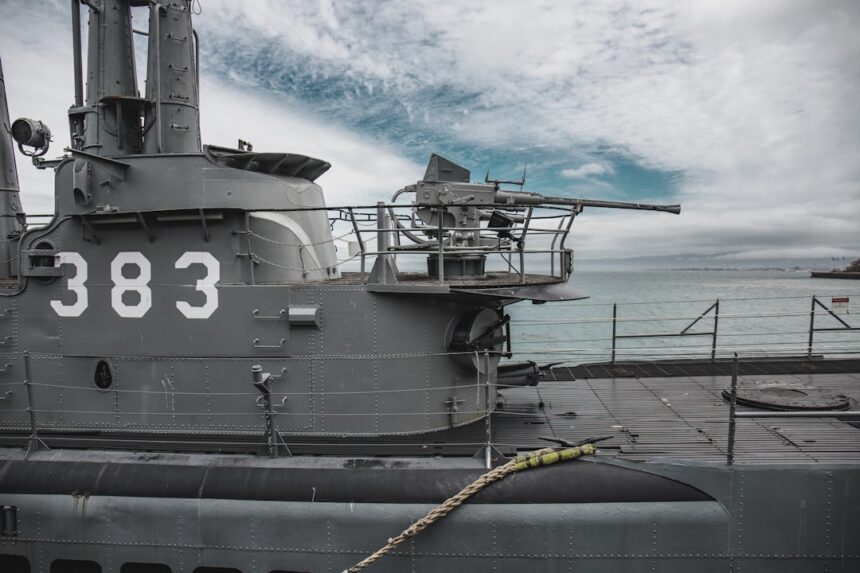
The depths of saltwater oceans, a realm of perpetual twilight and immense pressure, became the primary battleground for a silent, deadly game during the Cold War. This was the arena for “Submarine Cat and Mouse,” a sophisticated dance of detection and evasion that defined a significant portion of superpower strategic thinking. Far from the televised parades and fiery rhetoric, beneath the waves, highly trained crews maneuvered multi-ton vessels with surgical precision, engaged in a concealed struggle with unthinkable stakes. This article delves into the tactics, technologies, and psychological pressures that characterized this underwater standoff, a period when the world held its breath, unaware of the dramas unfolding in the oceanic abyss.
The concept of underwater warfare predates the Cold War, with rudimentary submarines making appearances in earlier conflicts. However, it was the advent of nuclear propulsion and ballistic missiles that transformed the submarine from a niche naval asset into a cornerstone of global deterrence. The ability of a submarine to remain submerged for extended periods, traverse vast distances undetected, and launch devastating attacks from the deep fundamentally altered the calculus of war.
Post-War Naval Expansion and Technological Leapfrogging
Following World War II, both the United States and the Soviet Union embarked on aggressive naval modernization programs. The initial focus for the Soviets was on conventional attack submarines, primarily derived from German U-boat technology. Their sheer numbers instilled a sense of dread in NATO commanders, who feared a repeat of the Battle of the Atlantic. Simultaneously, the United States, leveraging its industrial might, began developing nuclear-powered submarines.
- The USS Nautlius (SSN-571): Commissioned in 1954, the Nautilus represented a paradigm shift. Its nuclear reactor granted it unprecedented endurance and speed while submerged, effectively rendering conventional anti-submarine warfare (ASW) tactics obsolete. It was a technological declaration that the future of naval power resided beneath the waves.
- Soviet Countermeasures: The Soviets, initially lagging in nuclear propulsion, countered with a massive shipbuilding program for diesel-electric submarines. While slower and with shorter endurance, these boats were often quieter at lower speeds, presenting their own unique ASW challenges. They also invested heavily in hydrofoil technology and deep-diving capabilities for some of their conventional submarines.
The Rise of Ballistic Missile Submarines (SSBNs)
The true game-changer was the introduction of ballistic missile submarines. The Polaris program in the US and the Yankee class in the Soviet Union provided each superpower with a credible second-strike capability. These submarines, often referred to as “boomers,” became the ultimate deterrent, capable of launching nuclear missiles from anywhere in the world’s oceans. Their existence ensured that even a devastating first strike would not prevent catastrophic retaliation. Their primary mission was stealth and evasion, disappearing into the vastness of the ocean to remain an untouchable sword of Damocles.
The Cold War era was marked by a tense and intricate cat-and-mouse game between submarines, as both the United States and the Soviet Union sought to gain an upper hand in underwater warfare. This strategic rivalry not only involved advanced technology but also psychological tactics, as each side attempted to outmaneuver the other in the depths of the ocean. For a deeper understanding of this fascinating aspect of military history, you can read more in the related article found here: Cold War Submarine Strategies.
The Technological Arms Race: The Eyes and Ears of the Deep
The effectiveness of submarine warfare hinged on advancements in detection and stealth. This led to an intense technological arms race, with each side striving to develop more sensitive sensors and quieter vessels. The ocean, despite its vastness, became a meticulously monitored environment.
Sonar: The Primary Tool of Detection
Sonar, or Sound Navigation And Ranging, was the backbone of underwater detection. Both active and passive sonar systems were employed, each with its own advantages and disadvantages.
- Active Sonar: Emitted sound pulses and listened for echoes. While effective for pinpointing targets, it also broadcasted the emitting submarine’s own position, making it a double-edged sword. It was akin to shouting in a dark room; you might find someone, but they now know exactly where you are.
- Passive Sonar: Listened for sounds emitted by other vessels, such as propeller cavitation, machinery noise, and even crew activities. This was the preferred method for stealth operations, as it did not betray the listening submarine’s presence. Quietness became paramount. The analogy here is that of a hunter listening for the rustle of leaves, rather than shouting to flush out prey.
- Towed Array Sonar: These long cables, trailing behind submarines or surface ships, contained numerous hydrophones, dramatically increasing the range and bearing accuracy of passive sonar systems. They were particularly effective at detecting distant, quiet submarines.
Stealth Technologies and Noise Reduction
The survival of a submarine, especially an SSBN, depended on its ability to remain undetectable. This spurred immense efforts in noise reduction.
- Anechoic Tiles: These rubber coatings, applied to submarine hulls, absorbed sonar pings, reducing the vessel’s acoustic signature. They made submarines harder to “see” with active sonar.
- Propulsion System Design: Great attention was paid to designing quiet propellers (pump-jets were a later innovation), isolating machinery from the hull with resilient mounts, and minimizing internal noise sources. Every hum, every clanking of a valve, could be a potential giveaway.
- Operating Depths and Thermoclines: Submarines exploited oceanographic features like thermoclines (layers of water with different temperatures) to their advantage. These layers could reflect sonar waves, creating acoustic shadows in which submarines could hide, much like a chameleon changing its color.
The Hunter-Killer Submarines (SSNs): The Guardians of the Gates
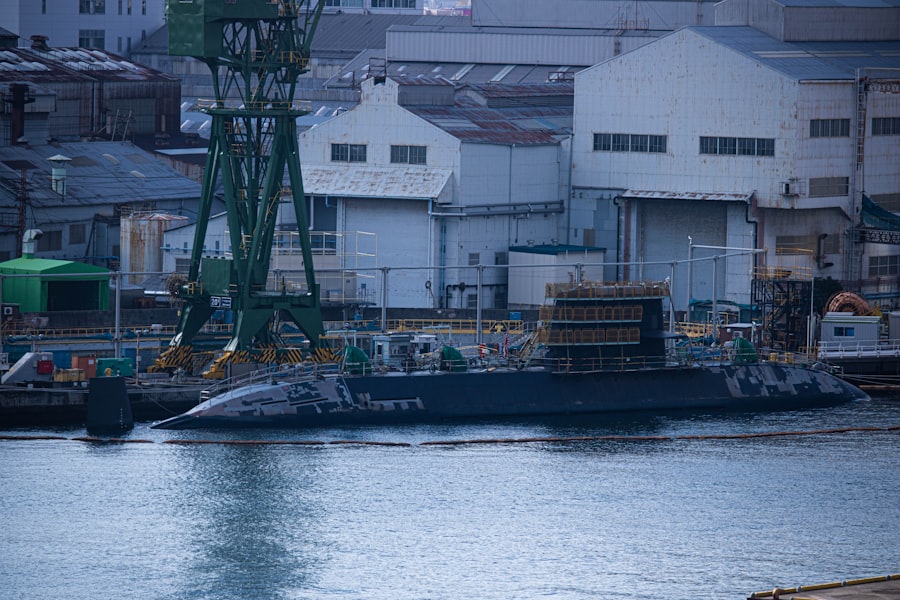
While SSBNs were the ultimate deterrent, it was the attack submarines (SSNs), often referred to as “hunter-killers,” that engaged in the direct “cat and mouse” game. Their mission was diverse: escorting friendly SSBNs, tracking enemy SSBNs, gathering intelligence, and, if required, engaging enemy surface fleets and other submarines.
The Art of Tracking and Evasion
The core of the hunter-killer mission was the protracted tracking of adversary submarines. This required immense patience, skill, and an understanding of oceanography.
- Slow, Silent Maneuvering: SSNs would often operate at extremely low speeds, sometimes barely making headway, to minimize their own noise signature while maximizing the sensitivity of their passive sonar. A single, ill-timed maneuver could betray their position.
- The “Flank Speed” Dilemma: While nuclear submarines could achieve impressive speeds, doing so generated significant noise, making them vulnerable. The decision to accelerate or maneuver aggressively was a calculated risk, often taken only when a suspected contact was attempting to evade.
- Deception Tactics: Submariners employed various deception tactics, such as releasing noisemakers or changing course abruptly, to mislead tracking units. These were the underwater equivalent of smoke and mirrors, aiming to sow confusion in the enemy’s acoustic picture.
- The ‘Weenie Maneuver’: This informal term referred to a sudden, coordinated turn by a formation of ships or submarines designed to confuse a pursuing submarine’s sonar.
The Psychological Toll of the Depths
The “cat and mouse” game imposed immense psychological stress on the crews involved. The prolonged periods of silence, the constant threat of detection, and the awareness of the immense destructive power at their fingertips created a unique and demanding environment.
- Hyper-Vigilance: Sonar operators, in particular, bore a heavy burden, listening for hours for the faintest acoustic signatures that could betray an adversary or confirm a contact. Fatigue could have catastrophic consequences.
- Isolation and Confinement: Living in cramped, artificial environments for months on end, deprived of natural light and fresh air, tested the mental fortitude of even the most dedicated sailors.
- The Stakes: Every decision, every maneuver, carried the weight of potential nuclear conflict. This awareness undoubtedly shaped the conduct of operations beneath the waves.
Naval Espionage and Intelligence Gathering: The Silent Spies

Beyond direct engagement, submarines played a crucial role in naval espionage and intelligence gathering. Their ability to operate covertly in enemy waters provided invaluable insights into adversary capabilities and intentions.
Undersea Cable Tapping
One of the most audacious forms of submarine espionage involved tapping undersea communication cables. American submarines, notably USS Halibut (SSN-587), were instrumental in operations like Project Azorian, which aimed to recover a sunken Soviet submarine, and more routinely, in tapping Soviet underwater communication lines. This provided a treasure trove of intelligence, offering a direct window into Soviet military and political communications.
- Technological Ingenuity: These operations required specialized equipment and deep-sea diving capabilities, pushing the boundaries of underwater engineering. Divers would work in pitch black conditions, at immense depths, to install and maintain the tapping devices.
- The Risk Factor: Such missions were fraught with peril. Detection would not only jeopardize the submarine and its crew but could also escalate diplomatic tensions significantly.
Surveillance of Enemy Naval Bases
Submarines would routinely conduct close-in surveillance of enemy naval bases, monitoring ship movements, identifying new platforms, and mapping defensive deployments. This “eyes-on” intelligence was critical for understanding the adversary’s operational patterns and potential threats.
- Periscope Depth Incursions: These risky maneuvers involved bringing the submarine close to the surface, raising its periscope, and gathering visual or electronic intelligence without being detected by surface patrols or shore-based sensors. This was often done at night or in adverse weather conditions.
- Sensor Saturation: Enemy ports and choke points were often heavily monitored. Submarines operating in these areas had to be exceptionally quiet and rely on advanced electronic warfare capabilities to avoid detection.
The Cold War era was marked by a tense and intricate submarine cat and mouse game, where both the United States and the Soviet Union engaged in a relentless pursuit beneath the waves. This underwater rivalry not only showcased advancements in naval technology but also highlighted the strategic importance of stealth and intelligence gathering. For a deeper understanding of the tactics employed during this period, you can explore a related article that delves into the complexities of submarine warfare by visiting In the War Room.
The Legacy of the Underwater Cold War
| Metric | Description | Cold War Context |
|---|---|---|
| Number of Submarines | Total active submarines involved in cat and mouse operations | US and USSR each operated hundreds of submarines, including nuclear and diesel-electric types |
| Detection Range (km) | Average sonar detection range during underwater tracking | Typically 5-15 km depending on technology and ocean conditions |
| Average Engagement Duration (hours) | Time spent tracking or evading an enemy submarine | Ranged from several hours to multiple days in some cases |
| Stealth Technology Advances | Improvements in noise reduction and hull design | Introduction of anechoic tiles and quieter propulsion systems in the 1970s-80s |
| Number of Recorded Encounters | Documented cat and mouse submarine incidents | Dozens of known incidents between US and Soviet submarines |
| Depth Capability (meters) | Maximum operational depth of submarines | Typically 200-300 meters for diesel subs, up to 400+ meters for nuclear subs |
| Speed (knots) | Maximum submerged speed of submarines | Diesel-electric: 20-25 knots; Nuclear: 30+ knots |
Although the Cold War has officially ended, the lessons learned and technologies developed during the “Submarine Cat and Mouse” era continue to shape modern naval strategy. The emphasis on stealth, advanced sonar, anti-submarine warfare, and the psychological fortitude of submariners remains central to contemporary underwater operations.
Enduring Strategic Importance
Submarines, particularly SSBNs, remain a vital component of strategic nuclear deterrence for several nations. The ability to project power globally in a concealed manner, and to strike from unforeseen vectors, continues to be a cornerstone of national security. The stealth technology pioneered during the Cold War has evolved, making modern submarines even harder to detect.
- Anti-Submarine Warfare (ASW) Evolution: The techniques and technologies developed to hunt Cold War submarines have been continually refined. Modern ASW platforms, including aircraft, surface ships, and other submarines, employ advanced sonars, magnetic anomaly detectors (MAD), and sophisticated data fusion techniques to detect and track the quietest of targets.
- The Human Element: The training and discipline of submarine crews continue to be paramount. The skills of sonar operators, navigators, and tactical officers, honed over decades of underwater practice, are still irreplaceable. The “silent service” remains that way because of the dedication and expertise of its personnel.
The “Submarine Cat and Mouse” game of the Cold War was a testament to human ingenuity and resilience in the face of existential dread. In the vast, dark expanse of the world’s oceans, a hidden war was waged, not with explosions and open conflict, but with silence, stealth, and an unwavering commitment to strategic advantage. The echoes of that silent struggle continue to resonate in the strategic thinking of naval powers today, a stark reminder of the profound impact of underwater warfare on global geopolitics.
FAQs
What was the Cold War submarine cat and mouse game?
The Cold War submarine cat and mouse game referred to the strategic underwater maneuvers and surveillance operations conducted by the United States and the Soviet Union. Both sides used submarines to track, shadow, and sometimes evade each other in an effort to gather intelligence and maintain naval superiority.
Why were submarines important during the Cold War?
Submarines were crucial during the Cold War because they provided stealthy platforms for nuclear deterrence, intelligence gathering, and covert operations. Their ability to operate undetected underwater made them key assets in maintaining a balance of power between the superpowers.
What types of submarines were primarily involved in these cat and mouse games?
The primary submarines involved were nuclear-powered attack submarines (SSNs) and ballistic missile submarines (SSBNs). The U.S. Navy’s Los Angeles-class and the Soviet Navy’s Victor and Alfa classes were among the most notable participants in these underwater encounters.
How did technology influence submarine tactics during the Cold War?
Advancements in sonar, stealth technology, and underwater communication significantly influenced submarine tactics. Both sides developed quieter propulsion systems and improved detection equipment, leading to increasingly sophisticated tracking and evasion techniques.
Did any submarine incidents occur as a result of these cat and mouse games?
Yes, several incidents occurred, including collisions between submarines and near-detection events that heightened tensions. Notable examples include the 1986 collision between the U.S. submarine USS Augusta and the Soviet submarine K-219, highlighting the risks inherent in these underwater confrontations.