The Cold War began following World War II’s conclusion, characterized by fundamental shifts in global power dynamics and competing ideologies. The wartime partnership between the United States and the Soviet Union, formed to defeat Nazi Germany and Imperial Japan, deteriorated as the conflict ended. Disagreements over Europe’s future governance became increasingly clear: the United States promoted democratic institutions and capitalist economies, while the Soviet Union aimed to spread communist ideology throughout the region.
These ideological differences created the foundation for decades of international tension and competition. Following their emergence as superpowers, the United States and Soviet Union pursued conflicting objectives across multiple continents. The partition of Germany into occupation zones and the installation of communist governments throughout Eastern Europe deepened the rift between the two nations.
American policymakers interpreted these actions as threats to democratic and capitalist systems, leading to containment strategies designed to limit Soviet expansion. The Truman Doctrine and Marshall Plan served as key instruments in this approach, providing economic and military support to Western European nations to prevent communist influence. These developments established the conditions for an extended period defined by ideological competition, economic rivalry, and military tension.
The documentary reveals the shocking story of a KGB mole who infiltrated the highest levels of government.
Key Takeaways
- The Cold War began from post-World War II tensions between the US and USSR, leading to ideological and geopolitical rivalry.
- Nuclear arms buildup and the Space Race symbolized the intense competition for technological and military superiority.
- Proxy wars in Korea and Vietnam exemplified indirect conflicts fueled by Cold War tensions.
- Key crises like the Cuban Missile Crisis and the Berlin Wall highlighted the dangers and divisions of the era.
- The Cold War ended with the collapse of the Soviet Union, leaving a lasting impact on global politics and military alliances.
The Arms Race and Nuclear Weapons
The Cold War was defined by an intense arms race between the United States and the Soviet Union, with both nations striving to achieve military superiority. This competition was not merely about conventional weapons; it escalated into a race for nuclear armament that would shape international relations for decades. The development of atomic bombs during World War II had already demonstrated the devastating potential of nuclear weapons, and both superpowers recognized that possessing such capabilities was essential for national security and global influence.
As the 1950s progressed, the arms race intensified, with each side amassing vast arsenals of nuclear weapons. The doctrine of Mutually Assured Destruction (MAD) emerged as a chilling reality; both nations understood that any nuclear conflict would result in catastrophic consequences for all involved. This precarious balance of power created a tense atmosphere, where the threat of nuclear annihilation loomed large over international relations.
The establishment of various treaties, such as the Nuclear Non-Proliferation Treaty (NPT) in 1968, aimed to curb the spread of nuclear weapons and promote disarmament, yet the underlying competition continued unabated.
The Space Race

The Space Race was another significant aspect of Cold War rivalry, symbolizing technological prowess and national prestige. It began in earnest with the launch of Sputnik by the Soviet Union in 1957, marking humanity’s first venture into space. This event sent shockwaves through the United States, which perceived it as a direct challenge to its scientific and technological superiority.
In response, the U.S. government ramped up its investment in science and education, leading to the establishment of NASA and an ambitious program aimed at landing a man on the Moon. The competition reached its zenith with the Apollo 11 mission in 1969 when American astronauts successfully landed on the lunar surface.
This achievement not only showcased American ingenuity but also served as a powerful propaganda tool during a time of intense ideological struggle. The Space Race was more than just a contest for technological supremacy; it represented a broader struggle for influence and legitimacy on the global stage. As both superpowers continued to push the boundaries of space exploration, they also laid the groundwork for future cooperation in scientific endeavors, albeit after years of fierce competition.
Proxy Wars and Military Interventions
Throughout the Cold War, both superpowers engaged in numerous proxy wars and military interventions as they sought to expand their influence without direct confrontation. These conflicts often played out in developing nations where local factions aligned themselves with either the United States or the Soviet Union. The Korean War (1950-1953) is one of the most notable examples, where North Korea, backed by China and the Soviet Union, clashed with South Korea, supported by U.S.-led United Nations forces.
This conflict solidified the division of Korea and set a precedent for future interventions. In addition to Korea, other regions became battlegrounds for Cold War rivalries. The Vietnam War exemplified this dynamic, as North Vietnam received support from the Soviet Union and China while South Vietnam was backed by the United States.
The war resulted in significant loss of life and had profound implications for U.S. foreign policy.
These proxy wars not only exacerbated regional tensions but also contributed to a global environment characterized by instability and conflict.
The Cuban Missile Crisis
| Documentary Title | Year Released | Duration (minutes) | Main Focus | Production Company | Viewer Rating (out of 10) |
|---|---|---|---|---|---|
| The Cold War: A New History | 2018 | 90 | Global political tensions and nuclear arms race | History Channel | 8.5 |
| Cold War Secrets | 2015 | 60 | Espionage and intelligence operations | BBC Documentary | 8.0 |
| Vietnam: The Cold War Battle | 2017 | 120 | Vietnam War and Cold War implications | National Geographic | 8.7 |
| Cold War at Sea | 2019 | 75 | Naval confrontations during the Cold War | Smithsonian Channel | 7.9 |
| The Berlin Wall: Cold War Divide | 2020 | 85 | History and impact of the Berlin Wall | PBS | 8.3 |
The Cuban Missile Crisis of October 1962 stands as one of the most critical moments in Cold War history, bringing the world perilously close to nuclear conflict. The crisis began when U.
intelligence discovered that the Soviet Union was installing nuclear missiles in Cuba, just 90 miles from American shores.
This revelation triggered a tense standoff between President John F. Kennedy and Soviet Premier Nikita Khrushchev, as both leaders grappled with how to respond to this provocative act. In an effort to contain the threat, Kennedy imposed a naval blockade around Cuba and demanded the removal of the missiles.
The ensuing days were marked by high-stakes negotiations and public posturing, with both sides aware that any miscalculation could lead to catastrophic consequences. Ultimately, a resolution was reached when Khrushchev agreed to dismantle the missiles in exchange for a U.S. commitment not to invade Cuba and a secret agreement to remove American missiles from Turkey.
The crisis underscored the dangers of nuclear brinkmanship and highlighted the need for improved communication between superpowers to prevent future confrontations.
The Berlin Wall
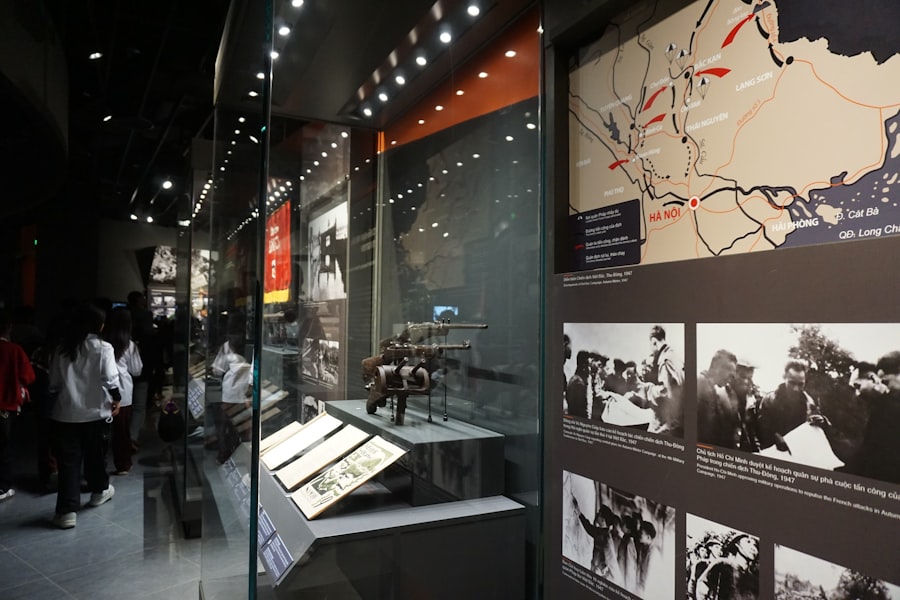
The construction of the Berlin Wall in 1961 became a powerful symbol of Cold War division and ideological conflict. Following World War II, Berlin had been divided into East and West, with East Berlin falling under Soviet control while West Berlin remained a bastion of Western democracy. As economic conditions deteriorated in East Germany, many citizens sought refuge in West Berlin, leading to a mass exodus that threatened the stability of the communist regime.
In response to this crisis, East German authorities erected the Berlin Wall overnight on August 13, 1961, effectively sealing off East Berlin from its western counterpart. The wall became a physical manifestation of the Iron Curtain that separated Eastern and Western Europe. It not only restricted movement but also served as a stark reminder of the ideological divide that characterized the Cold War era.
Over time, it became a focal point for protests against communist oppression and a symbol of hope for those yearning for freedom.
The formation of military alliances during the Cold War further entrenched divisions between East and West. In 1949, the North Atlantic Treaty Organization (NATO) was established as a collective defense pact among Western nations, primarily led by the United States. NATO’s primary purpose was to deter Soviet aggression in Europe by ensuring that an attack on one member would be considered an attack on all.
In response to NATO’s formation, the Soviet Union established the Warsaw Pact in 1955, uniting Eastern Bloc countries under its influence. This alliance served not only as a military counterbalance to NATO but also as a means for Moscow to maintain control over its satellite states. The existence of these two opposing alliances heightened tensions and solidified military postures on both sides, leading to an arms race that would define much of the Cold War period.
Espionage and Intelligence Operations
Espionage played a crucial role in shaping Cold War dynamics as both superpowers sought to gain an advantage through intelligence gathering and covert operations. The Central Intelligence Agency (CIA) emerged as a key player for the United States, conducting operations aimed at undermining communist regimes and supporting anti-communist movements worldwide. Notable examples include covert actions in Iran (1953) and Guatemala (1954), where U.S.-backed coups sought to install favorable governments.
On the other side, the KGB served as the Soviet Union’s primary intelligence agency, engaging in espionage activities aimed at infiltrating Western governments and gathering sensitive information. High-profile spy cases, such as those involving Julius and Ethel Rosenberg or Aldrich Ames, highlighted the pervasive nature of espionage during this era. Both sides engaged in disinformation campaigns and psychological warfare to manipulate public perception and undermine each other’s credibility.
The Vietnam War
The Vietnam War stands out as one of the most contentious conflicts during the Cold War era, deeply affecting American society and foreign policy. Beginning in earnest in the late 1950s and escalating throughout the 1960s, this war pitted North Vietnam—backed by communist allies—against South Vietnam, which received substantial support from the United States. The U.S.’s involvement was driven by its commitment to containing communism under the Domino Theory; it feared that if Vietnam fell to communism, neighboring countries would follow suit.
As American troops were deployed in increasing numbers, public opposition to the war grew significantly within the United States. Graphic media coverage brought images of violence into living rooms across America, leading to widespread protests against what many viewed as an unjust conflict. The war ultimately ended in 1975 with North Vietnam’s victory; this outcome not only marked a significant defeat for U.S.
foreign policy but also left lasting scars on Vietnamese society and American consciousness.
The Korean War
The Korean War (1950-1953) was another pivotal conflict that exemplified Cold War tensions through direct military engagement between opposing ideologies. Following Japan’s defeat in World War II, Korea was divided along the 38th parallel into two separate states: North Korea (supported by China and the Soviet Union) and South Korea (backed by U.S.-led United Nations forces). When North Korea invaded South Korea in June 1950, it ignited a brutal conflict that would last three years.
The war saw significant military engagements and shifting front lines as both sides fought fiercely for control over the Korean Peninsula. Ultimately, it ended in an armistice rather than a formal peace treaty; thus, Korea remains divided to this day along one of the most heavily militarized borders in the world—the Demilitarized Zone (DMZ). The Korean War solidified U.S.
commitments to containing communism in Asia while also highlighting the complexities of international alliances during this tumultuous period.
The End of the Cold War and its Legacy
The Cold War began to wind down in the late 1980s due to various factors including economic stagnation within the Soviet Union and growing calls for reform from Eastern European nations. Mikhail Gorbachev’s policies of glasnost (openness) and perestroika (restructuring) aimed at revitalizing Soviet society but inadvertently accelerated demands for independence among satellite states. As Eastern Europe witnessed waves of revolutions leading to democratic transitions—most notably in Poland with Solidarity’s rise—this momentum contributed significantly to weakening Soviet control.
By 1991, with Gorbachev’s resignation following a failed coup attempt and subsequent dissolution of the Soviet Union itself, an era came to an end. The Cold War’s legacy continues to shape contemporary geopolitics; issues such as nuclear proliferation remain pressing concerns while former Eastern Bloc countries navigate their identities within an increasingly interconnected world order. Ultimately, understanding this complex history is essential for comprehending current international relations dynamics rooted in decades-long rivalries and ideological struggles.
For those interested in exploring the intricate dynamics of military history during the Cold War, the documentary “Cold War: A Military History” provides a comprehensive overview of the geopolitical tensions and military strategies that defined the era. To further enhance your understanding, you can read a related article that delves into the various conflicts and military operations that shaped this period. Check it out here: Military History Insights.
WATCH THIS 🛑 SHOCKING: The KGB Mole Who Made Every Soviet Submarine Visible
FAQs
What is a military history documentary about the Cold War?
A military history documentary about the Cold War explores the military strategies, conflicts, and events that occurred during the Cold War period, roughly from 1947 to 1991. It covers the rivalry between the United States and the Soviet Union, including proxy wars, nuclear arms race, espionage, and key military operations.
What were the main military conflicts during the Cold War?
The main military conflicts during the Cold War included the Korean War, the Vietnam War, the Soviet-Afghan War, and various proxy wars in Africa, Latin America, and Asia. These conflicts were often indirect confrontations between the US and the USSR, avoiding direct military engagement between the two superpowers.
Why is the Cold War significant in military history?
The Cold War is significant because it shaped modern military strategy, technology, and international relations. It led to the development of nuclear weapons, the concept of deterrence, and the formation of military alliances like NATO and the Warsaw Pact. The Cold War also influenced global politics and conflicts for nearly half a century.
What types of military technology were developed during the Cold War?
During the Cold War, significant advancements were made in nuclear weapons, intercontinental ballistic missiles (ICBMs), submarines, spy satellites, jet aircraft, and electronic warfare. Both the US and the USSR invested heavily in developing sophisticated military technology to maintain strategic superiority.
How do military history documentaries about the Cold War present information?
These documentaries typically use archival footage, expert interviews, declassified documents, and reenactments to present a detailed and factual account of Cold War military events. They aim to provide context, explain complex strategies, and highlight the global impact of the Cold War military rivalry.
Where can I watch military history documentaries about the Cold War?
Military history documentaries about the Cold War can be found on streaming platforms like Netflix, Amazon Prime, and YouTube. They are also available on specialized history channels such as the History Channel, National Geographic, and PBS.
Who are some notable historians or experts featured in Cold War military documentaries?
Notable historians and experts often featured include John Lewis Gaddis, Melvyn P. Leffler, Richard Rhodes, and historians affiliated with military institutions or universities specializing in Cold War studies.
What role did espionage play in the Cold War military history?
Espionage was a critical component of Cold War military history, involving intelligence gathering, covert operations, and counterintelligence efforts by both the US and the USSR. Spy agencies like the CIA and KGB played significant roles in shaping military and political strategies during the period.