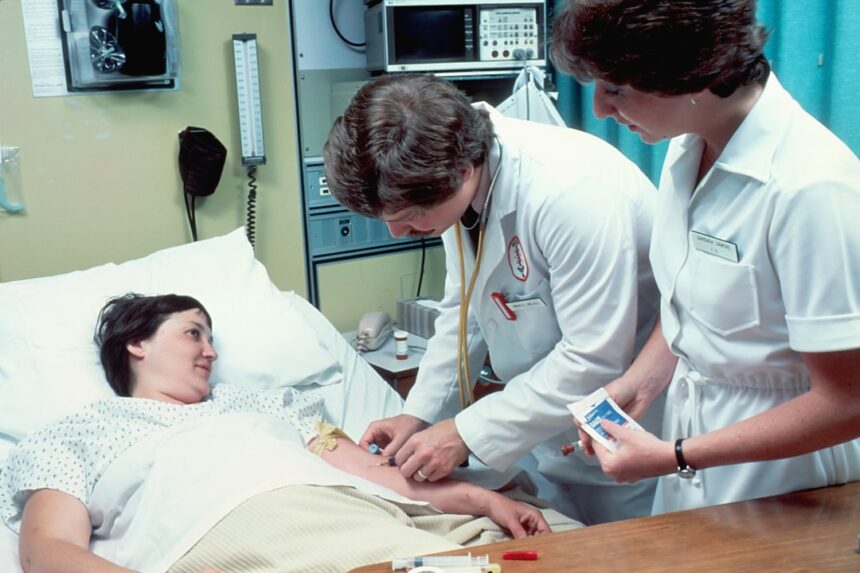
Storing medical isotopes is quite a puzzle, and it’s not something you can just wing. The main challenge boils down to a few key things: they’re radioactive, they decay over time, and they’re essential for treatments and diagnostics, meaning we need them available when needed without compromising safety. It’s a delicate balancing act that involves specialized knowledge and infrastructure.
Medical isotopes, at their core, are atoms with an unstable nucleus. This instability is what makes them useful – they emit radiation. But this same property is precisely what makes them a storage headache.
Radioactivity: The Constant Concern
Every medical isotope is radioactive, meaning it spontaneously decays, releasing energy in the form of particles or electromagnetic waves. This radiation can be harmful if not properly contained.
Alpha, Beta, and Gamma Radiation
Understanding the type of radiation emitted is crucial. Alpha particles are heavy and short-ranged, easily stopped by a sheet of paper. Beta particles are lighter and more penetrating than alphas but can still be stopped by a few millimeters of aluminum. Gamma rays are the most penetrating, essentially high-energy X-rays that require thick shielding, like lead or concrete, to attenuate significantly. The health risks associated with each type of radiation dictate the necessary shielding and handling protocols.
Half-Life: The Ticking Clock
Perhaps the most defining characteristic impacting storage is an isotope’s half-life. This is the time it takes for half of a radioactive sample to decay. Half-lives vary wildly, from fractions of a second to millions of years. This directly influences how long an isotope needs to be stored and managed.
Short-Lived Isotopes: The Race Against Time
Many of the most commonly used diagnostic isotopes, like Technetium-99m (⁹⁹ᵐTc), have half-lives measured in hours. This means they must be produced very close to their point of use, often at dedicated radiopharmacies or even on-site at larger hospitals. Storage is essentially a waiting game for their activity to decay to negligible levels.
Medium and Long-Lived Isotopes: A Longer Commitment
Isotopes used in treatments, such as Iodine-131 (¹³¹I) for thyroid cancer or Cobalt-60 (⁶⁰Co) for radiotherapy, have half-lives ranging from days to years. This requires more robust and long-term storage solutions, often involving specialized facilities that can safely house them for extended periods.
Medical isotopes are crucial for various diagnostic and therapeutic procedures in modern medicine; however, their storage poses significant challenges due to their radioactive nature and short half-lives. As discussed in the article on the complexities of isotope management, the inability to store these isotopes for extended periods necessitates a continuous supply chain to ensure their availability for medical use. For more insights on this topic, you can read the related article here: Understanding the Challenges of Medical Isotope Storage.
The Storage Environment: More Than Just a Shelf
Storing radioactive materials isn’t like putting food in a cupboard. It involves a highly controlled environment designed to contain radiation and manage the physical properties of the isotopes.
Shielding: Building the Barrier
The primary concern for safe storage is shielding. The type and thickness of shielding depend entirely on the isotope’s radioactivity and radiation type.
Lead Shielding: The Go-To
Lead is a dense material that’s very effective at stopping gamma rays. Storage containers for many isotopes are made of lead or incorporate lead lining. The thicker the lead, the more radiation it absorbs.
Concrete and Other Materials
For extremely high-activity sources, such as those used in brachytherapy or industrial radiography, concrete bunkers or specialized casks are employed. These provide substantial mass to attenuate the radiation. Water and paraffin wax can also be used to slow down and absorb neutrons, if present.
Ventilation and Containment: Keeping it Localized
Radioactive materials can also pose a hazard if they become airborne, either as dust or gas. Therefore, storage areas require specialized ventilation and containment systems.
Fume Hoods and Glove Boxes
For handling smaller quantities of potent isotopes, fume hoods and glove boxes are standard. These sealed environments prevent any airborne radioactive particles from escaping into the general workspace.
Air Filtration Systems
Storage facilities often employ multi-stage HEPA (High-Efficiency Particulate Air) filters to trap any potentially radioactive particles before the air is exhausted.
Temperature and Humidity Control: Beyond Radiation
While radioactivity is the main focus, other environmental factors can also impact isotope stability and safety.
Preventing Degradation
Some isotopes, particularly those in liquid form or attached to biological molecules, can degrade over time if not stored at appropriate temperatures. Refrigeration or freezing might be necessary.
Minimizing Contamination Risk
Controlling humidity can help prevent corrosion of storage containers and reduce the risk of radioactive contamination spreading.
Regulatory Hurdles: Navigating the Maze

The storage of medical isotopes is heavily regulated by national and international bodies. Compliance isn’t optional; it’s a fundamental requirement for safety and security.
Licensing and Permits: The Official Green Light
Operating any facility that stores radioactive materials requires specific licenses and permits from regulatory agencies. This process involves rigorous inspections and demonstrations of safety protocols.
Understanding Specific Regulations
Different countries have their own regulatory frameworks, often overseen by agencies like the Nuclear Regulatory Commission (NRC) in the US or similar bodies elsewhere. These regulations cover everything from facility design to waste disposal.
Security: Preventing Misuse
Given the potential for certain isotopes to be misused, security is a paramount concern. Storage facilities must have robust security measures in place to prevent unauthorized access or theft.
Access Control and Monitoring
This includes physical security measures like locked doors, security guards, and surveillance systems, as well as strict access control protocols to ensure only authorized personnel can reach the stored isotopes.
Inventory Management: Knowing What You Have
Meticulous inventory management is critical. Every source of radioactive material must be accounted for at all times, with records detailing its acquisition, use, and disposal.
The Logistics of Supply Chains: A Delicate Dance
The inherent decay of isotopes, coupled with stringent storage requirements, creates a complex logistical challenge for ensuring a steady supply to medical facilities.
Just-in-Time Production and Delivery
For short-lived isotopes like ⁹⁹ᵐTc, the concept of “just-in-time” production and delivery is essential. These isotopes are often produced at cyclotrons or nuclear reactors and then rapidly transported to radiopharmacies or hospitals for processing into medical imaging agents.
The Role of Radiopharmacies
Radiopharmacies are specialized facilities that receive radioactive precursors and then synthesize the final radiopharmaceuticals used in patients. Their proximity to hospitals and efficient workflow are vital.
Transportation Challenges
Transporting radioactive materials is a highly specialized and regulated process itself, requiring shielded containers and licensed carriers. Any delay can render a batch unusable.
Maintaining Stocks of Longer-Lived Isotopes
For isotopes with longer half-lives used in treatments, the challenge shifts to maintaining safe and secure long-term storage. This requires dedicated storage facilities that can hold materials for months or years.
Strategic Stockpiling
Hospitals or regional centers might maintain strategic stockpiles of certain longer-lived isotopes to ensure availability during emergencies or disruptions in the supply chain.
Disposal of Spent Isotopes: The End of the Line
Once an isotope has decayed sufficiently or is no longer needed, it must be disposed of safely. This is a highly regulated process.
Decay-in-Storage
For many short-lived isotopes, the most common disposal method is “decay-in-storage.” They are safely stored in designated areas until their radioactivity has dropped to background levels, at which point they can be disposed of as regular waste (though often still with some restrictions).
Specialized Waste Disposal Facilities
More highly radioactive or long-lived isotopes require disposal at licensed, specialized waste management facilities. This can involve deep geological repositories for the most hazardous materials.
Medical isotopes play a crucial role in diagnostic imaging and cancer treatment, but their short half-lives pose significant challenges for storage and distribution. This limitation is explored in detail in a related article that discusses the complexities of managing these isotopes effectively. For a deeper understanding of the intricacies involved, you can read more about it in this insightful piece on medical isotopes. The need for timely delivery and the inability to store these isotopes for extended periods highlight the importance of efficient production and transportation systems in the healthcare sector.
Innovations and Future Directions: Looking Ahead
| Reasons | Explanation |
|---|---|
| Decay | Medical isotopes have a short half-life and decay rapidly, making long-term storage impractical. |
| Radiation | Medical isotopes emit radiation, which can be harmful if not properly contained and managed. |
| Regulatory requirements | There are strict regulations and guidelines for the storage and handling of medical isotopes due to their radioactive nature. |
The challenges of storing medical isotopes are not static. Ongoing research and technological advancements are continuously seeking to improve safety, efficiency, and accessibility.
Minimizing Decay Through Proximity
The push for decentralizing isotope production closer to the point of use is a significant trend. Small-scale cyclotrons are becoming more common at major medical centers, reducing reliance on distant producers and mitigating the impact of decay.
On-Site Cyclotrons
Hospitals equipped with their own cyclotrons can produce short-lived isotopes like Fluorine-18 (¹⁸F) on demand, significantly improving turnaround times for diagnostic imaging like PET scans.
Improved Shielding Technologies
Researchers are continually exploring new materials and designs for more efficient and lighter shielding solutions. This can make handling and transport safer and more practical.
Composite Materials
Development of advanced composite materials could offer better radiation attenuation in a smaller footprint compared to traditional lead or concrete.
Enhanced Monitoring and Control Systems
Advancements in sensors and data analytics are leading to more sophisticated real-time monitoring of radiation levels, temperature, and other environmental factors in storage areas.
Remote Monitoring and Automation
Automated systems can alert personnel to deviations from safe parameters, and remote monitoring allows for oversight without direct exposure.
Novel Isotope Production Methods
Research into producing isotopes without relying on traditional nuclear reactors or large cyclotrons could revolutionize supply chains for specific isotopes.
Accelerator-Based Production
New accelerator technologies and targets are being explored to generate a wider range of isotopes more efficiently.
The challenges are significant, but the dedication of scientists, engineers, and regulatory bodies ensures that these vital medical tools remain accessible and safe for patient care. It’s a constant effort, a quiet but critical component of modern medicine.

Why Modern Medicine Can’t Store Tomorrow
FAQs
1. What are medical isotopes?
Medical isotopes are radioactive substances used in nuclear medicine to diagnose and treat various medical conditions, such as cancer and heart disease.
2. Why can’t medical isotopes be stored?
Medical isotopes have a short half-life, which means they decay rapidly and lose their effectiveness. This makes it impractical to store them for extended periods of time.
3. What is the impact of not being able to store medical isotopes?
The inability to store medical isotopes means that they must be produced on an as-needed basis, which can lead to supply shortages and logistical challenges for medical facilities.
4. How are medical isotopes produced and used in medical procedures?
Medical isotopes are typically produced in nuclear reactors or particle accelerators. They are then used in procedures such as PET scans, SPECT scans, and targeted radiation therapy to diagnose and treat various medical conditions.
5. Are there any alternative solutions to the storage issue of medical isotopes?
Researchers are exploring alternative production methods and technologies to address the storage issue of medical isotopes. These include the development of new production techniques and the use of alternative isotopes with longer half-lives.