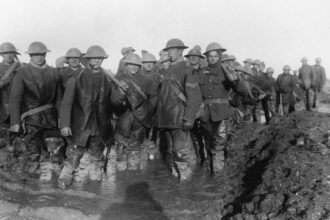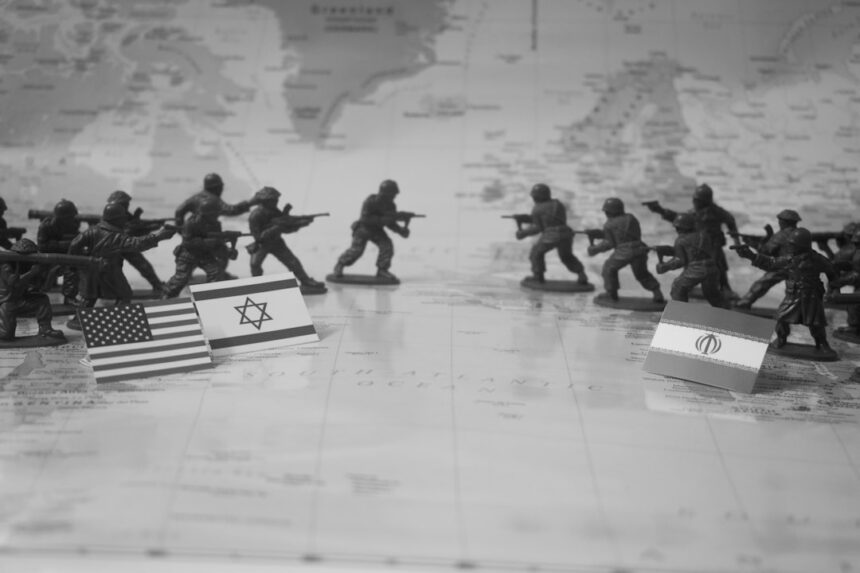
The Arab-Israeli War of 1948, a cataclysmic event that reshaped the Middle East, was far more than a mere political dispute; it was a brutal and multifaceted military struggle. For decades to come, its echoes would reverberate through subsequent conflicts, embedding themselves in the strategic doctrines and operational experiences of the involved nations. To understand the enduring complexities of the region, a deep dive into the military dimensions of this foundational war is essential. This article aims to provide a comprehensive military history, dissecting the key phases, strategic decisions, and tactical realities that defined this pivotal conflict.
The Arab-Israeli War has a complex military history that continues to shape the geopolitical landscape of the Middle East. For a deeper understanding of the strategies, battles, and key figures involved in these conflicts, you can explore a related article that provides insightful analysis and historical context. To read more about this topic, visit this article.
Prelude to Conflict: The Unfolding Crisis and Mobilization
The seeds of the 1948 war were sown long before the formal declarations of hostilities. The aftermath of World War II, coupled with the United Nations’ Partition Plan for Palestine, ignited a volatile atmosphere. Both sides, sensing the impending confrontation, engaged in a period of intense, albeit often clandestine, military preparation.
The Growing Tensions and Pre-War Clashes
- Escalating Violence Post-UN Partition: The UN’s Resolution 181, recommending the partition of Palestine into separate Arab and Jewish states, was met with fierce opposition from Arab leadership and populations. This political impasse translated into an immediate surge in violence. Haganah, the main Jewish paramilitary organization, and Irgun, a more radical Zionist group, began to consolidate their forces and engage in preemptive strikes against Arab villages and infrastructure. Arab irregulars, often supported by external actors, retaliated, creating a spiral of violence that effectively initiated hostilities before any official declaration.
- Formation and Integration of Jewish Paramilitary Forces: The Jewish community in Palestine had been building its defense capabilities for years. The Haganah, a conscripted militia, was the backbone of this effort. It gradually transitioned from a primarily defensive force to one capable of offensive operations. Alongside the Haganah, the more aggressive Irgun and Lehi (Stern Gang) operated, often independently, undertaking commando-style raids and acts of sabotage. The impending statehood led to a push for greater integration and formalization of these forces, laying the groundwork for the future Israel Defense Forces (IDF). Training regimens became more intensive, and rudimentary logistics and command structures began to take shape.
- Arab Military Preparations and Divisions: The Arab states, while outwardly united in their opposition to the partition, were internally divided and militarily unprepared for a large-scale conflict. The Arab Higher Committee, the political leadership of Palestinian Arabs, lacked a unified military command. Local militias, often poorly trained and equipped, formed the bulk of their initial fighting force. The Arab Legion of Transjordan, under the command of British officers like Sir John Bagot Glubb, was the most professional Arab fighting force. However, its primary objective was to secure territories allocated to the Arab state, particularly the West Bank, rather than a full-scale offensive against the entire Jewish population. Egypt, Syria, Lebanon, and Iraq also began to mobilize their nascent armies, though their primary focus was on border security and projecting an image of solidarity.
The Initial Assaults and the Struggle for Control: May 1948
The declaration of Israel’s independence on May 14, 1948, was immediately followed by the invasion of its territory by neighboring Arab armies. This phase was characterized by the initial shock of the invasion and the desperate defense mounted by the nascent Israeli forces against numerically superior but operationally fragmented Arab armies.
The Invasion and the Battle for Jerusalem
- The Five-Pronged Arab Offensive: The invasion commenced on multiple fronts. The Egyptian army, the largest and best-equipped force, advanced northward from the Sinai, aiming to capture Tel Aviv and link up with other forces. The Transjordanian Arab Legion pushed towards Jerusalem and the central corridor. Syrian, Lebanese, and Iraqi forces attacked from the north and east, aiming to secure border areas and potentially push deeper into Israeli territory. This multi-pronged approach, while impressive on paper, lacked effective coordination.
- The Siege of Jerusalem and its Strategic Importance: Jerusalem, a city with immense religious and political significance for all three Abrahamic faiths, became a central battleground. The Jewish population within Jerusalem, numbering around 100,000, was cut off and besieged by Arab forces. The Haganah, later the IDF, fought tenaciously to maintain supply routes, most notably the precarious “Burma Road,” to sustain the city. Control of Jerusalem was not just a military objective but a symbolic one, with profound implications for the future of both states. The fighting in Jerusalem was often brutal and street-by-street, marked by intense urban warfare.
- Early Israeli Defensive Successes and Setbacks: Despite being outnumbered and outgunned in many areas, Israeli forces, particularly the Haganah, displayed remarkable resilience. They utilized their knowledge of the terrain, their well-organized communication networks, and their motivated fighting spirit to blunt initial Arab advances. However, they also suffered significant setbacks. The loss of the Gush Etzion bloc south of Jerusalem, a cluster of Jewish settlements, was a particularly devastating blow, leading to the surrender of over 120 defenders. The Egyptian advance in the south also posed a grave threat.
The Battle for the Negev and the Northern Front
- Egyptian Advance into the Negev: The Egyptian army’s objective was to cut off the Negev region, isolating the Jewish settlements there and preventing them from joining the nascent state. While they managed to push into the Negev, their advance was slower and less decisive than anticipated, partly due to difficult terrain and determined Israeli resistance.
- Syrian and Lebanese Attacks in the North: The Syrian and Lebanese armies launched attacks along the northern border, attempting to seize strategic positions and settlements. The Israelis, concentrated in defending the central front and Jerusalem, initially struggled to muster sufficient forces to counter these offensives effectively. However, local kibbutzim and settlements often put up fierce resistance, delaying the enemy and inflicting casualties.
The First Truce and the Israeli Reorganization: June-July 1948
The intensity of the initial fighting, coupled with significant casualties on both sides and a growing awareness of their respective limitations, led to international pressure for a ceasefire. The UN-brokered truce, lasting from June 11 to July 9, 1948, proved to be a critical turning point.
The UN Truce and its Impact on Military Operations
- Interruption of Hostilities and International Mediation: Mediators, primarily Count Folke Bernadotte of Sweden, worked to broker a lasting peace. During the truce, arms embargoes were ostensibly in place, though they were unevenly enforced. The truce provided a much-needed respite for exhausted armies.
- Exploiting the Truce for Reorganization and Re-armament: For Israel, the truce was a lifeline. It allowed for the formal establishment of the Israel Defense Forces (IDF) from the amalgamation of the Haganah, Irgun, and Lehi. The IDF underwent a rapid period of professionalization, with the establishment of a General Staff, improved command and control structures, and the creation of new units like the Armored Corps and Air Force. Crucially, the period also saw a significant influx of weapons and equipment, often through clandestine channels, compensating for the initial deficiencies. Jewish communities worldwide played a vital role in procuring these essential supplies.
- Arab Armies’ Missed Opportunities: The Arab armies, in contrast, did not utilize the truce as effectively. Internal rivalries, a lack of centralized command, and a reliance on outdated military structures hampered their ability to reorganize and re-arm to the same extent as the Israelis. They largely remained in their positions, failing to exploit their initial territorial gains.
The Arab-Israeli War has been a pivotal moment in military history, shaping the geopolitical landscape of the Middle East. For those interested in exploring the intricate details of the conflicts and their lasting impacts, a related article can be found at In The War Room, which delves into the strategies and outcomes of various military engagements throughout this tumultuous period. This resource provides valuable insights into the complex dynamics that have influenced the region’s history.
The Ten-Day Offensive and the Shifting Tides: July 1948
| War | Year | Duration | Casualties |
|---|---|---|---|
| 1948 Arab-Israeli War | 1948 | 7 months | Israel: 6,373 killed, 15,000 wounded Arab states: 15,000–20,000 killed, 30,000–40,000 wounded |
| Six-Day War | 1967 | 6 days | Israel: 776 killed, 2,586 wounded Arab states: 15,000–20,000 killed, 30,000–40,000 wounded |
| Yom Kippur War | 1973 | 19 days | Israel: 2,688 killed, 7,250 wounded Arab states: 8,528–20,000 killed, 18,000–35,000 wounded |
With the truce broken, Israel launched a series of well-coordinated offensive operations that dramatically altered the military balance. This period marked a significant shift in momentum, with Israeli forces going on the offensive and achieving substantial territorial gains.
Operation Danny and the Breaking of the Jerusalem Siege
- Targeting the Central Front: Operation Danny, launched on July 9, aimed to break the Arab siege of Jerusalem and secure the vital Tel Aviv-Jerusalem road. The IDF deployed its newly formed armored units and its growing air power effectively. They achieved significant breakthroughs, recapturing Lydda and Ramle, key Arab towns on the Tel Aviv-Jerusalem corridor.
- The Capture of Lydda and Ramle and their Consequences: The capture of Lydda and Ramle led to the displacement of a large number of their Arab inhabitants, an event that remains a deeply contentious issue. Militarily, however, their capture was crucial in reopening the vital supply line to Jerusalem, lifting the siege and reinforcing the city’s defenders.
Operation Dekel and Operation Bromos
- Securing the Galilee: Operation Dekel, launched in northern Israel, aimed to push back Syrian and Lebanese forces and secure Jewish settlements in the Galilee. Israeli forces achieved considerable success, capturing Nazareth, the largest Arab city in the Galilee, and pushing the Arab armies back towards the Lebanese and Syrian borders.
- Consolidating Gains in the South: Operation Bromos, while less extensive than Danny and Dekel, focused on consolidating Israeli gains in the south and probing Egyptian positions. It aimed to disrupt Egyptian supply lines and prepare the ground for further offensives.
The Second Truce and the Final Engagements: Late 1948 – Early 1949
The success of the Ten-Day Offensive again led to international pressure for a ceasefire. The second truce, effective from July 19, 1948, lasted until October. While this truce also saw violations, it ultimately paved the way for the final military engagements of the war.
Renewed Hostilities and the Battles of the Negev
- Egyptian Breakout Attempt and Israeli Response: Following the collapse of the second truce on October 15, Egyptian forces attempted a breakout from the pocket they found themselves in, aiming to re-establish contact with their main forces. This led to Operation Yoav, a decisive Israeli offensive in the Negev.
- Operation Yoav and the Destruction of the Egyptian Pocket: Operation Yoav was a resounding success for the IDF. Israeli forces encircled and destroyed the Egyptian pocket in the western Negev, capturing Beersheba and pushing the Egyptian army back towards the Sinai. This effectively ended the threat from the south.
The Northern Front and the Consolidation of Israeli Territory
- Operation Hiram and the Advance into Lebanon: Operation Hiram, launched on October 29, targeted the remaining Arab forces in northern Israel and southern Lebanon. IDF units advanced rapidly, pushing Lebanese and remnants of Syrian forces back across the international border. This operation secured Israel’s northern frontier and expanded its territory beyond the UN partition lines.
- The Israeli Navy’s Role and the Egyptian Blockade: While primarily a land war, the nascent Israeli Navy also played a role, particularly in coastal operations and the interdiction of Arab shipping. The Egyptian blockade of Israeli shipping was a constant concern, and the Israeli Navy sought to counter this threat.
The Armistice Agreements and the Post-War Landscape
- Negotiations and the Rhodes Armistice Agreements: Following the cessation of major hostilities, armistice agreements were negotiated between Israel and each of its Arab adversaries (Egypt, Transjordan, Lebanon, and Syria) on the island of Rhodes in 1949. These agreements did not constitute formal peace treaties but rather ended the state of war and established the Green Line, the demarcation line between Israeli and Arab territories.
- Territorial Changes and the Palestinian Refugee Crisis: The war resulted in significant territorial gains for Israel, exceeding the boundaries proposed by the UN partition plan. The displacement of hundreds of thousands of Palestinian Arabs, who became refugees, created a profound humanitarian crisis and a central issue in the ongoing Arab-Israeli conflict. The military aspect of the war thus had profound and lasting demographic and political consequences.
The Arab-Israeli War of 1948 was a crucible of military innovation and adaptation. It demonstrated the effectiveness of a motivated and well-organized defense force against numerically superior but often poorly coordinated invaders. The IDF, forged in the fires of this conflict, emerged as a formidable fighting force, its doctrines and operational experiences shaping its future engagements. Understanding the military history of this war is not merely an academic exercise; it is crucial for comprehending the strategic realities that continue to define the complex and often tragic landscape of the Middle East.
The Intelligence System That Won the Six-Day War Before It Began
FAQs
What was the Arab Israeli War?
The Arab Israeli War, also known as the First Arab-Israeli War, was a conflict between the newly declared State of Israel and a military coalition of Arab states, including Egypt, Jordan, Syria, and Iraq. The war began on May 15, 1948, one day after Israel declared its independence, and lasted for approximately one year.
What were the main causes of the Arab Israeli War?
The main causes of the Arab Israeli War were the conflicting claims to the land of Palestine by both Jews and Arabs, the rejection of the United Nations Partition Plan for Palestine by Arab states, and the Arab opposition to the establishment of a Jewish state in the region. Tensions between Jewish and Arab communities had been escalating for years prior to the war.
What were the major battles and events of the Arab Israeli War?
Some of the major battles and events of the Arab Israeli War include the Battle of Jerusalem, the Battle of Haifa, the Siege of Jaffa, and the Operation Hiram. These battles and events were pivotal in shaping the outcome of the war and had significant impacts on the military history of the conflict.
What were the outcomes of the Arab Israeli War?
The outcomes of the Arab Israeli War included the establishment of the State of Israel, the displacement of hundreds of thousands of Palestinian Arabs, and the signing of armistice agreements between Israel and the Arab states. The war also set the stage for future conflicts and ongoing tensions in the region.
How did the Arab Israeli War impact military history?
The Arab Israeli War had a significant impact on military history, as it demonstrated the effectiveness of the Israeli military and its ability to defend itself against multiple Arab armies. The war also highlighted the importance of strategic planning, intelligence, and air power in modern warfare. Additionally, the outcomes of the war shaped the geopolitical landscape of the Middle East for decades to come.