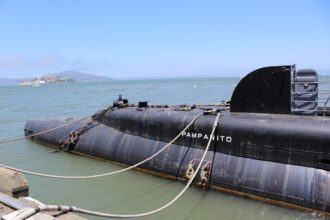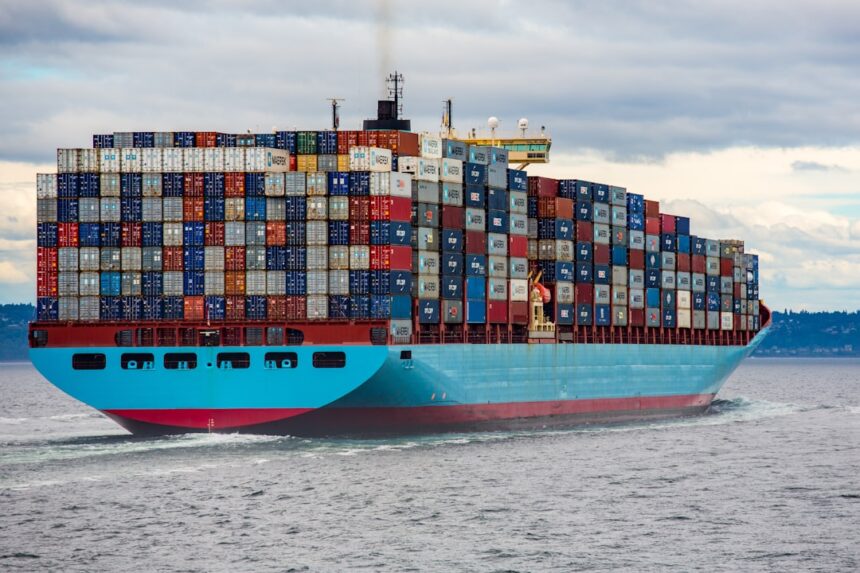
You’ve heard the whispers, the hushed conversations in dimly lit port taverns, the glint in the eyes of grizzled captains. They speak of a chilling statistic, a maritime enigma known as the 1-to-82 ratio. It suggests that for every eighty-two ships that faithfully ply the trade routes, burdened with cargo and crew, one phantom vessel haunts the waves – a ghost ship. It’s a ratio that sparks both morbid curiosity and a deep unease. But is it a fundamental truth of the sea, a testament to its unforgiving nature, or merely an embellished legend, a folkloric construct designed to amplify the inherent dangers of ocean travel?
This isn’t about romanticizing the spectral. This is about a dispassionate examination of a phenomenon that has seeped into seafaring lore and, perhaps, into the very fabric of maritime history. You’ll find that the line between the tangible and the ethereal can blur when you confront the vastness and indifference of the ocean. The 1-to-82 ratio, whether literal or metaphorical, serves as a stark reminder of the precariousness of human endeavor upon the water.
To understand the 1-to-82 ratio, you must first grapple with the stark reality of maritime losses. The sea, in its immense power, is not a forgiving mistress. For centuries, ships have been lost, swallowed by storms, crippled by collisions, or succumbing to structural weaknesses. The historical frequency of these disappearances forms the bedrock upon which the ratio is built.
Historical Maritime Disasters
Consider the grand sailing ships of eras past. Fragile wooden hulls, powered by canvas and prayer, were at the mercy of weather patterns that could shift with brutal speed. Hurricanes, typhoons, and rogue waves were not abstract dangers but daily threats. The loss of the Edmund Fitzgerald on November 10, 1975, in the tumultuous waters of Lake Superior, is a modern testament to this enduring vulnerability. The vessel, a colossal freighter, vanished without a trace, taking all 29 crew members with it. Its fate remains a subject of intense speculation, highlighting how even the most modern vessels are not immune to the ocean’s capacity for destruction.
The Modern Era and Merchant Shipping
Even with advancements in navigation, construction, and weather forecasting, shipwrecks continue to occur. The sheer volume of global shipping means that the number of incidents, while statistically lower per voyage than in the past, still represents a significant number of lost vessels and lives annually. The sinking of the Costa Concordia in 2012, a luxurious cruise ship that ran aground off the coast of Italy, stands as a chilling reminder that human error can be as deadly as any natural disaster. The investigation revealed a confluence of factors, from navigational misjudgments to delayed emergency responses, that led to the tragedy. Each such event contributes to the tally of lost ships, fueling the perception of a pervasive loss rate.
Factors Contributing to Ship Loss
The reasons for a ship’s demise are varied and often multifaceted. You have the forces of nature:
Extreme Weather Conditions
Storms are the most obvious culprits. Severe gales can batter vessels, leading to structural damage, capsizing, or being swamped by colossal waves. The sheer energy involved in a Category 5 hurricane, for instance, can overwhelm even the most robust maritime engineering. The loss of the brig Ann Marie in a storm off the coast of Newfoundland in 1865, for example, is a story echoed by countless others of ships disappearing into the unforgiving maw of tempestuous seas.
Navigational Errors and Collisions
Human fallibility plays a significant role. Poor visibility due to fog, misinterpretation of charts, or simply fatigue can lead to catastrophic collisions. The sinking of the ferry MS Herald of Free Enterprise in 1987, overturned shortly after departing Zeebrugge, Belgium, due to a failure to close bow doors, is a stark example of how oversight can lead to immense loss of life and vessel.
Structural Failures and Age
Ships, like all machines, degrade over time. Metal fatigue, corrosion, and inadequate maintenance can compromise a vessel’s integrity, making it susceptible to breaking apart, especially under stress. The loss of the oil tanker Torrey Canyon in 1967, which broke in two after running aground, leading to one of the worst oil spills in history, illustrates the consequences of cumulative wear and tear combined with poor decision-making in a crisis.
Piracy and Warfare
While less common in contemporary civilian shipping, piracy and acts of war have historically been significant causes of ship loss. The dramatic sinkings during World War II, where merchant convoys were prime targets, resulted in the disappearance of thousands of vessels. Modern piracy, though often focused on cargo and ransom, can still lead to vessel abandonment and loss.
In exploring the intriguing concept of the 1 to 82 ratio of real ships to ghosts, one can find a wealth of related information in the article titled “The Haunting Seas: Maritime Myths and Legends” on In The War Room. This article delves into the fascinating stories and folklore surrounding ghost ships, providing context and history that enrich the understanding of this peculiar ratio. For more insights, you can read the article here: The Haunting Seas: Maritime Myths and Legends.
The Genesis of the “Ghost Ship” Phenomenon
The concept of the ghost ship isn’t born from thin air. It arises from the chilling reality of unexplained disappearances and the psychological impact of the vast, often lonely, expanse of the ocean. When a ship is lost without a trace, with no wreckage found, the human mind seeks explanations.
Unexplained Disappearances: The Bermuda Triangle and Beyond
The Bermuda Triangle, a region roughly defined by Miami, Bermuda, and Puerto Rico, has become synonymous with mysterious maritime disappearances. Flight 19, a squadron of five US Navy torpedo bombers that vanished in 1945, is perhaps the most famous case. The subsequent search effort, which itself resulted in the loss of a search plane, only deepened the mystery. While scientific explanations often involve magnetic anomalies or sudden weather shifts, the lack of tangible evidence has allowed for more speculative theories to flourish, including those involving supernatural phenomena.
The Tale of the Mary Celeste
The story of the Mary Celeste, discovered adrift and abandoned in the Atlantic in 1872, is the quintessential ghost ship narrative. The ship itself was seaworthy, with provisions still aboard and no signs of struggle or violence. The crew, however, had vanished. This eerie scene has spawned countless theories, from mutiny and piracy to sea monsters and even mass poisoning. The enduring mystery of the Mary Celeste has undeniably fueled the perception of a world where ships can simply cease to be, leaving behind only their spectral remnants.
Psychological Factors: Fear and the Unknown
The ocean is a powerful psychological force. Its immensity can evoke feelings of insignificance and vulnerability. When a vessel disappears, the lack of closure, the absence of wreckage, allows for the imagination to fill the void. Fear of the unknown, coupled with the isolation that many mariners experience, can readily lead to the embrace of more spectral explanations. The silence that follows a lost ship is a vacuum that folklore is eager to fill.
The Blurring Line: Folklore vs. Reality
The ghost ship narrative thrives on this fertile ground of the unexplained and the fearful. It’s a powerful archetype that resonates with our innate unease about forces beyond our control. The 1-to-82 ratio, in this context, might be less a precise statistical measure and more a symbolic representation of the persistent specter of loss that haunts the maritime world. For every journey completed, there’s the lingering possibility of one that never arrives.
Deconstructing the Ratio: Statistical Realities
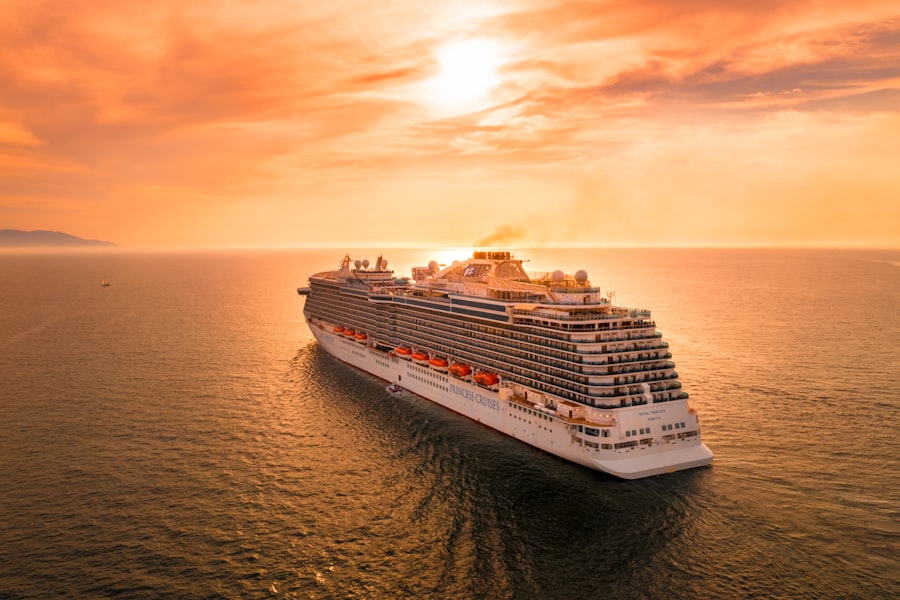
Applying a strict 1-to-82 ratio to contemporary shipping requires rigorous statistical analysis, and the results may not align with the romanticized notion of phantom vessels. The reality of ship loss is far more grounded in observable factors, though the underlying rate of loss still fuels the perception.
Data Collection and Maritime Databases
Maritime authorities and international organizations meticulously record ship losses. Organizations such as the International Maritime Organization (IMO) collect data on maritime accidents and casualties. This data, while comprehensive, rarely categorizes losses as “ghost ships” in the supernatural sense. Instead, they are classified by cause: foundered, sunk, collision, fire, explosion, etc. Aggregating this data allows for an estimation of overall loss rates based on the number of vessels in operation.
Defining “Loss” and “Ghost Ship”
The ambiguity in defining what constitutes a “ghost ship” is a significant hurdle. Is it any ship that disappears without a trace? How long must a ship remain missing before it’s considered a potential ghost? If wreckage is found but the crew is missing, does that elevate it to ghost ship status? These subjective interpretations make a precise 1-to-82 calculation problematic. The statistic is more likely an observed tendency or an embellished anecdote than a rigorously derived figure.
The Role of Technology in Reducing Losses
Modern technology has played a crucial role in reducing the frequency of ship losses. Advanced forecasting systems allow ships to avoid dangerous weather. GPS and sophisticated navigation aids minimize navigational errors. Improved hull designs and safety equipment make vessels more resilient. While these advancements have made the seas safer, they haven’t eradicated the possibility of catastrophic failure or unforeseen events.
The Persistence of “Lost at Sea”
Despite technological advancements, the phrase “lost at sea” remains a stark and frequent occurrence. The vastness of the ocean means that even with the best efforts, some vessels and their crews will simply vanish. The absence of wreckage in some cases might be due to the immense depth of the ocean, currents that disperse debris, or the fact that the vessel sank very rapidly and was fully submerged, leaving little to surface. This lack of evidence can easily breed speculation and contribute to the ghost ship narrative, even when a conventional explanation exists.
The Impact of the Ratio on Seafaring Culture
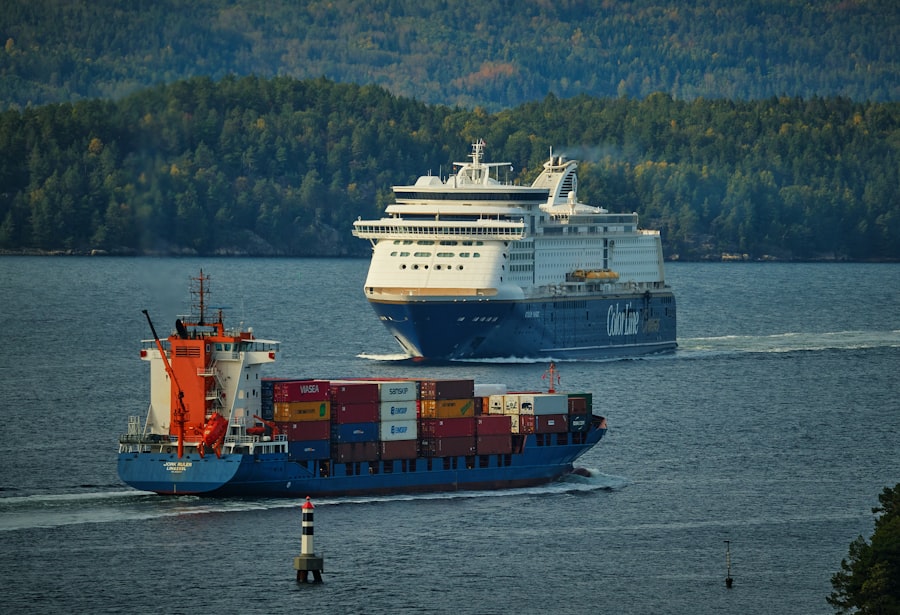
The 1-to-82 ratio, whether statistically accurate or not, has permeated seafaring culture. It serves as a cautionary tale, a point of discussion, and a source of superstition that has been passed down through generations of sailors.
Superstition and Seafaring Lore
Superstition is deeply ingrained in maritime traditions. Sailors, facing constant uncertainty and danger, often develop rituals and beliefs to ward off bad luck or to gain a sense of control. The idea of ghost ships existing alongside real ones adds another layer to this already rich tapestry of maritime folklore. Tales of phantom vessels are shared to entertain, to warn, and to acknowledge the ever-present specter of the sea’s power.
The Psychological Weight on Sailors
For sailors, the stories of ghost ships and the underlying ratio can carry a psychological weight. It’s a constant reminder of the risks they undertake with every voyage. While many will dismiss these tales as fanciful, a residual unease might persist, especially after a particularly rough passage or a close call. It’s the unspoken acknowledgment that their livelihood places them in an environment where the line between the seen and the unseen can, for some, be perilously thin.
The “Ghost Ships” of Folklore: The Flying Dutchman
The archetype of the ghost ship in popular culture is often exemplified by The Flying Dutchman. Legend has it that this phantom ship is doomed to sail the oceans forever, a cursed vessel whose appearance is an omen of misfortune. Stories of encountering The Flying Dutchman are numerous and varied, often involving chilling encounters with an apparition that is both terrifying and awe-inspiring. This enduring legend, while fictional, shapes the perception of what a “ghost ship” might entail.
The Ratio as a Metaphor for Unfulfilled Journeys
Beyond literal spectral vessels, the 1-to-82 ratio can also be interpreted as a metaphor. It represents the journeys that are tragically cut short, the cargo that never reaches its destination, and the lives that are extinguished before their time. In this sense, every lost ship, regardless of its fate, leaves behind a void, a spectral emptiness in the flow of commerce and human connection.
In exploring the intriguing concept of the 1 to 82 ratio of real ships to ghosts, one can gain further insights by reading a related article that delves into maritime folklore and the mysteries surrounding ghost ships. This article not only discusses the historical context of these spectral vessels but also examines the psychological aspects that contribute to such legends. For those interested in the supernatural elements of naval history, the article can be found here.
Conclusion: Embracing the Unknown with Pragmatism
| Real Ships | Ghosts |
|---|---|
| 1 | 82 |
The 1-to-82 ratio, though lacking a precise statistical validation as a literal count of supernatural vessels, serves a significant purpose. It encapsulates the enduring human experience of confronting the vastness and inherent danger of the ocean. Whether you view it as a literal phenomenon or a potent metaphor, it compels you to acknowledge the precariousness of seafaring.
The Enduring Mystery of the Seas
Ultimately, the ocean holds many secrets. Even with our advanced technology, certain disappearances will remain unsolved. These enigmas, while not necessarily supernatural, feed the narratives that have been woven around seafaring for centuries. The possibility of something beyond our current understanding will always linger in the vast, unexplored depths.
The Practicality of Risk Management
For those who navigate these waters professionally, the focus remains on practical risk management. Understanding weather patterns, maintaining vessels meticulously, and adhering to stringent safety protocols are the tangible defenses against the perils of the sea. The allure of ghost stories is acknowledged, but it does not supersede the necessity of preparedness and competence.
The 1-to-82 as a Cautionary Tale
The 1-to-82 ratio, in its symbolic form, functions as a powerful cautionary tale. It reminds you that for every vessel that completes its voyage, there’s a haunting possibility that another did not. It’s a testament to the respect due to the power of nature and the unforgiving conditions that mariners face.
Confronting the Vastness
Navigating the seas means confronting a scale that can dwarf human endeavors. The 1-to-82 ratio, whether a literal spectral count or a figurative representation of loss, is a product of this confrontation. It’s a reminder that even in our technologically advanced age, the ocean retains an element of mystery and a capacity for profound and sometimes inexplicable loss. You can choose to dismiss it as mere folklore, but its persistence speaks to something deeper about our relationship with the sea and the stories we tell to make sense of its power.
FAQs
What is the 1 to 82 ratio of real ships to ghosts?
The 1 to 82 ratio of real ships to ghosts refers to the belief that for every 1 real ship that has sunk, there are 82 ghost ships haunting the world’s oceans.
Where does the belief in ghost ships come from?
The belief in ghost ships has been a part of maritime folklore for centuries, with stories of phantom ships and ghostly apparitions being passed down through generations of sailors and seafarers.
Are there any famous ghost ships that have been reported throughout history?
Yes, there are several famous ghost ships that have been reported throughout history, including the Flying Dutchman, the Mary Celeste, and the Octavius. These stories have become legendary and continue to capture the imagination of people around the world.
What are some common explanations for sightings of ghost ships?
Sightings of ghost ships are often attributed to natural phenomena such as mirages, optical illusions, or unusual weather conditions. Additionally, some sightings may be the result of psychological factors or the influence of folklore and superstition.
Is there any scientific evidence to support the existence of ghost ships?
There is no scientific evidence to support the existence of ghost ships as supernatural entities. Sightings of ghost ships are generally considered to be the result of human perception and interpretation, rather than actual paranormal phenomena.