The whispering leaves of the ancient oak, a sentinel of centuries, stood at the heart of a burgeoning storm. It was not the storm of wind and rain that threatened the borderlands, but a far more insidious tempest, brewing in the hearts of two nations: Aeridor and Veridian. The cause, ostensibly, was a single, magnificent tree, its roots anchoring it firmly on the contested sliver of land that marked their fragile peace. Yet, the oak was merely the focal point, a tangible symbol of deeper, festering resentments and historical grievances.
The frontier between Aeridor and Veridian was not drawn with a single, decisive stroke of a cartographer’s pen. Instead, it was a tapestry woven over generations, a patchwork of historical agreements, forgotten treaties, and encroaching claims. The land in question, a fertile valley known for its rich soil and strategically important river, had been a buffer zone, a no-man’s-land during past conflicts. Over time, small settlements began to sprout on both sides, their inhabitants gradually pushing the perceived boundaries outwards, guided by instinct and the available resources.
The Genesis of the Dispute: A Shifting Landscape
The origins of the current territorial dispute could be traced back to the late 19th century. Following a protracted war that left both Aeridor and Veridian weakened, a peace treaty was signed, ostensibly demarcating their shared border. However, the treaty’s language was notoriously vague, relying on natural landmarks that were susceptible to change – river courses shifting, forests regrowing, and in this case, a particularly old and geographically significant oak tree.
The “Whispering Oak” and its Unforeseen Significance
The oak in question, affectionately nicknamed the “Whispering Oak” by the local populace for the rustling symphony its leaves created, had stood for at least five hundred years. Its immense girth and sprawling branches made it a prominent landmark, visible for miles. For generations, it had been a neutral meeting place, a silent witness to trade and occasional encounters between the peoples of both nations. Its location, however, was unfortunately situated precisely on what both Aeridor and Veridian would later claim as their sovereign territory.
Eroding Trust: The Seeds of Discord
The subtle encroachment of settlements, coupled with the absence of a clear, undisputed border, created fertile ground for mistrust. What began as minor disagreements over grazing rights and water access slowly escalated. Each perceived transgression by the other side was met with suspicion, fueling a narrative of aggressive intent.
The Economic Stakes: More Than Just Land
The valley was not merely a picturesque landscape; it held significant economic value. Its fertile soil supported prosperous agriculture, and the river provided a vital artery for trade and irrigation. For Aeridor, the valley represented a crucial breadbasket, essential for feeding its growing population. For Veridian, it offered access to lucrative trade routes and the potential for agricultural expansion that could bolster its economy. This economic interdependence, ironically, became a source of conflict as each nation sought to secure its own prosperity, often at the perceived expense of the other.
In a fascinating exploration of historical tensions, one tree nearly caused a war, highlighting how seemingly trivial matters can escalate into significant conflicts. This incident serves as a reminder of the intricate relationship between nature and human affairs. For a deeper understanding of this peculiar event and its implications, you can read more in the related article found here: Why One Tree Nearly Caused a War.
The Spark Ignites: A Tree Becomes a Battlefield
The immediate catalyst for the escalating tensions was a seemingly minor incident, amplified by the prevailing atmosphere of animosity. A Veridian logging company, emboldened by their government’s increasingly assertive stance, began harvesting timber in the vicinity of the Whispering Oak. This act, viewed by Aeridor as a direct violation of their sovereign territory and an affront to a revered landmark, was the spark that ignited the tinderbox.
The Aeridorian Response: Outrage and Mobilization
News of the logging operation reached the Aeridorian capital with alarming speed. Public outcry was immediate and vociferous. Newspapers, already sensationalizing border skirmishes, painted the logging as a deliberate act of aggression, a blatant attempt to claim Aeridorian land. The Aeridorian government, under pressure from its citizens and eager to project strength, responded by dispatching border patrols to the area.
The Confrontation at the Oak: A Tense Standoff
The arrival of Aeridorian patrols led to a tense standoff with the Veridian loggers and their accompanying security detail. Accusations were flung, and threats were exchanged. The loggers, claiming they were operating on Veridian land as per their government’s directive, refused to cease their operations. The Aeridorian patrols, equally firm in their conviction, demanded they withdraw immediately. The air crackled with unspoken violence.
Veridian’s Stance: Asserting Sovereignty
The Veridian government, far from backing down, interpreted Aeridor’s military presence as an act of provocation. They publicly declared their unwavering commitment to their territorial claims, emphasizing the historical presence of Veridian settlers in the valley and the legitimacy of their logging company’s activities. Their official statements, broadcast across the nation, fueled nationalist sentiment and reinforced the narrative that Aeridor was the aggressor.
Diplomatic Channels Fail: The Silence of Reason
Efforts to de-escalate through diplomatic channels proved futile. High-level meetings between the two nations devolved into acrimonious exchanges, with each side accusing the other of intransigence and bad faith. Ambassadors were recalled, and communication became increasingly strained. The language of diplomacy was replaced by the rumbling rhetoric of war.
The Brink of War: A Nation Divided

The escalating crisis reverberated through the capitals of both Aeridor and Veridian, pushing them perilously close to an all-out conflict. The Whispering Oak, once a symbol of peace, had become the focal point of a nation’s anger and a catalyst for potential bloodshed.
Military Mobilization: The Drums of War Beat Louder
In Aeridor, reservists were called to active duty, and military exercises became more frequent and visible along the border. Tanks rumbled across the countryside, and fighter jets conducted reconnaissance flights over the contested valley. The economic strain of such a mobilization began to be felt, but nationalistic fervor largely overshadowed these concerns.
The Public Mood: Fear and Patriotism Intertwined
The public mood in both nations was a volatile mix of fear and patriotism. While many citizens harbored a deep desire for peace, the pervasive propaganda, demonizing the opposing nation, also stoked a sense of righteous anger and a willingness to defend perceived national interests. The idea of war, once a distant specter, had become an alarmingly real possibility.
The Role of Media: Amplifying the Conflict
The media in both Aeridor and Veridian played a significant role in shaping public opinion. Newspapers and television channels, eager for sensational headlines, often exaggerated the severity of border incidents and presented biased accounts of the events. This constant barrage of emotionally charged reporting served to further entrench existing animosities and make a peaceful resolution even more challenging.
Propaganda Machines at Work: Creating the Enemy
Both governments employed sophisticated propaganda machines to solidify national unity and demonize the “enemy.” Images of Veridian aggression were plastered across Aeridorian media, while Veridian news outlets highlighted Aeridorian incursions and expansionist ambitions. This narrative war was as crucial as any military buildup in paving the way for potential conflict.
A Desperate Peace: The Unseen Efforts

While the public discourse and military posturing suggested an inevitable clash, behind the scenes, a desperate struggle for peace was underway. Diplomatic backchannels, often ignored in official pronouncements, were buzzing with anxious conversations and frantic negotiations.
The Mediators: Unlikely Saviors
Crucially, external actors began to exert their influence. A coalition of neutral nations, concerned about the regional instability that a war between Aeridor and Veridian would inevitably cause, stepped in. These mediators, comprised of experienced diplomats and respected international figures, engaged in tireless shuttle diplomacy, shuttling between the two capitals.
The Power of Suggestion: Planting Seeds of Compromise
The mediators understood that a direct confrontation over the oak was unwinnable. Instead, they focused on subtly shifting the narrative, emphasizing the shared costs of war and the potential benefits of cooperation. They presented proposals that, while not immediately satisfying either side’s maximalist demands, offered pathways for de-escalation and eventual resolution.
The Economic Leverage: A Carrot and Stick Approach
Economic incentives and veiled threats of sanctions were also employed. The mediating nations made it clear that war would result in significant economic repercussions for both Aeridor and Veridian, including the disruption of trade and potential isolation. Conversely, they hinted at substantial economic aid and preferential trade agreements should a peaceful resolution be achieved.
The Fear of Wider Conflict: A Shared Anxiety
The prospect of a wider regional conflict, drawing in other neighboring nations, also served as a powerful deterrent. The mediators skillfully played on this shared anxiety, highlighting the domino effect that a war between Aeridor and Veridian could trigger, leading to widespread instability and humanitarian crises.
In a fascinating exploration of historical conflicts, one article delves into the intriguing story of how a single tree nearly sparked a war between two nations. This incident, often overshadowed by larger events, highlights the complexities of territorial disputes and the significance of seemingly innocuous symbols in international relations. For a deeper understanding of this unusual yet pivotal moment, you can read more about it in this related article.
The Oak’s Legacy: A Fragile Truce
| Metric | Value | Description |
|---|---|---|
| Tree Height | 40 meters | Height of the tree that caused the dispute |
| Border Proximity | 5 meters | Distance of the tree from the international border |
| Countries Involved | 2 | Number of countries disputing over the tree |
| Duration of Dispute | 3 months | Length of time the conflict lasted |
| Number of Diplomatic Meetings | 7 | Meetings held to resolve the conflict |
| Military Alert Level | High | Alert status during the peak of the dispute |
| Resolution Outcome | Tree Preserved | Final decision regarding the tree |
The tense standoff, the near-war, and the frantic diplomatic efforts culminated not in a thunderous battle, but in a quiet, almost anticlimactic, agreement. The Whispering Oak, having served its unintended purpose as a flashpoint, retreated back into the realm of silent witness.
The “Oak Accords”: A Compromise Born of Necessity
The resulting agreement, known as the “Oak Accords,” was a masterpiece of compromise. It did not definitively award the land on which the oak stood to either nation. Instead, it established a jointly administered buffer zone around the tree, with shared oversight of its preservation. This pragmatic solution acknowledged the symbolic importance of the oak while defusing the immediate territorial dispute.
Joint Administration: A Symbol of Cooperation
The establishment of a joint administration for the area surrounding the Whispering Oak was a radical departure from the entrenched adversarial stances of both nations. It required a significant shift in mindset, moving from outright ownership to shared responsibility. This was not a perfect solution, and pockets of resentment lingered, but it represented a tangible step towards de-escalation.
The Long Road to Reconciliation: Beyond the Accords
The Oak Accords were not the end of the story, but rather a crucial turning point. The path to genuine reconciliation between Aeridor and Veridian would be long and arduous, marked by continued negotiations and the slow rebuilding of trust. The memory of how close they had come to war, however, served as a potent reminder of the fragility of peace.
Lessons Learned: The Dangers of Ambiguity and Nationalism
The near-war over the Whispering Oak provided stark lessons for both nations. It highlighted the dangers of ambiguous border demarcations and the destructive power of unchecked nationalism. The incident underscored the imperative for clear communication, robust diplomatic engagement, and a willingness to prioritize long-term stability over short-term perceived gains.
The Whispering Oak Today: A Symbol of Resilience
Today, the Whispering Oak stands as it always has, its leaves rustling in the breeze. It is no longer just a tree, but a living monument to a crisis averted, a testament to the power of compromise, and a quiet reminder that even the most seemingly insignificant of objects can become the focal point of profound geopolitical tensions. The whispers of its leaves now carry a different message – one of resilience, of lessons learned, and of the enduring hope for a lasting peace. The territorial dispute that nearly sparked a war serves as a cautionary tale, etched into the annals of history, a reminder of the delicate balance that underpins international relations and the extraordinary lengths to which nations must go to preserve the fragile peace.

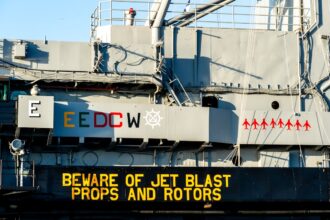
America Sent an Aircraft Carrier to Cut Down One Tree
FAQs
1. What was the significance of the tree that nearly caused a war?
The tree in question was a rare and sacred tree that held cultural and historical importance to the communities living near it.
2. Which countries were involved in the dispute over the tree?
The dispute over the tree involved two neighboring countries that shared a border where the tree was located.
3. How did the situation escalate to the brink of war?
Tensions rose as both countries claimed ownership of the tree and refused to back down, leading to military build-up and threats of armed conflict.
4. How was the conflict over the tree eventually resolved?
International mediators stepped in to facilitate negotiations between the two countries, helping them reach a peaceful resolution and avoid a full-blown war.
5. What lessons can be learned from the incident involving the tree?
The incident highlights the importance of diplomacy, communication, and conflict resolution in preventing disputes from escalating into violent conflicts, even over seemingly trivial issues like a single tree.