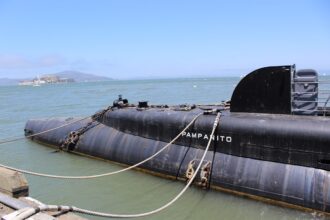
The modern battlefield, particularly the undersea domain, is a realm of subtle power, where silence is paramount and detection is the ultimate advantage. For decades, submarines have operated as the unseen predators of the deep, their stealth a formidable weapon. However, the advent of the Towed Array Surveillance System, more commonly known as TACTAS, is poised to fundamentally alter this balance, ushering in a new era of submarine tracking technology. This sophisticated system, deployed from surface vessels or aircraft, represents a significant leap forward in acoustic detection, offering unprecedented capabilities in identifying, locating, and classifying submerged threats. TACTAS is not merely an incremental improvement; it is a revolutionary paradigm shift, enhancing situational awareness and bolstering maritime security on a global scale.
The Evolution of Submarine Detection
Early Acoustic Prowess and Its Limitations
The earliest methods for detecting submarines relied heavily on passive listening, utilizing hydrophones to pick up the sounds generated by a vessel. These early arrays were rudimentary, often comprising a few individual hydrophones strung together. While they provided a basic ability to detect the presence of a submarine, their directional accuracy was poor, and their range limited. The advent of sonar, both active and passive, marked a significant advancement. Active sonar, by emitting a sound pulse and listening for its echo, offered more precise localization. However, active sonar has a significant drawback: it broadcasts the presence of the emitting platform, negating the stealth of the detecting vessel. Passive sonar, on the other hand, relies on detecting the ambient noise of the target, maintaining the tactical advantage of silence for the hunter. Early passive sonar systems, while improving upon simple hydrophones, still struggled with distinguishing faint signals from background noise and accurately triangulating a target’s position, especially in complex acoustic environments.
The Need for Advanced Passive Arrays
As submarine technology advanced, becoming quieter and more sophisticated, the limitations of existing detection systems became increasingly apparent. Modern submarines are designed to minimize their acoustic signatures, employing advanced quieting techniques, propeller designs, and hull treatments to become nearly undetectable to older sonar systems. This arms race between stealth and detection necessitated a new approach, one that could exploit the fainter and more complex acoustic information emanating from these advanced submarines. The need was clear: a passive detection system that could offer superior sensitivity, wider coverage, and enhanced signal processing capabilities without compromising the stealth of the platform carrying it. This paved the way for the development of advanced towed array systems.
TACTAS, or the towed array submarine tracking system, plays a crucial role in modern naval warfare by enhancing the detection capabilities of submarines. For a deeper understanding of the operational principles and advancements in submarine tracking technologies, you can refer to a related article that discusses various tracking systems and their implications in contemporary military strategy. For more information, visit this article.
Unveiling the TACTAS System
Architecture and Components of a Towed Array
At its core, TACTAS is a long, flexible cable, often several kilometers in length, studded with an array of highly sensitive hydrophones. These hydrophones are strategically spaced along the cable, allowing for the precise measurement of the direction and intensity of sound waves. The cable itself is designed to be neutrally buoyant and towed behind a vessel at a significant distance, effectively moving the listening aperture away from the noise generated by the towing platform’s own machinery and propellers. This separation is crucial for achieving high signal-to-noise ratios, allowing for the detection of even the faintest submarine sounds. The hydrophones are connected by a data transmission system, typically fiber optic, that relays the collected acoustic data back to a processing unit onboard the towing platform. Advanced signal processing algorithms then analyze this raw data, filtering out extraneous noise and amplifying the subtle signatures of submarines.
Hydrophone Sensitivity and Array Geometry
The effectiveness of any towed array hinges on the quality and arrangement of its hydrophones. TACTAS employs state-of-the-art hydrophones, engineered for exceptional sensitivity across a wide range of frequencies. These sensors are capable of capturing the intricate acoustic details of a submarine’s machinery, propulsion system, and even its hull interactions with the water. The geometry of the array, the spacing and number of hydrophones, are carefully optimized to maximize directional accuracy and spatial resolution. This precise arrangement allows the system to perform beamforming, a signal processing technique that focuses the array’s listening sensitivity in specific directions, effectively creating a narrow “beam” of attention. By electronically steering these beams, TACTAS can rapidly scan the surrounding underwater environment, identifying potential contacts with remarkable precision. Furthermore, the length of the array provides inherent advantages in detecting low-frequency sounds, which are often characteristic of distant or stealthy submarines.
Revolutionary Capabilities and Operational Impact
The TACTAS towed array submarine tracking system represents a significant advancement in underwater surveillance technology, enhancing the capabilities of naval forces around the world. For those interested in exploring more about the strategic implications of such technologies, a related article can be found on In The War Room, which delves into the evolving landscape of maritime security and the role of advanced tracking systems in modern warfare.
Enhanced Detection Range and Sensitivity
The most profound impact of TACTAS lies in its dramatically increased detection range and sensitivity compared

A Soviet Submarine Hit a U.S. Frigate. Was It the Wrong Ship?
FAQs
What is a TACTAS towed array system used for?
A TACTAS towed array system is used for tracking submarines by detecting and analyzing underwater sounds.
How does a TACTAS towed array system work?
A TACTAS towed array system consists of a long cable with hydrophones that are towed behind a ship. The hydrophones pick up underwater sounds, which are then processed to locate and track submarines.
What are the advantages of using a TACTAS towed array system for submarine tracking?
Some advantages of using a TACTAS towed array system include its ability to detect submarines at longer ranges, its passive nature which makes it harder for submarines to detect, and its ability to provide valuable intelligence on submarine movements.
How is a TACTAS towed array system different from other submarine tracking technologies?
A TACTAS towed array system is different from other submarine tracking technologies in that it is towed behind a ship, allowing for greater coverage and sensitivity to underwater sounds compared to fixed sensors or sonobuoys.
Which navies or maritime forces commonly use TACTAS towed array systems?
Navies and maritime forces of various countries, including the United States, Russia, China, and NATO allies, commonly use TACTAS towed array systems for submarine tracking and anti-submarine warfare operations.