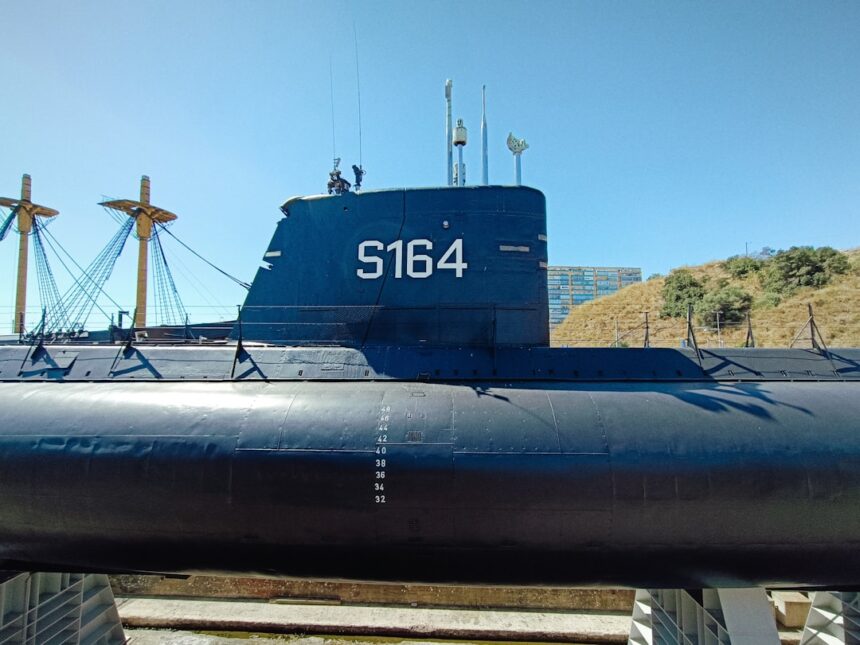
Submarine technology represents a fascinating intersection of engineering, military strategy, and oceanography. These underwater vessels have evolved significantly since their inception, becoming crucial assets for naval forces around the world. The ability to operate stealthily beneath the surface of the ocean allows submarines to perform a variety of missions, from intelligence gathering to strategic deterrence.
As nations continue to invest in their naval capabilities, the development of submarine technology remains a priority, reflecting the changing dynamics of global security and maritime operations. The complexity of submarine technology encompasses various systems and components, including propulsion, navigation, communication, and weaponry. Each of these elements must work in harmony to ensure the effectiveness and safety of the vessel and its crew.
As technological advancements continue to emerge, submarines are becoming more sophisticated, capable of operating in increasingly challenging environments. This article will explore the rich history of submarine development, the different types of submarines, and the latest innovations that are shaping the future of underwater warfare and exploration.
Key Takeaways
- Submarine technology has evolved significantly from early designs to advanced modern vessels with diverse types and capabilities.
- Innovations in propulsion, sonar, and underwater communication have greatly enhanced submarine performance and stealth.
- Modern submarines employ sophisticated navigation, weaponry, and defense systems to improve operational effectiveness.
- Environmental sustainability is becoming a key consideration in the development of new submarine technologies.
- Future trends focus on increased automation, improved stealth, and integration of cutting-edge technologies for enhanced underwater missions.
History of Submarine Development
The history of submarine development is a tale of ingenuity and perseverance, dating back to ancient times when early inventors envisioned vessels that could navigate underwater. The first recorded submarine was designed in the 16th century by Dutch inventor Cornelis Drebbel, who created a wooden submersible that could carry a small crew beneath the surface of the Thames River. However, it wasn’t until the 19th century that significant advancements were made, particularly during the American Civil War with the introduction of the H.L.
Hunley, the first combat submarine to sink an enemy ship. The two World Wars marked pivotal moments in submarine technology, as nations recognized the strategic advantages these vessels offered. During World War I, submarines were primarily used for blockades and disrupting enemy supply lines.
By World War II, submarines had evolved into formidable weapons of war, equipped with advanced torpedoes and capable of long-range missions. The Cold War further accelerated submarine development, leading to the creation of nuclear-powered submarines that could remain submerged for extended periods and carry ballistic missiles. This era solidified submarines as essential components of national defense strategies.
Types of Submarines
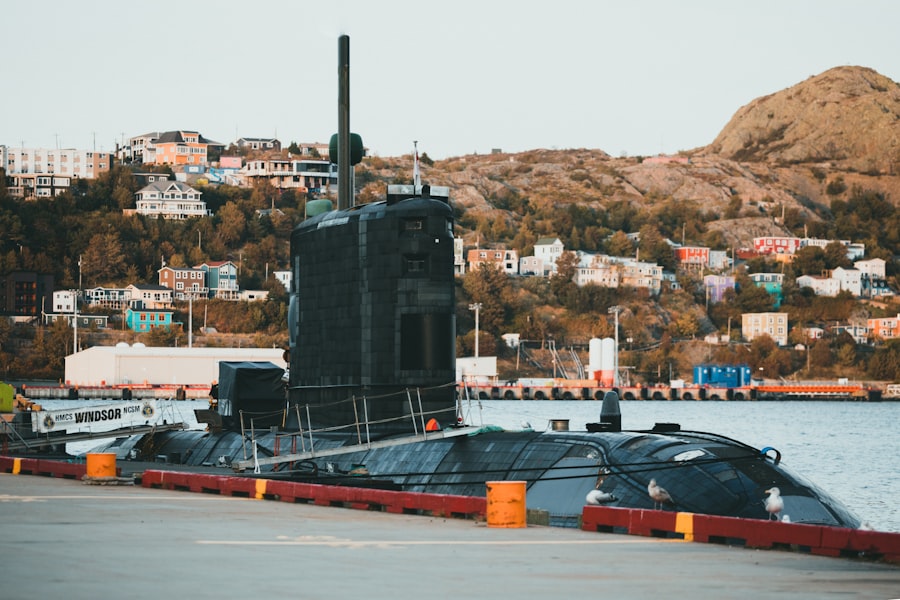
Submarines can be broadly categorized into several types based on their design, purpose, and capabilities. The most common classifications include attack submarines, ballistic missile submarines (SSBNs), and guided missile submarines (SSGNs). Attack submarines are designed for offensive operations, including hunting enemy vessels and conducting reconnaissance missions.
These submarines are typically fast and agile, equipped with torpedoes and cruise missiles to engage surface ships and submarines. Ballistic missile submarines serve a strategic role in nuclear deterrence. They are equipped with intercontinental ballistic missiles (ICBMs) and are designed to remain hidden beneath the ocean’s surface for extended periods.
This stealth capability ensures that they can launch a retaliatory strike if necessary, providing a crucial element of national security. Guided missile submarines combine features of both attack and ballistic missile submarines, allowing them to engage land targets with precision while also possessing anti-submarine warfare capabilities.
Advancements in Underwater Communication Systems
Effective communication is vital for the successful operation of submarines, particularly given their submerged status. Traditional radio communication is ineffective underwater due to signal attenuation; therefore, submarines rely on specialized systems for communication with surface vessels and command centers. Recent advancements in underwater communication technology have focused on improving data transmission rates and reliability.
One notable development is the use of low-frequency acoustic communication systems that allow for longer-range transmissions while minimizing interference from ambient noise. These systems utilize sound waves to transmit information through water, enabling submarines to maintain contact with their fleets even at great depths. Additionally, advancements in satellite communication technology have allowed for more secure and efficient data exchange when submarines surface or operate near the surface.
Cutting-Edge Sonar Technology
| Year | Technology | Description | Impact on Submarine Capabilities | Example Submarine/Class |
|---|---|---|---|---|
| 1900s | Diesel-Electric Propulsion | Use of diesel engines for surface running and electric batteries for submerged operation. | Extended underwater endurance and improved stealth compared to earlier designs. | German U-Boat Type VII |
| 1950s | Nuclear Propulsion | Introduction of nuclear reactors to power submarines, allowing unlimited underwater endurance. | Greatly increased submerged endurance and speed, enabling strategic deterrence roles. | USS Nautilus (SSN-571) |
| 1970s | Advanced Sonar Systems | Development of passive and active sonar arrays for improved detection and tracking. | Enhanced situational awareness and threat detection capabilities. | Los Angeles-class |
| 1990s | Air-Independent Propulsion (AIP) | Systems allowing non-nuclear submarines to operate submerged longer without surfacing. | Increased underwater endurance for conventional submarines, improving stealth. | Swedish Gotland-class |
| 2000s | Stealth Technology | Use of anechoic coatings and hull design to reduce acoustic signature. | Reduced detectability by enemy sonar, enhancing survivability. | Virginia-class |
| 2010s | Unmanned Underwater Vehicles (UUVs) | Integration of autonomous drones for reconnaissance and mine countermeasures. | Extended operational reach and reduced risk to crew. | Various modern submarines with UUV deployment capability |
| 2020s | Artificial Intelligence & Automation | Use of AI for navigation, threat analysis, and system management. | Improved decision-making speed and reduced crew workload. | Next-generation conceptual designs |
Sonar technology plays a critical role in submarine operations, enabling vessels to detect and identify objects in their vicinity. Modern submarines are equipped with advanced sonar systems that utilize both active and passive sonar techniques. Active sonar emits sound waves that bounce off objects and return to the source, providing information about their location and size.
In contrast, passive sonar listens for sounds generated by other vessels or marine life, allowing submarines to remain undetected while gathering intelligence. Recent innovations in sonar technology have led to the development of multi-beam sonar systems that can create detailed three-dimensional images of underwater environments. These systems enhance situational awareness and improve target identification capabilities.
Additionally, advancements in signal processing algorithms have increased the accuracy and efficiency of sonar data interpretation, allowing submarines to operate effectively in complex underwater environments.
Innovations in Submarine Propulsion
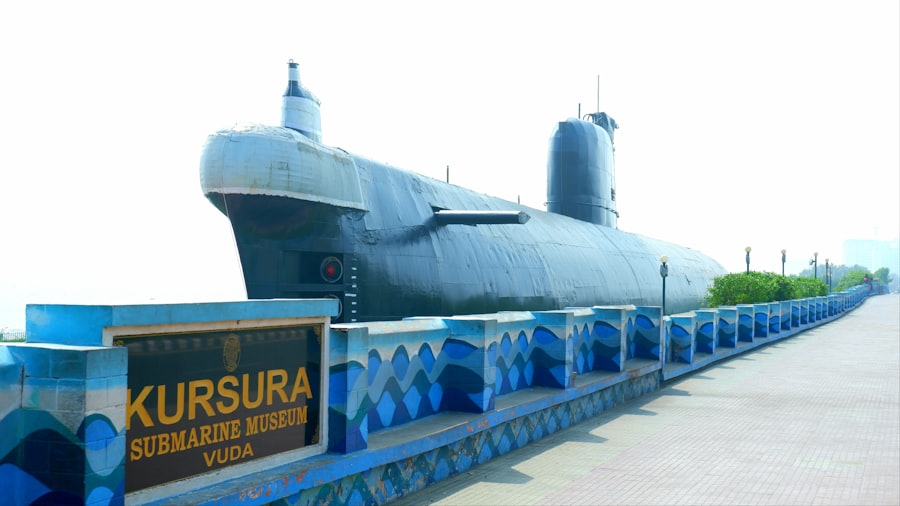
The propulsion systems used in submarines have undergone significant transformations over the years, moving from traditional diesel-electric engines to advanced nuclear propulsion technologies. Nuclear-powered submarines offer several advantages over their diesel counterparts, including greater endurance and speed. They can operate submerged for extended periods without surfacing for air or fuel, making them ideal for long-range missions.
Recent innovations in propulsion technology have focused on improving efficiency and reducing noise levels. The development of air-independent propulsion (AIP) systems has allowed non-nuclear submarines to operate submerged for longer durations without surfacing. AIP systems utilize various technologies, such as fuel cells or Stirling engines, to generate power without relying on atmospheric oxygen.
This advancement enhances stealth capabilities and extends operational range, making non-nuclear submarines more competitive in modern naval warfare.
Enhanced Stealth and Camouflage Techniques
Stealth is a fundamental aspect of submarine design and operation, as remaining undetected is crucial for mission success. Over the years, various techniques have been developed to enhance submarine stealth capabilities. One such technique involves reducing noise generated by machinery and water flow around the hull.
Advanced materials and design modifications help minimize acoustic signatures, making it more challenging for enemy forces to detect submarines. In addition to noise reduction, camouflage techniques have also evolved significantly. Modern submarines often employ specialized coatings that help them blend into their underwater environment by mimicking the surrounding water’s color and texture.
These coatings can also reduce radar signatures when operating near the surface. Furthermore, some submarines are equipped with decoy systems that can confuse enemy sonar systems by creating false targets or noise patterns.
Developments in Underwater Navigation
Navigating underwater presents unique challenges due to the absence of GPS signals beneath the ocean’s surface. Submarines rely on a combination of inertial navigation systems (INS), sonar-based navigation aids, and dead reckoning techniques to determine their position accurately. Recent advancements in navigation technology have improved the accuracy and reliability of these systems.
One significant development is the integration of advanced sensors that can provide real-time data on ocean currents and environmental conditions. By incorporating this information into navigation algorithms, submarines can adjust their course more effectively and avoid potential hazards. Additionally, research into quantum navigation technologies holds promise for future developments in underwater navigation, potentially offering unprecedented accuracy without reliance on external signals.
Submarine Weaponry and Defense Systems
Submarine weaponry has evolved dramatically over the years, with modern submarines equipped with a diverse array of offensive and defensive systems. Torpedoes remain a primary weapon for attack submarines, with advancements leading to faster speeds, greater ranges, and improved guidance systems. Additionally, many submarines are now armed with cruise missiles capable of striking land targets with precision from underwater.
Defensive systems are equally important for protecting submarines from enemy threats. Modern submarines are equipped with advanced countermeasure systems designed to detect incoming torpedoes and deploy decoys or jamming signals to evade them. Some submarines also feature advanced hull designs that enhance their ability to withstand attacks while maintaining stealth capabilities.
Environmental Impact and Sustainability of Submarine Technology
As concerns about environmental sustainability grow globally, the submarine industry is also facing scrutiny regarding its ecological impact. The construction and operation of submarines can have significant environmental consequences, including habitat disruption during construction and potential pollution from fuel leaks or waste disposal. To address these concerns, many naval forces are exploring more sustainable practices in submarine design and operation.
This includes using environmentally friendly materials in construction and developing propulsion systems that minimize emissions. Additionally, there is ongoing research into recycling old submarines to reduce waste and promote sustainability within the industry.
Future Trends in Submarine Technology
The future of submarine technology promises exciting developments as nations continue to invest in their naval capabilities. One emerging trend is the integration of artificial intelligence (AI) into submarine operations. AI can enhance decision-making processes by analyzing vast amounts of data from sensors and providing real-time insights into potential threats or operational efficiencies.
Another trend is the increasing focus on unmanned underwater vehicles (UUVs) that can operate alongside manned submarines or independently for reconnaissance missions. These UUVs can extend operational reach while reducing risk to human crews. As technology continues to advance, it is likely that future submarines will incorporate even more sophisticated systems for communication, navigation, weaponry, and stealth capabilities.
In conclusion, submarine technology has come a long way since its inception, evolving into a complex field that combines engineering prowess with strategic military considerations. As nations navigate an increasingly complex geopolitical landscape, advancements in submarine technology will continue to play a critical role in ensuring maritime security and operational effectiveness on a global scale.
Recent advancements in submarine technology have significantly enhanced underwater capabilities, particularly in stealth and communication systems. For a deeper dive into these innovations, you can read more about the latest developments in this field in the article available at this link. These advancements not only improve operational efficiency but also play a crucial role in modern naval strategy.
FAQs
What are some recent advancements in submarine technology?
Recent advancements in submarine technology include improvements in stealth capabilities, enhanced sonar and sensor systems, the development of air-independent propulsion (AIP) systems, and the integration of advanced automation and artificial intelligence for better navigation and combat efficiency.
How does air-independent propulsion (AIP) improve submarine performance?
Air-independent propulsion allows non-nuclear submarines to operate underwater for longer periods without surfacing or using snorkels to access atmospheric oxygen. This increases their stealth and endurance, making them harder to detect.
What role does automation play in modern submarines?
Automation reduces the crew size needed to operate submarines by handling routine tasks and complex systems management. It enhances operational efficiency, safety, and allows for more precise control of the vessel.
How have sonar systems evolved in submarine technology?
Modern sonar systems have become more sensitive and capable of detecting quieter targets at greater distances. Advances include passive and active sonar improvements, as well as the use of towed array sonar systems for enhanced underwater surveillance.
What materials are used to improve submarine stealth?
Submarines use anechoic coatings—special rubber tiles that absorb sonar waves—to reduce detectability. Additionally, hull designs and materials are optimized to minimize noise and magnetic signatures.
Are there advancements in submarine weaponry?
Yes, modern submarines are equipped with advanced torpedoes, cruise missiles, and sometimes unmanned underwater vehicles (UUVs). These weapons have improved range, accuracy, and payload capabilities.
How do nuclear-powered submarines differ from conventional ones?
Nuclear-powered submarines have virtually unlimited underwater endurance and higher speeds due to their nuclear reactors, whereas conventional submarines rely on batteries and diesel engines, limiting their underwater endurance and speed.
What is the significance of unmanned underwater vehicles (UUVs) in submarine technology?
UUVs extend the operational capabilities of submarines by performing reconnaissance, mine detection, and other tasks without risking crew members. They can be deployed from submarines to gather intelligence or conduct missions in hazardous environments.
How has submarine communication technology improved?
Advancements include the use of very low frequency (VLF) and extremely low frequency (ELF) radio waves for communication at depth, as well as satellite communication systems when surfaced or at periscope depth, enabling better connectivity and data exchange.
What environmental considerations are involved in submarine technology advancement?
Modern submarine designs aim to reduce environmental impact by minimizing noise pollution, improving fuel efficiency, and using cleaner propulsion technologies. Additionally, nuclear submarines have strict safety protocols to prevent radioactive contamination.