Mastering Submarine Ambush Tactics in Deep Waters
Deep-water submarine ambushes represent a highly specialized and demanding form of naval warfare, requiring a confluence of advanced technology, meticulous planning, and profound understanding of the underwater environment. Unlike surface engagements, the silent, three-dimensional domain of the ocean floor conceals opportunities and threats with equal efficacy. Success in these operations hinges on the ability to become a ghost in the machine, an unseen predator waiting for its unsuspecting prey to wander into range. This article will delve into the core principles that underpin effective deep-water submarine ambush tactics, examining the critical phases from deployment to engagement and the subsequent evasion.
The bedrock of any successful submarine ambush is an unparalleled degree of stealth. In the deep ocean, where visibility is virtually nonexistent, sound becomes the primary medium for detection. Eliminating or minimizing a submarine’s acoustic signature is thus paramount.
Understanding and Mitigating Acoustic Signatures
A submarine’s presence is betrayed by the sounds it generates. These originate from various sources, each requiring specific mitigation strategies.
Machinery Noise Reduction
The internal machinery of a submarine—propulsion systems, pumps, ventilation, and auxiliary equipment—all produce noise. Modern submarines employ extensive noise-dampening techniques. This includes the isolation of machinery from the hull using resilient mounts, the use of advanced propeller designs that minimize cavitation (the formation and collapse of bubbles, a significant noise source), and rigorous maintenance to ensure silent operation. The goal is to make the submarine’s noise profile indistinguishable from the ambient background noise of the ocean.
Hydrodynamic Noise Control
As a submarine moves through the water, its hull interacts with the flow, creating hydrodynamic noise. This includes flow noise along the hull and noise generated by control surfaces (rudders, dive planes). Careful hull design, smooth surfacing, and the precise control of trim and ballast contribute to reducing this signature. Even minor imperfections in the hull’s exterior can act like a rough patch on a road, generating turbulence and audible disturbances.
Sonar Baffling and Absorption
Active sonar, used by vessels to detect submarines, can be countered by various means. While submarines primarily rely on passive sonar for their own detection, they must also be aware of active sonar frequencies and capabilities. Hull coatings designed to absorb or scatter sonar signals, and optimized deployment of acoustic decoys, can further enhance survivability.
Environmental Awareness and Exploitation
The deep ocean is not a uniform expanse; it is a dynamic environment with unique characteristics that can be exploited to a submarine’s advantage.
Leveraging Bathymetry and the Sound Channel
The seafloor topography, or bathymetry, plays a crucial role. Deep ocean trenches and canyons can provide excellent acoustic cover, masking a submarine’s presence or deflecting sonar signals. The SOFAR channel (Sound Fixing and Ranging channel), a layer in the ocean where sound travels farthest horizontally, can be both a help and a hindrance. While it can carry a submarine’s own noise over vast distances, it can also be used to hide within its acoustic anomaly, making detection more difficult. Understanding these geological features is as important as understanding the submarine’s own acoustic profile.
Thermoclines and Density Layers
Variations in water temperature and salinity create density layers and thermoclines. These layers can refract and reflect sonar signals, creating acoustic shadows or distorting the appearance of a submarine. A well-positioned submarine can use these natural phenomena as an invisible shield, rendering it effectively invisible to sonar.
In the study of submarine ambush geometry in deep water, understanding the tactical advantages and challenges presented by underwater environments is crucial. A related article that delves into these concepts can be found at In the War Room, where it explores various strategies and scenarios that submarines may encounter during ambush operations. This resource provides valuable insights into the complexities of underwater warfare and the importance of geometry in planning effective ambushes.
The Art of the Lurk: Strategic Positioning and Patience
Once a submarine has achieved a satisfactory level of stealth, the next critical phase is establishing the optimal ambush position. This is not a matter of simply finding a broad area; it requires precise calculation and an unwavering commitment to patience.
Identifying Optimal Kill Zones
A kill zone is a pre-determined area where a target vessel is expected to transit, providing the best conditions for a successful attack.
Predictive Intelligence and Operational Patterns
The establishment of effective kill zones relies heavily on intelligence. Understanding the enemy’s operational patterns, typical transit routes, and acoustic signatures allows for predictive modeling. This involves analyzing known shipping lanes, patrol areas, and operational objectives of potential targets. The submarine commander essentially becomes a chess player, anticipating the opponent’s moves several steps in advance.
Acoustic Concealment and Detection Advantage
The ambush position must offer both concealment for the attacking submarine and an advantage in detecting the approaching target. This might involve lurking behind geological features that block sonar transmission, positioning the submarine in a location with favorable acoustic conditions, or exploiting natural sound channels. The goal is to create a scenario where the submarine can detect the target long before the target can detect the submarine.
The Virtue of Stillness: Maintaining Position and State
Once in position, the submarine’s primary objective is to remain as still and silent as possible.
Static Ambush vs. Dynamic Pursuit
While a static ambush involves waiting in a fixed position, a dynamic ambush might involve subtly maneuvering to maintain optimal engagement parameters while the target is approaching. However, even in dynamic scenarios, the emphasis remains on minimizing detectable movement and noise. The submarine must be a statue in the abyss, aware of every ripple it creates.
Minimizing Ballast and Trim Changes
Even minor adjustments to ballast or trim can create detectable pressure waves or hull movements. During an ambush, these changes are minimized, and any necessary adjustments are made with extreme deliberation and at ultra-low speeds.
The Moment of Truth: Detection, Classification, and Engagement
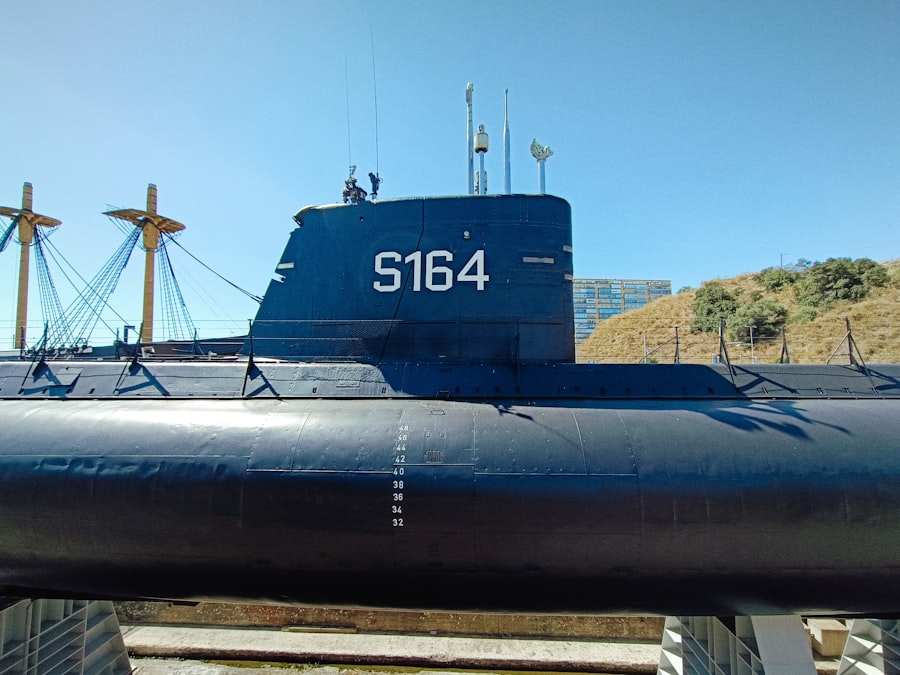
The longest phase of an ambush is often the waiting period. However, when the target finally appears on passive sonar, the operation shifts into a high-stakes race against time.
Passive Sonar Mastery: The Eavesdropper’s Edge
Passive sonar is the submarine’s primary offensive weapon during an ambush. It allows the submarine to “listen” to the ocean and identify potential threats without revealing its own presence.
Bearing and Range Estimation
Accurate bearing and range estimation of the target is crucial. Sophisticated sonar arrays and advanced processing algorithms allow submarine crews to triangulate the source of a sound, even in complex acoustic environments. This requires constant monitoring and correlation of multiple acoustic contacts.
Target Classification and Identification
Beyond simply detecting a sound, the submarine crew must classify and identify the target. This involves analyzing the specific acoustic signature of the vessel – its engine noise, propeller cavitation, and any extraneous sounds. Distinguishing a merchant vessel from a warship, or even identifying the specific class of warship, is vital for determining the threat level and the appropriate engagement strategy.
The Decision to Strike: Timing and Favorable Firing Solutions
The decision to launch an attack is a calculated risk, dependent on several factors.
Optimal Firing Position and Acoustic Stealth
The submarine must be in a position that provides a favorable firing solution while still maintaining its acoustic stealth. This might involve precise maneuvering to gain a tactical advantage without compromising its hidden status.
Avoiding Active Sonar Detection
Crucially, the submarine must ensure its attack does not inadvertently trigger the target’s active sonar. A sudden surge in noise or an ill-timed maneuver could expose the attacking vessel.
The Post-Strike Maneuver: Evasion and Disengagement

A successful ambush is not merely about firing torpedoes; it is equally about disappearing afterward. The deep ocean offers unique challenges and opportunities for evasion.
Vanishing into the Depths: Obscuring the Escape Route
Once the torpedoes have been launched, the submarine’s priority shifts to breaking contact and evading any potential counter-attack.
Acoustic Deception and Decoys
Modern submarines are equipped with advanced acoustic decoys designed to mimic the submarine’s own sound signature or the signature of different vessels. Deploying these strategically can confuse pursuers and draw their attention away from the escaping submarine.
Exploiting Underwater Features for Cover
Once again, bathymetry becomes a critical ally. The submarine can use canyons, seamounts, or deep trenches to break line-of-sight with sonar systems and mask its escape. The ocean floor can become a labyrinth, providing numerous hiding places.
The Art of the Silent Fade: Becoming One with the Ocean
The most effective evasion is often one that is never detected.
Minimal Maneuvering and Noise
After the attack, the submarine will employ extreme measures to minimize any further detectable activity. This might involve slow, deliberate maneuvers or even periods of absolute stillness, allowing the sounds of the attack to dissipate and their own noise to fade into the ambient background.
Leveraging Natural Phenomena for Concealment
The submarine commander might use cloud cover, adverse weather on the surface (which can mask Asdic or torpedo wake detection), or even the presence of surface vessels as a screen to facilitate their disappearance. The deep-sea environment, with its inherent obscurity, is the ultimate accomplice in this silent fade.
In exploring the complexities of submarine ambush geometry in deep water, one can gain further insights from a related article that delves into the tactical considerations and environmental factors influencing underwater engagements. This comprehensive piece highlights how submarines utilize the unique characteristics of deep water to their advantage, enhancing stealth and surprise. For a deeper understanding of these strategies, you can read more in this informative article on In the War Room.
The Technological Edge: Advanced Systems in Deep Water Ambushes
| Parameter | Value | Unit | Description |
|---|---|---|---|
| Engagement Range | 1500 | meters | Distance between submarine and target at ambush initiation |
| Depth of Submarine | 300 | meters | Operating depth for optimal stealth in deep water |
| Target Speed | 12 | knots | Speed of the target vessel during ambush |
| Submarine Speed | 5 | knots | Speed of submarine while maintaining stealth |
| Attack Angle | 45 | degrees | Angle between submarine’s heading and target’s course at ambush |
| Sonar Detection Range | 2000 | meters | Maximum range at which submarine can detect target |
| Weapon Launch Depth | 250 | meters | Depth at which torpedoes are launched during ambush |
| Time to Target | 90 | seconds | Estimated time for weapon to reach target after launch |
The effectiveness of deep-water submarine ambushes is inextricably linked to the advanced technological capabilities of modern submarines. These systems are the silent partners that enable the predator to operate unseen.
Passive Sonar Suites: The Eyes and Ears of the Abyss
The heart of any submarine’s ambush capability lies in its passive sonar system.
Wide Aperture Arrays and Beamforming
Modern sonar arrays are designed to capture sound across a wide spectrum and from numerous directions simultaneously. Advanced beamforming techniques allow for the precise directionality of these arrays, enabling the crew to isolate and track specific sound sources amidst the cacophony of the ocean.
Advanced Signal Processing and Acoustic Libraries
Sophisticated algorithms analyze incoming acoustic data, filtering out noise, identifying target characteristics, and comparing them against extensive acoustic libraries. These libraries contain the unique sound profiles of virtually every known naval vessel, allowing for rapid and accurate classification.
Inertial Navigation Systems and Sonar Integration
Accurate navigation is paramount for both positioning and evasion.
High-Accuracy Inertial Navigation Systems (INS)
INS provides continuous updates on a submarine’s position, velocity, and orientation without external references. This is crucial in the deep ocean where GPS signals are unavailable.
Integrated Sonar and Navigation Data
The real power comes from integrating sonar data with navigation information. This allows for precise mapping of the underwater environment and the creation of a dynamic tactical picture, essential for both setting up an ambush and avoiding detection.
Torpedo Fire Control Systems: Precision Under Pressure
The final act of an ambush involves accurately launching torpedoes.
Advanced Ballistic and Towed Array Solutions
Fire control systems process all available target and submarine data to calculate optimal firing solutions, accounting for target movement, water conditions, and torpedo performance. This ensures a high probability of a successful hit, even at extended ranges and against evasive maneuvers.
Acoustic and Wake-Homing Torpedoes
Modern torpedoes often employ their own acoustic homing systems or towed arrays, further enhancing their ability to track and engage targets in complex underwater environments.
Mastering submarine ambush tactics in deep waters is a testament to the intricate dance between human skill and technological prowess. It is about becoming a phantom in the deepest blue, a whisper on the currents, waiting with unparalleled patience for the opportune moment to strike from the silence. The deep ocean, a realm of perpetual twilight and immense pressure, offers both the perfect mask and a challenging battleground for those who dare to master its secrets. The modern submarine, with its advanced stealth capabilities and sophisticated sensory systems, is the apex predator of this hidden world, a testament to humanity’s ongoing quest to dominate every frontier.

WATCH NOW ▶️ WARNING: The $17M Deal That Blinded The US Navy
FAQs
What is submarine ambush geometry?
Submarine ambush geometry refers to the strategic positioning and movement patterns of submarines to effectively intercept or attack enemy vessels. It involves understanding underwater terrain, sonar detection ranges, and optimal angles of approach to maximize stealth and combat effectiveness.
Why is deep water important in submarine ambush tactics?
Deep water provides submarines with greater maneuverability and concealment opportunities. It allows submarines to operate below thermal layers that can distort sonar signals, making detection by enemy forces more difficult. Deep water also offers more space for tactical positioning during an ambush.
How do submarines use geometry to enhance their ambush capabilities?
Submarines use geometric principles to calculate the best interception points, angles of attack, and escape routes. By analyzing the relative positions and movements of target vessels, submarines can position themselves in optimal locations to launch torpedoes or missiles while minimizing the risk of detection.
What role does sonar play in submarine ambush geometry?
Sonar systems are critical for detecting and tracking enemy vessels, as well as for navigation in deep water. Understanding sonar detection ranges and blind spots helps submarines plan their ambush geometry to avoid being detected while maintaining situational awareness of the target’s location.
Can environmental factors affect submarine ambush geometry in deep water?
Yes, environmental factors such as water temperature, salinity, underwater currents, and seabed topography can influence sonar performance and submarine maneuverability. These factors must be considered when planning ambush geometry to ensure effective positioning and stealth in deep water operations.