The silent ballet of submarines beneath the waves presents a fascinating paradox. These vessels, designed for stealth, operate in a realm where detection is both a primary threat and a critical tool for their own operations. At the heart of this delicate balance lies the intricate relationship between submarine speed and its detection range. Understanding this tradeoff is fundamental to naval strategy, the design of sonar systems, and the very survival of submarines in a modern maritime environment.
The Physics of Underwater Sound Propagation
The ability to detect a submarine relies on the principles of sound propagation through water. Unlike electromagnetic waves, which are rapidly attenuated in seawater, sound travels much further, making it the primary medium for underwater surveillance. However, the ocean is not a uniform medium. Its properties—temperature, salinity, and pressure—vary significantly, creating layers and gradients that can bend, reflect, and refract sound waves. These variations, known as the acoustic environment, profoundly influence how far a sound source can be detected.
Sound Generation in Submarine Operations
Submarines generate sound in several ways, each contributing to their acoustic signature. The most significant sources of noise are the mechanical systems on board. The propulsion system, whether it be diesel-electric or nuclear, is a major contributor. Shafts, gears, and propellers, even when meticulously designed and maintained, generate vibrations and cavitation. Cavitation, the formation and collapse of bubbles in the water, is particularly problematic as it produces broadband noise across a wide range of frequencies. Other onboard machinery, such as pumps, generators, and cooling systems, also contribute to the overall noise signature. The hull itself, moving through the water, creates hydrodynamic noise due to friction and turbulence. Finally, the operation of the submarine, such as maneuvering, deploying or retracting equipment, and even the movement of personnel, can create transient noises.
The Spectrum of Submarine Noise
Submarine noise can be broadly categorized by its frequency content. Low-frequency noise, typically below 1 kHz, is generated by larger machinery and hull vibrations. These frequencies travel further in the ocean than higher frequencies due to less absorption by water. Mid-frequency noise, between 1 kHz and 10 kHz, often originates from pumps, auxiliaries, and moderate propeller cavitation. High-frequency noise, above 10 kHz, is generally associated with smaller equipment, internal movements, and more intense cavitation. The frequency spectrum of a submarine’s noise is a critical component of its acoustic signature, as different sonar systems are optimized for different frequency bands, and the propagation characteristics of sound vary with frequency.
Acoustic Detection Methods
The primary method for detecting submarines is sonar, an acronym for Sound Navigation and Ranging. Sonar systems can be broadly divided into two categories: active sonar and passive sonar. Active sonar systems emit pulses of sound and listen for the echoes that return after reflecting off a target. The time it takes for the echo to return, along with its characteristics, can reveal the range, bearing, and sometimes even the speed of the target. Passive sonar systems, on the other hand, simply listen for sounds produced by the target itself. This is the preferred method for submarines seeking to remain undetected, as it does not reveal their presence.
The Role of Passive Sonar
Passive sonar is akin to eavesdropping. It relies on an array of hydrophones, which are underwater microphones, to detect and analyze the ambient sounds in the ocean. These sounds can include biological noise from marine life, shipping traffic, seismic activity, and, of course, submarine noise. Sophisticated signal processing techniques are employed to isolate and identify the specific acoustic signatures of submarines from this cacophony. The effectiveness of passive sonar is heavily dependent on the quality of the hydrophone array, the signal processing algorithms, and the understanding of submarine noise characteristics.
The tradeoff between submarine speed and detection range is a critical consideration in naval strategy, as faster submarines may reduce their stealth capabilities while attempting to evade detection. For a deeper understanding of this complex relationship, you can explore a related article that discusses various factors influencing submarine operations and tactics. To read more about this topic, visit this article.
The Impact of Speed on Acoustic Signatures

The speed at which a submarine travels has a direct and significant impact on its acoustic signature. As a submarine increases its speed, its internal machinery often operates at higher power, leading to increased noise output. More importantly, the interaction of the hull with the water changes dramatically. Higher speeds induce greater turbulence and pressure differentials around the hull, leading to increased hydrodynamic noise. Propeller cavitation also becomes more pronounced at higher speeds as the propeller blades cut through the water with greater force, creating more bubbles.
Propeller Cavitation and Noise Generation
Propeller cavitation is arguably the most significant speed-dependent noise source for submarines. As the propeller blades rotate, they generate regions of low pressure. If this pressure drops below the vapor pressure of the water, bubbles form. When these bubbles encounter regions of higher pressure, they collapse violently, generating a characteristic broadband noise. The intensity and frequency spectrum of this cavitation noise are directly related to the propeller’s design, its rotational speed, and the submarine’s speed through the water. At higher speeds, the propeller must rotate faster and experience greater forces, leading to more intense and widespread cavitation.
Hydrodynamic Noise and Hull Interaction
Beyond propeller noise, the submarine’s hull itself generates noise as it moves through the water at speed. Friction between the hull and the water creates turbulence, particularly around areas with complex shapes or protrusions. As speed increases, this turbulence becomes more energetic and generates a broader range of frequencies. The flow of water over control surfaces, such as dive planes and rudders, also contributes to hydrodynamic noise, especially when these surfaces are adjusted to maintain course or depth at higher speeds.
The Detection Range Tradeoff

The core of the submarine speed dilemma lies in the tradeoff between operational effectiveness and detectability. Submarines often need to travel at higher speeds to meet mission deadlines, escape pursuit, or position themselves strategically. However, these higher speeds invariably increase their acoustic signature, making them more susceptible to detection by enemy sonar. Conversely, operating at very slow speeds significantly reduces noise levels, enhancing stealth, but at the cost of mission flexibility and potentially leaving the submarine vulnerable in other ways if it cannot reposition quickly.
Stealth as a Primary Doctrine
For many submarines, stealth is not merely an advantage; it is a primary operational doctrine. The ability to operate undetected allows submarines to gather intelligence, deploy forces, and engage targets with minimal risk of counterattack. This emphasis on stealth drives efforts to minimize all sources of noise, especially those directly linked to speed. Advanced hull designs, quieter propulsion systems, and meticulous maintenance practices are all geared towards reducing the acoustic footprint, particularly when operating at lower speeds.
The Influence of Sonar Systems on the Tradeoff
The type and sophistication of the detecting sonar system also play a crucial role in defining the speed-detection range tradeoff. Modern passive sonar arrays, with their advanced signal processing capabilities, are increasingly adept at detecting even faint noises from submarines operating at moderate speeds. Active sonar, while revealing the submarine’s presence, can still achieve significant detection ranges. The ability of an adversary’s sonar to distinguish a submarine’s signature from ambient noise, and the range at which this distinction can be made, directly influences the speed a submarine captain can safely employ.
Optimizing Speed for Mission Objectives
Naval planners and submarine commanders must constantly balance the imperative of speed with the need for stealth. This optimization is a complex calculation that considers the specific mission, the expected threat environment, and the capabilities of both the submarine and its potential adversaries. There is no single “optimal” speed; rather, it is a dynamic variable that is adjusted based on evolving circumstances.
The Spectrum of Operational Speeds
Submarines operate across a wide spectrum of speeds. “Creeping speed,” typically just a few knots, is employed when maximum stealth is paramount, such as during intelligence gathering or when operating in heavily patrolled waters. At this speed, most mechanical and cavitation noise is minimized. “Cruising speed,” often in the range of 10-20 knots, offers a balance between reasonable speed for transit and still-manageable noise levels, especially with advanced noise reduction technologies. “Dash speed,” the maximum speed a submarine can achieve, is usually reserved for emergencies, such as escaping a hunter-killer group or rapidly repositioning to engage a target. At dash speed, the acoustic signature is significantly amplified.
The Role of Acoustic Signatures in Mission Planning
Understanding a submarine’s acoustic signature at various speeds is a critical input for mission planning. Intelligence gathered on the capabilities of enemy sonar systems, as well as the known acoustic characteristics of other vessels in the operating area, informs decisions about the acceptable speed envelope for a given mission. A submarine commander might choose to operate at a higher speed for a shorter duration to reach a rendezvous point, accepting the increased risk of detection, rather than to proceed at a stealthy, but potentially mission-delaying, speed.
The tradeoff between submarine speed and detection range is a critical consideration in modern naval warfare, influencing tactical decisions and operational effectiveness. For a deeper understanding of this complex relationship, you may find the article on submarine stealth and operational strategies insightful. It explores how advancements in technology are reshaping the dynamics of underwater combat and the implications for naval forces worldwide. To read more about this topic, check out the article here.
Advanced Technologies and Future Trends
| Submarine Speed (knots) | Detection Range by Sonar (nautical miles) | Noise Level (dB) | Detection Probability (%) | Operational Tradeoff Notes |
|---|---|---|---|---|
| 2 | 15 | 40 | 10 | Low speed, minimal noise, low detection probability |
| 5 | 12 | 50 | 25 | Moderate speed, moderate noise, moderate detection risk |
| 10 | 8 | 65 | 50 | Higher speed, increased noise, higher detection risk |
| 15 | 5 | 80 | 75 | High speed, high noise, high detection probability |
| 20 | 3 | 95 | 90 | Maximum speed, maximum noise, very high detection risk |
The ongoing evolution of both submarine technology and anti-submarine warfare (ASW) capabilities means that the speed-detection range tradeoff is a constantly shifting landscape. Innovations in noise reduction, propulsion, and hull design continue to push the boundaries of stealth for submarines, while advancements in sonar, acoustic intelligence, and underwater sensing technologies are enhancing detection capabilities.
Silent Running Technologies
The pursuit of silent running has led to the development of numerous technologies. Modern submarines employ advanced propeller designs that minimize cavitation. Double-hull designs and anechoic coatings can help to absorb or scatter sonar pings. Electric propulsion systems, particularly those powered by nuclear reactors, eliminate the much noisier combustion processes of diesel engines. Magnetic drive shafts and advanced vibration isolation systems further reduce mechanical noise. These technologies collectively aim to reduce the acoustic signature across all operating speeds, allowing submarines to maintain higher speeds with a lower risk of detection.
The Future of Underwater Acoustics
The future likely holds even more sophisticated methods for both generating and detecting underwater sound. Machine learning and artificial intelligence are being employed to improve the signal processing capabilities of sonar systems, enabling them to better discriminate between submarine noise and ambient ocean sounds. Advances in distributed acoustic sensing, which involves networks of smaller, interconnected sensors, could provide more comprehensive underwater surveillance. Conversely, submarines will continue to push the envelope in stealth, perhaps through active noise cancellation technologies or novel propulsion systems that are virtually silent. The cat-and-mouse game between detection and evasion will undoubtedly continue, with speed remaining a central, albeit complex, variable in this enduring underwater conflict.
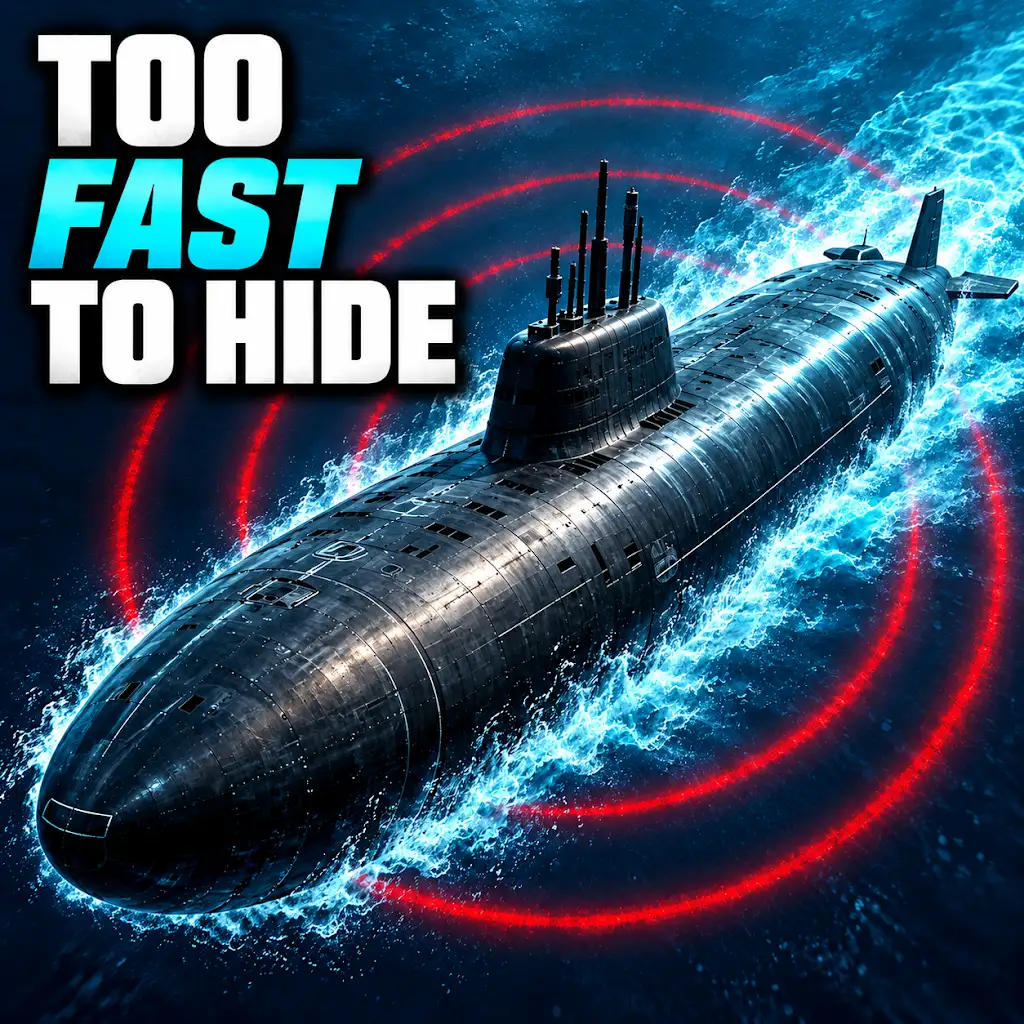
The Soviet Submarine That Broke a Speed Record—and Its Own Stealth
FAQs
What is the tradeoff between submarine speed and detection range?
The tradeoff between submarine speed and detection range refers to the balance that submarines must strike between moving quickly to evade detection and moving slowly to reduce their own noise emissions and avoid detection by enemy sonar systems.
How does increasing speed affect a submarine’s detection range?
Increasing a submarine’s speed can lead to an increase in its own noise emissions, which can in turn make it easier for enemy sonar systems to detect the submarine at a greater distance. This can reduce the submarine’s stealth capabilities and increase its vulnerability to detection.
What are the advantages of a faster submarine?
A faster submarine can cover greater distances in a shorter amount of time, allowing it to respond more quickly to changing tactical situations and potentially evade pursuit by enemy forces. Additionally, a faster submarine may have a tactical advantage in certain combat scenarios.
What are the advantages of a slower, quieter submarine?
A slower, quieter submarine can reduce its own noise emissions, making it more difficult for enemy sonar systems to detect the submarine at longer ranges. This can enhance the submarine’s stealth capabilities and increase its chances of remaining undetected while on a mission.
How do submarines typically balance speed and stealth considerations?
Submarines typically balance speed and stealth considerations by adjusting their speed based on the tactical situation and the level of threat posed by enemy forces. Submarines may operate at slower speeds to reduce noise emissions and enhance stealth when trying to remain undetected, while increasing speed when necessary to evade detection or respond to threats.