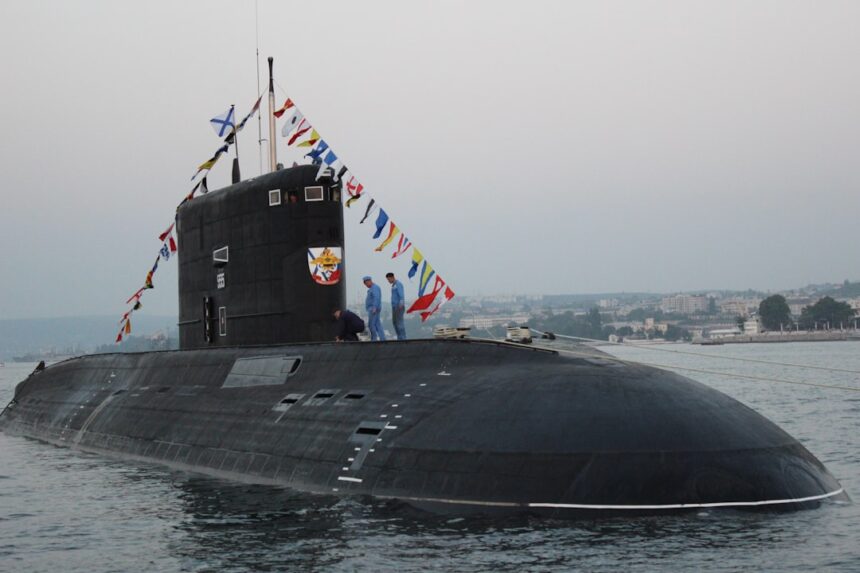
In military history, a submarine captain faced a significant moral dilemma. This experienced officer commanded a nuclear-capable vessel and received orders that could have had historic consequences. The situation tested both his leadership abilities and moral judgment, as he had to weigh military duty against ethical considerations.
The captain found himself in a position where following orders would have severe implications. Despite his crew being trained to execute commands without hesitation, he experienced internal conflict about the potential consequences of launching a nuclear strike. The tension aboard the submarine was intense as the crew awaited his decision.
This incident highlights the complex ethical challenges military leaders may face when official orders conflict with personal moral convictions. The captain had to balance his obligations to his country with his concern for the potential loss of civilian lives, illustrating the profound responsibility that accompanies command positions during critical situations.
Key Takeaways
- The submarine captain faced a profound moral dilemma when ordered to launch a nuclear strike.
- Refusing the order highlighted the tension between military obedience and ethical responsibility.
- The captain prioritized protecting human life and upholding international law over following commands.
- The decision had significant impacts on the crew and sparked diverse reactions within the military community.
- The captain’s stand has influenced discussions on military ethics and the importance of moral decision-making in armed forces.
The Decision to Refuse the Order
The decision to refuse an order in a military context is fraught with peril. For this submarine captain, the stakes were higher than ever. He understood that disobeying a direct command could lead to severe repercussions, including court-martial and potential imprisonment.
However, as he contemplated the implications of launching a nuclear strike, he realized that the cost of compliance could be far greater than any punishment he might face. The captain’s mind was filled with images of destruction—cities reduced to ashes, families torn apart, and generations lost in an instant. It was a vision he could not reconcile with his sense of duty.
In that critical moment, the captain weighed his options carefully. He considered the chain of command and the expectations placed upon him as a leader. Yet, he also recognized that true leadership sometimes requires standing against authority when it conflicts with one’s moral compass.
The captain’s decision was not made lightly; it was born from a deep understanding of the gravity of nuclear warfare and its potential to annihilate countless lives. By choosing to refuse the order, he took a stand not only for himself but for humanity as a whole, embodying the principle that some orders should never be followed.
The Moral Dilemma Faced by the Captain
The moral dilemma faced by the submarine captain was not merely an internal struggle; it was a profound conflict between duty and ethics. On one hand, he had sworn an oath to protect his country and follow orders from superiors. On the other hand, he grappled with the ethical implications of unleashing nuclear weapons—a choice that would lead to indiscriminate death and suffering.
This internal battle was compounded by the knowledge that his decision could have far-reaching consequences for his crew and their families. As he deliberated, the captain reflected on his training and experiences throughout his military career. He had been taught to prioritize mission success above all else, yet he could not shake the feeling that this particular mission was fundamentally flawed.
The weight of responsibility pressed heavily upon him; he was not just a soldier but a custodian of human life. The captain’s moral dilemma illuminated the complexities inherent in military service, where adherence to orders can sometimes clash with ethical considerations. In this moment of crisis, he became acutely aware that true courage lies not only in following orders but also in questioning them when they threaten to cross an ethical line.
The Legal and Ethical Implications of Refusing a Nuclear Strike Order
Refusing a nuclear strike order carries significant legal and ethical implications that extend beyond individual conscience. Legally, military personnel are bound by a complex web of national and international laws governing armed conflict. The captain understood that while he had a duty to obey lawful orders, he also had an obligation to reject those that were manifestly unlawful or immoral.
The Geneva Conventions and various treaties aimed at preventing nuclear proliferation underscored the importance of protecting civilian lives and maintaining global stability. Ethically, the implications were equally profound. The captain’s refusal to launch a nuclear strike raised questions about accountability and moral responsibility within military hierarchies.
If leaders are expected to follow orders without question, what safeguards exist to prevent atrocities? The captain’s decision highlighted a critical gap in military ethics: the need for individuals to exercise moral judgment in situations where orders may lead to catastrophic outcomes. By refusing to comply with an order he deemed unethical, the captain not only asserted his own moral agency but also challenged the broader military culture that often prioritizes obedience over ethical considerations.
The Captain’s Responsibility to Protect Human Life
| Metric | Details |
|---|---|
| Incident | Submarine Captain Refused Nuclear Strike Order |
| Date | October 27, 1962 |
| Submarine Name | B-59 |
| Location | Caribbean Sea, near Cuba |
| Captain | Vasili Arkhipov |
| Context | Cuban Missile Crisis |
| Order Refused | Launch of nuclear torpedo |
| Consequence | Potential nuclear war averted |
| Decision Basis | Disagreement among submarine commanders; Arkhipov’s veto |
| Historical Significance | Considered a key moment in preventing nuclear conflict |
At the heart of the captain’s decision lay an unwavering commitment to protect human life. As he contemplated the consequences of launching a nuclear strike, he recognized that his role extended beyond mere military duty; it encompassed a profound responsibility to safeguard innocent lives. The captain understood that every decision made in the heat of conflict reverberates through time, affecting not only those directly involved but also future generations.
This sense of responsibility was deeply ingrained in the captain’s identity as a leader. He had witnessed firsthand the devastating impact of war on civilians—families torn apart, communities shattered, and lives irrevocably altered. In refusing to carry out an order that would lead to mass destruction, he sought to honor his commitment to humanity itself.
The captain’s actions served as a reminder that military leaders must always consider the human cost of their decisions, prioritizing compassion and empathy even in the most challenging circumstances.
The Impact of the Captain’s Decision on the Crew
The captain’s refusal to execute the nuclear strike order sent shockwaves through his crew. Initially met with disbelief and confusion, his decision ultimately sparked intense discussions about ethics and duty among those on board. Many crew members had been trained to view obedience as paramount; however, witnessing their captain’s moral stand prompted them to reevaluate their own beliefs about authority and responsibility.
As conversations unfolded within the submarine’s confines, crew members began grappling with their own values and convictions. Some expressed admiration for their captain’s courage, recognizing that he had chosen integrity over blind obedience. Others struggled with feelings of uncertainty and fear regarding their future in light of such a monumental decision.
The captain’s actions fostered an environment where ethical considerations took precedence over rigid adherence to orders, encouraging crew members to think critically about their roles as military personnel.
The Role of Military Training in Moral Decision-Making
Military training plays a crucial role in shaping how service members approach moral decision-making in high-pressure situations. For this submarine captain, years of rigorous training had instilled discipline and adherence to protocol; however, it also provided him with tools for critical thinking and ethical reasoning. In moments of crisis, such training can either reinforce blind obedience or empower individuals to question authority when necessary.
The captain’s experience underscored the importance of incorporating ethical training into military curricula. While technical skills are essential for operational success, fostering an environment where service members can engage in discussions about morality and ethics is equally vital. By equipping personnel with frameworks for ethical decision-making, militaries can cultivate leaders who prioritize human rights and dignity alongside mission objectives.
The Captain’s Duty to Uphold International Law and Human Rights
In addition to his personal convictions, the submarine captain recognized his duty to uphold international law and human rights standards. As a military leader entrusted with significant power, he understood that his actions carried implications beyond national interests; they resonated within a global context where human rights are paramount. The principles enshrined in international law serve as safeguards against atrocities and abuses during armed conflict.
By refusing to launch a nuclear strike, the captain demonstrated his commitment to these principles. He acknowledged that international law exists not only as a framework for military operations but also as a moral compass guiding leaders toward responsible conduct in warfare. In doing so, he reaffirmed his belief in humanity’s shared responsibility to protect vulnerable populations from harm—a belief that transcends borders and political affiliations.
The Reactions and Responses to the Captain’s Refusal
The reactions to the captain’s refusal were varied and complex, reflecting a spectrum of opinions within both military circles and society at large. Some hailed him as a hero—a beacon of moral courage who prioritized humanity over protocol. These supporters argued that his actions exemplified true leadership in an era where ethical considerations often take a backseat to strategic objectives.
Conversely, there were those who viewed his refusal as insubordination—a dangerous precedent that could undermine military discipline and cohesion. Critics contended that allowing individual conscience to dictate actions could lead to chaos within ranks, eroding trust in command structures essential for operational effectiveness. This dichotomy highlighted the ongoing tension between obedience and ethical responsibility within military contexts—a debate that continues to shape discussions around military ethics today.
The Captain’s Legacy and Impact on Military Ethics
The legacy left by this submarine captain extends far beyond his immediate decision; it has sparked ongoing conversations about military ethics and moral responsibility within armed forces worldwide. His refusal has become emblematic of a broader movement advocating for ethical leadership in military contexts—one that emphasizes accountability and compassion alongside operational success.
His story serves as a powerful reminder that leaders must navigate complex moral landscapes while remaining steadfast in their commitment to protect human life. As future generations of military personnel reflect on this legacy, they are encouraged to embrace their roles as custodians of humanity—challenging norms when necessary and prioritizing ethics over blind obedience.
Lessons Learned from the Submarine Captain’s Moral Stand
The story of the submarine captain who refused an order for nuclear strike is one steeped in complexity and moral significance. His journey illustrates that true leadership often requires individuals to confront difficult choices head-on—balancing duty with ethical considerations in ways that honor both their commitments and their humanity. As society continues to grapple with issues surrounding warfare and human rights, this captain’s legacy serves as an enduring reminder: sometimes standing up for what is right means challenging authority itself.
Ultimately, this narrative offers invaluable lessons for current and future leaders across all sectors—not just within military ranks but also in civilian life where ethical dilemmas abound. By prioritizing compassion over compliance and recognizing their responsibility toward humanity at large, leaders can forge paths toward more just outcomes even amidst chaos and uncertainty. In doing so, they honor not only their own convictions but also those who have suffered due to decisions made without regard for human life—a testament to resilience in pursuit of justice for all.
In a recent discussion about the critical decisions faced by military leaders, an article on submarine captains and their authority during nuclear strike scenarios highlights the gravity of such responsibilities. The piece delves into the ethical dilemmas and protocols that govern these high-stakes situations. For more insights, you can read the full article [here](https://www.inthewarroom.com/).
FAQs
Who was the submarine captain who refused a nuclear strike?
The submarine captain who refused a nuclear strike was Lieutenant Commander Vasili Arkhipov of the Soviet Navy during the Cuban Missile Crisis in 1962.
What was the context in which the submarine captain refused the nuclear strike?
The refusal occurred during the Cuban Missile Crisis when a Soviet submarine was being depth-charged by U.S. Navy forces. The captain believed the submarine was under attack and considered launching a nuclear torpedo, but Arkhipov opposed the launch.
Why did the submarine captain refuse to launch the nuclear strike?
Lieutenant Commander Vasili Arkhipov refused to authorize the launch because he believed that the situation did not warrant nuclear escalation and that the submarine had not been definitively attacked, thus preventing a potential nuclear war.
What was the significance of the refusal to launch the nuclear strike?
The refusal to launch the nuclear strike is credited with preventing a possible nuclear war between the United States and the Soviet Union during the Cuban Missile Crisis, thereby averting a global catastrophe.
How are nuclear launch decisions made on submarines?
Nuclear launch decisions on submarines typically require the consent of multiple officers, including the captain and other senior officers, to authorize the use of nuclear weapons, ensuring checks and balances in critical situations.
Has this incident influenced nuclear command protocols?
Yes, the incident highlighted the importance of clear communication, strict protocols, and the human element in nuclear command and control, influencing subsequent policies to reduce the risk of accidental nuclear war.
Is the story of the submarine captain widely recognized?
While initially classified and less known, the story of Lieutenant Commander Vasili Arkhipov has gained recognition over time as a crucial moment in Cold War history and nuclear diplomacy.