The Unseen Rumble: Submarine Acoustic Conditions During Storms
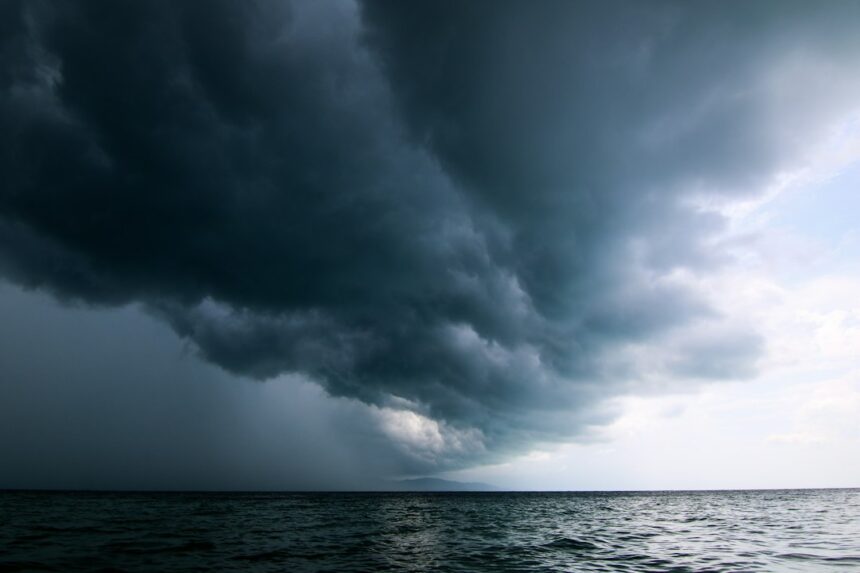
The ocean’s surface, often a mirror of tranquility, can transform into a maelstrom during storms. These violent atmospheric disturbances have profound impacts that extend far beneath the waves, fundamentally altering the acoustic environment for submarines. For naval operations, scientific research, and the well-being of marine life, understanding these turbulent underwater soundscapes is paramount. Storms introduce a complex interplay of acoustic phenomena, posing significant challenges for sonar systems, communication, and the very ability of submarines to operate undetected.
The primary drivers of altered submarine acoustic conditions during storms are the increased sea state, atmospheric pressure changes, and enhanced precipitation. These factors coalesce to create a dynamic and often noisy underwater world, where the predictable acoustic propagation paths of calm seas become distorted and masked. Navigating these conditions requires a deep appreciation of the underlying physics and the development of sophisticated countermeasures.
In exploring the impact of storm conditions on submarine acoustic environments, a related article can be found at In the War Room. This piece delves into how turbulent weather can significantly alter sound propagation in underwater settings, affecting naval operations and submarine stealth capabilities. Understanding these acoustic variations is crucial for military strategists and oceanographers alike, as they navigate the complexities of underwater warfare and environmental challenges.
Surface Agitation and Its Acoustic Manifestations
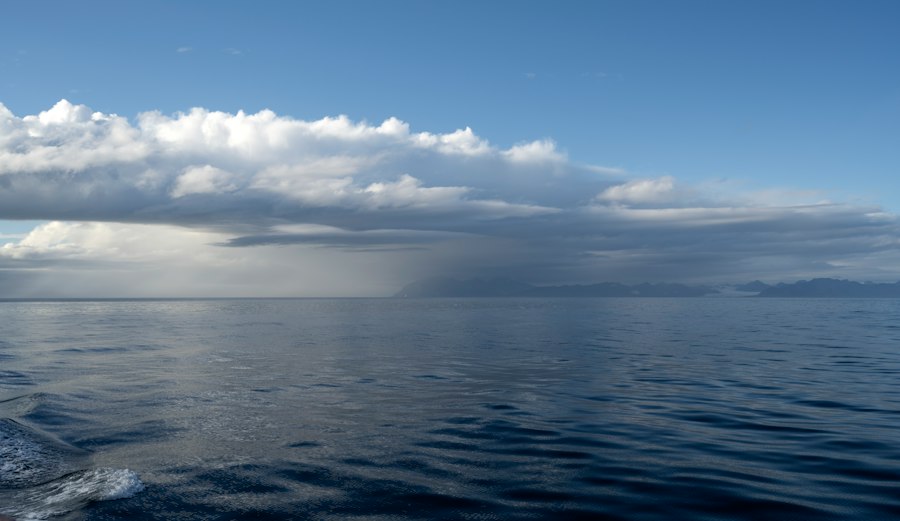
The most immediate and pervasive effect of a storm on the underwater acoustic environment stems from the violent churning of the ocean surface. High winds whip waves into a frenzy, creating a constant source of ambient noise that can drown out subtler acoustic signals. This increased surface noise is not uniform; it varies with wind speed, wave height, and the presence of breaking waves.
Breaking Waves as Broadband Noise Generators
Breaking waves, a hallmark of storms, are a significant contributor to underwater noise. The act of a wave collapsing and entraining air creates a multitude of bubbles. These bubbles, as they collapse and oscillate, generate sound across a broad spectrum, from low frequencies to ultrasound. The intensity of this noise is directly related to the energy of the breaking waves. During a severe storm, the cumulative effect of millions of breaking waves can create a formidable acoustic curtain, making it exceedingly difficult for submarines to hear anything beyond the immediate vicinity. This broadband noise effectively acts as a mask, obscuring both incoming sonar pings and the sounds produced by other vessels or marine life. The higher the sea state, the more pronounced this masking effect becomes, impacting the detection range of active sonar and the ability of passive sonar to discern specific targets.
Whitecap Formation and Bubble Clouds
Whitecaps, the foamy crests of waves, are visual indicators of intense air-sea interaction. Beneath these whitecaps lie vast clouds of entrained air bubbles. These bubble clouds are not merely passive absorbers of sound; they actively scatter and reflect acoustic waves. As sound waves pass through a bubble cloud, they are diffused, their energy dissipated, and their directionality altered. This phenomenon is particularly problematic for sonar systems, as it can lead to false echoes, reduced signal strength, and a distorted perception of the underwater environment. The presence of numerous bubble clouds near the surface during a storm significantly complicates the interpretation of sonar data, demanding advanced signal processing techniques to distinguish genuine targets from acoustic artifacts. The acoustic impedance mismatch between water and air-filled bubbles causes significant scattering, effectively creating a “noisy” layer that can attenuate and distort signals traveling through it.
Spray and Rain Noise
In addition to the direct impact of waves, storms often bring heavy rainfall and sea spray. Raindrops impacting the ocean surface, especially at high velocities, create acoustic signals that can be surprisingly significant, particularly at higher frequencies. These impacts generate small bubbles and disturbances that contribute to the ambient noise floor. Similarly, sea spray, the fine mist generated by wind blowing over waves, also adds to the acoustic clutter. While typically less impactful than breaking waves, the cumulative effect of intense rainfall and spray over a large area during a prolonged storm can further elevate the noise levels, adding another layer of difficulty for acoustic detection and analysis. The frequency content of rain noise is generally higher than that of wave noise, further broadening the spectrum of interference.
Atmospheric Influences on Underwater Acoustics

While surface conditions are the most obvious consequence of storms, atmospheric changes also exert a subtle yet significant influence on the propagation of sound underwater. These influences are often linked to changes in water properties that are indirectly driven by atmospheric phenomena.
Barometric Pressure Fluctuations and Sound Speed
Storms are characterized by significant fluctuations in barometric pressure. As atmospheric pressure drops, the water pressure at the surface also decreases, albeit to a lesser extent. Changes in hydrostatic pressure affect the density of seawater, which in turn influences the speed of sound. Lower pressure generally leads to slightly lower sound speeds. While this effect might seem minor, over long distances, these variations in sound speed can alter acoustic propagation paths, leading to refraction and bending of sound waves. This can impact the effectiveness of sonar systems by changing the expected arrival times and directions of echoes. Furthermore, rapid pressure changes can induce micro-bubbles within the water column itself, which can also scatter and attenuate sound.
Temperature Stratification and Thermoclines
Storms can disrupt the normal temperature stratification of the ocean. The intense mixing caused by strong winds can break down or deepen existing thermoclines – layers of rapid temperature change. Thermoclines act as significant acoustic barriers, reflecting and refracting sound waves. The disruption of these layers can lead to less predictable sound propagation. In calm conditions, submarines often exploit the properties of thermoclines for acoustic stealth. During storms, this predictable behavior is lost, and sound can travel through previously impenetrable layers, or be scattered in unexpected ways. This altered sound speed profile can significantly complicate sonar calculations and reduce the effectiveness of stealth tactics. The deepening of thermoclines can allow sound to travel deeper, while the disruption of strong, shallow thermoclines can allow sound to propagate more broadly at shallower depths.
Precipitation Effects on Salinity and Density
Heavy rainfall associated with storms can lead to localized decreases in surface salinity. Freshwater is less dense and has a slightly different sound speed than saltwater. This influx of freshwater can create lenses or layers of altered acoustic properties at the surface. These variations in salinity and density can cause further refraction and scattering of sound waves, adding another layer of complexity to acoustic propagation. While the effects are often localized and temporary, during intense and prolonged storms, these surface layers can significantly impact sonar performance and acoustic communication. The interaction of freshwater lenses with existing thermal gradients can create complex acoustic boundaries.
Submarine Operational Challenges in Stormy Seas
The altered acoustic landscape during storms presents a multitude of challenges for submarine operations, impacting everything from detection and navigation to communication and survivability.
Sonar Performance Degradation
The primary casualty of stormy seas is sonar performance. Both active and passive sonar systems rely on the predictable propagation of sound waves. The increased ambient noise, bubble scattering, and unpredictable sound speed gradients during storms severely degrade the signal-to-noise ratio (SNR), making it difficult to detect targets. Active sonar, which emits sound pulses and listens for echoes, is particularly vulnerable. The intense noise floor masks the weak echoes from distant submarines or other objects. Furthermore, the scattering from bubble clouds can create false echoes, leading to misidentification of targets and unnecessary expenditure of resources. Passive sonar, which listens for the sounds emitted by other vessels, also suffers. The overwhelming ambient noise can drown out the faint signatures of potential threats, reducing the submarine’s situational awareness. The ability to classify and track targets is severely compromised.
Communication Difficulties
Underwater acoustic communication is already a challenging endeavor due to the limitations of sound propagation. Storms exacerbate these difficulties. The high ambient noise levels make it difficult to transmit and receive intelligible messages. The reliability of sonar-based communication systems, such as those used for short-range tactical data exchange, is significantly reduced. In some cases, acoustic communication may become entirely impossible during the height of a storm, forcing submarines to rely on slower and less secure methods, or to forgo communication altogether. This can have serious implications for coordinated operations and the relay of critical intelligence. The range and clarity of acoustic modems are severely impacted by the increased noise and scattering.
Navigation and Stealth Compromises
While submarines primarily rely on inertial navigation systems, acoustic data plays a role in some advanced navigation and positioning techniques, particularly in areas where GPS is unavailable. Storm-induced acoustic anomalies can introduce errors into these systems, potentially affecting the submarine’s precise location. More critically, the ability of a submarine to maintain acoustic stealth is severely compromised. The very sounds generated by the submarine’s own machinery can be more easily detected by adversaries operating in the acoustically noisy environment, as the storm noise can mask the origin of these sounds, paradoxically making the submarine more detectable if its own noise is significant. Conversely, the increased ambient noise makes it harder for the submarine to detect approaching threats, reducing its ability to evade them. The strategic advantage of acoustic silence is diminished.
Impact on Torpedo and Mine Warfare
The effectiveness of torpedoes and naval mines, which often rely on acoustic homing or are deployed in areas susceptible to storm effects, can also be impacted. Acoustic torpedoes may struggle to acquire and track targets amidst the noise and scattering. The deployment and functioning of naval mines can be affected by strong currents and seabed disturbances associated with storms, and their acoustic fuzes may be triggered by the elevated ambient noise, leading to premature detonation or false alarms. The ability to accurately deploy these weapons in a controlled manner is diminished.
Understanding submarine acoustic conditions during storms is crucial for naval operations and underwater research. A related article that delves into this topic can be found at this link, where it explores how turbulent weather affects sound propagation in the ocean. This knowledge is essential for enhancing communication and detection capabilities in challenging environments, ensuring that submarines can operate effectively even under adverse conditions.
Countermeasures and Future Research Directions
| Parameter | Typical Range During Storm | Impact on Submarine Acoustic Conditions | Measurement Units |
|---|---|---|---|
| Sea State | 5 to 8 (Rough to Very Rough) | Increased surface noise and wave action, causing higher ambient noise levels | Beaufort Scale |
| Wind Speed | 20 to 40 knots | Generates surface turbulence and bubbles, affecting sound propagation | Knots |
| Ambient Noise Level | 90 to 120 dB re 1 µPa | Elevated noise floor reduces sonar detection range | Decibels (dB) |
| Water Temperature | 5 to 15 °C (varies with depth) | Influences sound speed profile and refraction | Degrees Celsius (°C) |
| Salinity | 30 to 35 PSU | Affects sound speed and absorption | Practical Salinity Units (PSU) |
| Sound Speed | 1450 to 1550 m/s | Determines acoustic propagation paths | Meters per second (m/s) |
| Bubble Density | High during storm | Scatters and absorbs acoustic signals | Number per cubic meter (varies) |
| Wave Height | 3 to 10 meters | Contributes to surface noise and bubble generation | Meters (m) |
The challenges posed by submarine acoustic conditions during storms necessitate the development of robust countermeasures and continued research into understanding and mitigating these effects.
Advanced Signal Processing Techniques
The cornerstone of dealing with stormy acoustic conditions lies in advanced signal processing. Sophisticated algorithms are being developed to filter out the broadband noise, isolate specific frequencies, and distinguish genuine signals from clutter. Techniques such as adaptive beamforming, noise cancellation, and advanced statistical filtering are crucial for improving sonar performance. Machine learning and artificial intelligence are also being employed to identify patterns in the noisy data, enabling the recognition of targets that might otherwise be missed. These techniques aim to enhance the SNR and improve the accuracy of acoustic detection and classification. The development of algorithms that can adapt to the rapidly changing acoustic environment in real-time is a key area of focus.
Novel Sonar and Acoustic Technologies
The limitations of traditional sonar systems are driving innovation in new acoustic technologies. This includes the development of higher frequency sonars for increased resolution, though these are more susceptible to attenuation in bubble clouds. Conversely, lower frequency sonars offer better propagation but have lower resolution. Research is also ongoing into non-acoustic detection methods, such as magnetic anomaly detection (MAD) and optical sensors, to supplement acoustic capabilities during storms. Furthermore, the design of sonar arrays and transducers is being optimized to be more resilient to the acoustic interference. The exploration of biomimetic sonar, inspired by the acoustic capabilities of marine mammals, is also a promising avenue.
Improved Acoustic Modeling and Prediction
A critical area of research is the development of more accurate models for predicting underwater acoustic conditions during storms. By better understanding the physics of air-sea interaction and its impact on sound propagation, naval forces can plan operations more effectively and anticipate acoustic challenges. These models can help determine optimal operating depths, acoustic frequencies, and communication strategies. Real-time acoustic forecasting systems, integrating meteorological data with acoustic propagation models, are becoming increasingly important for operational decision-making.
Submarine Design and Operational Tactics
The design of submarines themselves can be adapted to improve their performance in noisy environments. This includes advancements in quieting technologies to reduce the submarine’s own acoustic signature, making it harder to detect. Operational tactics are also being refined. Submarines may choose to operate at greater depths to avoid surface noise, or alter their speed and maneuver to minimize their acoustic footprint. The development of “silent running” protocols during storms is paramount. Understanding the specific acoustic characteristics of different storm types can also inform strategic deployment and operational planning.
The Broader Ecological and Scientific Implications
Beyond military applications, the acoustic changes during storms have significant implications for marine ecosystems and scientific research.
Impact on Marine Mammal Communication and Behavior
Many marine mammals rely heavily on sound for communication, navigation, foraging, and predator avoidance. The intense noise generated by storms can disrupt these vital acoustic channels. Vocalizations may be masked, leading to reduced communication range and effectiveness. This can impact mating calls, parent-offspring interactions, and the ability to locate prey or avoid predators. While some species may adapt by vocalizing louder or at different frequencies, prolonged exposure to high noise levels can cause stress, displacement, and even auditory damage. Understanding these impacts is crucial for marine conservation efforts, especially in areas with high shipping or naval activity that may coincide with storm seasons. The long-term effects on population dynamics are a growing concern.
Oceanographic Research and Data Collection
Storms are a unique opportunity for oceanographic research, but the acoustic interference can pose challenges for instrumentation. Autonomous underwater vehicles (AUVs) and acoustic sensors deployed for research purposes may experience degraded performance. However, the very disruption caused by storms can provide valuable data on ocean mixing, sediment transport, and the physical processes governing sound propagation. Scientists are developing methods to extract meaningful data from these noisy environments, using the storm itself as a natural experiment. The study of acoustic scattering from bubble clouds, for instance, can provide insights into the dynamics of air-sea interaction.
Hydroacoustic Monitoring and Environmental Noise Assessment
Hydroacoustic monitoring stations are used to track marine life, seismic activity, and human-induced noise pollution. During storms, these stations are inundated with high levels of ambient noise, making it difficult to discern specific events. However, the data collected during storms can also be valuable for establishing baseline noise levels and understanding the natural variability of the underwater soundscape. This information is essential for assessing the impact of anthropogenic noise on marine environments and for developing effective noise mitigation strategies. The long-term trends in hydroacoustic data, including those affected by storm periods, are vital for understanding the health of the ocean.
The underwater acoustic conditions during storms represent a complex and challenging phenomenon. From the direct impact of surface agitation to the subtle influences of atmospheric pressure, storms transform the ocean’s soundscape. For submarines, this translates into degraded sonar performance, communication difficulties, and compromised stealth. However, through ongoing advancements in signal processing, sonar technology, modeling, and tactical approaches, naval operations are continually adapting. Furthermore, the ecological and scientific implications of these acoustic shifts highlight the interconnectedness of atmospheric and oceanic processes, underscoring the importance of continued research and a comprehensive understanding of our planet’s dynamic aquatic environments.

The Soviet Submarine Britain Lost—Then Found Again
FAQs
What are submarine acoustic conditions during a storm?
Submarine acoustic conditions during a storm can be significantly affected by the increased noise levels caused by rough seas, strong winds, and underwater turbulence. These conditions can make it challenging for submarines to detect and communicate with other vessels.
How do storms impact underwater sound propagation?
Storms can impact underwater sound propagation by increasing ambient noise levels, causing sound to scatter and refract differently, and creating turbulent conditions that can distort or absorb sound waves. This can make it difficult for submarines to accurately detect and interpret acoustic signals.
Why is it important for submarines to understand acoustic conditions during a storm?
It is important for submarines to understand acoustic conditions during a storm because these conditions can affect their ability to navigate, communicate, and detect potential threats underwater. By being aware of how storms impact acoustic environments, submarines can better adapt their operations to ensure safety and mission success.
How do submarines mitigate the effects of stormy acoustic conditions?
Submarines can mitigate the effects of stormy acoustic conditions by using advanced acoustic technologies, such as noise reduction systems and signal processing algorithms, to enhance their ability to detect and communicate in challenging underwater environments. Additionally, submarines can adjust their operational tactics to minimize exposure to noisy or turbulent areas during storms.
What research is being done to improve submarine operations in stormy acoustic conditions?
Ongoing research is focused on developing new acoustic sensing technologies, improving underwater communication systems, and studying the impact of storms on underwater sound propagation. By advancing our understanding of stormy acoustic conditions, researchers aim to enhance submarine capabilities and ensure their effectiveness in challenging maritime environments.