The Echoes of Speed: Soviet Submarine Design and the Stealth Paradox
The Cold War, a period of intense ideological and geopolitical tension, fostered an unprecedented arms race, particularly in the domain of naval warfare. At the heart of this struggle lay the submarine, a silent predator of the deep. While the United States focused on developing quieter, more stealthy submarines, the Soviet Union often pursued a different philosophy. Among their many innovative designs, certain submarines stood out for their remarkable speed, pushing the boundaries of what was thought possible for underwater vessels. This pursuit of velocity, however, raised a critical question: was this emphasis on speed coming at the expense of stealth, the very attribute that made submarines so formidable? This article delves into the Soviet approach to submarine design, examining the technological drivers behind their pursuit of speed and the inherent trade-offs with stealth.
In a fascinating exploration of naval technology, a recent article discusses the challenges faced by Soviet submarines, particularly focusing on the paradox of speed and stealth. The piece highlights how some Soviet submarines were designed to be incredibly fast, which ironically made them less stealthy and more detectable by enemy forces. For a deeper understanding of this intriguing aspect of Cold War naval strategy, you can read the full article at In the War Room.
The Drive for Velocity: Strategic Imperatives and Technological Ambition
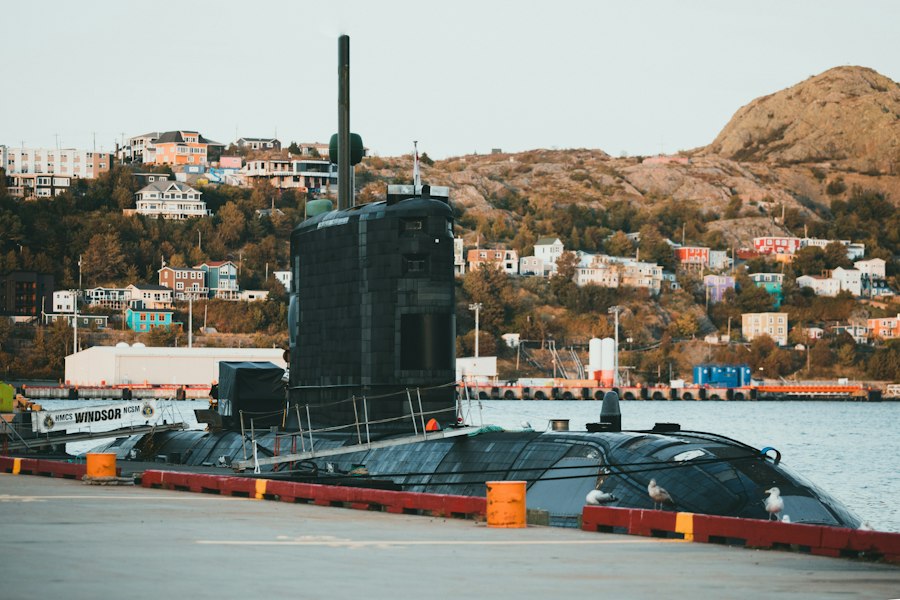
The Soviet Union’s strategic doctrine differed significantly from that of the United States. While American planners often envisioned submarines as stealthy deterrents and intelligence gatherers, the Soviet military saw them as powerful offensive weapons. This divergence in strategic thinking heavily influenced their submarine development.
The “Active Hunter” Doctrine
Soviet naval strategists conceived of submarines not just as passive watchers but as active hunters of enemy fleets. Their primary objective was often the rapid interception and destruction of Western carrier battle groups and convoys. To achieve this, speed was paramount. A submarine capable of high speeds could close the distance quickly, engage its targets, and evade counterattacks with greater effectiveness. This “active hunter” doctrine demanded platforms that could not only reach their targets rapidly but also maneuver aggressively during combat.
The Technological Push for Speed
Achieving high underwater speeds is a monumental engineering challenge. It requires immense power, efficient propulsion systems, and hull designs that minimize hydrodynamic drag. The Soviets, despite facing resource constraints and technological hurdles, invested heavily in these areas.
Nuclear Propulsion: The Engine of Speed
The development of reliable and powerful nuclear reactors was a game-changer for submarine design. The Soviet Union, though perhaps lagging behind the US in certain aspects of nuclear technology, made significant strides. Their nuclear-powered submarines, particularly later designs like the Project 671 “Yorik” (NATO reporting name Victor class) and the Project 945 “Skat” (NATO reporting name Sierra class), were known for their impressive speed. These reactors provided sustained power output, allowing submarines to maintain high speeds for extended periods, a capability that diesel-electric submarines, with their limited battery life, could not match.
Hull Design and Hydrodynamics
Beyond raw power, the shape of the submarine’s hull plays a crucial role in its speed. Soviet designers experimented with various hull forms, often incorporating features aimed at reducing drag and turbulence. The teardrop-shaped hull, optimized for hydrodynamic efficiency at high speeds, became a characteristic of many Soviet fast attack submarines. However, the pursuit of speed could sometimes lead to compromises in other areas of hull design that might have enhanced stealth. For instance, hull shapes optimized for speed might have different acoustic signatures than those optimized for silence.
The Submarine’s Role in Soviet Naval Strategy
The Soviet submarine fleet was envisioned as a critical component of a multi-layered defense and offense strategy. Their speed allowed them to operate in forward areas, disrupt enemy sea lanes, and pose a direct threat to naval assets far from Soviet shores.
Interdicting Sea Lanes
A core tenet of Soviet naval strategy was the interdiction of Western maritime trade routes. Fast submarines could rapidly deploy to choke points and patrol areas where convoys were expected. Their speed provided them with the advantage of surprise and the ability to attack before defensive measures could be effectively deployed.
Countering Carrier Battle Groups
The formidable American aircraft carrier battle groups were a primary target for Soviet naval planners. Fast submarines were seen as a key weapon to counter this threat. The ability to quickly close the distance and launch torpedo attacks against these large, complex formations was a significant strategic goal, and speed was essential for such an operation.
The Stealth Conundrum: Sacrifices Made for Velocity
While Soviet submarines were undeniably fast, this pursuit of velocity often came with significant compromises in stealth, a characteristic that became the hallmark of Western submarine development. Stealth, in the context of submarines, refers to the ability to operate undetected, minimizing acoustic signatures and visual detection.
Acoustic Signature: The Unseen Footprint
The most significant trade-off for high speed in submarine design is often an increase in acoustic signature. Powerful propulsion systems, necessary for high speeds, generate more noise.
Machinery Noise
The nuclear reactors themselves, along with the turbines and gearing that transmit power to the propeller, are inherent sources of noise. To achieve high speeds, these systems often operate at higher power levels, thus increasing their acoustic output. While Soviet engineers worked on noise reduction techniques, the sheer power required for their fast submarines inevitably led to a more pronounced acoustic footprint compared to submarines designed with an overriding emphasis on silence.
Hydrodynamic Noise
At high speeds, the interaction of the hull with the water generates significant hydrodynamic noise. Cavitation, the formation and collapse of bubbles in the water around the propeller and hull, is a major contributor to this noise. Designs optimized for high speed might experience more pronounced cavitation at lower speeds than designs that prioritized a quieter flow of water around the hull.
Detection Methods: The Evolving Landscape of ASW
The effectiveness of a submarine’s stealth is ultimately measured by its ability to evade Anti-Submarine Warfare (ASW) capabilities. The development of sonar technology, both passive and active, has been a constant arms race.
Sonar Detection Challenges
Western navies, particularly the United States, invested heavily in advanced sonar systems capable of detecting even faint acoustic signatures at long ranges. A Soviet submarine, even if its speed allowed for rapid maneuvering, could still be detected by these sophisticated ASW platforms if its acoustic signature was sufficiently high. The “push and run” tactics, where a fast submarine would dash in, attack, and then attempt to outrun pursuit, were predicated on the hope that their speed would outpace the enemy’s ability to track and engage them once their position was compromised.
Hull Materials and Construction: A Balancing Act
The materials and construction methods used in submarine hulls also play a role in stealth. While the Soviets did experiment with advanced materials, the emphasis on speed and robustness sometimes led to designs that might have been acoustically less optimized.
Titanium Hulls and Acoustic Properties
Some advanced Soviet submarine classes, like the Project 661 “Anchar” (NATO reporting name Papa class) and the Project 945 “Skat” (Sierra class), utilized titanium alloys for their hulls. Titanium offers exceptional strength-to-weight ratio, allowing for deeper diving and potentially higher speeds. However, the acoustic properties of titanium are different from those of steel, and its use could present its own set of challenges and advantages in terms of acoustic reflection and transmission, which needed to be managed carefully to avoid compromising stealth.
Case Studies: The “Victor” and “Alpha” Classes
Examining specific Soviet submarine classes provides concrete examples of the pursuit of speed and its implications for stealth. The Victor and Alpha classes represent distinct, albeit overlapping, philosophies in Soviet submarine design.
The Project 671 “Yorik” (Victor Class)
The Victor class submarines were a series of Soviet nuclear-powered attack submarines that served as the workhorses of the Soviet Navy. They were designed to be fast, maneuverable, and capable of carrying a significant torpedo armament.
Speed and Armament
The Victor class was renowned for its speed, with some variants reportedly capable of exceeding 30 knots, a significant velocity for their era. This speed, combined with their advanced sonar and weapon systems, made them a potent threat to Western naval forces. Their primary role was to hunt down and destroy Western submarines and surface ships.
Stealth Considerations
While fast, the Victor class was generally considered to be noisier than its contemporary American counterparts, such as the Sturgeon class. The powerful propulsion systems required for their speed, while effective, contributed to a more detectable acoustic signature. However, the Soviets did implement noise reduction measures, and the overall effectiveness of their stealth capabilities was a complex interplay of design, operation, and the evolving ASW environment.
The Project 661 “Anchar” (Alpha Class)
The Alpha class submarines, while fewer in number, represented a more radical departure in Soviet submarine design, pushing the boundaries of speed and depth.
The Quest for Extreme Speed and Depth
The Alpha class was engineered for unparalleled speed, with some sources suggesting speeds exceeding 40 knots, making it one of the fastest submarines ever built. This was achieved through a revolutionary twin-reactor design and a titanium hull, allowing for extreme diving depths as well. The strategic rationale was to create a submarine that could rapidly deploy to intercept enemy forces and survive in environments previously inaccessible to submarines.
The Noise Factor and Operational Realities
The incredible speeds achieved by the Alpha class invariably came with a significant acoustic penalty. The sheer power and the cavitation generated at such velocities made these submarines inherently noisy. While their speed and depth offered unique tactical advantages, their acoustic signature likely made them more vulnerable to detection by advanced sonar systems. Operational reports and analyses often point to the Alpha class as being very fast but also very loud, a testament to the direct trade-off between extreme velocity and stealth.
In recent discussions about naval warfare, the performance of Soviet submarines has often been highlighted, particularly regarding their speed and stealth capabilities. An intriguing article that delves deeper into this topic can be found here, where it explores how the design choices made by Soviet engineers sometimes prioritized speed over stealth, resulting in submarines that were too fast to remain undetected. This trade-off has significant implications for naval strategy and tactics, making it a fascinating subject for military enthusiasts and historians alike.
The Evolving Nature of Stealth and Soviet Responses
| Metric | Value | Notes |
|---|---|---|
| Submarine Class | Alfa-class (Project 705) | Known for high speed and titanium hull |
| Maximum Speed | 41 knots (approx. 76 km/h) | One of the fastest nuclear submarines ever built |
| Stealth Capability | Compromised at high speeds | High speed generated significant noise |
| Hull Material | Titanium | Reduced weight and increased strength |
| Reactor Type | Liquid metal cooled reactor | Allowed compact design and high power output |
| Operational Depth | Up to 400 meters | Greater than many contemporaries |
| Noise Level at Max Speed | High | Reduced stealth effectiveness |
| Year Introduced | 1970s | Cold War era technology |
The Soviet Union was not static in its approach to submarine design. As ASW technology advanced, so too did Soviet efforts to improve the stealth of their submarines, even while maintaining a focus on speed.
Noise Reduction Efforts
Throughout the latter stages of the Cold War, Soviet engineers made concerted efforts to reduce the acoustic signatures of their submarines. This involved innovations in machinery isolation, propeller design, and hull treatments.
Machinery Isolation and Damping
Mounting critical machinery like engines and pumps on resilient foundations helped to isolate vibrations from the hull, reducing the transmission of noise into the water. The use of acoustic damping materials also played a role in absorbing sound.
Propeller Design and Cavitation Control
The propeller is a major source of underwater noise. Soviet designers worked on optimizing propeller blade design to minimize cavitation and turbulence, even at higher rotational speeds.
Operational Tactics and Evasion
Beyond design, Soviet submarine commanders employed sophisticated operational tactics to maximize their chances of remaining undetected. Speed itself was often used as a tactical tool for evasion.
“Dash and Hide” Tactics
When detected or anticipating detection, fast Soviet submarines could employ “dash and hide” maneuvers. This involved a rapid acceleration to high speed to break contact and then shutting down or maneuvering to a quieter operating profile in a favorable acoustic environment.
Operating in Known Acoustic Shadows
Submarine commanders were trained to understand the acoustic properties of different ocean environments and to utilize “acoustic shadows” – areas where sound propagation is limited – to their advantage. High speed could be used to reach these areas quickly.
The Legacy of Speed and Stealth
The Soviet pursuit of fast submarines left an indelible mark on naval warfare and submarine design. Their innovative approaches, while sometimes at odds with the prevailing emphasis on stealth in the West, highlighted the complex interplay of strategic objectives, technological capabilities, and the inherent compromises in military engineering.
A Different Path, Not Necessarily a Wrong One
It is crucial to avoid judging Soviet submarine design solely through the lens of Western stealth priorities. The Soviet Union had different strategic imperatives and a different understanding of naval warfare. Their fast submarines were designed to fulfill specific roles, and their speed was a critical enabler of those roles. The debate over whether their speed compromised their stealth to a detrimental degree is a complex one, with no easy answers.
Lessons Learned for Modern Submarine Warfare
The advancements made by the Soviets in propulsion and hydrodynamics, even if driven by speed, have contributed to the broader understanding of submarine performance. Modern submarines, regardless of their primary design philosophy, benefit from the lessons learned in noise reduction and efficient power utilization. The ongoing evolution of ASW technology continues to push both sides to innovate, seeking a balance between speed, stealth, and survivability in the underwater domain. The echoes of the Soviet Union’s high-speed submarines continue to resonate in the silent depths, a testament to a different vision of underwater dominance.
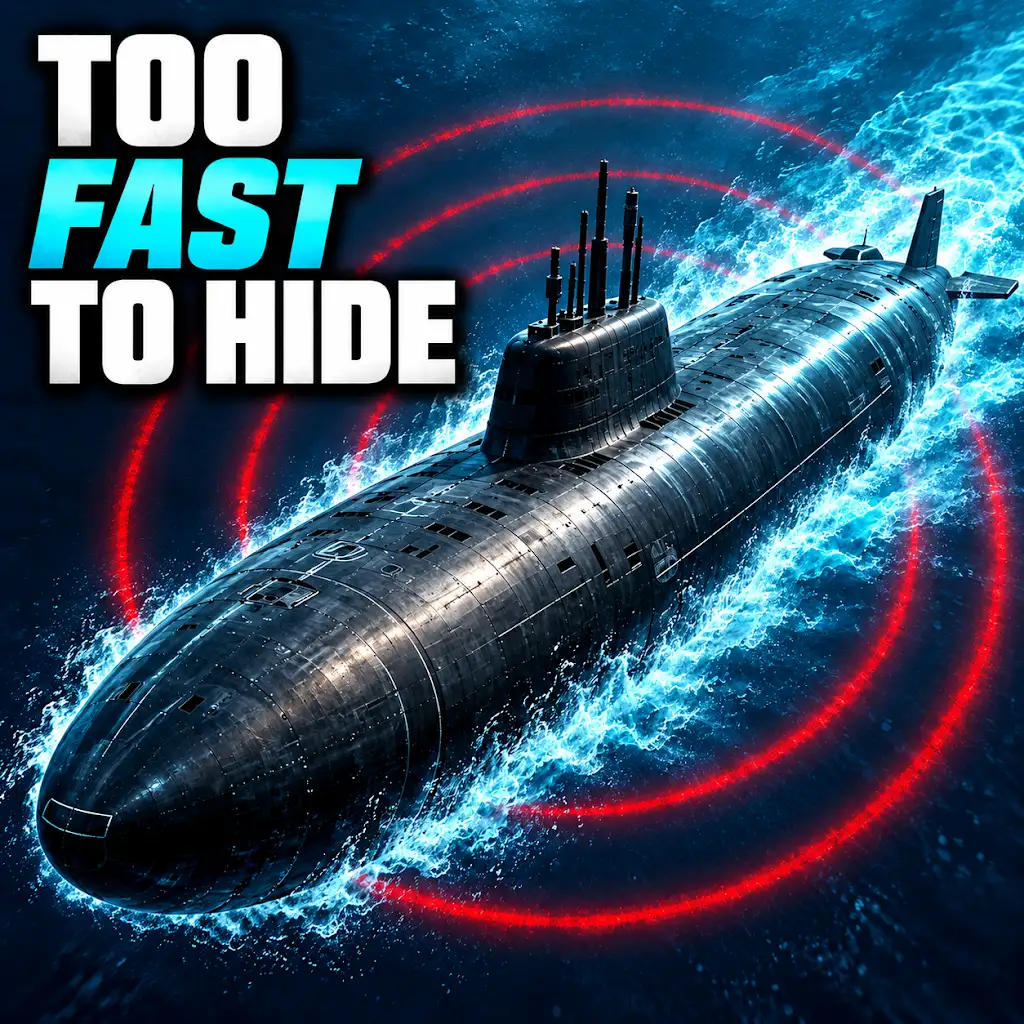
The Soviet Submarine That Broke a Speed Record—and Its Own Stealth
FAQs
What is the article about?
The article discusses a Soviet submarine that was found to be too fast to maintain stealth capabilities.
Why is speed important for submarine stealth?
Submarines rely on stealth to remain undetected by enemy forces. Slower speeds help reduce noise levels, making it harder for sonar systems to detect the submarine.
How did the Soviet submarine’s speed affect its stealth capabilities?
The Soviet submarine’s high speed caused increased noise levels, making it easier for enemy sonar systems to detect the submarine. This compromised its ability to remain stealthy.
What are some other factors that contribute to submarine stealth?
In addition to speed, factors such as the design of the submarine, the materials used in its construction, and the skill of the crew in operating the vessel all play a role in maintaining stealth capabilities.
How do modern submarines address the issue of speed and stealth?
Modern submarines are designed with a balance of speed and stealth in mind. Advances in technology, such as quieter propulsion systems and improved hull designs, help to minimize noise levels and maintain stealth capabilities even at higher speeds.