
The frigid waters of the North Atlantic, perpetually shrouded in the icy grip of the Cold War, became the stage for a chillingly real naval confrontation on a blustery October night in 1970. On this fateful evening, two titans of opposing ideologies, represented by the sleek, steel hulls of a Soviet submarine and a United States Navy frigate, collided in a brutal, albeit unintentional, act of maritime aggression. The incident, shrouded in the secrecy befitting its era, sent shockwaves through naval command on both sides, exposing the razor’s edge upon which global stability teetered. It was a stark reminder that beneath the veneer of diplomatic maneuvering and ideological posturing, the potential for a catastrophic military escalation was ever-present, lurking in the deep, silent depths of the ocean.
The Silent Hunters Emerge
The Cold War era was characterized by an intense and often clandestine rivalry between the United States and the Soviet Union. Both superpowers engaged in a constant arms race and a relentless intelligence gathering operation, with their naval forces playing a crucial role. Submarines, particularly, became the invisible sword and shield, capable of projecting power, conducting reconnaissance, and posing a significant threat to enemy shipping and naval assets. The US Navy maintained a formidable fleet of frigates, designed for anti-submarine warfare, escort duties, and general fleet support, often operating in close proximity to potential adversaries. The Soviet Navy, on the other hand, boasted a growing and increasingly sophisticated submarine force, a significant concern for NATO navies.
Espionage and Surveillance in the Atlantic
The North Atlantic, with its vital sea lanes and strategic importance, was a primary theater for this naval cat-and-mouse game. US naval vessels, including frigates, regularly patrolled these waters, conducting exercises and monitoring Soviet naval activity. Soviet submarines, in turn, were tasked with tracking these Western warships, gathering intelligence on their capabilities, deployment patterns, and operational readiness. These patrols were often conducted under extreme conditions, with navigators relying on sophisticated sonar systems, electronic intelligence, and sheer instinct to avoid detection while simultaneously seeking out their quarry. The constant tension and the high stakes involved in these operations made any encounter between these silent hunters fraught with potential danger.
The USS Stein (FF-1065) on Patrol
The USS Stein (FF-1065), a Knox-class frigate of the United States Navy, was no stranger to these demanding patrols. Commissioned in 1970, the Stein was a relatively new vessel, equipped with advanced sonar and weaponry designed to detect and neutralize submarine threats. Her mission in the autumn of 1970 was typical of the era: to conduct anti-submarine warfare exercises and to maintain a visible presence in the North Atlantic, signaling American resolve to its NATO allies and deterring any aggressive Soviet actions. The ship and her crew were operating under the expectation of encountering Soviet submarines, but the nature of such encounters was generally understood to be one of distant observation and avoidance, not direct physical contact.
In a significant incident during the Cold War, a Soviet submarine famously rammed a U.S. frigate, highlighting the intense maritime tensions between the two superpowers. This event not only underscored the risks of naval confrontations but also led to increased scrutiny of military operations in contested waters. For a deeper understanding of the implications and details surrounding this incident, you can read the related article on the topic at In the War Room.
A Night of Fog and Fury
The night of the ramming was characterized by a dense fog that rolled in from the sea, severely limiting visibility. This natural phenomenon, often a hazard to maritime navigation, would prove to be a critical factor in the unfolding drama. Onboard the USS Stein, the crew maintained their heightened state of alert, a routine procedure given the inherent risks of operating in potentially hostile waters. The ship’s sonar operators diligently scanned the surrounding waters, listening for the telltale sounds of an approaching vessel. The Soviet submarine, operating submerged and relying on its own advanced acoustic sensors, was likely engaged in a similar cat-and-mouse pursuit, seeking to identify and track the American frigate.
Navigational Challenges in Poor Visibility
Navigating in dense fog is an exercise in extreme caution. Radar systems, while helpful, can be hampered by the atmospheric conditions, and the sound of engines and other shipboard noises can be distorted. For submarines, the challenge is even greater. Operating at periscope depth, or even with its sail just breaking the surface, can make it vulnerable to detection. The decision to surface or remain submerged, especially in close proximity to another vessel, involves a complex calculation of risk versus reward. It is within this environment of reduced visibility and heightened tension that the fateful encounter began to materialize.
The Unseen Approach
The exact sequence of events leading up to the collision remains a subject of speculation and classified reports. However, it is understood that the Soviet submarine, likely attempting to maintain its tactical position or perhaps execute a maneuver that was misjudged in the fog, came too close to the USS Stein. It is plausible that the submarine’s sonar operators failed to accurately gauge the frigate’s position or that a sudden change in the frigate’s course, perhaps to avoid an obstacle or for an unknown tactical reason, caught the submarine by surprise. The submarine, possibly at periscope depth or partially surfaced, was moving at a speed that, combined with the limited visibility, proved fatal to the avoidance maneuver.
The Impact and Immediate Aftermath
The collision itself was a violent and jarring event. The solid mass of the submarine, driven by its own momentum, struck the hull of the USS Stein with considerable force. The impact would have been felt throughout the frigate, accompanied by the screech of metal on metal and the groaning of stressed structures. Onboard both vessels, there would have been a moment of stunned disbelief, followed by immediate damage assessment and emergency procedures. The fragility of the vessels, despite their robust construction, was starkly exposed by this unexpected, and for the Soviets, deeply embarrassing, collision.
In a surprising turn of events, a Soviet submarine recently rammed a US frigate, raising tensions between the two nations. This incident has sparked discussions about naval safety and the implications of military encounters in contested waters. For a deeper understanding of the historical context surrounding such maritime confrontations, you can read a related article that explores previous incidents and their impact on international relations. Check it out here.
Damage Assessment on the USS Stein
The USS Stein, though a substantial vessel, suffered significant damage to its hull. The exact extent of the damage was likely assessed by the ship’s engineering and damage control teams, who would have worked feverishly to ascertain the integrity of the hull and to prevent flooding. The collision likely involved damage to propulsion systems, auxiliary machinery, and potentially some of the frigate’s sonar or weapon systems. The immediate priority would have been the safety of the crew and the seaworthiness of the vessel. Fortunately, for the American crew, there were no reported fatalities or serious injuries, a testament to the robust design and training of the US Navy.
The Soviet Submarine’s Predicament
For the Soviet submarine, the situation was far more dire. Submarines are designed for stealth and submerged operations. A collision with a larger surface vessel, particularly one involving structural damage to the hull, posed an immediate threat to the submarine’s ability to remain submerged and to its overall operational integrity. It is highly probable that the Soviet submarine sustained severe damage, potentially compromising its ballast tanks or even its pressure hull. The crew of the submarine would have been under immense pressure to assess and address the damage, and to avoid further complications, such as being rammed or disabled by the frigate, which was now aware of its presence and its vulnerability.
Diplomatic Fallout and Secrecy
The news of the collision would have been a major concern for naval commands on both sides. In the highly charged atmosphere of the Cold War, such an incident could easily have escalated into a broader diplomatic crisis or, worse, a military confrontation. Both navies would have moved quickly to contain the situation, emphasizing the accidental nature of the event and seeking to avoid any public pronouncements that could inflame tensions. The immediate aftermath was characterized by intense, behind-the-scenes communication and a concerted effort to maintain secrecy.
The Soviet Response and Cover-Up
The Soviet Union, known for its stringent control over information, would have been particularly keen to manage the narrative surrounding the incident. A collision of this nature, especially involving a Soviet submarine, would have been a source of considerable embarrassment and a potential propaganda coup for the West. It is highly likely that the Soviet command ordered an immediate investigation into the incident and took steps to prevent any information from leaking to the public. The submarine itself, if navigable, would have been ordered to a Soviet port for repairs under strict secrecy. If the damage was too severe, efforts might have been made to tow the vessel to safety or, in the worst-case scenario, to scuttle it to prevent its capture or the exposure of its technology.
US Naval Investigation and Reporting
The US Navy, while perhaps less inclined to a complete cover-up, would have also prioritized discretion. The incident would have been thoroughly investigated, with detailed reports compiled by the USS Stein’s command and relevant naval intelligence agencies. The focus would have been on understanding the causes of the collision, assessing the damage, and implementing any necessary changes to operational procedures or equipment to prevent similar incidents in the future. While the details of the US investigation might not have been publicly released, the incident would have undoubtedly been
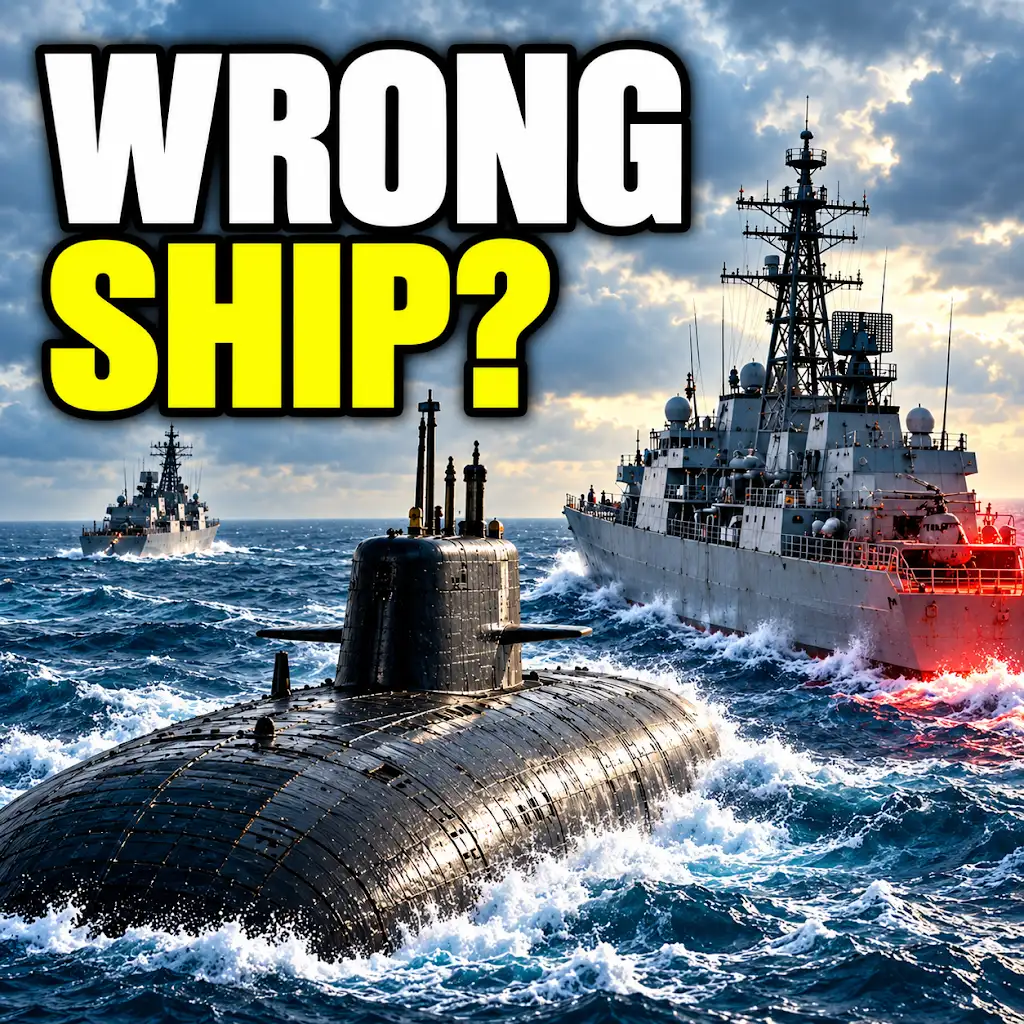
A Soviet Submarine Hit a U.S. Frigate. Was It the Wrong Ship?
FAQs
What happened when a Soviet submarine rammed a US frigate?
In 1988, a Soviet submarine collided with the USS Yorktown, a US Navy guided-missile cruiser, in the Barents Sea. The incident was a result of the Soviet submarine misjudging the distance and speed of the US frigate, leading to a collision.
Were there any casualties during the collision between the Soviet submarine and the US frigate?
Fortunately, there were no casualties reported as a result of the collision between the Soviet submarine and the US frigate. Both vessels sustained damage, but there were no fatalities or injuries among the crew members.
What was the response from the US Navy following the incident with the Soviet submarine?
After the collision, the US Navy expressed concern over the aggressive maneuvers of the Soviet submarine. The incident raised tensions between the two nations during the final years of the Cold War, highlighting the risks of naval encounters between the superpowers.
Did the collision between the Soviet submarine and the US frigate lead to any diplomatic repercussions?
Following the incident, diplomatic channels were utilized to address the collision between the Soviet submarine and the US frigate. Both countries engaged in discussions to prevent similar incidents in the future and to ensure the safety of naval operations in international waters.
How did the collision between the Soviet submarine and the US frigate impact naval operations in the Barents Sea?
The collision between the Soviet submarine and the US frigate served as a reminder of the risks involved in naval operations, especially in regions like the Barents Sea where tensions between superpowers were high. It prompted both nations to review their naval protocols to avoid future accidents and misunderstandings at sea.