The frigid waters of the North Atlantic, a theater of constant, silent tension, became the improbable stage for a near-catastrophic maritime incident. It was an encounter that, had fate or human error played a slightly different hand, could have escalated into a major international crisis. The chilling ballet of submerged adversaries, a perpetual game of cat and mouse between NATO and the Soviet Union, brought two titans of the deep into an unexpected, terrifying proximity. This is the story of a Soviet submarine’s perilous ascent and the harrowing moments of a periscope depth collision, a testament to the unforgiving nature of naval warfare and the razor’s edge on which superpower relations often teetered.
The Strategic Landscape of the Cold War Seas
The Cold War was not solely fought on land or in the skies; its most inscrutable and potentially devastating battles were waged beneath the waves. The vast expanses of the world’s oceans served as highways for intelligence gathering, power projection, and the terrifying specter of nuclear deterrence. Submarines, the invisible predators of the sea, represented the apex of this silent, strategic struggle. For the Soviet Union, a nation with an extensive coastline and a deep-seated desire to challenge American naval supremacy, submarines were paramount. Their Northern Fleet, based in the Kola Peninsula, was a formidable force, designed to patrol the crucial Arctic waters and the North Atlantic, a vital artery for NATO reinforcements and trade.
The Soviet Submarine Doctrine: Stealth and Deterrence
Soviet submarine doctrine was, by and large, centered on stealth and the ability to launch devastating retaliatory strikes. Unlike their American counterparts, who often operated with a greater emphasis on forward deployment and power projection, Soviet submarines were frequently tasked with shadowing NATO fleets, identifying potential targets, and maintaining a constant, silent vigil. This emphasis on undetectable presence meant that Soviet submarine crews were drilled in the art of silent running, minimizing acoustic signatures, and operating in environments where detection was exceptionally difficult. Their operational areas often overlapped with those of NATO patrols, creating a continuous, albeit usually unseen, dance of potential conflict. The pursuit of technological parity, while always a goal, was often secondary to the rigorous training and disciplined adherence to operational protocols that characterized Soviet naval aviation.
NATO’s Anti-Submarine Warfare (ASW) Posture
Conversely, NATO’s primary objective in the submarine domain was denial and detection. The alliance poured immense resources into developing advanced anti-submarine warfare (ASW) capabilities, including sophisticated sonar systems, maritime patrol aircraft, and a fleet of dedicated anti-submarine escorts. The overarching strategy was to locate and neutralize any Soviet submarine threat before it could pose a danger to NATO shipping or launch an offensive. This often involved coordinated ASW operations, where various assets worked in concert to sweep vast areas of the ocean, creating a formidable barrier to Soviet underwater incursions. The North Atlantic, a region of critical strategic importance, was a constant focus of these ASW efforts, with regular patrols and exercises designed to maintain a high state of readiness.
In examining the complexities of naval operations during the Cold War, one notable incident involves a Soviet submarine’s collision while at periscope depth, highlighting the challenges of underwater navigation and the risks associated with stealth operations. For a deeper understanding of such maritime incidents and their implications, you can refer to a related article that discusses various naval encounters and their historical significance. For more details, visit this article.
The Shadowy Encounter: Navigating the Depths

The specific incident in question occurred during a period of heightened global tension, a time when the ideological chasm between the superpowers seemed to widen with each passing year. The Soviet submarine, a formidable Delta-class ballistic missile submarine, was on a routine patrol, a mission cloaked in secrecy and designed to test the boundaries of detection. Its mission was multifaceted: to gather intelligence on NATO naval movements, to practice operational procedures in contested waters, and to project Soviet power into the strategic North Atlantic. The submarine, a leviathan of steel and advanced technology, moved with a deceptive grace through the dark, cold water, its crew a testament to years of rigorous training and unwavering discipline.
The Periscope Depth Maneuver
Periscope depth, a critical operational state for any submarine, represents a precarious balance between stealth and situational awareness. At this shallow depth, the submarine can utilize its periscopes to observe the surface world, identify potential threats or targets, and navigate more effectively. However, it also significantly reduces the margin for error. The submarine’s hull is dangerously close to the surface, making it more vulnerable to detection by radar and visual observation. For the Soviet crew, this maneuver was a standard, yet always nerve-wracking, part of their operational routine. It required meticulous attention to depth control, constant monitoring of sonar, and a keen awareness of their surroundings. The submarine’s command team had to weigh the necessity of visual reconnaissance against the increased risk of detection or collision. Every ripple on the water’s surface, every distant sound, was amplified in its significance.
Unforeseen Circumstances and a Critical Miscalculation
The exact confluence of events that led to the near-collision remains a subject of classified reports and conjecture, a testament to the opaque nature of underwater naval operations. However, it is understood that a combination of factors likely contributed to the dangerous proximity. Potential factors include unexpected surface weather conditions that obscured visual cues, a momentary lapse in sonar vigilance, or a miscalculation in the submarine’s navigation or the perceived positions of other vessels. In the unforgiving environment of the open ocean, even the smallest deviation from planned course or speed could have catastrophic consequences. The inherent dangers of operating large, stealthy vessels in close proximity, particularly in the fog of war or heightened alert, were starkly illustrated by this near-miss. The sheer scale of these vessels meant that even minor errors in judgment could lead to devastating outcomes.
The Moment of Truth: A Near Collision

The chilling realization dawned on the bridge crew with a terrifying suddenness. The sonar operator’s voice, usually a calm, measured tone, crackled with urgency, reporting an unidentified contact directly ahead. Simultaneously, on the conn, the officer of the watch, scanning the darkened horizon through the periscope, saw it – the unmistakable silhouette of another vessel, impossibly close, appearing from the gloom. The order to dive was shouted, a desperate attempt to avert disaster, but in the confined space of the submarine’s control room, the seconds stretched into an eternity. The massive steel hull of the Soviet submarine responded sluggishly, a testament to the immense inertia of such a colossal machine.
The incident involving a Soviet submarine colliding while at periscope depth highlights the critical importance of navigation and situational awareness in underwater operations. This event serves as a reminder of the potential hazards faced by submarines, which are often operating in close quarters with other vessels. For a deeper understanding of the complexities and challenges of submarine navigation, you can read more in this insightful article on the topic. To explore further, visit this link.
The Alarms and the Adrenaline Surge
As the submarine began its emergency dive, klaxons blared through the vessel, an ear-splitting symphony of impending doom. Red lights flashed, casting an eerie glow on the tense faces of the crew. In the control room, a palpable wave of adrenaline surged through every sailor. Systems were being checked with frantic speed, depth gauges were being monitored with hawk-like intensity, and the helm was being spun with practiced urgency. The sheer physical presence of another massive hull, a mere hundred meters, then fifty, then perhaps even less, away, was a terrifying sensation. The potential for a devastating impact, the catastrophic damage to both vessels, and the unimaginable loss of life hung heavy in the air. Each man performed his duty with a razor’s edge of focus, a testament to their training, but the primal fear of collision was an undeniable, visceral force. The metallic groans of the hull, usually a comforting reminder of its strength, now sounded like an ominous prelude to destruction.
A Hair’s Breadth Escape
The Soviet submarine plunged deeper, its ballast tanks flooding with water, its stern rising as it descended. Onboard the other vessel, a NATO frigate on patrol, the frantic shouts of “Contact! Collision imminent!” would have echoed on its bridge. Eyewitness accounts, though scarce and heavily classified, suggest that the two immense hulls passed within meters of each other, the dark water churning violently as they maneuvered in a desperate, last-second dance to avoid impact. The sound of the Soviet submarine’s engines, as it executed its emergency dive, would have been a deafening roar on the frigate’s sonar. The pressure waves generated by the plunging hull would have been acutely felt by the crew of the surface ship. It was a moment where the immense power and inherent danger of these underwater behemoths were laid bare, a stark reminder of the thin line between operational success and catastrophic failure. The water, a turbulent vortex of displaced mass, bore silent witness to this near-fatal ballet.
The Aftermath: Damage Control and Diplomatic Silence
Miraculously, no direct collision occurred. The hull of the Soviet submarine, though buffeted by the immense forces of its rapid dive and the near-miss, sustained no significant structural damage. Similarly, the NATO vessel, though subjected to the terrifying proximity of a submerged submarine, emerged unscathed. However, the psychological impact on the crews of both vessels was profound. The chilling reality of how close they had come to disaster, the potential for a full-blown international incident, lingered long after the immediate danger had passed. Both submarines, shaken but intact, continued their patrols, the
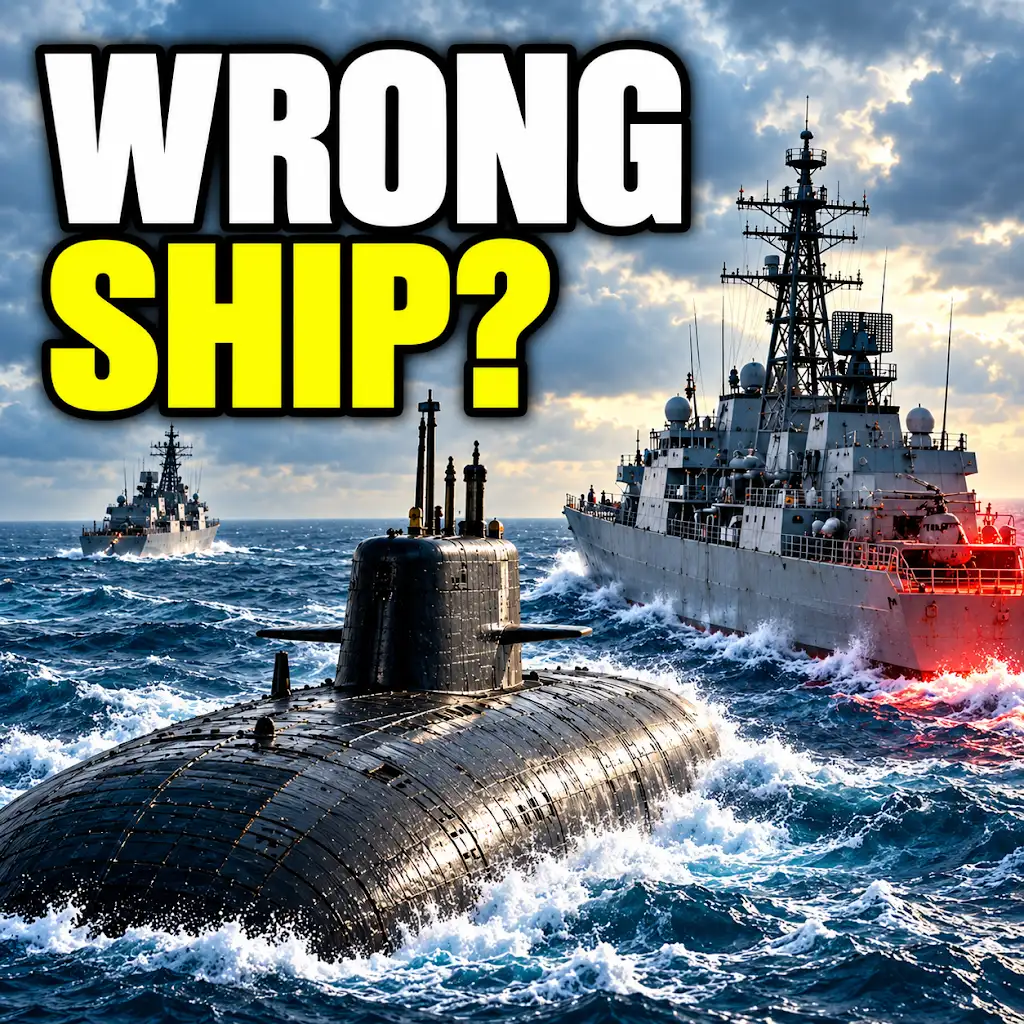
A Soviet Submarine Hit a U.S. Frigate. Was It the Wrong Ship?
FAQs
What is periscope depth for a submarine?
Periscope depth is the depth at which a submarine can raise its periscope above the water’s surface to observe the surroundings without fully surfacing.
How did the collision at periscope depth occur between Soviet submarines?
The collision at periscope depth between Soviet submarines occurred due to a misjudgment of distance and positioning by the submarine operators, leading to the periscopes of the two submarines colliding.
What were the consequences of the periscope depth collision between the Soviet submarines?
The consequences of the periscope depth collision between the Soviet submarines included damage to the periscopes, compromising the stealth and surveillance capabilities of the submarines, as well as potential injuries to the crew members operating the periscopes.
How common are periscope depth collisions among submarines?
Periscope depth collisions among submarines are relatively rare, as submarine operators undergo extensive training to prevent such incidents and utilize advanced technology to enhance situational awareness and avoid collisions.
What safety measures are in place to prevent periscope depth collisions in submarines?
To prevent periscope depth collisions in submarines, safety measures such as clear communication between crew members, proper training in periscope operations, use of sonar and radar systems, and adherence to established protocols for surfacing and submerging are implemented.