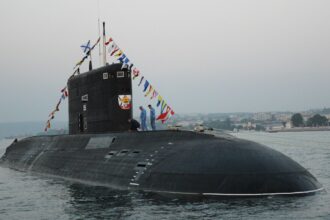
The Silent Standoff Beneath the Waves
The Cold War was a period defined by a palpable, albeit often unseen, tension between the United States and the Soviet Union. While the world’s gaze was frequently fixed on the nuclear arms race and the ideological battleground, a constant and equally perilous struggle played out in the depths of the world’s oceans. Submarines, the silent hunters of the deep, were central to this clandestine warfare. These vessels, bristling with weaponry and shrouded in secrecy, engaged in a high-stakes game of cat and mouse, a dangerous ballet of surveillance and evasion. The potential for miscalculation or accident was ever-present, a ticking clock beneath the waves. It was within this tense maritime environment that a dramatic and potentially catastrophic incident occurred in the North Atlantic, an event that brought the two superpowers to the brink of direct confrontation without firing a shot. This collision, between a Soviet submarine and a U.S. Navy frigate, serves as a stark reminder of the razor’s edge upon which global peace precariously balanced during the latter half of the 20th century.
In examining the historical context of naval confrontations during the Cold War, one cannot overlook the significant incident involving a Soviet submarine collision with a US Navy frigate. This event not only highlighted the tensions between the two superpowers but also raised questions about naval safety protocols and the potential for escalation in military conflicts. For a deeper understanding of the implications and aftermath of such incidents, you can read more in this related article: Soviet Submarine Collision with US Navy Frigate.
Echoes of Conflict: The Collision Scenario

The encounter that led to the collision was not an isolated event but a consequence of the pervasive atmosphere of mutual suspicion and intelligence gathering that characterized the Cold War. U.S. Navy submarines, often tasked with tracking Soviet ballistic missile submarines (SSBNs) – a mission fraught with extreme difficulty and danger – operated in waters where Soviet naval activity was also prevalent. Conversely, Soviet submarines were equally adept at monitoring American naval movements, particularly those of carrier strike groups and submarine fleets. The North Atlantic, with its vast expanses and strategic importance, was a frequent theater for these subsurface cat-and-mouse games. This particular incident, occurring under the cloak of darkness and the vastness of the ocean, highlighted the inherent risks of such close-quarters operations, where the slightest error in judgment or equipment malfunction could have devastating consequences.
The U.S. Navy Frigate: A Guardian of the Seas
The U.S. Navy frigate involved in the collision was a vessel designed for a variety of roles, including escort duty, anti-submarine warfare (ASW), and general patrol. Frigates of that era were typically equipped with advanced sonar systems, torpedoes, and other armaments crucial for detecting and neutralizing enemy submarines. Their presence in strategic waters was a clear signal of American naval power and a deterrent to potential adversaries. The crew of such a vessel would have been highly trained, constantly on alert for any unusual sound signatures or contacts that might indicate the presence of a hostile submarine. The operational tempo for frigates operating in contested waters was exceptionally high, demanding constant vigilance and a deep understanding of maritime tactics.
The Soviet Submarine: A Shadow in the Deep
The Soviet submarine involved was likely a diesel-electric or a nuclear-powered attack submarine (SSN) from the vast Soviet submarine fleet. These vessels were engineered for stealth, with crews trained in silent running techniques and sophisticated evasion maneuvers. Their primary objectives often included shadowing Western naval forces, gathering intelligence on their capabilities and movements, and posing a credible threat to enemy shipping and naval assets. The operational environment for Soviet submariners was equally demanding, requiring immense skill, discipline, and the ability to function under extreme pressure for extended periods. The Soviet Navy placed a significant emphasis on its submarine force, viewing it as a vital component of its strategic deterrent and power projection capabilities.
The Moment of Impact: A Collision in the Depths

The actual moment of collision was a sudden and violent interruption of the silent vigil that both vessels were maintaining. In the dense, sound-obscured environment of the ocean, the delicate dance of detection and evasion can easily go awry. Factors such as limited visibility, interference from oceanographic conditions, and the inherent limitations of even the most advanced sonar systems could contribute to such a disastrous outcome. The collision itself would have been a jarring, terrifying event for the crews of both submarines, a sudden and overwhelming realization that the unseen adversary had become a tangible, destructive force. The immense pressure of the water, the structural integrity of the hulls, and the potential for catastrophic damage were all immediate and terrifying considerations in the aftermath.
The Grim Discovery: Assessing the Damage
The immediate aftermath of the collision would have been a chaotic and tense period. For the U.S. Navy frigate, the impact would have been felt on the surface, a jolt that would have sent shockwaves through the hull and potentially alarms blaring throughout the ship. For the Soviet submarine, the collision at depth would have been a far more perilous situation, with the potential for hull
A Soviet Submarine Hit a U.S. Frigate. Was It the Wrong Ship?
FAQs
1. What caused the Soviet submarine collision with the US Navy frigate?
The collision was caused by the Soviet submarine failing to detect the presence of the US Navy frigate due to a combination of poor visibility and technical limitations in the submarine’s sonar system.
2. Were there any casualties as a result of the collision?
Fortunately, there were no casualties reported as a result of the collision between the Soviet submarine and the US Navy frigate.
3. How did the US Navy frigate respond to the collision?
After the collision, the US Navy frigate immediately initiated emergency procedures to assess the damage and ensure the safety of its crew members. The frigate also communicated with the Soviet submarine to exchange information and coordinate any necessary actions.
4. What were the consequences of the Soviet submarine collision with the US Navy frigate?
The collision led to diplomatic tensions between the Soviet Union and the United States, as both countries conducted investigations and exchanged diplomatic messages regarding the incident. It also highlighted the risks of underwater military operations and the importance of communication and coordination between naval forces.
5. Has there been any similar incident involving submarine collisions in the past?
Yes, there have been several incidents involving submarine collisions in the past, both between military submarines and civilian vessels, as well as between submarines of different countries. These incidents underscore the challenges of underwater navigation and the need for improved technology and protocols to prevent such collisions in the future.