The Shadow Beneath the Waves
The icy grip of the Cold War, a period of pervasive geopolitical tension between the United States and the Soviet Union, was characterized by a constant dance of espionage, proxy conflicts, and a terrifying nuclear standoff. While the world’s attention often fixated on the visible arenas of this struggle – the arms race, ideological pronouncements, and crises like Cuba – a more clandestine and equally perilous battle was waged beneath the ocean’s surface. Submarines, the silent hunters of the deep, played a crucial role in this strategic chess game, and an incident involving a Soviet submarine and a US naval vessel, shrouded in secrecy and amplified by the prevailing paranoia, threatened to ignite a direct confrontation that could have plunged the world into unimaginable conflict. This event, though not widely publicized at the time, served as a stark reminder of the razor’s edge upon which global security teetered.
In a recent article discussing the tense maritime encounters during the Cold War, the incident where a Soviet submarine attacked a US ship is highlighted as a pivotal moment in naval history. This event not only escalated tensions between the two superpowers but also underscored the risks associated with underwater warfare. For more insights into this significant historical event, you can read the full article here: Soviet Submarine Attacks US Ship.
The Whispers of the Deep
The encounter, which occurred in the unforgiving waters of the North Atlantic, was a product of the ever-present cat-and-mouse game played out between the two superpowers’ submarine fleets. The Soviet Union, keen to counter the perceived technological superiority of its American adversary, had invested heavily in its submarine program. These underwater behemoths, ranging from the hunter-killer types designed to track and destroy enemy submarines to the missile-carrying ballistic missile submarines (SSBNs) that represented a significant portion of their nuclear deterrent, were a constant source of concern for NATO navies. Similarly, the United States maintained a formidable submarine force, employing them for intelligence gathering, reconnaissance, and the protection of its own vital sea lanes.
The specific circumstances leading to this particular confrontation were likely rooted in routine patrol patterns, designed to gather intelligence on the movements and capabilities of the opposing fleet. Soviet submarines, often operating close to NATO’s borders and operating areas, were frequently shadowed by American anti-submarine warfare (ASW) forces. Conversely, US submarines ventured into Soviet territorial waters or conducted surveillance of Soviet naval bases. This constant proximity, coupled with the inherent difficulties of operating large, stealthy vessels in the ocean’s depths, created a volatile environment where miscalculation or aggressive maneuvering could have devastating consequences. The technological advancements of the era, while impressive, also introduced new complexities. Sonar systems, both passive and active, were becoming increasingly sophisticated, allowing submarines to detect each other at greater distances. However, the oceans are vast and often noisy, with natural sounds and the operational chatter of other vessels capable of masking critical signals. This ambiguity often necessitated bold, even risky, actions to confirm a contact or to break away from a perceived threat.
The Instruments of War
The technology employed by both sides in this underwater ballet was a critical factor. Soviet submarines, particularly the Victor and Akula classes, were formidable vessels designed for offensive operations. They boasted powerful sonar suites and a potent array of torpedoes and anti-ship missiles. Their construction, often focused on brute strength and high speeds, sometimes came at the expense of crew comfort and sophisticated noise reduction compared to their Western counterparts. Nevertheless, they represented a credible threat and were a constant focus of ASW efforts.
The US Navy, on the other hand, had a reputation for advanced sonar technology and sophisticated acoustic counter-measures. Submarines like the Sturgeon and later the Los Angeles class were designed for stealth and prolonged operations, equipped with cutting-edge detection systems and a variety of offensive and defensive weaponry. The meticulous training of their crews, emphasizing stealth and evasion, was paramount. The psychological aspect of submarine warfare also cannot be overstated. The isolation, the claustrophobia, and the constant awareness of the potential for sudden, catastrophic destruction created a unique mental pressure cooker for those serving in these underwater environments. Commanders were trained to operate on instinct and experience, often making split-second decisions with the fate of their crew and potentially much more hanging in the balance.
The Incident Unfolds
The specifics of the attack remain largely classified, a testament to the sensitive nature of such encounters during the Cold War. However, accounts that have emerged over time, pieced together from declassified documents, naval memoirs, and intelligence analyses, paint a chilling picture. A Soviet submarine, believed to be a highly capable attack submarine, was operating in international waters, its mission likely related to monitoring the movements of a US Navy carrier strike group or a specific high-value target. It was detected by a US warship, possibly a destroyer or a frigate equipped with advanced sonar and anti-submarine weapons. The initial contact was likely a tense game of cat and mouse, with the US vessel attempting to track and potentially deter the Soviet submarine.
The situation escalated when, for reasons still debated, the Soviet submarine allegedly fired upon the US warship. The weapon used was almost certainly a torpedo, the ubiquitous underwater projectile of naval warfare. The attack, whether it was a direct hit or a near miss, sent shockwaves through the crew of the targeted vessel and triggered an immediate, forceful response. The US warship, under direct attack, was compelled to defend itself. This would have involved a rapid
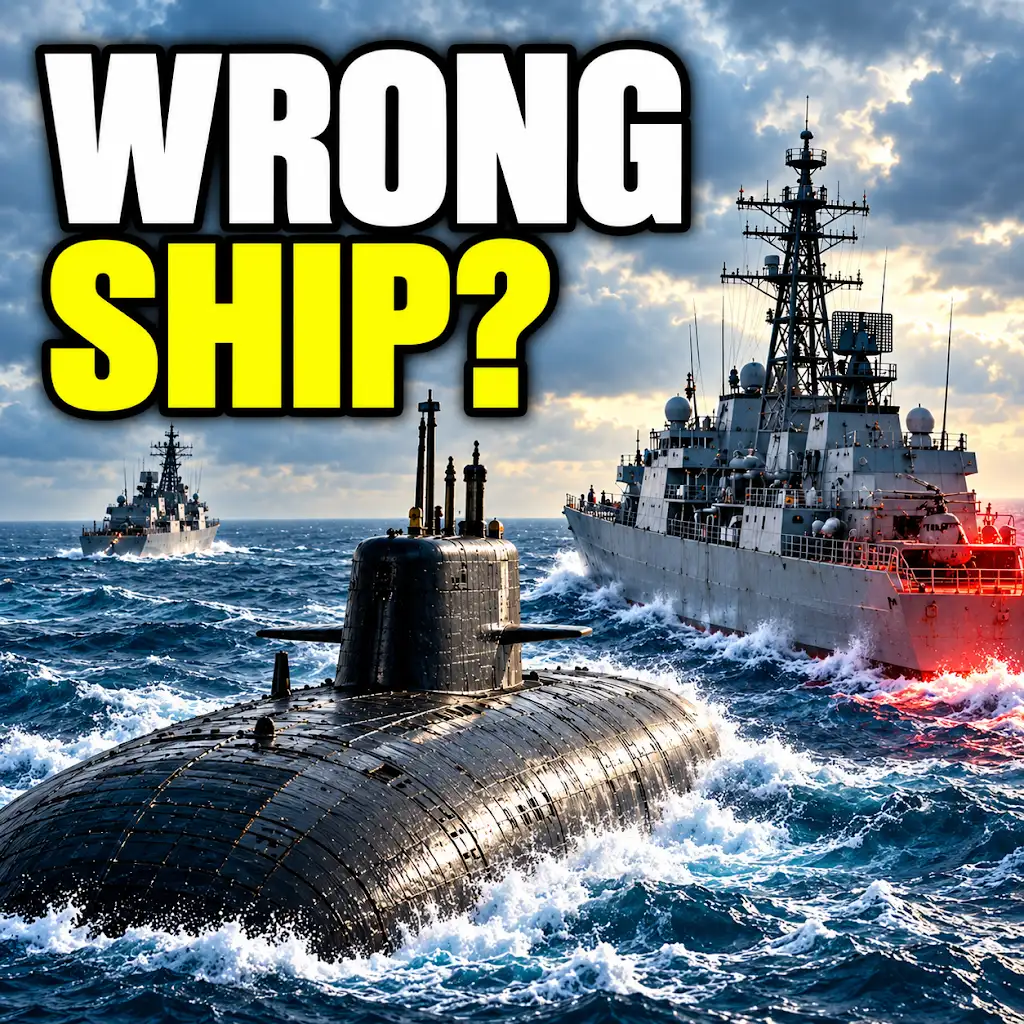
A Soviet Submarine Hit a U.S. Frigate. Was It the Wrong Ship?
FAQs
What happened during the Soviet submarine attack on a US ship?
During the Soviet submarine attack on a US ship, the Soviet submarine fired torpedoes at the USS Beale, a US destroyer, in the Atlantic Ocean.
When did the Soviet submarine attack on the US ship take place?
The Soviet submarine attack on the US ship took place on October 31, 1986.
Was there any damage caused by the Soviet submarine attack on the US ship?
Fortunately, the torpedoes fired by the Soviet submarine missed their target, and the USS Beale was not damaged during the attack.
What was the response of the US Navy to the Soviet submarine attack on their ship?
Following the Soviet submarine attack on the US ship, the US Navy retaliated by dropping practice depth charges near the Soviet submarine to force it to surface.
Were there any casualties as a result of the Soviet submarine attack on the US ship?
There were no casualties reported as a result of the Soviet submarine attack on the US ship, as the torpedoes missed their target and the USS Beale remained unharmed.