The silent service, a term often associated with the clandestine world of submarines, operates on the principle of stealth. For decades, the United States Navy has grappled with the challenge of detecting and tracking Soviet, and later Russian, submarines. While various factors contribute to a submarine’s detectability – its hull shape, propulsion system, and operational profile – acoustic signature is paramount. For a long time, Soviet submarine design and operational doctrine presented unique acoustic interference challenges, particularly as these vessels pushed the boundaries of high-speed transit. This article delves into the complexities of Soviet submarine acoustics at high speeds, examining the inherent difficulties in their design, the impact of operational tactics, and the ongoing efforts to counter these acoustic phenomena.
The Sonic Footprint of Soviet Submarine Designs
The acoustic signature of any submarine is a complex interplay of its physical characteristics and the technology employed for propulsion and operation. Soviet submarine design, often driven by different strategic imperatives and technological trajectories than their Western counterparts, presented a distinct set of acoustic challenges, especially when operating at higher speeds. These challenges were not merely a matter of louder machinery; they encompassed a broader spectrum of acoustic phenomena that made accurate detection and classification significantly more difficult.
Hull Form and Hydrodynamics at Speed
The shape of a submarine’s hull is a primary determinant of its acoustic properties, particularly at higher velocities. Soviet designers often prioritized specific operational requirements, which sometimes led to hull forms that generated considerable hydrodynamic noise when pushed. Unlike many Western designs that focused on minimizing flow noise through streamlined, bulbous bows and smoothly contoured fairings, some Soviet submarines featured more angular or less conventional hull shapes. At slower speeds, this might not be a significant issue, but as the submarine accelerated, the water flow over these surfaces could become turbulent, creating broadband noise across a wide range of frequencies. This turbulence acted like a constant hiss or roar, masking subtler, more diagnostic acoustic signatures.
Furthermore, the integration of sonar arrays and other external sensors on the hull could also contribute to increased hydrodynamic noise at speed. Protrusions, even if minimized, could disrupt laminar flow and induce localized turbulence. The Soviets, like other navies, faced the constant trade-off between the acoustic impact of external components and their functional necessity. However, the operational context often dictated that these components be robust and, in some cases, less aerodynamically refined than their Western counterparts, leading to a more pronounced acoustic signature at speed.
Propulsion Systems and Their Acoustic Manifestations
The heart of any submarine’s acoustic signature is its propulsion system. Soviet submarines employed a variety of propulsion technologies throughout their history, each with its own acoustic characteristics that could be amplified at high speeds.
Reactor Noise and Machinery Vibrations
Nuclear-powered Soviet submarines, such as the formidable Typhoon and Akula classes, relied on their nuclear reactors for sustained high-speed operations. While nuclear propulsion offered immense power and endurance, the associated machinery – pumps, turbines, and cooling systems – generated significant internal noise. At higher speeds, these systems often operated at increased power levels, leading to amplified vibrations that propagated through the hull and radiated into the surrounding water. The challenge for acoustic detection was not just the sheer volume of this noise but its spectral content. The complex interplay of rotating machinery and fluid dynamics within the reactor systems produced a rich harmonic structure that could be difficult to distinguish from other ambient noise sources or to classify definitively as a specific submarine type. Moreover, the rigorous maintenance and operational demands placed on these systems within the Soviet military context could sometimes result in less-than-optimal noise suppression compared to systems designed with a paramount focus on acoustic stealth.
Diesel-Electric Engine Noise and Cavitation
For diesel-electric submarines, particularly the vast fleets of the Cold War era, high-speed operation was a more transient phenomenon, often associated with transit to and from patrol areas or evasive maneuvers. However, even during these periods, the diesel engines themselves were a significant source of acoustic interference. When running on diesels and snorkel, the intake and exhaust systems, along with the combustion process, generated substantial noise. When operating submerged on battery power, the motors themselves, while quieter than diesels, still produced their own mechanical noise. At higher speeds, the demands on the battery and motors increased, leading to higher rotational speeds and greater mechanical stress, thus amplifying their acoustic output.
A particularly problematic aspect for both nuclear and diesel-electric submarines operating at speed is cavitation. Cavitation occurs when the pressure around a propeller blade drops below the vapor pressure of the surrounding water, causing tiny bubbles to form and collapse. This collapsing process generates a characteristic crackling or popping sound, which can be audible over significant distances. At higher speeds, propellers spin faster and experience greater hydrodynamic forces, leading to increased cavitation. Soviet propeller designs, while sometimes optimized for speed, could also be more prone to cavitation under certain operating conditions. The broad frequency spectrum of cavitation noise made it a challenging signature to filter out or to use for precise identification.
Internal Systems and Operational Noises
Beyond the main propulsion, a host of other internal systems and operational activities within a Soviet submarine contributed to its acoustic footprint, particularly when operating at higher speeds. These included:
- Auxiliary machinery: Pumps for ballast, hydraulics, and cooling systems, ventilation fans, and generators all produce their own unique acoustic signatures. At higher operational speeds, these systems often work harder, increasing their noise output.
- Hull penetration noise: Any opening in the hull, such as for periscopes, antennas, or torpedo tubes, can act as a point of acoustic leakage. Water flow around these penetrations, especially at speed, can generate additional noise.
- Crew activity: While less significant than machinery noise, even the movement of crew members, opening and closing hatches, and the operation of internal equipment can contribute to the overall acoustic signature, becoming more noticeable in quieter ambient conditions.
- Weapon system readiness: The process of preparing torpedoes or missiles for launch can involve the operation of internal mechanisms, which may be audible acoustically.
The Soviet doctrine often emphasized rapid deployment and aggressive operations, which meant that these submarines were frequently operating at higher speeds, thus maximizing the contribution of all these secondary noise sources.
In exploring the complexities of Soviet submarine operations, particularly regarding acoustic interference at high speeds, one can gain further insights by examining the article available at In the War Room. This resource delves into the technological challenges faced by submarines in maintaining stealth while maneuvering rapidly, highlighting the intricate balance between speed and acoustic signature that was crucial during the Cold War era.
The Impact of High-Speed Tactics on Acoustic Signatures

Soviet submarine doctrine during the Cold War was characterized by a perceived emphasis on offensive operations and a willingness to operate in close proximity to NATO forces. This often translated into tactical scenarios that necessitated high-speed maneuvers, significantly impacting their acoustic detectability and the challenges faced by sonar operators. The need for speed was not just for transit but also for engagement, evasion, and shadowing.
Rapid Deployment and Transit to Patrol Areas
Soviet submarine forces were tasked with projecting power and maintaining a constant presence in strategically important areas, often far from their home ports. Reaching these patrol zones quickly required sustained high-speed transits. During these transits, submarines would often operate at speeds that maximized their sonar performance, pushing their propulsion systems to their limits. This not only amplified the inherent noise of the machinery but also meant that the submarine was less likely to be operating in its acoustically quietest modes. For detection, this presented a significant challenge: the submarine was covering more ground faster, and its acoustic signature was likely more pronounced. The continuous, high-speed transit meant that a submarine was a moving target with a more significant acoustic footprint for extended periods.
Evasive Maneuvers and Breakaway Tactics
In the event of detection or an anticipated encounter with anti-submarine warfare (ASW) forces, Soviet submarines were trained in rapid and often aggressive evasive maneuvers. These maneuvers frequently involved high-speed turns, dives, and accelerations. Such dynamic changes in speed and direction put immense strain on the hull and propulsion systems. The water flow over the hull would become highly turbulent, and the propeller would be more prone to cavitation. These rapid changes in operational state also meant that auxiliary machinery would be working overtime, and internal systems might be engaged in rapid adjustments, all contributing to a sudden and often dramatic increase in the submarine’s acoustic output. For the pursuing ASW forces, this burst of noise could be both a potential signal of the submarine’s presence and an immediate obstacle to tracking, as the familiar acoustic signature was masked by the cacophony of high-speed evasions.
Shadowing and Close-Proximity Operations
Soviet submarines were often tasked with shadowing NATO naval groups, particularly carrier strike groups. This operation required the submarine to maintain a close distance while remaining undetected. However, to keep pace with maneuvering surface vessels, especially during combat exercises or fleet movements, the submarine might need to operate at higher speeds than its stealthiest regime would ideally allow. Furthermore, the close proximity to the noise of the surface fleet could sometimes provide a degree of acoustic cover for the submarine’s own noise. Yet, the need to react quickly to changes in the surface group’s formation or to potential ASW threats could necessitate bursts of speed, leading to detectable acoustic events. The “dance” of shadowing often involved periods of quiet lurking interspersed with moments of high-speed adjustments, making the acoustic picture complex and difficult to interpret.
The “Stealth Speed” Dilemma
Every submarine has an optimal speed for acoustic stealth – a regime where machinery noise is minimized and hydrodynamic flow is laminar. However, this “stealth speed” is often a relatively slow speed. Soviet operational requirements, especially for offensive missions or rapid redeployment, often pushed submarines beyond this optimal stealth regime. The decision to prioritize speed over absolute quietness was a calculated risk, reflecting their strategic priorities. This meant that while their submarines might be capable of extended periods of relative quietness at lower speeds, their inherent ability to operate at high speeds also meant they could generate significant acoustic interference when doing so. The challenge for ASW forces was to detect these submarines during their high-speed transits or evasive maneuvers, as well as to distinguish their acoustically “noisy” operational modes from background noise.
Analyzing the Acoustic Signatures: Challenges for Sonar Systems

The unique acoustic signatures generated by Soviet submarines, particularly at high speeds, posed significant challenges for the sonar systems employed by the United States Navy and its allies. These challenges were multifaceted, affecting everything from the initial detection of a faint sound to the precise classification and tracking of the target.
Signal-to-Noise Ratio Degradation
The most fundamental challenge in detecting any underwater sound source is achieving an adequate signal-to-noise ratio (SNR). When a Soviet submarine operates at high speeds, its acoustic signature intensifies, effectively raising the “signal” level. However, this is often accompanied by a corresponding increase in broadband noise generated by the hull, machinery, and propeller. This increased self-noise, combined with ambient ocean noise (which can also be affected by sea state and currents, often exacerbated during high-speed operations), significantly degrades the SNR. For passive sonar systems, which rely on listening for sounds, a low SNR means that the submarine’s acoustic emissions can be easily masked by the surrounding noise. This makes it difficult to distinguish the target sound from background interference, leading to missed detections or false alarms.
Broadband Noise and Spectrum Overlap
The broadband nature of the noise produced by Soviet submarines at speed – the hiss of turbulent flow, the roar of machinery, and the crackle of cavitation – presents a significant challenge. Unlike a single, distinct tonal signature, broadband noise occupies a wide range of frequencies. This makes it difficult for sonar systems to isolate the target signature. Furthermore, the spectral content of this broadband noise often overlaps with the spectral content of ambient ocean noise, making it even harder to discriminate. Sophisticated signal processing techniques are required to analyze these complex soundscapes, but even with advanced algorithms, the sheer volume and broadband nature of the interference can overwhelm the system’s ability to extract a clear target signal.
Transient and Dynamic Acoustic Events
The high-speed tactics employed by Soviet submarines often resulted in transient and dynamic acoustic events. A sudden acceleration, a sharp turn, or the activation of a specific system could create a brief but intense acoustic signature. For sonar operators, these transient signals can be fleeting and difficult to pinpoint. They might be picked up as a brief anomaly, but the rapid changes in speed and course associated with these events make it challenging to maintain a continuous track. The dynamic nature of these acoustic emissions requires sonar systems and operators to be highly responsive and capable of rapid analysis and re-acquisition. The “fingerprint” of a submarine might be present, but it could be rapidly obscured or altered by the submarine’s subsequent maneuvers.
Classification Difficulties
Classifying a detected sound as belonging to a specific type of submarine is crucial for tactical decision-making. The complex and often high-speed acoustic signatures of Soviet submarines made this classification process particularly difficult. The overlap in acoustic characteristics between different Soviet submarine classes, coupled with the masking effect of high-speed noise, could lead to ambiguity. A loud, broadband noise signature might indicate a high-speed transit but could be difficult to definitively link to a specific class, let alone an individual vessel. This ambiguity reduced the tactical advantage gained from a detection, as the ASW force might not be able to determine the specific threat posed by the detected submarine.
The “Silent Running” Paradox
Ironically, the very efforts made by Soviet submarines to operate “silently” often involved operating at speeds that, while perhaps quieter than their maximum, were still fast enough to generate significant acoustic interference. The paradox lay in the fact that the pursuit of stealth at moderate speeds could still result in a detectable acoustic presence. For ASW forces, the challenge was to identify the operational regime of the detected submarine. Was it in a high-speed transit with a louder signature, or was it attempting to run quietly but still producing a discernible sound? Differentiating these scenarios required a deep understanding of submarine acoustics and the ability to analyze subtle variations in the detected sound.
Countermeasures and Technological Advancements
The persistent acoustic challenges posed by Soviet submarines at high speeds spurred significant investment and innovation in United States Navy sonar technology and anti-submarine warfare (ASW) tactics. The goal was not just to hear the submarine but to understand its signature, predict its movements, and ultimately neutralize the threat.
Advanced Passive Sonar Systems
The development of more sophisticated passive sonar arrays was a critical response. These systems employed a greater number of hydrophones, arranged in more complex configurations, to improve spatial filtering and signal enhancement. Advanced signal processing algorithms were developed to sift through the noise, identifying weak signals and distinguishing them from background interference. Techniques such as beamforming, spectral analysis, and matched filtering were refined to isolate and track specific acoustic characteristics. The focus shifted from simply detecting loud noises to analyzing the subtle nuances of acoustic signatures, even when degraded by high-speed operation. This included developing algorithms that could identify and track transient acoustic events, such as those associated with cavitation or rapid maneuvers.
Active Sonar and Its Limitations
While passive sonar focuses on listening for the enemy, active sonar involves transmitting a sound pulse and listening for the echo. Active sonar can be highly effective for determining range and bearing, especially in noisy environments. However, its use by ASW forces immediately alerts the submarine to their presence and location, a significant disadvantage when trying to maintain stealth. Furthermore, the complex acoustic signatures of Soviet submarines at high speeds could also complicate active sonar returns. The echoes might be distorted by the submarine’s hull shape and the turbulent water surrounding it, making interpretation difficult. Despite these limitations, active sonar remained a valuable tool, particularly in situations where the element of surprise was less critical or when trying to confirm a passive sonar contact.
Data Fusion and Acoustic Libraries
A key advancement was the development of comprehensive acoustic libraries. These databases contained the known acoustic signatures of various Soviet submarine classes, including their performance characteristics at different speeds and operational regimes. By comparing the detected acoustic signature of an unknown contact to these libraries, sonar analysts could attempt to classify the submarine and estimate its speed and class. The integration of data from multiple sonar systems (both passive and active), as well as other sensors such as magnetic anomaly detectors (MAD) and electronic support measures (ESM), into a data fusion process significantly improved the accuracy of detection and classification. This holistic approach allowed for a more informed assessment of the acoustic picture.
Understanding and Exploiting Cavitation
Specific research was dedicated to understanding and exploiting the acoustic signatures of cavitation. By analyzing the frequency and intensity of cavitation noise, ASW forces could gain insights into the propeller design, rotational speed, and operational state of a submarine. This knowledge allowed for the development of specialized algorithms to detect and classify cavitation, turning a significant source of interference into a potential diagnostic tool. For example, understanding the specific acoustic “fingerprint” of cavitation on a particular class of Soviet submarine could aid in its identification.
Tactical Adaptations and Operational Doctrine
Technological advancements were complemented by adaptations in ASW tactical doctrine. This included developing strategies for operating in environments where the acoustic picture was inherently degraded, such as in shallow waters or high sea states. It also involved training sonar operators to be more adept at recognizing subtle acoustic cues and distinguishing between different types of noise. The emphasis shifted from simply listening for the loudest sounds to a more nuanced understanding of the underwater acoustic environment and the diverse ways in which submarines could be detected.
Recent studies have highlighted the challenges faced by Soviet submarines regarding acoustic interference at high speeds, which can significantly impact their stealth capabilities. This issue is particularly relevant in the context of naval warfare, where maintaining a low acoustic signature is crucial for evading detection. For a deeper understanding of the technological advancements and strategies employed by submarines to mitigate these challenges, you can read more in this insightful article on the topic. For further details, visit this link.
The Evolving Landscape of Submarine Acoustics
| Parameter | Value | Unit | Notes |
|---|---|---|---|
| Speed Threshold for Acoustic Interference | 20 | knots | Speed above which noise significantly increases |
| Noise Level at 15 knots | 80 | dB re 1 μPa | Baseline noise level at moderate speed |
| Noise Level at 25 knots | 110 | dB re 1 μPa | High noise due to cavitation and flow turbulence |
| Frequency Range of Interference | 100 – 1000 | Hz | Dominant frequencies of acoustic interference |
| Hull Vibration Amplitude | 0.5 | mm | Measured at 25 knots, contributes to noise |
| Propeller Cavitation Intensity | High | N/A | Major source of acoustic interference at high speed |
| Acoustic Signature Reduction Techniques | Rubber Coating, Propeller Design | N/A | Used to mitigate noise at high speeds |
The challenges posed by Soviet submarine acoustics at high speeds were not static. As technology advanced on both sides, the cat-and-mouse game of detection and evasion continued to evolve, shaping the future of submarine design and ASW capabilities.
The Impact of quieting Technologies
As Western navies invested heavily in quieting technologies for their own submarines, Soviet designers also sought to improve the acoustic performance of their vessels. Later generations of Soviet and Russian submarines incorporated more advanced hull coatings, improved machinery mounts, and more refined propeller designs to reduce their acoustic footprint. This meant that the “baseline” noise of a modern submarine, even at higher speeds, was potentially lower than that of its predecessors. This presented a moving target for ASW systems, requiring continuous updates to acoustic libraries and detection algorithms. The challenge was no longer just about dealing with loud noises but about detecting increasingly subtle signatures.
The Role of Non-Acoustic Sensors
While acoustics remained the primary means of submarine detection, the limitations of sonar, particularly in dealing with acoustically sophisticated targets, spurred increased reliance on non-acoustic sensors. Magnetic Anomaly Detectors (MAD), which detect disturbances in the Earth’s magnetic field caused by a submarine’s metal hull, became more sophisticated. Electronic Support Measures (ESM) systems could detect the radar or communications emissions of a submarine. Infrared sensors, designed to detect the thermal wake of a submarine, also saw development. The integration of data from these diverse sensor types into a comprehensive tactical picture helped to compensate for the weaknesses of any single sensor system, especially when acoustics were degraded by high-speed operations.
The Rise of Submersible Drones and Unmanned Systems
In recent years, the development of unmanned underwater vehicles (UUVs) and submersible drones has added another layer of complexity to the ASW environment. These systems can be deployed in swarms to conduct wide-area surveillance, gather acoustic data, and even potentially “herding” submarines into more detectable areas. Their small size and potentially lower acoustic signatures also present new challenges for detection. As these technologies mature, they will undoubtedly play an increasingly important role in counter-submarine operations, working in conjunction with traditional sonar systems to provide a more comprehensive understanding of the underwater battlespace.
Future Challenges and Strategic Implications
The future of submarine acoustics will likely be shaped by the continued pursuit of stealth by submarine designers and the parallel efforts by ASW forces to overcome these advancements. The development of quieter propulsion systems, such as advanced Stirling engines for diesel-electric submarines or more efficient and silent nuclear reactors, will continue to push the boundaries of detectability. Furthermore, the increasing sophistication of digital signal processing and artificial intelligence may enable ASW systems to identify and classify even the most subtle acoustic anomalies.
The ability to effectively detect and track submarines, particularly those capable of high-speed transit, remains a critical component of naval power projection and strategic deterrence. The challenges posed by Soviet, and now Russian, submarine acoustics have historically been a significant driver of innovation in this field. As the technological landscape continues to evolve, the silent service will undoubtedly continue to operate in an environment where understanding and countering acoustic interference, especially at high speeds, remains a paramount and ongoing challenge. The constant evolution of submarine technology and ASW capabilities ensures that the silent war beneath the waves will continue to be a dynamic and technologically driven contest.
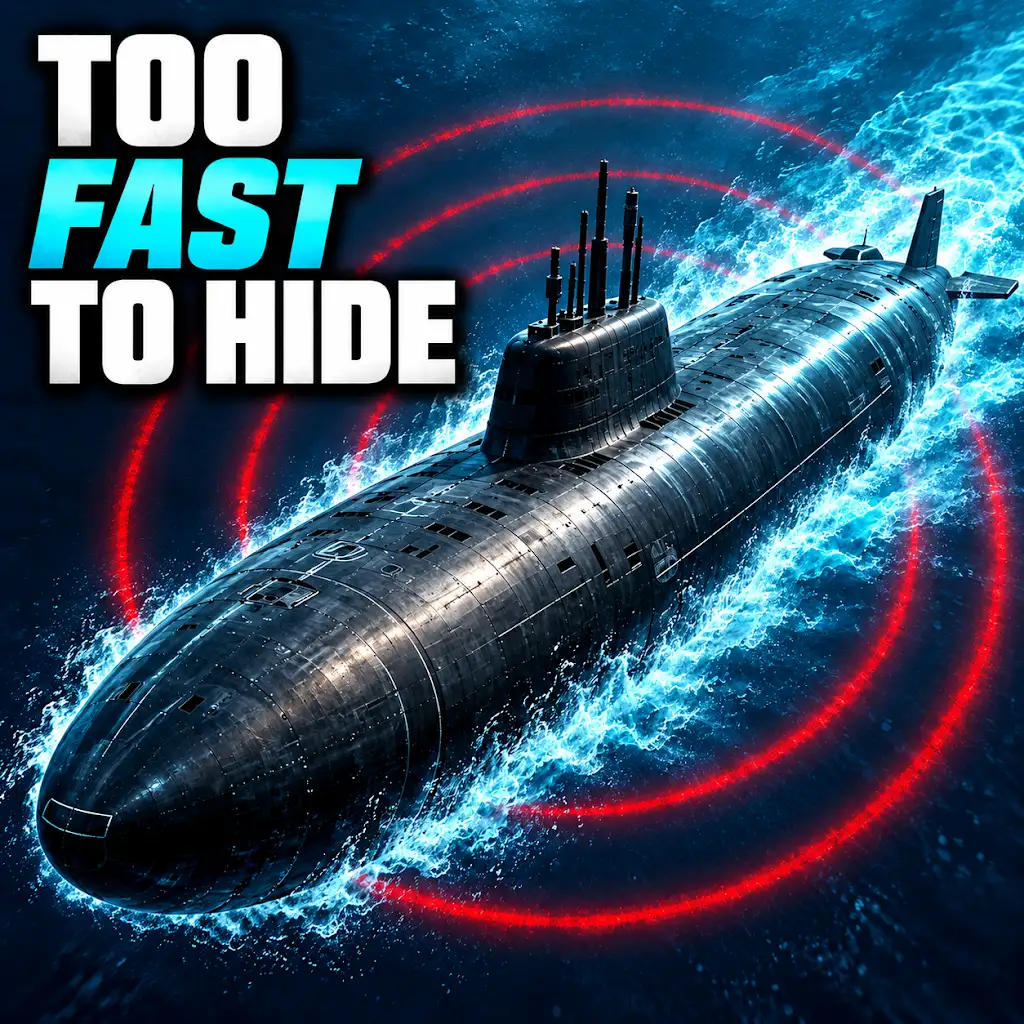
The Soviet Submarine That Broke a Speed Record—and Its Own Stealth
FAQs
What is Soviet submarine acoustic interference at high speed?
Soviet submarine acoustic interference at high speed refers to the phenomenon where the noise generated by a submarine’s propulsion system at high speeds can interfere with its own sonar system, making it difficult to detect and track other vessels.
How does high speed affect a submarine’s acoustic signature?
When a submarine travels at high speeds, the increased cavitation and mechanical noise from its propulsion system can create a louder acoustic signature, making it easier for enemy vessels to detect and track the submarine.
Why was Soviet submarine acoustic interference a significant issue during the Cold War?
During the Cold War, Soviet submarines relied on stealth and secrecy to evade detection by NATO forces. The acoustic interference caused by high-speed travel posed a threat to their ability to remain undetected, potentially compromising their missions.
What measures did the Soviet Union take to address submarine acoustic interference at high speed?
The Soviet Union developed various technologies and techniques to reduce the acoustic interference caused by high-speed travel, such as improving the design of submarine propellers, implementing sound-absorbing materials, and optimizing the submarine’s hydrodynamics.
How does submarine acoustic interference at high speed impact naval operations today?
Submarine acoustic interference at high speed remains a concern for modern naval forces, as advancements in sonar technology have made it easier to detect submarines. Navies continue to research and develop ways to mitigate acoustic interference and maintain the stealth capabilities of their submarines.