The Crucible of Innovation: Soviet Military Engineering in the 20th Century
Soviet military engineering, born out of necessity and forged in the crucible of ideological struggle and global conflict, represents a remarkable testament to human ingenuity under immense pressure. For decades, the Soviet Union’s defense establishment was a behemoth, a sprawling enterprise dedicated to developing and producing technologies that could, at least in theory, rival or surpass those of its Western adversaries. This relentless pursuit of military superiority led to a unique trajectory of innovation, characterized by a blend of pragmatic problem-solving, sheer brute force engineering, and occasional flashes of groundbreaking brilliance. The legacy of this era is not merely historical; it continues to shape global defense dialogues and technologies even today.
The Soviet approach to military engineering was deeply rooted in its geopolitical realities. Facing a technologically superior and ideologically opposed West, particularly the United States, for much of the Cold War, Soviet planners and engineers were compelled to find ways to achieve parity or even dominance through strategic focus and resource allocation. This often meant prioritizing certain areas, such as armored warfare and missile technology, while perhaps lagging in others. The immense scale of the Soviet Union, its vast industrial capacity, and its centralized command structure allowed for the mobilization of resources on a scale rarely seen, which, when coupled with a determined focus on specific defense objectives, could yield impressive results. The emphasis was often on reliability, ease of mass production, and operational simplicity, reflecting a doctrine that valued robust, dependable systems capable of being fielded in massive numbers.
Soviet military engineering played a crucial role in shaping the strategies and capabilities of the Red Army during the Cold War. For a deeper understanding of this topic, you can explore an insightful article that delves into the innovations and developments in Soviet military technology. This article provides a comprehensive overview of the engineering feats that contributed to the Soviet military’s effectiveness. To read more, visit this link.
Innovations in Land Warfare: The Rise of Soviet Armor
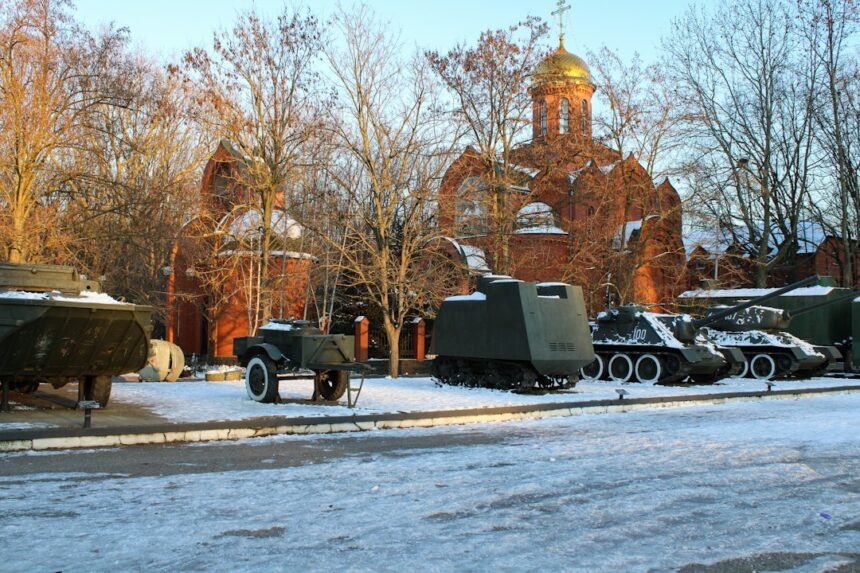
The Soviet Union’s dominance on the Eastern Front during World War II and its subsequent focus on ground forces solidified land warfare as a cornerstone of its military engineering efforts. The development and deployment of tanks, artillery, and other land-based weaponry were areas where Soviet innovation often shone, frequently driven by the need to counter advanced enemy designs with more cost-effective and easily produced alternatives.
The Evolution of the Tank: From T-34 to T-80
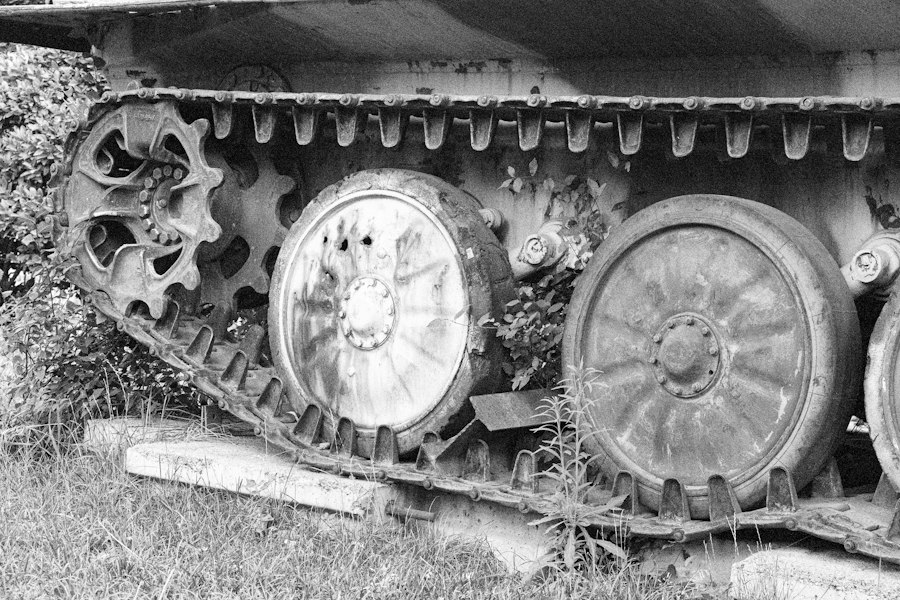
The T-34 medium tank, introduced in 1940, stands as arguably the most significant tank design of World War II and a pivotal moment in Soviet military engineering. Its revolutionary sloped armor, powerful engine, and effective weaponry combined to create a formidable machine that posed a significant challenge to German armor. The T-34’s success was not just in its technical specifications but in its ease of production and maintenance, allowing the Red Army to field them in overwhelming numbers. Post-war, Soviet tank development continued this evolutionary path. The IS series of heavy tanks, followed by the T-54/55 series, became the most produced tanks in history, forming the backbone of Soviet and Warsaw Pact armored forces. These tanks, while not always at the forefront of technological complexity, were known for their ruggedness, simplicity, and potent firepower. The later T-64 and T-80 series represented a leap forward, incorporating advanced features like composite armor, autoloader systems, and powerful gas turbine engines (in the T-80). These designs showcased a growing ambition to compete with the most sophisticated Western tanks, pushing the boundaries of Soviet tank engineering.
Artillery and Rocketry: The “God of War” Reimagined
Artillery has always been central to Russian and Soviet military doctrine, earning the moniker “God of War.” Soviet artillery engineers excelled in developing systems that offered high rates of fire, mobility, and devastating firepower. Self-propelled artillery pieces, such as the SU-100 tank destroyer and later the highly successful 2S1 Gvozdika and 2S3 Akatsiya, allowed for greater operational flexibility and survivability compared to towed artillery. Beyond conventional artillery, the development of multiple rocket launcher systems (MRLs) was a particular Soviet strength. Systems like the Katyusha in World War II, and later the BM-21 Grad, BM-27 Uragan, and BM-30 Smerch, provided devastating saturation bombardment capabilities, capable of laying down vast fields of fire rapidly. This emphasis on rocket artillery allowed for a powerful, if less precise, way to disrupt enemy formations and achieve battlefield dominance, a doctrine that has persisted into modern Russian military thinking.
Naval Power and the Submarine Menace: Projecting Soviet Might
While land forces often received the most attention, Soviet naval engineering was a critical component of its global strategy, particularly in the challenging arena of submarine warfare and the projection of power into the world’s oceans. Facing a superior surface fleet in NATO, Soviet engineers focused on developing potent submarine forces and innovative surface combatants designed to counter specific threats.
The Silent Service: Submarine Technology and Strategy
The Soviet Union invested heavily in its submarine fleet, understanding its crucial role in strategic deterrence and power projection. From early diesel-electric designs to the formidable nuclear-powered ballistic missile submarines (SSBNs) and attack submarines (SSNs), Soviet submarine engineering achieved remarkable feats. The development of the first nuclear-powered submarine, the USS Nautilus, spurred a rapid Soviet response. While initially playing catch-up, Soviet engineers quickly developed their own nuclear propulsion systems and submarine designs. The Typhoon-class SSBN, for example, remains the largest submarine ever built, designed to carry a massive payload of intercontinental ballistic missiles. Soviet SSNs, like the Akula and Sierra classes, were engineered for stealth and offensive capabilities, often designed to hunt Western SSNs and carrier strike groups. A particular Soviet innovation was the use of titanium for hull construction in some classes, offering greater depth capability and reducing magnetic signatures. The emphasis was often on speed, firepower, and the ability to operate in challenging Arctic waters.
Surface Fleets: Adapting to New Threats
Soviet surface fleet engineering was characterized by a pragmatic approach, often focusing on survivability and anti-ship missile capabilities. While not always possessing the same level of technological sophistication or refinement as their Western counterparts in terms of electronics or overall design, Soviet warships were built to be robust and heavily armed. The development of powerful anti-ship cruise missiles, such as the P-15 Termit (known to NATO as the Styx) deployed on missile boats, represented a significant asymmetric threat to larger Western vessels. Later, larger warships like the Kresta and Kara-class cruisers, and eventually the Kirov-class battlecruisers, were bristling with anti-ship missile launchers, radar, and defensive weaponry. The Kirov class, in particular, was a unique design, essentially a cruiser with a flight deck and an armament comparable to a capital ship, representing a distinct Soviet approach to naval power. The emphasis was often on potent offensive strike capabilities and the ability to survive engagements in the face of superior numbers.
Air Power and Aerospace Ambitions: Reaching for the Skies and Beyond
Soviet aviation and aerospace engineering were marked by a constant drive to challenge Western dominance in the air and, ambitiously, in space. From sophisticated fighter jets to pioneering spaceflight, this sector of Soviet military engineering pushed the boundaries of what was considered possible.
The Jet Age and Fighter Design: From MiG to Sukhoi
The advent of jet propulsion spurred a rapid evolution in Soviet fighter aircraft design. The Mikoyan-Gurevich (MiG) bureau, in particular, became renowned for its potent and highly maneuverable fighter jets. The MiG-15, a revolutionary swept-wing design, proved a formidable opponent to early American jet fighters during the Korean War, demonstrating Soviet engineers’ ability to quickly absorb and adapt new technologies. Subsequent generations of MiG fighters, such as the MiG-21, MiG-23, and the iconic MiG-29, continued to be widely exported and formed the backbone of many air forces worldwide. The Sukhoi design bureau, on the other hand, often focused on ground attack aircraft and more heavily armed fighters. The Su-7, Su-17, and later the highly capable Su-27 Flanker, known for its exceptional maneuverability and advanced aerodynamic design, showcased Soviet prowess in high-performance aircraft. These aircraft were often designed with robust airframes, powerful engines, and a focus on dogfighting capabilities, reflecting a distinct combat philosophy.
The Space Race: Achievements and Military Applications
The Soviet Union’s achievements in the Space Race were directly intertwined with its military engineering capabilities. The development of the R-7 Semyorka rocket, initially designed as an intercontinental ballistic missile (ICBM), became the launch vehicle for Sputnik, the first artificial satellite, and later for Yuri Gagarin, the first human in space. This dual-use capability was characteristic of Soviet aerospace engineering, where civilian advancements often had clear military applications. The program’s successes, from Vostok to Soyuz and the Mir space station, demonstrated remarkable engineering prowess in life support, orbital mechanics, and spacecraft construction. While the US focused on lunar landings, the Soviet Union excelled in developing long-duration space stations and sophisticated robotic exploration. The military dimension was ever-present, with ongoing efforts in reconnaissance satellites, anti-satellite weapons, and the development of space-based weapon systems.
Soviet military engineering played a crucial role in shaping the strategies and technologies used during the Cold War, and understanding its impact can provide valuable insights into modern military practices. For a deeper exploration of this topic, you can read a related article that discusses the innovations and challenges faced by Soviet engineers in their quest for military superiority. This article can be found here, and it highlights the significant advancements that emerged from this era, influencing both historical and contemporary military engineering.
The Era of Missiles and Strategic Deterrence: The Nuclear Shadow
| Category | Metric | Details |
|---|---|---|
| Bridging Equipment | Maximum Load Capacity | Up to 60 tons (PMM-2 pontoon bridge) |
| Mine Clearance | Mine Clearing Rate | Up to 1,000 m²/hour (UR-77 Meteorit mine-clearing vehicle) |
| Fortifications | Typical Bunker Wall Thickness | 1.5 to 3 meters of reinforced concrete |
| Engineering Vehicles | Armored Engineer Vehicle Weight | Approximately 20-30 tons (IMR-2 combat engineering vehicle) |
| Demolition Charges | Explosive Yield | Up to 10 kg TNT equivalent per charge |
| Field Fortifications | Typical Construction Time | Several hours to build a defensive trench system with support |
Perhaps the most defining aspect of Soviet military engineering, and indeed of the Cold War itself, was the development and proliferation of nuclear weapons and the delivery systems to deploy them. This led to an unprecedented arms race and a constant push for advancements in missile technology.
Intercontinental Ballistic Missiles (ICBMs): The Ultimate Deterrent
The development of ICBMs was a paramount objective for the Soviet Union, aiming to achieve strategic parity with the United States. The R-36 series of ICBMs, particularly the R-36M (NATO designation SS-18 Satan), represented the pinnacle of Soviet ICBM technology. These massive missiles could carry multiple independently targetable re-entry vehicles (MIRVs), capable of delivering devastating payloads across continents. The sheer scale and destructive power of these weapons were designed to ensure mutually assured destruction (MAD), a cornerstone of Cold War deterrence. Soviet engineers also developed a range of other ICBMs and intermediate-range ballistic missiles (IRBMs), constantly seeking improvements in range, accuracy, survivability, and payload capacity. The robust nature of many Soviet missile designs, often built with simpler, more resilient components, facilitated their mass production and deployment.
Submarine-Launched Ballistic Missiles (SLBMs) and Cruise Missiles: Expanding Reach
Complementing their land-based ICBMs, the Soviet Union also made significant strides in developing submarine-launched ballistic missiles (SLBMs). This allowed for a highly survivable second-strike capability, making Soviet nuclear forces more difficult to neutralize. The R-29 and later the R-30 Bulava (intended for the Borei-class submarines) represented key advancements in SLBM technology, offering greater range and accuracy. Beyond ballistic missiles, Soviet engineers also developed a sophisticated array of cruise missiles, both air-launched and ground-launched. These missiles offered lower-altitude, more stealthy attack profiles, posing a different kind of threat to enemy defenses. The development of anti-ship cruise missiles, as mentioned in the naval section, was a particularly impactful area of innovation, allowing smaller vessels to threaten much larger and more powerful warships.
The Enduring Legacy: From Cold War Relics to Modern Influence
The innovations born from Soviet military engineering during the 20th century left an indelible mark on global defense technology. While the Soviet Union itself is no more, its technological legacy continues to resonate, influencing contemporary military systems and strategic thinking.
Technological Inheritance and Modernization
Many of the technologies and design philosophies pioneered by Soviet engineers remain relevant today. Russia, as the successor state to the Soviet Union, continues to operate and modernize vast quantities of Soviet-era military equipment. Tanks like the T-72 and T-80, while having undergone extensive upgrades, are still in service globally. Fighter jets like the MiG-29 and Su-27 families, and their numerous derivatives, continue to be manufactured and sold to various nations. Furthermore, the strategic concepts that underpinned Soviet military development, such as the emphasis on robust and reliable systems, effective anti-access/area denial (A2/AD) capabilities, and the integration of multiple weapon platforms, continue to inform modern military doctrines. The robust engineering principles that prioritized simplicity and ease of mass production have proven to be a resilient foundation for continued development.
The Global Spread of Soviet Technology
The sheer volume of Soviet military hardware produced during the Cold War meant that these technologies were not confined to the Soviet Union or its Warsaw Pact allies. Many nations around the world, particularly those seeking to balance against Western influence or acquire capable defense systems at more affordable prices, became significant operators of Soviet-designed equipment. This global proliferation means that Soviet-era designs and their direct descendants continue to be a significant factor in regional security dynamics and international arms markets. The readily available nature and proven operational record of many Soviet systems have made them a persistent presence on battlefields and in air forces across continents. This widespread adoption has also led to a continuous stream of feedback and operational experience, which in turn has informed ongoing modernization efforts by both Russia and the nations operating this equipment. The legacy is not static; it is an ongoing influence that shapes the present and future of defense.

The Soviet Warship That Learned to Fly
FAQs
What were some key areas of focus for Soviet military engineering?
Soviet military engineering focused on developing advanced weapons systems, fortifications, transportation infrastructure, and communication networks to support the military’s strategic objectives.
How did Soviet military engineering contribute to the country’s defense strategy?
Soviet military engineering played a crucial role in designing and constructing defensive structures such as bunkers, fortifications, and barriers to protect key locations and deter potential threats.
What were some notable achievements of Soviet military engineering during the Cold War era?
During the Cold War, Soviet military engineering excelled in developing missile defense systems, strategic bombers, and nuclear submarines, which significantly enhanced the country’s military capabilities.
How did Soviet military engineering influence the arms race with the United States?
Soviet military engineering innovations, such as the development of intercontinental ballistic missiles and space technology, fueled the arms race with the United States and led to the constant pursuit of more advanced weapons systems.
What is the legacy of Soviet military engineering in modern Russia?
The legacy of Soviet military engineering in modern Russia can be seen in the country’s continued emphasis on defense technology, research, and development to maintain a strong military presence on the global stage.